Most villa listings use the word “accessible” freely, yet the details that decide whether a wheelchair user can actually shower, swim and move around are buried in vague descriptions and flattering photos. A single ramp at the front door tells you almost nothing about the bathroom, the pool or the route from your parking spot to the bedroom. This guide to accessible villas shows you exactly what to check before you book.
We’ll walk through what makes a villa genuinely accessible, how to judge ramps and outdoor routes, and which pool designs work for everyone. You’ll also get the specific questions to ask hosts, advice on booking timing and destinations where accessible villas actually exist, plus backup plans and insurance considerations if equipment fails. Every recommendation is based on measurements and verifiable features, not marketing language, so you can compare listings with confidence and avoid nasty surprises on arrival.
What Makes a Villa Genuinely Accessible
A villa is genuinely accessible when you can travel step-free from the parking area or drop-off point all the way to the front door. One ramp at the main entrance is not enough if a single step hides anywhere along the way. Ask the host to describe the full route, and treat hesitation as a warning sign.
Inside, the numbers matter more than the adjectives. Look for thresholds under 2 cm, doorways of at least 80-90 cm, and corridors wide enough for a 1.5 m turning circle. These measurements separate real accessible villas from properties that simply added the word “accessible” to their listing.
The entry-level rule
The bedroom and bathroom must be on the entry level. A common trap is a “ground floor room” that sits behind a half-flight of steps, technically on the ground floor but unreachable for a wheelchair user. Confirm that the entire route between bedroom, bathroom and living areas is level.
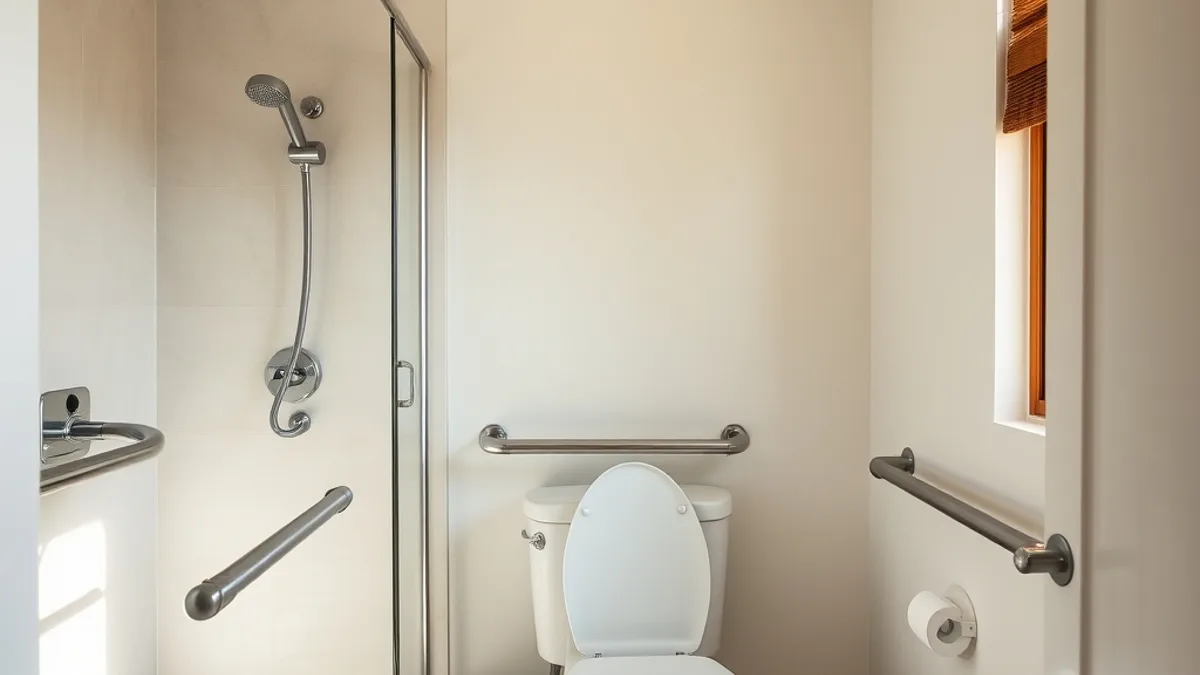
The bathroom is where most bookings fail. A roll-in shower with a fold-down seat, plus grab bars at both the toilet and the shower, are non-negotiable features. If a listing shows a bathtub with a step or a shower over a raised tray, keep searching.
Ramps, Gradients and Outdoor Routes
The entrance ramp is only the beginning. Ask for photos and measurements of every ramp on the property, including any that lead to terraces, gardens or the pool. The math is simple: a safe gradient of about 1:12 means a 30 cm step needs a 3.6 m ramp, plus landings for rest and turning. If a host sends a photo of a short, steep incline, that ramp will not work in practice.
Outdoor routes matter as much as the interior, especially in tropical settings where gardens and decks are part of the appeal. Many villas in destinations like Ubud’s quiet rice field enclaves feature beautiful but challenging grounds, so ask specifically what connects the villa to the pool, the dining area and any beach or garden access.
When reviewing the outdoor spaces, watch for these common barriers:
- Gravel paths — loose stone is nearly impossible for manual wheelchairs and uncomfortable even for powered ones; ask if a paved alternative route exists.
- Cobblestone or stepped garden terraces — decorative stonework often hides uneven joints and level changes of a few centimeters that can stop small front casters.
- Timber decking — gaps between boards and warped planks create vibration and resistance; ask about the deck’s condition and whether edges have ramps or lip-free transitions.
- Pool deck surfaces — wet decking changes everything, so confirm the route to the pool stays firm and slip-resistant when damp.
Finally, ask whether each ramp is permanent concrete or a temporary portable model added for photos. Portable ramps are often too steep, unstable under load, or stored away by the time you arrive. A host who can state ramp lengths and gradients from memory is usually one who has genuinely hosted wheelchair users before.
Pools That Everyone Can Use
The pool is often the deciding factor for a villa holiday, and there are two main solutions to look for. Zero-entry or beach-entry pools let swimmers roll or walk in down a gentle slope of roughly 1:6 to 1:12, with no lifting equipment needed. If a listing advertises this design, ask for a photo of the entry itself and confirm the slope is gradual rather than a short, steep transition.
If the pool has steps only
Many villas rely on a pool hoist instead. If so, ask three things: does a hoist actually exist, is it fixed or portable, and who operates it? A portable hoist locked in a storeroom with no trained staff on site is of little use. Confirm the answers in writing before you book.
Also check the water itself. Ask for the pool depth at the accessible entry point, because a hoist or zero-entry that lands in shallow water can be awkward for swimmers who need deeper water to transfer safely. Ask whether a transfer bench or grab rail is installed at the edge, which makes independent transfers far easier.
Comfort details extend your time at the pool. Non-slip decking reduces risk around wet areas, and a shaded rest area within a few meters of the water lets travelers cool down, rest between swims and stay comfortable for longer sessions. If the only shade is a distant umbrella by the villa, mention that in your questions to the host.
Questions to Ask Before You Book
Marketing language tells you very little about whether a villa will actually work for a wheelchair user. Words like “accessible” and “wheelchair friendly” can describe anything from a purpose-built layout to a single portable ramp added for the listing photos. Because genuinely accessible villas are a small slice of the market, hosts who have them tend to know their properties in detail, and they answer questions willingly. The way to cut through the vagueness is to ask specific questions, in specific units, and get answers in writing before any deposit changes hands.
- Ask for measurements in centimetres. Request exact door widths, threshold heights and shower dimensions rather than accepting descriptions like “spacious” or “step-free.” A doorway of 80 cm is workable; a doorway of 68 cm is not, no matter how it is worded.
- Request recent photos or a video walkthrough. Ask for images of the bathroom, bedroom entrance and pool access taken within the last year. Renovations and wear change properties, and listings often show the best unit in a complex rather than the one you will actually sleep in.
- Confirm which villa you are actually booking. Some complexes advertise accessible features that belong to a different unit in the same development. Ask directly whether the roll-in shower and step-free entry are in your specific villa, and ask for the unit number in writing.
- Ask who staffs the property. Find out whether someone on site can assist with a pool hoist, and whether there is 24-hour contact in case equipment fails mid-stay. A hoist nobody knows how to operate is not an accessible pool.
- Get everything in writing. Once features are confirmed, ask that every one of them be listed on the booking confirmation or in an email before you pay. Written confirmation is what gives you grounds to act if something is missing on arrival, so keep a copy handy for check-in.
Good hosts with genuinely accessible villas answer these questions quickly and precisely, often sending floor plans or a short video without being asked twice. Vague replies, stock photos or reluctance to confirm measurements in centimetres are useful signals in the other direction. Treat slow or evasive responses as a warning sign early in the process, because they rarely improve once your money has been paid. If a host cannot answer a basic question about door widths, it usually means nobody has ever verified them.
Booking Timing and Where Accessible Villas Exist
Accessible villas are a small slice of the market. Roughly 1-5% of villa inventory is genuinely accessible, which means the best options are often booked long before standard villas sell out. Planning ahead is not optional here; it is the difference between a proper choice and whatever is left.
How far ahead to book
Book 3-6 months ahead as a baseline, and earlier for high season in beach destinations, where the few accessible properties face the heaviest demand. If your dates fall in a peak window, treat the search like a scarce booking rather than a casual one: shortlist early, ask your measurement questions, and reserve as soon as answers check out.
Where accessible villas are easiest to find
Purpose-built accessible villas cluster in newer resort areas and modern villa estates, where layouts and gradients were designed in from the start. Historic properties and hillside homes rarely retrofit ramps properly, and for good reason: older structures and steep sites make step-free entry genuinely difficult.
Terrain matters as much as age. Flat coastal and island destinations are the easier wins, since level ground suits long, gentle ramps and smooth routes between villa, pool and beach. Cliffside and mountain settings can defeat even well-built ramps, so weigh the setting itself, not just the villa.
Finally, budget for a premium. Accessible villas typically price 10-30% above comparable standard villas, because supply is thin and adaptations are costly to build and maintain. Factoring that in from the start keeps the search realistic rather than frustrating.
Backup Plans and Travel Insurance Considerations
Even a thoroughly vetted villa can have a bad week. A hoist battery dies, a storm damages a ramp, or the manager who promised the roll-in shower has moved on by the time you arrive. The travelers who cope best are the ones who planned for failure before leaving home, not after it happened.
Start by asking the property directly what happens when things go wrong. A confident answer sounds like this: if the hoist breaks or the ramp is damaged, you will be moved to a comparable accessible unit, or offered a refund for the affected nights. A shrug, or a promise to “see what we can do,” is a signal to keep looking or to build in extra protection of your own.
- Check your insurance coverage abroad. Confirm whether your policy covers you at the destination, and specifically whether any medical equipment you bring, such as a wheelchair or scooter, is covered for damage, loss or delay in transit.
- Carry repair contacts. Note down wheelchair and scooter repair services near your destination, plus your equipment manufacturer’s support line, so a mechanical problem does not cost you days of your trip.
- Bring a printed accessibility list. Keep a hard copy of every confirmed feature, with the measurements you were given, to show on arrival in case staff have changed since you booked and nobody has read your file.
These steps cost you an hour at most, and they turn the worst-case scenario from a ruined holiday into a manageable inconvenience. Reconfirming the details in writing 2-4 weeks before arrival adds a final layer, catching problems while there is still time to fix them.
Wrapping Up Your Accessible Villa Search
Most villa listings slap the word “accessible” on a photo of a palm tree and hope you won’t ask follow-up questions. The details that decide whether a stay works for you are almost never in the description, which is why the smartest approach is to treat every claim as a starting point for a conversation rather than a promise.
The search comes down to verified specifics rather than marketing language: real measurements for ramps, doorways and bathrooms, a pool entry that suits how you transfer, and staff who can actually help on the ground. Nothing in between “confirmed” and “assumed” really works, so push for answers until each feature is nailed down. Book early, because genuinely accessible villas are scarce and get snapped up fast, and get every promised feature in writing before money changes hands.
If you’ve stayed somewhere that got accessibility right, share your experience in the comments or pass this article along to someone planning their own trip. First-hand reports from other travelers often reveal more than any listing ever will.