Those dreamy photos of a glowing canvas tent in a wildflower meadow are hard to resist. But if you have never actually stayed in one, it is easy to wonder what the reality looks like: how comfortable is a bed under canvas, where do you shower, and what happens when the temperature drops at night? Bell tents promise a middle ground between camping and a hotel room, and knowing the details beforehand makes the difference between a magical stay and a disappointing one.
This guide walks through exactly what to expect at a canvas glamping stay. We will explain what a bell tent actually is and how it is set up, what is typically inside (and what is not), the best times to book and what you might pay, plus honest notes on weather, noise and sleeping in canvas. You will also find practical tips for choosing a well-run site and packing the right gear, and a final look at whether this style of travel suits you.
What a Bell Tent Actually Is
A bell tent is one of the simplest tent designs around: a single central pole holds up a circular canopy of canvas, with guy ropes fanning out around the base to keep everything taut. The result is that distinctive cone shape you have probably seen in glamping photos. Most rental bell tents are 4m or 5m across, which gives you a surprisingly open floor area in the middle of the tent.
Unlike a basic campsite tent, a glamping bell tent is set up for actual sleeping comfort. Sites typically furnish them for 2-5 guests on real beds or futons with proper mattresses, not the thin foam pads you would pitch yourself. For couples, a 4m tent with one double bed feels roomy; families often do better with a 5m model that fits two or three sleeping spots plus a little floor space.
Why canvas matters
The fabric itself is a big part of the experience. Canvas is heavy and breathable, so air moves through it naturally and the interior stays noticeably cooler by day than a synthetic tent would. On a hot afternoon, that difference is easy to feel the moment you step inside.
The trade-off is the shape and structure. The central pole stands in the middle of the floor, and the walls slope inward from every side, so usable standing space shrinks quickly near the edges. You can walk upright across the center, but expect to crouch when you dig through a bag placed along the wall.
Comfort Levels: What’s Inside and What Isn’t
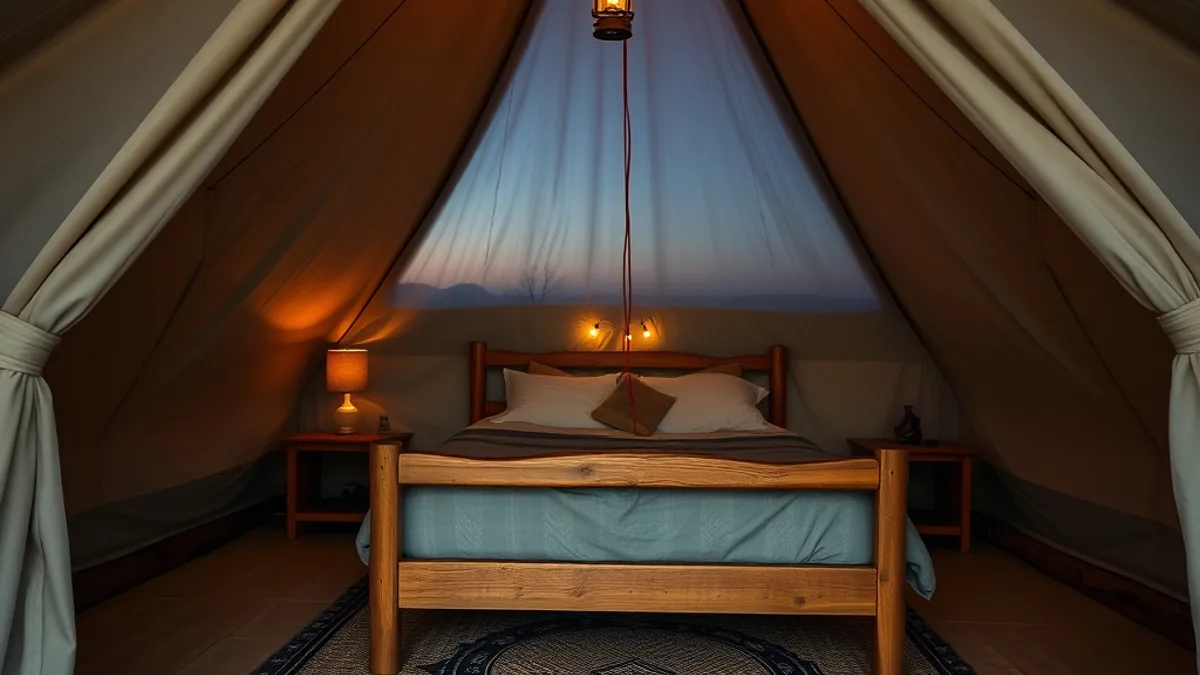
Step inside a well-run bell tent and it feels closer to a cozy bedroom than a campsite. The standard setup usually includes a proper bed frame with real linens, rugs on the floor, lanterns for light and, at many sites, a small wood stove for chilly evenings. It is a genuine step up from sleeping bags on the ground.
What you will not find is the infrastructure of a hotel room. Electricity is limited or absent entirely, so lighting typically comes from solar or battery lanterns rather than overhead fixtures. There is also no kitchen inside the tent: cooking happens at a shared camp kitchen, a BBQ area or a fire pit, depending on the site.
- Bathrooms are often a walk away. Many sites rely on shared shower blocks a short stroll from the tents, so plan for a trip across grass or gravel with your towel and toiletries in hand.
- Private en-suites exist but cost more. Some sites offer tents with attached bathrooms, which removes the walk entirely, though you will pay a premium for the convenience.
- Wood stoves need a bit of attention. Where a stove is provided, hosts usually supply a small stack of firewood and basic instructions, and you may need to add a log or two through the evening to keep the tent warm.
- Cooking gear is usually communal. Shared camp kitchens and BBQ areas typically provide the essentials, but check with your host whether you need to bring your own utensils, cooler or food storage.
The overall feel is comfortable but simple. If you go in expecting hotel-style plumbing and power inside your tent, you will be frustrated; if you expect a well-furnished tent with facilities nearby, the setup makes sense.
When to Book a Canvas Glamping Stay
Timing matters more with canvas glamping than with most hotel stays. Peak season runs roughly May to September in most temperate regions, and many canvas sites either close entirely or reduce their capacity outside those months. Some operators take tents down over winter, so a mid-January search may turn up far fewer options than the same search in June.
How far ahead to book
For summer weekends, plan to book 2-4 months ahead at the sites you actually want. July and August are the busiest stretch, and the most popular well-kept sites often fill their peak dates 6+ months in advance. If your dates are flexible, midweek stays are easier to land at short notice.
Shoulder season is where the smart value sits. May, early June and September offer the best mix of mild weather, lower rates and fewer guests, and you still get long enough days to enjoy the meadow setting. The trade-off is a slightly higher chance of a cool or damp night.
What you might pay
Nightly rates typically run from about $90 to $250 depending on location, tent size and what is included. Expect pricing toward the top of that range in peak weeks, especially for larger family tents or sites with en-suite bathrooms. Because rates and availability shift year to year, always check current prices with the site before you commit.
Weather, Noise and Sleeping in Canvas
Canvas feels wonderful during the day precisely because it breathes. Air moves through the fabric, so a bell tent stays cooler than a sealed synthetic tent in afternoon sun. The trade-off is that the walls are thin, so inside temperatures track the outside air closely. When the evening cools down, your tent cools down with it, usually within an hour or so of sunset.
This is the detail that catches first-time glampers off guard. Even on a warm summer night, temperatures can drop sharply once the sun goes down, especially in open meadow sites with no tree cover. Pack layers and warm sleepwear no matter the season. A fleece, wool socks and a light beanie take up almost no space in your bag and make the difference between a cozy night and a shivering one.
What you will actually hear
Expect to hear the world around you. Wind moving through the canvas, rain drumming overhead, birds at first light and, yes, neighboring campers talking or laughing after dark. Sound carries through canvas far more easily than through a hotel wall. Light sleepers should bring earplugs as standard kit, and a small white noise app on your phone can help too.
Heavy rain itself is manageable on well-sited tents. A properly pitched bell tent sheds water well, and the interior generally stays dry. The real inconvenience comes outside: a summer storm may mean a wet, muddy walk to the shower block. Bring footwear you do not mind ruining, and time your trips between showers if you can.
If all this sounds appealing rather than off-putting, you are the kind of traveler canvas suits best. There is something genuinely restful about falling asleep to rain on fabric, a feeling we found at some lovely slow countryside hideaways in Provence where the mornings smelled of lavender and damp grass.
How to Choose a Quality Bell Tent Site
The gap between a well-kept bell tent site and a neglected one is bigger than most travelers expect. The good news is that the warning signs are easy to spot before you book, if you know where to look. Start with the listing photos and work outward from there.
Canvas tells on itself. Look closely at the age and condition of the fabric in the photos: faded, patched or sagging canvas signals poor maintenance, and it usually means leaks and drafts are not far behind. Fresh, evenly colored canvas with taut guy lines is what you want to see. Do not feel awkward about messaging the host for recent photos either; responsive hosts will send them happily.
Bathrooms deserve equal scrutiny, since this is where canvas stays differ most. Some sites offer private en-suite facilities attached to each tent, while others run a shared shower block that may be a short walk down a gravel path or across a field. Check which setup you are booking and how far the walk is, because that distance matters a lot at night or in the rain.
- Tent density: Ask how many tents the site hosts at once. Sites that cap tent numbers, ideally fewer than 10-15, keep the quiet meadow feel intact, while larger operations can feel like a mini village with paths of foot traffic between tents.
- Ground surface under the tent: Look for whether tents sit on grass, gravel pads or decking. Grass feels more authentic, but decking or raised platforms keep the floor dry after heavy rain.
- Shelter and shade: Check whether tents have any natural windbreak or tree cover nearby, or whether they sit fully exposed in an open field, which affects both night temperatures and storm comfort.
- Fire pit allocation: Confirm whether each tent gets its own fire pit or whether guests share a central one, since a shared pit can mean waiting your turn on busy evenings.
Finally, read reviews with a specific checklist in mind. Look for comments on mattress quality, whether the wood stove actually holds heat and draws properly, and how quickly the host responds when something goes wrong. Vague five-star reviews are less useful than one detailed note about a warm stove and a host who drove out with a spare lantern at nine at night.
Packing for a Bell Tent Stay
Packing for a bell tent stay is a strange middle ground: you need far less than for camping, but slightly more than for a hotel. The provided setup usually covers the big things, real beds, linens and lighting of some kind, so your job is to fill in the small gaps that canvas living creates.
The first gap is light. Interior lighting on most canvas sites is dim by design, often a solar or battery lantern meant for atmosphere rather than reading. Bring a headlamp or a rechargeable lantern of your own, and you will thank yourself the first time you need to find a dropped earring at midnight or make the walk to the bathrooms after dark.
The second gap is the walk itself. Unless you have paid for an en-suite, the shower block is usually a short path away, and that path can be gravel, grass or, after rain, mud. Quick-dry towels and slip-on shoes turn that walk from an ordeal into a non-event, and they pack down to almost nothing.
- Sleeping bag liner: Even with provided linens, a silk or fleece liner adds a noticeable layer of warmth if nights turn unexpectedly cold, and it doubles as a clean barrier if you are sensitive to unfamiliar bedding.
- Soft-sided duffel or backpack: Leave the hard suitcase at home. Tent floors are soft underfoot and entry involves a step or lip, while gravel paths punish wheeled bags; a duffel folds flat once emptied.
- Small dry bag or zip pouch: Canvas tents breathe, which means a little ambient dampness in humid weather; keeping phones, chargers and documents in a sealed pouch protects them overnight.
- Reusable water bottle: There is no kitchen inside your tent, and trips to a shared camp kitchen or tap for drinking water are part of the routine; a bottle with a handle makes those trips easier.
One last mindset note: pack for a lighter, slower pace rather than for options. Two pairs of shoes, a few layers and a small bag of comforts will serve you better than a wardrobe. The whole appeal of a canvas stay is that life simplifies down to warm bedding, a fire pit and the weather outside, so let your packing reflect that.
Is a Canvas Glamping Stay Right for You?
So, is a bell tent stay right for you? If you love the idea of a real bed, soft linens and a lantern-lit evening, but you also want to hear owls and rain on canvas rather than traffic through a hotel wall, the answer is probably yes. Just go in knowing the temperatures follow the outdoors and the bathroom may be a short walk away. Travelers who enjoy shared facilities and a slower, lighter pace tend to be the happiest canvas campers.
Timing matters too. May, early June and September offer the best value, with nightly rates typically running $90-$250, and booking 2-4 months ahead secures summer weekends at well-kept sites. If that sounds like your kind of night away, a bell tent could be the most memorable bed you sleep in this year. Have you tried canvas glamping, or are you planning your first trip? Leave a comment or share this article.