Families of four or five often discover that booking two hotel rooms works very differently from booking one large room, both in price and in logistics. The wrong choice can quietly inflate the trip budget, and the right choice depends on how the hotel counts guests, prices rooms and handles multi-room reservations.
This guide walks through when two standard rooms actually beat a family room, what the real cost difference looks like, and how connecting, adjoining and adjacent rooms differ. It also covers the booking steps that keep both rooms linked, the small logistics families commonly forget, and the destinations where a two-room strategy pays off most.
When Booking Two Hotel Rooms Beats One Family Room
For families of five or more, two standard rooms often stop being a luxury and become the practical answer. Most family rooms cap at four or five guests, so a family of five may technically fit but will be squeezed, and a family of six usually will not fit at all. Two standard doubles, each sleeping two adults comfortably, solve the capacity problem without hunting for rare oversized rooms.
There is also the privacy question. Twin rooms give teenagers a door of their own, and parents get space that does not involve listening to a gaming session or an early-night light left on. That separation is worth the extra cost, typically 80-120% over a single room, to many families, especially on trips longer than a couple of nights.
The bathroom advantage
Two rooms usually mean two bathrooms, and that changes the rhythm of a trip. Morning routines can be cut roughly in half, because one shower queue instead of two stops being the bottleneck before breakfast or an early tour. On stays of several nights or more, that daily time saving is one of the most underrated reasons to book two rooms rather than one.
Cost Comparison: Two Rooms vs Family Rooms and Suites
Let’s start with the numbers. Two standard rooms at the same property typically cost 1.8-2.2 times the rate of one room, not the full double price you might expect. A family room or suite, by comparison, usually runs 20-40% more than a single standard room while still costing less than two rooms. On paper, the suite looks cheaper, but it sleeps fewer people, so the comparison depends on your family size.
Ask about the multi-room discount
Many hotels offer a 10-20% discount when both rooms are booked under a single reservation, but it is rarely advertised. Always ask when booking, and if you have already reserved online, call the hotel and request the rate be applied. That one phone call can close a meaningful part of the price gap between two rooms and one suite.
Then factor in child policies. Children under 12 often stay free or at a reduced rate when sharing with their parents, though this varies by property. That rule can tip the math toward one room for the parents and younger kids plus a second room for older children, rather than paying for two full-price rooms from the start. Run the numbers for your specific family before assuming either option wins.
Connecting, Adjoining or Simply Adjacent: Know the Difference
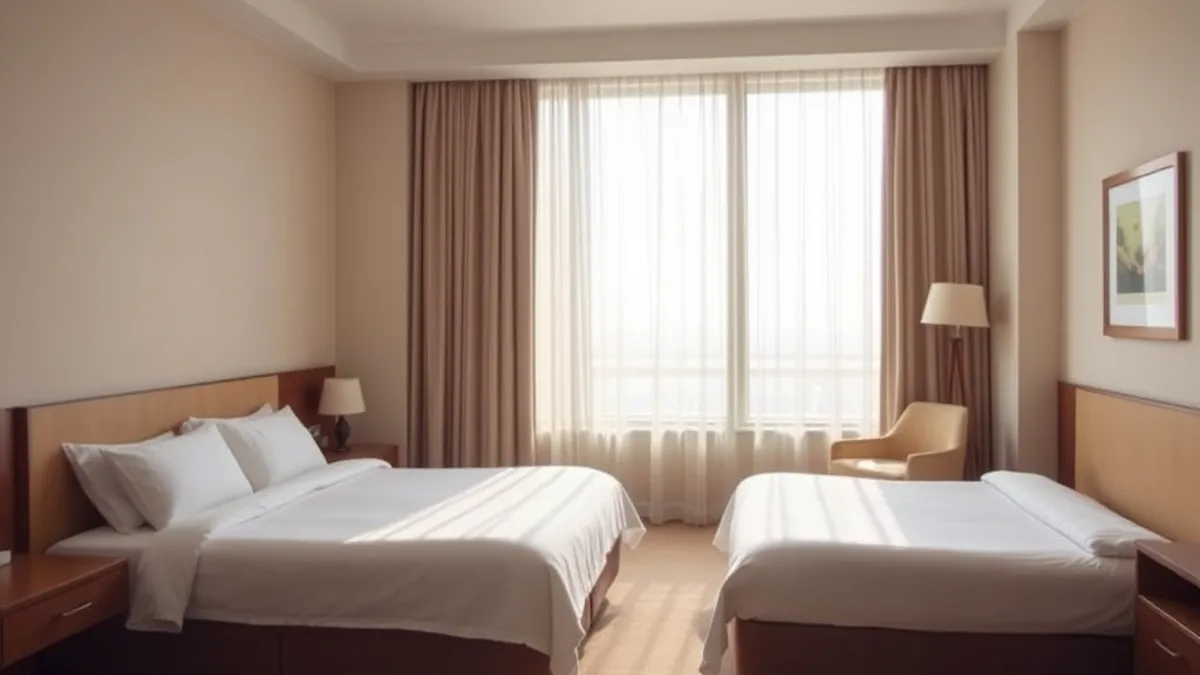
Hotel websites blur three very different room arrangements, and knowing the difference saves families from unpleasant surprises at check-in. Connecting rooms share an interior door, so younger children can sleep within reach while everyone still gets two bathrooms and two TVs. Adjoining rooms are simply next to each other with no door between them. Adjacent rooms may be nothing more than “somewhere on the same floor,” and in practice that can mean opposite ends of a corridor.
The catch is supply. Connecting rooms are limited inventory, often just 5-10% of a hotel’s room stock, so they disappear first, especially during peak summer travel when families book 2-4 months ahead. Request them early, get the request noted on your confirmation in writing, and follow up a few days before arrival. For families with older children, adjoining rooms are a cheaper fallback, since a shared door matters less when a teen can walk ten steps down the hall on their own.
It also pays to think about how the rooms will actually be used. Parents with babies tend to value the connecting door above almost everything else, because it means a crib can go in one room while one parent keeps a proper bed in the other. Families with mixed ages, meanwhile, might prefer a side-by-side setup that lets everyone spread out without listening through a wall.
- Connecting rooms: the interior door usually locks from both sides, so you can give older kids independence while keeping toddlers within earshot.
- Adjoining rooms: ask specifically whether the rooms are across the corridor or truly side by side, since “adjoining” is used loosely by some booking systems.
- Adjacent rooms: if this is all that’s available, ask for the rooms to be on the same side of the corridor rather than facing each other, which keeps the walk shorter.
- Written confirmation: a room-type request noted on the reservation is a request, not a guarantee, so reconfirm at check-in before you accept your room keys.
How to Book Two Rooms the Right Way
Booking two rooms for a family is easy in theory and surprisingly easy to get wrong in practice. The difference between a smooth check-in and a frustrating one usually comes down to how you book, not where you book. Hotels handle multi-room family stays every day, but their booking systems were built for individual travelers, and small details like room linking and lead guest names often fall through the cracks. Follow these steps and most of the common two-room problems disappear before you ever reach the front desk.
- Book both rooms in a single reservation. One booking keeps the rooms tied together in the hotel’s system and often unlocks a multi-room discount, so ask about it when you book. For peak summer family travel, aim to reserve 2-4 months ahead; in shoulder season, 3-6 weeks ahead is typically enough.
- Call the hotel after booking online. Online systems rarely show connecting rooms, so a short call lets you link the rooms to each other and flag any connecting-room request. Ask the agent to note the request on both confirmations, then check that the notes actually appear when your confirmation emails arrive. If they do not, call back and ask for the notes to be added again.
- Put one name as lead guest on both rooms. This keeps the front desk, housekeeping and billing unified under one household. It also makes it far simpler to move a child between rooms, split charges or sort out any issue without explaining your family setup twice.
None of these steps takes more than a few minutes, and together they cover the details hotels most often mishandle. Do them at booking time rather than at check-in, when options are limited and staff are busy. If something does go wrong on arrival, having a single reservation and one lead guest gives the front desk a clear starting point to fix it quickly. A little admin now buys you a much calmer arrival, and it costs you nothing but a phone call.
Hidden Logistics Families Forget
Two rooms solve the space problem but quietly introduce a few new ones. Families tend to discover these at the worst possible moments: at the front desk with tired kids, or when the breakfast bill arrives. The good news is that almost all of these issues can be sorted out before you leave home, usually with one phone call and one email. A quick round of checks before you travel keeps the surprises off your invoice and keeps the trip focused on what you actually came for.
- Occupancy limits. Standard double rooms commonly sleep two adults, so squeezing a family of five into two doubles can breach the guest cap. Ask each property for its per-room maximum and how it counts children, since some count infants and some do not.
- Breakfast pricing. Some hotels charge per room, others per person, and the difference can double a family’s morning bill across two rooms. Ask whether children eat at a reduced rate and whether the rate you booked includes breakfast at all.
- Room placement. Verify before arrival day that both rooms are on the same floor and the same side of the hotel. A corridor apart or a floor apart turns your connecting-room plan into a daily walk, so confirm it a few days out and again at check-in.
- Crib and rollaway availability. If you need an extra bed or a crib, ask whether the hotel can physically fit one in each room type you booked. Some rooms have space for a rollaway, others do not, and availability is often first come, first served.
It also pays to reconfirm everything in writing, since verbal promises about room placement rarely survive a busy weekend. A short email quoting your confirmation numbers gives you something to point to if the assignment changes. Bring a copy of both confirmations to check-in, and ask the front desk to note any special requests on your profile so housekeeping and the night team see them too. Five minutes of checking beats a week of small annoyances, and it usually means you walk straight into rooms that work the way you planned.
Where Two-Room Family Stays Work Best
Not every destination suits the two-room strategy, and matching your room plan to the place you are visiting saves both money and hassle. Resort areas with large inventories tend to handle multi-room families best. City properties and rural retreats each come with their own quirks.
Coastal and resort destinations
Resort destinations with family suites and connecting-room inventory are the natural home for twin-room trips. Coastal villa regions like Noosa are a good example, where properties are used to larger families and connecting rooms are a normal request rather than a rare exception. If you are weighing up the area, this look at Noosa’s relaxed coastal style gives a feel for what the region offers families.
Cities and the countryside
City inns and boutique properties often have too few large rooms to go around, which makes two standard rooms the only realistic option for a bigger family. That is not a bad outcome, but book early and expect the multi-room cost. In contrast, lake and countryside retreats usually favour family rooms over twin bookings, so a single larger room may serve you better there. Match the room strategy to the destination type and the logistics tend to take care of themselves.
Wrapping Up the Two-Room Family Plan
So, do two rooms blow up the budget? They can if you book them carelessly, but planned well, they typically cost 1.8-2.2x a single room rate while giving you privacy, two bathrooms and real breathing room for families of five or more. That trade-off is exactly what makes the two-room plan work for so many trips.
The logistics are simpler than they first appear: book both rooms under one reservation with one lead guest, request connecting rooms early and get the confirmation in writing, and make a quick call to the hotel to link everything together. Do those three things and the front desk, billing and breakfast questions tend to sort themselves out. If this helped you plan your next family stay, leave a comment or share the article with another traveling family.