One of the first questions glamping travelers ask after booking is a surprisingly practical one: can I actually cook here, or am I eating out every night? Some sites hand you a full kitchen, others give you a shared grill and a campfire ring, and a few expect you to rely entirely on an on-site restaurant. Getting glamping cooking right starts with knowing which setup you have booked, because it changes what you pack, what you shop for, and how you plan your evenings.
This guide walks through the whole picture. We cover the four main tiers of cooking setup you will encounter, how shared BBQs and fire pits work in practice, the etiquette and packing list for communal kitchens, and how pre-ordered meal kits can rescue your arrival night. We also help you match the setup to your travel style, whether you are a couple, a family, or a group of friends, and finish with booking timing and the exact questions to ask hosts before you pay.
What Cooking Setup to Expect at a Glamping Site
Glamping cooking setups fall into four broad tiers, and the difference between them shapes your whole trip. At the simplest end are restaurant-only sites, where there is no guest cooking at all and meals come from an on-site eatery or nearby cafes. Next comes the outdoor BBQ tier: a shared grill or fire pit, no indoor cooking space. The third tier adds a shared kitchen building with hobs and basic equipment, and the top tier is a full private kitchen inside your unit, common in luxury lodges and high-end domes.
The type of accommodation usually hints at the tier. Safari tents and yurts almost always sit in the BBQ-and-campfire category, since canvas and open flames indoors do not mix, so expect a shared grill area or a fire ring on your deck at best. Cabins and geodesic domes, with solid walls and proper flooring, more often include a private kitchenette with a two-ring hob, a small fridge, and a sink.
Check fridge access before you pack fresh food
Fridge access is the detail travelers most often miss. Many tent-only sites have no in-unit refrigeration, offering instead a communal fridge in a sheltered area with limited shelf space that fills up fast on busy weekends. Read the listing carefully and, if it is unclear, message the host to confirm whether you get a shelf, a whole fridge, or nothing but a cool box. That answer decides whether you can buy meat, milk, and fresh produce on arrival or should stick to shelf-stable ingredients and eat fresh meals early in your stay.
Using BBQs and Fire Pits: Grills, Fuel, and Timing
Shared grills are the heart of glamping cooking at most tent-based sites, and they run on a simple system: at busy sites you book a slot, usually on a board or sign-up sheet near the kitchen or reception. The smart move is to sign up on your arrival day rather than waiting, because the prime 18:00-19:30 dinner slots go first and latecomers end up eating at 21:00 or grilling in the dark. Charcoal is the norm on these grills, so budget for a bag unless the site sells fuel, while gas grills typically come pre-fueled and ready to light.
Site grills are usually cleaned between guests, but they are chronically under-equipped. Expect a wire brush and little else, so bring your own tools. Firewood is often sold on site at $5-10 per bag, which is convenient but adds up over a multi-night stay, so check the price when you book if campfires are central to your plans.
- Long tongs: most shared grill stations have no utensils at all, and short kitchen tongs put your hands uncomfortably close to the coals when flipping sausages or steaks.
- A foil tray: doubles as a drip tray under fatty meats and gives you a clean surface for grilling vegetables or fish that would otherwise stick to a well-used grate.
- Matches or a lighter: charcoal grills on site are rarely stocked with ignition supplies, and a fire starter cube or two saves a frustrating twenty minutes on a windy evening.
- A trash bag: BBQ areas often have no bin at the grill itself, so you will need somewhere to collect ashes-adjacent waste and cooling foil before carrying it to the main bins.
One important check before you build a menu around open flames: in fire-risk regions, open fire pits may be banned during dry summer months, typically July and August. Sites usually switch to gas grills only during bans, so ask your host before planning campfire dinners.
Shared Glamping Kitchens: Etiquette and What to Bring
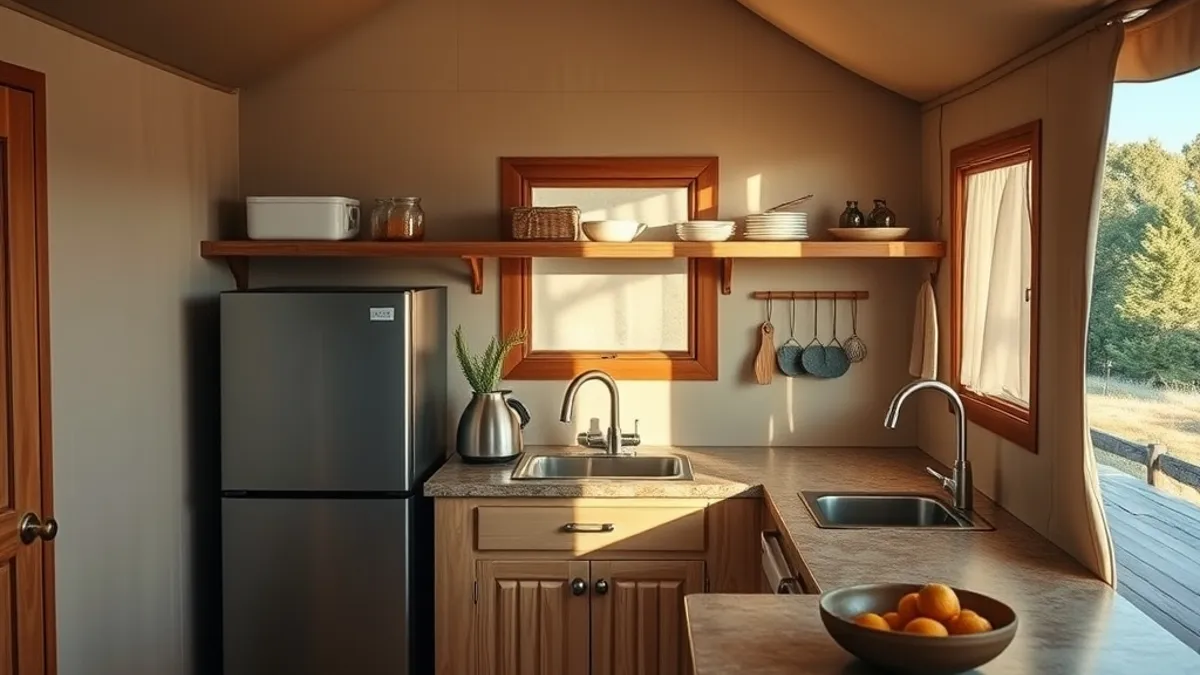
Shared kitchens at glamping sites are usually better equipped than people expect: a stove hob, a decent spread of pans, basic utensils, and almost always a kettle for morning tea and coffee. What they almost never have is anything consumable. Do not count on oil, salt, pepper, coffee, or any spices being there, even if a previous guest left a half-used bottle. Anything in a pantry category should be treated as your own responsibility.
Etiquette matters more than equipment in these spaces. Clean as you go rather than leaving a pile of pans for the next cook, and label everything you put in the communal fridge with your name and checkout date. Most kitchens close for the night between 22:00 and 23:00, so plan dinner earlier than you might at home, especially if you are cooking for a group.
Your compact pantry kit
- Olive oil in a small leak-proof bottle: the single most-used item in any holiday kitchen, and a travel-size bottle avoids both waste and spills in your bag.
- Salt and pepper in a combined shaker or two small jars: enough to season everything from eggs at breakfast to grilled corn at the shared BBQ.
- A good knife with a blade guard: site kitchen knives are often dull or missing entirely, and a sharp one makes quick work of market vegetables and bread.
- A tea towel: shared kitchens frequently run out of clean drying towels by mid-evening, and one of your own solves the problem instantly.
- Airtight containers for leftovers: two or three flat-lidded boxes let you save half a one-pan dinner for lunch, which matters when the communal fridge shelf space is tight.
Finally, keep recipes simple. Shared hobs mean limited burner space at peak dinner hours, when every family on the site wants to cook at once. One-pan meals, pasta dishes, and grill-and-salad combinations let you cook a real dinner on a single burner without holding up the queue.
Meal Kits and Pre-Ordered Food: How They Work and What They Cost
One of the easiest upgrades at an upscale glamping site is the meal kit. Instead of shopping and packing ingredients, you order a BBQ box or kit dinner ahead of time, and it arrives with pre-portioned local ingredients plus a simple recipe card. Many sites source from nearby farms, so the produce is often noticeably better than what you’d grab at a highway supermarket.
Pricing is straightforward to plan for. Expect roughly $25-60 per person for a two-course kit dinner, depending on the site and how premium the ingredients are. Order 48-72 hours ahead at most places, and note that some sites require meal kits to be added at the time you make your reservation, so ask early rather than assuming you can add one mid-trip.
When a meal kit is the smartest choice
Kits shine on arrival night, when you roll in late, the grill queue is long, and nobody wants to unpack a cooler. They’re also the practical answer during fire bans, when open-flame cooking is off the table and the shared kitchen is packed. A kit that needs only the site grill or a hob takes the pressure off.
Don’t stop at dinner kits. Farm-based glamping sites in particular often offer breakfast baskets with eggs, bread, and local dairy, plus scheduled deliveries of regional produce. Ask the host what’s available before you pack a full pantry — you may only need to bring coffee and a good appetite.
Matching the Cooking Setup to Your Trip Style
The best cooking setup depends less on the site and more on how you like to travel. A honeymooning couple and a group of eight friends want completely different things from a holiday kitchen, and glamping can serve both — if you book the right tier.
Couples who want the trip to feel effortless should target sites that offer meal kits, where dinner is a pre-ordered affair and there’s nothing to shop for or clean up. Groups, on the other hand, save real money with shared kitchens and communal BBQs: one big one-pan meal split between friends beats eight restaurant tabs. Families tend to do best with a private kitchenette in a cabin or dome, since anyone who has tried to juggle kids’ dinner times in a shared kitchen at 18:00 knows the appeal of cooking on your own schedule. Food-focused travelers should flip the logic and pick destinations known for strong local markets, arriving early enough to shop on day one. And for remote sites, always confirm the distance to the nearest supermarket before assuming self-catering will work.
- Couples: look for sites that let you add meal kits at reservation time, so the whole food plan is locked in before you leave home.
- Groups: bring a large pan and a serving board — shared kitchens rarely stock big-group cookware, and communal cooking works better with a shared platter.
- Families: check that the kitchenette includes a fridge big enough for milk and snacks, since kids’ requests rarely wait for a shared fridge run.
- Food-focused travelers: search for sites within easy reach of a weekly market day, and plan your menu around whatever you find that morning.
- Remote stays: ask the host for the nearest full supermarket, not just a village shop — small shops often stock basics only.
Booking the Right Glamping Site for Cooking: Timing and Questions to Ask
Glamping sites with proper cooking facilities are among the first to sell out, so a little planning pays off. The good news is that securing the right setup mostly comes down to two things: booking at the right time and asking the right questions before you pay. Hosts are usually happy to answer, but they will rarely volunteer details you did not ask about, so it pays to be specific.
- Book early for kitchen-equipped sites. For May-September weekends, aim to book 2-3 months ahead — private kitchenettes and domes go especially fast. BBQ-only sites fill more slowly, so you have more flexibility there.
- Email the host before booking. Confirm whether the grill is private or shared, how much fridge space you get, what type of hob is available, and whether meal kits can be pre-ordered. Written answers beat listing photos, which often show a well-stocked kitchen that belongs to the owner’s private area rather than yours.
- Ask about fire bans. If you’re traveling in July or August to a dry, fire-risk region, check whether open fires may be banned during your stay before you plan a BBQ-centred menu — and ask what alternatives the site offers, such as an indoor communal kitchen or a covered cooking shelter.
Ten minutes of emails can be the difference between a trip built around great meals and one built around improvisation. Keep the host’s replies handy, since they are useful if anything on arrival does not match what was promised. Once the grill, fridge, and fire situation is confirmed in writing, you can pack your pantry kit with confidence and get on with the fun part of planning the rest of your meals.
Wrapping Up Your Glamping Cooking Plan
So, can you cook proper meals while glamping? In most cases, yes — but the answer depends entirely on the setup tier you book. Cooking arrangements range from shared BBQs to private kitchenettes, so match the tier to your group and trip style rather than assuming every site works the same way. Couples who want an effortless stay will lean toward meal-kit sites, where a pre-ordered two-course dinner typically runs $25-60 per person and covers those first, tired arrival nights. Travelers who prefer full self-catering should plan on bringing a small pantry kit, since most kitchens stock pans and utensils but not the oil, salt, and spices that make a meal taste like home.
The practical steps are simple: book kitchen-equipped sites 2-3 months ahead for summer weekends, and confirm the details that matter — grill access, fridge space, and any fire bans — directly with the host before you pay. Do that, and dinner under canvas becomes a highlight instead of a scramble. Have a glamping cooking story or a question about a setup you’ve stayed at? Share it in the comments below.