Many travelers dream of sleeping among the Douro’s vineyards, but choosing glamping Douro Valley accommodation comes with two tricky decisions: which sub-region to base yourself in, and which month actually delivers the valley at its best. Pick the wrong stretch of river and you’ll spend hours driving to the views you came for. Pick the wrong season and you might face scorching terraces or empty, rain-soaked hillsides.
This guide breaks the decision down into clear, practical steps. We’ll explain why the valley suits glamping so well, compare the three vineyard regions from Baixo Corgo to Douro Superior, and walk through the best months for weather, color and crowd levels. You’ll also find advice on harvest season timing, how to choose between domes and safari tents, and how to plan your days once you arrive. By the end, you’ll know exactly where and when to book.
Why the Douro Valley Works So Well for Glamping
The Douro Valley is one of the few wine regions where the landscape itself does most of the work. Steep terraces carved into schist rise directly from the river’s bends, so almost any glamping site here opens its door onto a dramatic backdrop. You don’t need to hunt for viewpoints; you wake up inside one.
What makes it even better for a tent or dome stay is the rhythm of the villages. Places like Pinhão, Favaios and Provesende are small working wine communities, not resort towns. Day visitors arrive with the coaches and leave by late afternoon, after which the terraces go quiet and the evening belongs to locals and overnight guests.
Wine country without the rough edges
Glamping here strikes a balance that traditional camping can’t. You get the outdoor setting, the night skies over the vineyards and the morning mist on the river, but with a real bed, solid shelter and often a deck facing the vines. Wine experiences, from tastings at nearby quintas to walks through the terraces, sit right alongside the outdoor side of the trip. You don’t sacrifice comfort to stay in the middle of the landscape, and you don’t need camping gear or experience to do it well.
Picking Your Vineyard Region: Baixo Corgo vs Cima Corgo vs Douro Superior
The Douro isn’t one uniform wine region; it changes character noticeably as you move east along the river, and the shift happens faster than most first-time visitors expect. Within an hour or two of driving, greener slopes give way to drier, rockier terrain, and the villages thin out. Understanding those differences is the key to picking the right base for your glamping trip, because a site that suits a weekend couple from Porto may frustrate a traveler chasing dark skies and solitude. Getting this decision right before you book matters more here than in most wine regions, since repositioning mid-trip eats into your time on the deck.
The three official sub-regions run from west to east, and each has a distinct feel. Your choice comes down to how much driving you want to do, how developed or wild you prefer the scenery, and what you plan to do between tastings. Here’s how they compare:
- Baixo Corgo sits near Peso da Régua at the western end, making it the practical pick for short trips. Its greener, rain-fed slopes mean lusher scenery, and the shorter drive from Porto leaves you more time on site.
- Cima Corgo around Pinhão is the postcard heart of the valley. This is where the classic terraced amphitheaters, riverside quintas and famous lookouts concentrate, so most first-time visitors base themselves here.
- Douro Superior near Foz Côa is the wildest and driest stretch, with wider skies and sparser population. It’s the natural choice for stargazing and for visiting almond blossom country in late winter, when the orchards flower across the plateau.
If you’re unsure, Cima Corgo is the safest all-round base: you trade a little tranquility for easy access to lookouts, river beaches and tasting rooms. But if quiet landscapes matter more to you than wine estate density, push east and enjoy the emptier roads.
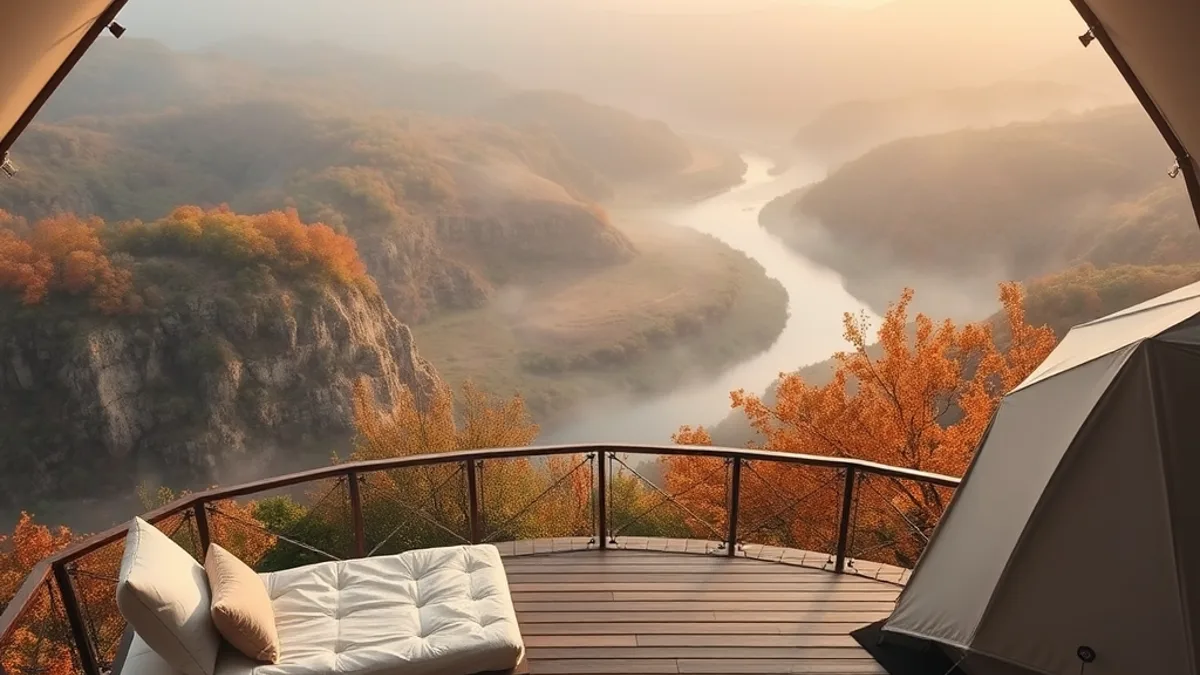
The Best Months for Glamping in the Douro Valley
Timing shapes a Douro glamping trip more than almost any other decision you will make. The valley has real seasonal personality: green and mild in early summer, golden and buzzing at harvest, punishingly hot at peak summer, and quiet and cool through winter. None of these windows is wrong, but each suits a different kind of traveler, from photographers chasing soft light to wine lovers who want the crush in full swing.
The sweet spots for most visitors are the shoulder windows, when the weather stays comfortable, the terraces are at their most photogenic, and the roads have not yet filled with peak-season traffic. You also get longer, more useful days: enough daylight for a morning viewpoint, an afternoon tasting and an unhurried dinner on your deck.
- May to June: the vines are fresh green, days run a mild 20-25°C, and you beat both the summer heat and the crowds. Evenings are cool enough for a deck dinner without air conditioning struggles.
- September to October: harvest season brings energy to the villages, the terraces turn golden, and days stay warm at 22-28°C. This is the most atmospheric window, but also the busiest.
- July and August: reliable sunshine, but highs often reach 30-35°C with strong sun on the terraces. Choose shaded domes or sites with pools, and plan sightseeing for mornings.
- November to March: quiet, cool and occasionally rainy, with 8-15°C days. Rates drop noticeably, so budget travelers who pack layers get the valley almost to themselves.
If you want the classic Douro experience, aim for one of the two shoulder windows and commit early. September weekends in particular draw visitors from across Europe, and the best-sited domes and decks go first. Spring offers more flexibility, but the most popular units near Pinhão still fill well before arrival, so check availability as soon as your dates are firm rather than leaving it to the last month.
Harvest Season (Vindima): The Valley’s Most Atmospheric Window
Harvest season, known locally as the vindima, is when the Douro Valley feels most alive. Grapes are picked by hand across the steep terraces, and the whole valley hums with activity. The harvest typically runs from late August to mid-October, with September as the peak month when most quintas bring in their fruit.
What harvest actually looks and feels like
If you time your glamping trip to the vindima, expect a sensory upgrade. You will see pickers working the rows on the schist terraces, small tractors and trailers loaded with grapes winding along narrow roads, and wineries running at full capacity. Many estates welcome visitors during this window, and some offer harvest-related experiences, though you should check directly with each quinta what they allow and when.
The trade-off is simple: atmosphere costs money and patience. Roads around Pinhão can get busy with harvest traffic, and accommodation prices across the valley tend to rise during peak weeks. Glamping sites are no exception, since their limited number of units fills quickly.
How far ahead to book
For September weekends, book 4-6 months ahead. Those dates sell out first, especially for well-located domes and safari tents with views over the river. For spring dates or early autumn weekdays, a 2-4 month lead time is usually enough. If your dates are flexible, aim for the shoulder of the harvest, late August or early October, when you still catch the picking scenes but face less competition for the best decks and domes.
How to Choose the Right Glamping Setup
Not all glamping units are built for the Douro’s summer conditions. July and August often bring highs of 30-35°C with strong sun bouncing off the terraces, so the difference between a comfortable night and a sweaty one comes down to design details. A quality dome or safari tent should have a solid deck, proper shading and real cooling, whether that means air conditioning, good cross-ventilation or thick insulation in the roof.
Location matters just as much as the tent itself. The valley is long and winding, and a site that looks close on the map can still mean half an hour of hairpin roads after a wine tasting. Prioritize places within 15-20 minutes of Pinhão or along a row of quintas, so you can enjoy tastings without a long drive back in the dark.
- Deck orientation: ask whether the deck faces west for sunset views over the river, or east if you prefer morning light with your coffee and cooler afternoons.
- Private facilities: confirm whether the unit has its own bathroom and kitchenette, or whether you will share a facilities block with other guests.
- Pool access: on hot afternoons, a shared or private pool is often the deciding factor between a good stay and a great one.
- On-site wine service: some sites partner with nearby quintas or pour their own wines, which saves you driving after an evening tasting.
On price, quality tents and domes typically run €120-€300 per night in high season, depending on size, views and amenities. Winter rates drop noticeably, which makes the cooler months a smart time to book a premium unit for less. Check current rates directly with each site, as they shift with demand.
Getting There and Building Your Days
The Douro Valley stretches roughly 100-120 km of river between Porto and the Spanish border, which means you cannot see it all from one base. The good news is that access is easy: driving from Porto to Peso da Régua, the practical gateway to the valley, takes around 1.5-2 hours. From there, the river roads continue east through the most scenic stretches.
Why a mid-valley base works best
Base yourself in the middle of the valley, near Pinhão or slightly east of it, and you can split your days efficiently. River lookouts, wine estates and river beaches all sit within reasonable reach, instead of requiring long drives up and down the valley. A mid-valley glamping site also puts you close to the classic postcard terraces without committing you to the busiest stretch of road every single day.
A simple two-day rhythm
Structure one day around bookings: a tasting at a quinta or two in the morning, lunch at the estate or in a village, and a river cruise in the afternoon to see the terraces from the water. Book the tastings and the cruise in advance, since small estates and boats have limited capacity.
Then leave one day completely unstructured. The valley’s best moments often come from unplanned stops: a viewpoint you pull over for, a village café in Favaios or Provesende, or a quiet riverside spot for a swim. Having a free day means you can chase the light and the views rather than the clock, and it gives you a buffer if a tasting runs long or the roads are slow.
Wrapping Up Your Douro Glamping Plan
Choosing between the Douro’s sub-regions comes down to what you want from your nights among the vines. Cima Corgo around Pinhão suits first-timers who want the classic postcard terraces within easy reach, while Douro Superior rewards quiet seekers who prefer wilder landscapes and darker skies. Either way, you are sleeping in the middle of one of Europe’s most scenic wine regions.
Timing matters just as much. May-June and September-October deliver the best mix of weather, color and vineyard activity, from fresh green vines to harvest energy. Once you have picked your window, book early: aim for 2-6 months ahead depending on season to secure the best tents and decks. If this helped you plan your Douro glamping trip, leave a comment or share the article with a fellow traveler.