Glamping in Georgia’s Caucasus sounds like a dream: sleeping in a glass dome with Mount Kazbek outside your window. Then the questions pile up. Which region actually fits your travel style? When does the season open, and when do high-altitude sites close? And what should a fair nightly rate look like before you book something overpriced or under-equipped?
This guide sorts it out region by region, from easy-access Kazbegi to remote Tusheti. You’ll find out why a dome often beats a hotel room in Stepantsminda or Mestia, which months give you the best mix of weather and quiet trails, and what glamping in Georgia’s Caucasus realistically costs per night at budget, mid-range, and luxury levels. We’ll also cover how to choose and book the right site, and how to pair your mountain stay with a night or two in Tbilisi. By the end, you’ll have a short list of decisions rather than a pile of open tabs.
Why Glamping in Georgia’s Caucasus Beats a Standard Hotel Stay
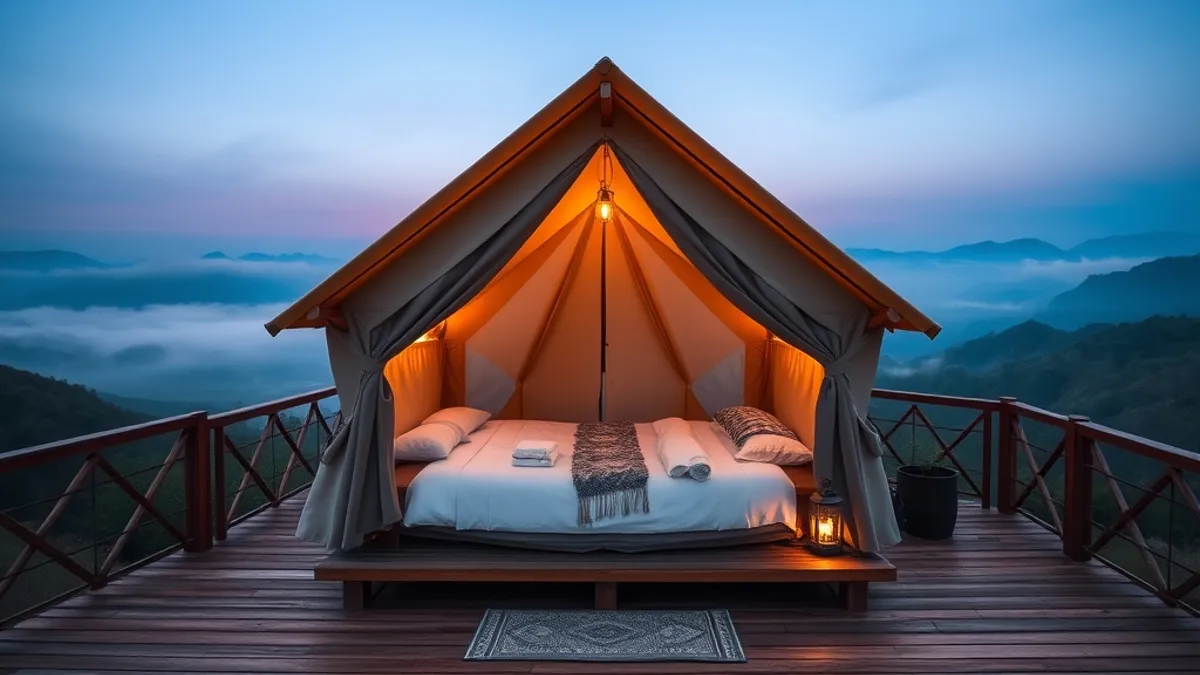
The main argument for glamping over a hotel comes down to one thing: location. Hotels in towns like Stepantsminda or Mestia sit where the roads and infrastructure are, which usually means your window faces a street, a parking lot, or the neighbor’s wall. A well-placed dome or safari tent puts you directly in the landscape, with grass under your feet and peaks in every direction the moment you step outside.
Wake up at the trailhead
Glamping sites in the Caucasus tend to cluster near walking trails rather than town centers. That changes the rhythm of your day completely. Instead of driving twenty or thirty minutes to reach a hike, you can finish breakfast and be on a mountain path within minutes. Early starts matter in the Caucasus, where afternoon clouds and thunderstorms are common in summer, so doorstep trail access is a genuine practical advantage, not just a romantic one.
Camping without the discomfort
The second half of the appeal is comfort. Most of the better sites in Georgia pair canvas or glass structures with proper beds, en-suite bathrooms, and wood stoves, so you get the scenery of camping without the frozen sleeping bag or the midnight walk to a shared toilet block. After a long day of hiking, heating a small stove and watching the light fade over the ridgelines is a far better experience than a generic hotel room. You trade nothing except the lobby.
Best Regions for Glamping: Kazbegi, Svaneti, Tusheti and the Aragvi Valley
Georgia’s Caucasus offers four main glamping regions, and they suit very different travelers. Kazbegi, also called Stepantsminda, is the easiest to reach: it sits about 160 km from Tbilisi, roughly 3 hours by car along the scenic Georgian Military Road, with views of Mount Kazbek that justify every photo you’ve seen. Because transfers are quick, it works well for a first taste of mountain glamping without committing your whole week to travel.
Svaneti around Mestia delivers the most dramatic scenery in the country, with medieval stone towers rising behind the glamping sites, but getting there takes real commitment and careful planning.
Tusheti is the specialist’s choice. The only way in is a rough 4×4-only road over the Abano Pass, which limits both the season and the comfort level, but rewards you with genuine isolation and some of the most intact mountain villages in Georgia. The Aragvi Valley, by contrast, is the low-effort option: close to Tbilisi, with riverside domes and gentler terrain that suit a first glamping trip or a short weekend escape.
- Kazbegi: the Georgian Military Road itself is part of the experience, passing the Ananuri fortress and the Gergeti area, so the transfer doubles as sightseeing rather than dead travel time.
- Svaneti: you can reach Mestia by road from Zugdidi, about 130 km of slow mountain driving, or take a short domestic flight from Tbilisi or Kutaisi if the schedule works.
- Tusheti: villages like Omalo and Dartlo sit at high altitude, and facilities are basic, so most glamping here is full-board and simple rather than luxurious. Confirm meal arrangements before you go.
- Aragvi Valley: the terrain suits travelers who want short walks, river scenery, and an easy return to Tbilisi the same week without a long transfer.
Seasons in the Caucasus: When to Book and What Weather to Expect
The reliable glamping season in the Caucasus runs from late May to early October. Outside that window, high-altitude sites generally close, roads can be snowed in, and operators pack things up. Within it, conditions vary a lot, so timing matters more than most first-time visitors expect.
High season: warm days, full sites
July and August are the warmest months and the busiest. Days are long and generally pleasant for hiking, but popular regions like Kazbegi and Svaneti fill up, and the best domes get reserved early. If you want warm, stable weather and don’t mind company, this is your window, but book well ahead.
Shoulder seasons: the sweet spot
Late May and June bring green meadows, wildflowers, and snow still visible on the high peaks, with noticeably fewer visitors on the trails. September may be even better: weather is typically stable, the crowds thin out, and the valleys turn golden as autumn colors arrive. By early October, high-altitude sites start closing for the winter, so confirm your chosen site is still operating before you plan a late trip.
One warning applies all season long: mountain nights are cold. Even in July and August, temperatures can drop below 10°C in regions like Kazbegi, Svaneti, and Tusheti. Before booking, confirm your dome or tent has real heating or a wood stove, not just extra blankets. It makes the difference between a cozy evening and a shivery one.
What Glamping in Georgia’s Caucasus Costs per Night
Glamping in the Caucasus covers a wide price range, and knowing the tiers before you search saves a lot of time. Georgia sits comfortably below Western European rates, so even the top end here often costs less than a middling alpine hotel. Prices below are typical figures for the regions covered in this guide, but availability and exact rates shift year to year, so always confirm with the site directly.
At the bottom end, budget domes and furnished tents usually run roughly $40-80 per night. Facilities are often shared or fairly simple en-suite setups, and meals may be optional rather than included. Mid-range sites sit around $80-150 and typically add private bathrooms, breakfast and genuinely scenic valley positions, which is where most couples and small families end up.
At the top, luxury lodges and designer domes with hot tubs or panoramic glass walls reach $150-300+ per night. These properties tend to book out first, especially for July-August, so if a glass-fronted dome with a Kazbek view is on your list, move early.
- Ask what breakfast actually includes. At some sites it’s a full hot Georgian spread; at others it’s tea, bread and jam, which matters if the next village is an hour away.
- Single-night premiums apply at smaller sites. Owners of two or three domes often charge more or refuse one-night bookings in high season, so a two-night stay can lower your per-night cost.
- Shoulder-season savings are real. Late May-June and September dates often price 20-30% below July-August rates for the same dome.
- Cash matters in remote valleys. Some Tusheti and upper Svaneti sites prefer cash payment on arrival and lack card terminals, so check payment methods before you go.
- Extra fees sneak in. Transfers from the nearest roadhead, wood stove refills or airport pickups are sometimes charged separately, so ask for a total price, not a nightly rate.
How to Choose and Book the Right Site
Not all glamping sites in the Caucasus are equal, and the difference between a great stay and a cold, hungry one usually comes down to a few questions asked before booking. Mountain conditions and thin infrastructure in places like Tusheti and Svaneti reward travelers who plan methodically. A dome that looks dreamy in photos can turn uncomfortable fast if the heating is weak, the meals aren’t included and the nearest shop is hours away. Work through these steps in order and you’ll avoid most common disappointments.
- Check the insulation and heating first. Mountain nights can drop below 10°C even in July-August, and a thin dome with a cheap electric heater won’t cut it. Look for sites that mention proper insulation, wood stoves or underfloor heating, and ask directly how the unit is heated at night.
- Confirm exactly what’s included. In remote areas like Tusheti there are no restaurants to fall back on, so find out whether dinner and breakfast are part of the rate, what they cost if not, and whether the kitchen can handle dietary needs.
- Ask about bathroom arrangements. “En-suite” sometimes means a private bathroom, sometimes a shared block twenty meters away across gravel. Photos rarely settle this, so confirm in writing.
- Sort out transfers before committing. Svaneti involves a long road transfer from Zugdidi, and Tusheti requires a 4×4 over the Abano Pass, so ask whether the site arranges transport, what vehicle is used and how many passengers it takes.
- Book according to season. High-season domes in July-August should be reserved 2-3 months ahead; shoulder-season trips (late May-June, September) usually need only 2-4 weeks’ notice.
One final habit worth adopting: get the host’s direct messaging contact, since phone coverage and email responses from mountain sites can be slow. A five-minute voice note exchange before you pay settles questions that three emails won’t. And keep a screenshot of every confirmation, because Wi-Fi at the site may be too weak to retrieve your booking details on arrival. A little extra communication up front is the cheapest insurance you can buy for a mountain trip.
Pairing Your Glamping Trip with Tbilisi and Nearby Regions
Glamping in the Caucasus rarely works well as a standalone trip, because the transfers themselves are half-day affairs. The drive from Tbilisi to Kazbegi covers around 160 km and takes roughly 3 hours along the Georgian Military Road, while Svaneti demands considerably more road time from Zugdidi. That’s why most itineraries work best with 1-2 nights in Tbilisi before and after your mountain stay, letting you recover from travel, enjoy the capital’s restaurants, and start the transfer rested.
Building a sensible route
Kazbegi and the Aragvi Valley combine naturally into one loop from the capital, since both lie along the same corridor on the Georgian Military Road. A typical plan looks like two nights in Tbilisi, two or three in a Kazbegi dome, possibly a gentler night in an Aragvi Valley riverside site on the way back, then a final evening in the city before your flight out. Svaneti is different: it deserves its own dedicated 3-4 day block, and squeezing it into the same trip as Kazbegi turns your vacation into a transfer marathon.
Flying to Mestia
If road time is the concern, domestic flights to Mestia from Tbilisi or Kutaisi can replace the long overland journey, cutting hours of mountain driving to a short hop. Schedules are limited and weather conditions can affect departures, so treat the flight as a bonus rather than a guarantee and check current timetables with the operator before you rely on one. If you do book a seat, keep flexible road transfer contacts as a backup, and mention your flight plans to your glamping host, since your arrival time in Mestia determines how your first evening unfolds. A delayed departure is far less stressful when your host already knows to expect you later in the day.
Planning Your Caucasus Glamping Trip at a Glance
Sleeping under Caucasus peaks doesn’t have to stay a daydream. Start by matching the region to your travel style: Kazbegi for easy access from Tbilisi, Svaneti for dramatic tower scenery, Tusheti for real remoteness, and the Aragvi Valley for a low-effort first taste of glamping.
Then time it right. The reliable season runs late May to early October, with late May-June and September offering the best mix of weather, prices and thinner crowds. Budget roughly $40-80 per night for simple domes and tents, $80-150 for mid-range comfort, and $150-300+ for luxury lodges, and reserve high-season stays 2-3 months ahead. If this helped you plan your trip, leave a comment or share the article with a fellow traveler.