Glamping in Mongolia sounds dreamy until you start planning it. You picture sleeping in a round felt tent under endless steppe skies, but then the questions pile up: when do camps actually open, how far apart are they, and what does a night in a ger really involve? Distances in Mongolia are enormous, seasons are short, and camps range from a family’s spare ger to well-equipped tourist complexes, so guessing your way through leads to frustration fast.
This guide breaks the trip into manageable pieces. We start with what a ger stay genuinely feels like day to day, then map out the best seasons for glamping in Mongolia and the four best regions to base your nights. From there, we build a workable Gobi route, run through realistic budgets and booking timelines, and finish with packing tips that account for temperature swings most travelers never expect. By the end, you will know exactly what to book, when, and for how much.
What a Ger Stay Actually Feels Like
Let’s set expectations first: a traditional ger is not a luxury safari tent. It is a round, felt-covered structure with painted wooden frames, a metal stove in the center and low beds arranged around the walls. The door is low, so you learn to duck quickly. The space is cozy and surprisingly warm once the stove is lit, but this is simple country living, not a five-star suite.
Camps come in several flavors. At one end are family homestays, where you sleep in a ger beside a herding family’s own tents and share their rhythm of life. At the other are established tourist camps with rows of guest gers, shared bathroom blocks and a central dining ger where everyone eats together.
What daily life in camp looks like
Expect simple heating from that central stove, electricity limited to certain hours of the day, and meals built around camp staples: mutton, dumplings and dairy products like dried curds and milk tea. It is hearty food, and after a day outdoors it usually hits the spot.
If you want more comfort, higher-end eco camps now add private bathrooms and western-style bedding while keeping the round felt structure. You still sleep under painted roof poles and hear the wind outside, but with a hot shower a few steps from your bed.
When to Go: Seasons for Glamping in Mongolia
Mongolia has one reliable window for ger stays: June to early September. During these months the steppe is green, mountain passes are open and essentially all ger camps are operating at full capacity. This is when the country looks the way it does on postcards, and when driving routes are actually passable.
Peak season realities
July is the complicated month. The Naadam festival draws crowds from around the world, and prices climb to their annual peak alongside demand. If you want to travel in July or August, book your camps 2-3 months ahead or you may find the best ones full. The festival itself is a genuine highlight, so many travelers decide the crowds and cost are worth it.
Shoulder seasons work differently. May and late September offer empty landscapes and lower rates, which appeals to travelers who prize solitude. The trade-off is real, though: nights can fall below freezing, and some camps operate with reduced services or not at all.
The Gobi adds its own packing puzzle. Summer afternoons there often reach 30-40°C, yet nights can drop near 10°C even in July. Pack for both extremes in the same bag: light clothing for the dunes and a warm layer for evenings around the stove.
Where to Base Your Ger Nights
Mongolia is big enough that where you base your ger nights shapes the whole trip. Each region offers a different version of the country, and most travelers pick one or two rather than trying to see everything. Here is how the main options compare.
Central Mongolia around Kharkhorin and the Orkhon Valley is the classic choice: you sleep in grassland gers while visiting historic sites like the old capital area and its famous monastery. Terelj National Park, meanwhile, is the easiest entry point, sitting just 1-2 hours from Ulaanbaatar, ideal if you want a first taste of ger life without committing to a long overland journey.
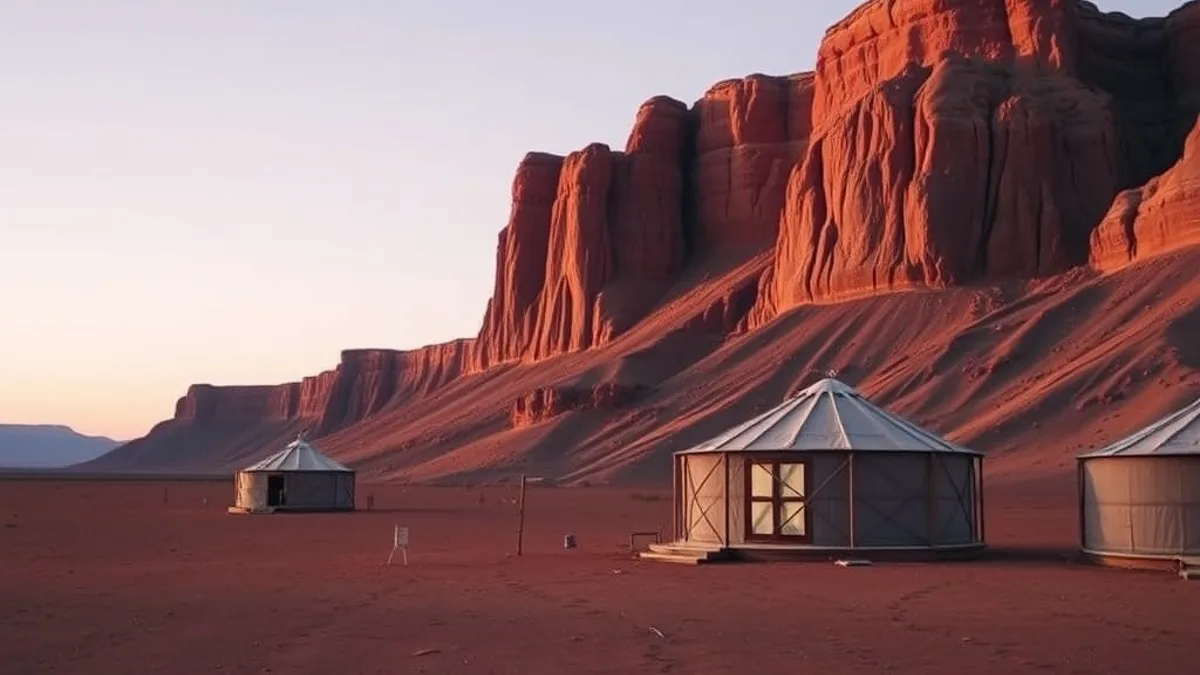
For desert scenery, the Gobi region around Dalanzadgad is the pick: dunes, dramatic gorges and dinosaur fossil sites, which we plan in detail in the next section. And in the far north, Lake Khuvsgul suits travelers who want forest and lake stillness rather than open steppe. If that appeals to you, our guide to remote hideaways around Lake Khuvsgul goes deeper on that quieter corner of the country.
- Kharkhorin area: many camps here sit within easy driving distance of Orkhon Valley waterfalls and horseback riding routes, letting you combine ger nights with active afternoons.
- Terelj: some camps sit close enough to Ulaanbaatar that you can visit on a day trip, though an overnight gives you the sunrise and the quiet after tour buses leave.
- Gobi camps: those around Dalanzadgad often arrange camel rides at the dunes and visits to fossil sites as part of your stay, so ask what is included when booking.
- Khuvsgul: northern camps tend to be smaller and more remote, with access by boat or trail rather than road, which is exactly why the stillness is so complete.
Building a Gobi Route That Works
The Gobi looks compact on a map, but distances here play tricks on you. Planning the region as a loop rather than a series of out-and-back trips makes everything easier: less backtracking, more time on the ground, and a natural rhythm of driving days followed by slower days at each stop. Most travelers either fly into Dalanzadgad or drive down from Ulaanbaatar, then work their way between the region’s three signature sights. Here’s how to structure it so the itinerary works with the landscape instead of against it.
- Get to Dalanzadgad first. The flight from Ulaanbaatar takes about 1.5 hours, which saves your legs and your patience. The alternative is a 9-10 hour drive over rough tracks, which is doable but eats a full day each way. If your schedule is tight, fly down and save your energy for the dunes.
- Plan a 4-6 day loop of 400-500 km. The classic route links Yolyn Am gorge, the Khongoryn Els dunes and the Bayanzag flaming cliffs. This pacing gives you time to actually walk, climb and watch the light change instead of just ticking boxes from the vehicle.
- Give Khongoryn Els a full morning. The dunes stretch about 100 km long with peaks up to 300 m, so climbing them is a real workout on soft sand. Start early while the sand is still cool, and save the evening for sunset light on the ridgelines from camp.
- Build slack into every driving day. Distances that look short on maps take far longer than expected because most routes are unpaved tracks. A stretch of 150-250 km can easily consume an entire day, so don’t stack too many waypoints into one leg.
One more tip: the Gobi rewards slowness the same way slow rural travel does elsewhere. Sitting out by your ger as the dunes shift color at dusk, or lingering over a camp dinner while your driver recounts the day’s route, often becomes the memory that outlasts the sights themselves. If you enjoy that style of trip, you might also like reading about slow French countryside mornings in Provence’s lavender country. The principle is the same: fewer stops, more time at each one, and a schedule loose enough to let the best moments happen on their own.
Budgeting and Booking Your Ger Camps
Ger camping in Mongolia is affordable by international standards, but costs add up quickly once you factor in a driver, fuel and meals for a multi-day Gobi loop. The good news is that most quotes are all-inclusive, so surprises are rare. Knowing the typical numbers helps you judge whether an operator’s offer is fair before you commit.
Standalone ger camp rates generally run roughly $30-80 per person per night, and that usually covers three meals. For a fully guided Gobi trip with driver, fuel, food and lodging, plan on $80-150 per person per day overall. Quotes at the lower end often mean basic camps and a shared vehicle; the higher end typically buys you better camps and a more experienced driver.
Timing matters as much as price. July and August are the busiest months on the steppe, and the best camps fill up well in advance, so reserve early for peak season. In the shoulder months of May and late September, you can usually book much closer to your travel dates, and you’ll have more flexibility to adjust your route on the fly.
- Expect to book through a tour operator. Most camps rarely take direct online reservations, so independent booking is harder than it looks. A local operator bundles camps, vehicle and permits into one price and handles rebooking if weather or road conditions force a change.
- Ask what the quote excludes. Some operators leave out park entry fees, drinks, or camel and horse rides at the dunes. Get a written breakdown before paying a deposit so you can compare offers on equal terms.
Finally, confirm what happens if your flight to Dalanzadgad is delayed or canceled. Good operators will rework the itinerary rather than cut a night, and asking about that policy before you pay is one of the easiest ways to separate reliable operators from the rest.
Packing and Practical Prep for the Steppe
Packing for a ger stay is all about handling extremes. The Gobi can hit 30-40°C in the afternoon and drop near 10°C after dark, and swings of 20°C between day and night are normal across the country. Layers are not optional here; they’re the difference between a comfortable evening and a miserable one. Think in modules: a moisture-wicking base layer, a warm fleece or down mid-layer, and a windproof shell you can pull on the moment the sun drops behind the dunes. A beanie and light gloves take up almost no space in your bag but get used every night, even in midsummer.
Camp infrastructure is basic by design. Electricity often runs for limited hours, there’s no in-room plumbing, and bathroom blocks may be a short walk across the campyard. Dust is another constant, especially on the Gobi’s open plains, so anything with zips or vents should be checked for grit daily. A few small items in your bag solve most of the discomforts travelers complain about.
- Headlamp with spare batteries. Camps go dark after the generators shut down, and the walk to the bathroom block is unlit. A headlamp keeps both hands free for ger doors and zippers.
- Power bank. Outlets in gers are scarce and sockets may only be live during certain hours. A charged power bank covers your phone and camera for a couple of days between proper charging stops.
- Wet wipes and quick-dry towel. With no in-room plumbing, a wipe-down in your ger is often the daily routine between shower chances at camp bathroom blocks.
- Sleeping bag liner and earplugs. Gers in family homestays can have shared or thin walls, and desert wind rattles the felt all night. A liner adds warmth and cleanliness, and earplugs rescue your sleep on windy nights.
Bring cash in Mongolian tugrik for small camps, roadside guanz restaurants and souvenir stops, since card payment is rare outside Ulaanbaatar. Withdraw enough in the city before heading out, and keep small denominations handy for snacks and tips along the way. Finally, pack a reusable water bottle and some electrolyte tablets; the dry steppe air dehydrates you faster than you expect, and camps don’t always stock drinks between meal times.
Wrapping Up Your Mongolia Glamping Plan
A ger stay turns out to be far simpler than the word “glamping” suggests: a warm felt tent, a stove, camp meals and big skies, best enjoyed between June and early September when you go in with realistic expectations. Once you accept that, the planning stops feeling impossible and starts feeling like a short checklist.
The core of the trip is a 4-6 day Gobi loop from Dalanzadgad that covers the dunes, the gorge and the flaming cliffs at a comfortable pace. For July and August travel, reserve your ger camps well in advance — early spring is a good target — and set your budget around $80-150 per person per day. With those two things sorted, the rest falls into place. If this helped you plan your own Mongolia trip, leave a comment or share the article with a fellow traveler.