Glamping in Namibia sounds like a dream: a proper bed, a hot shower and a chef-cooked dinner, all set against red dunes and some of the darkest night skies on the planet. The problem is turning that dream into a booking. Which region suits your trip? Should you travel in the dry season or gamble on greener, cheaper months? And what does a night in the desert actually cost?
This guide breaks the decision down into manageable parts. We start with why the desert camps work so well, then compare the main regions, from Sossusvlei’s dunes to the cooler Skeleton Coast. Next come the seasons and weather windows, followed by a clear look at what camps charge per night. We finish with booking lead times, how to pick a camp, route-building tips and a simple wrap-up plan. By the end, you should know exactly which combination of region, season and budget tier fits your Namibian adventure.
Why Glamping in Namibia Works So Well
The appeal of a Namibian desert camp comes down to one unusual combination: genuine wilderness with genuine comfort. After a day on the dunes, you return to a real bed with crisp linen, an en-suite bathroom with hot water, and a three-course dinner prepared by the camp chef. Then you step outside, look up, and see the Milky Way stretching from horizon to horizon with almost no light pollution to dim it.
Remote without being rough
Namibia has one of the lowest population densities of any country in the world, and the camps take full advantage of it. Even a fully serviced camp with a restaurant, pool and staff feels isolated, because there is simply nothing else around for kilometers. You get the silence and scale of the desert without giving up hot showers, cold drinks or a wake-up coffee before your morning excursion.
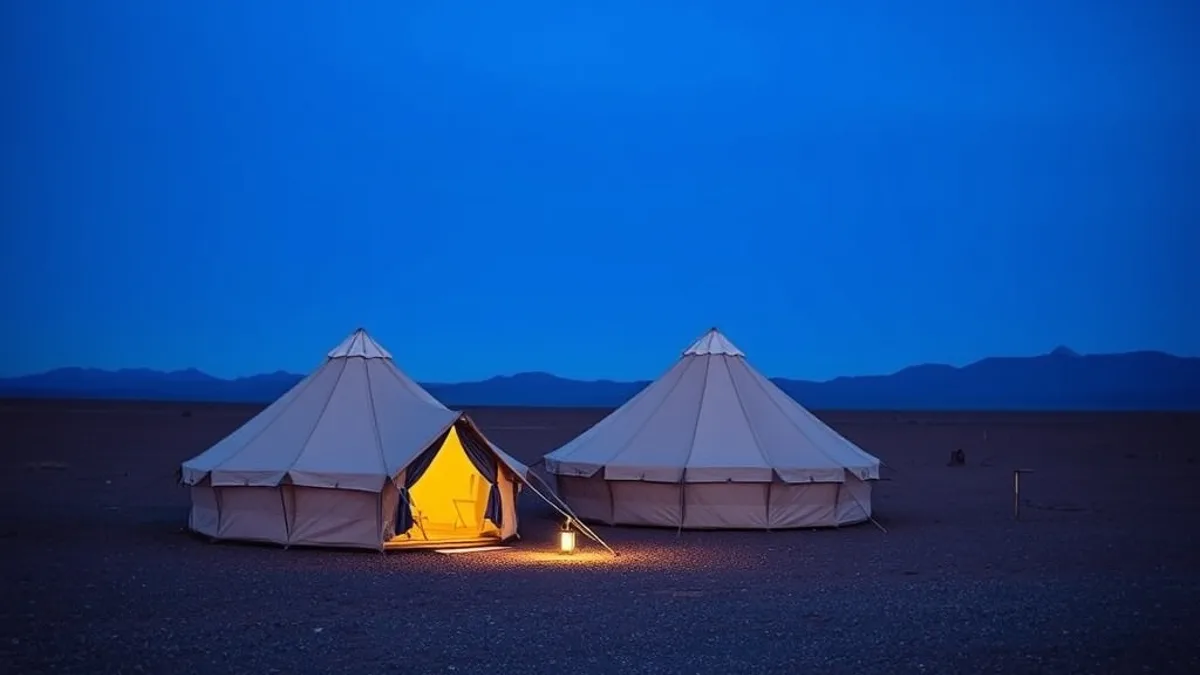
The variety of accommodation is wider than most first-time visitors expect. Stay types range from classic canvas tents pitched on wooden platforms to geodesic domes with panoramic windows, and even solid thatched chalets that feel closer to a lodge than a tent. Whichever style you choose, the desert does the decorating: the view is the point.
Choosing Your Desert Region
Namibia’s desert regions each deliver a different kind of glamping trip, so it pays to match the region to what you actually want from your stay. The four below cover the classic dune experience, a coastal alternative, rugged wilderness and dedicated dark-sky country.
Sossusvlei is the classic choice and the image most people carry in their heads: towering red dunes, dead acacia trees in white clay pans, and camps tucked into the dune belt. It lies about 300 km from Windhoek, which makes it the easiest desert region to reach on a first visit. Swakopmund and the Skeleton Coast flip the script entirely, trading inland heat for a cool, foggy coastline where the desert meets the Atlantic. Damaraland and Kaokoland suit travelers who want wide, rugged scenery, ancient rock engravings and the chance of spotting desert-adapted wildlife. NamibRand Nature Reserve, meanwhile, is built around dark skies and walking, with camps that emphasize exploring on foot rather than by vehicle.
- Sossusvlei: camps here often position you for early access to the dunes, since the classic experience means climbing Dune 45 or reaching Deadvlei before the midday heat flattens the light.
- Swakopmund and the Skeleton Coast: the coast is often 5 to 15°C milder than the inland deserts, so pack layers even in summer and expect morning fog along the shoreline.
- Damaraland and Kaokoland: this is where you look for desert-adapted elephants and, with luck, black rhino, along with Twyfelfontein’s rock engravings, among the most significant in Africa.
- NamibRand Nature Reserve: as an International Dark Sky Reserve, it draws dedicated stargazers, and its walking-focused camps let you explore the desert plains on foot with a guide.
Seasons and Weather Windows
Timing shapes every part of a desert glamping trip, from what you see to what you pay. Namibia essentially has two seasons, and each changes the character of the desert completely.
Dry season: May to October
The dry season runs from May to October and is the classic window for desert travel. Days are sunny and pleasant, nights turn cool, and skies stay clear almost continuously. These are the best conditions for both dune excursions and stargazing, since the air is dry and the nights are long and dark. If you want the postcard version of the Namib, this is when you’ll find it. The trade-off is demand: the peak months of June to September need booking 6 to 12 months ahead, and rates sit at their highest.
Wet season and the shoulder months
From November to April, the desert gets hot days and scattered rain, with a risk of flash floods from January to March. Dry riverbeds can suddenly run, and some dirt roads become difficult. In return, rates drop noticeably, the landscape turns greener, and camps are quieter. For travelers with flexible dates, the shoulder months of May and November are the sweet spot: you catch mostly stable weather and decent availability while avoiding peak-season prices. First-timers should default to the dry season; flexible travelers with a sense of adventure can save real money by shifting a month or two either side of it.
What Desert Camps Cost
Glamping in Namibia is not a budget backpacking trip, but the pricing is more spread out than many travelers expect. At the lower end of the proper desert-camp market, mid-range camps typically run around $150 to $350 per person per night, and that rate is usually all-inclusive. You get your tent, your meals, and most activities bundled into one figure, which makes comparing camps much easier.
At the top end, high-end lodges and camp suites range from roughly $400 to well over $1,000 per person per night. These properties tend to offer larger tented suites with private plunge pools or star beds, more personalized guiding, and a lower guest-to-guide ratio. Some of the most famous dune-view camps sit in this bracket, so expect to pay a premium for the location alone.
Before you book, dig into exactly what the rate covers. Most camps include a core set of services, but the details vary enough to change the real cost of your stay:
- Guided dune excursions: many camps include sunrise trips toward Sossusvlei, but private guiding or hot air balloon add-ons are usually billed separately.
- Meals and drinks: all-inclusive rates normally cover three meals, while soft drinks, local beers and house wines are often included only at the higher tiers.
- Park transfers and entrance logistics: camps near national parks often handle park transfers, but remember that conservation and entrance fees change yearly, so confirm the current amount with the camp before you travel.
- Laundry and Wi-Fi: some remote camps include laundry service, while internet access may be limited to a small common area rather than the tents.
Finally, budget separately for flights if you are not self-driving. Flying-in itineraries add light-aircraft transfer costs on top of the nightly rate, and those seat prices are quoted separately by the charter operator or safari planner. Ask your camp or agent for a full breakdown before committing, so the transfer legs never come as a surprise.
Booking Lead Times and How to Pick a Camp
The best desert camps in Namibia are small by design, and that means availability disappears early. For travel during the peak months of June to September, the most sought-after properties near Sossusvlei and in the private reserves can be fully committed for the season well before the year begins, especially for stays of three nights or more. Lock in your dates as soon as you know them.
Lead time matters even more if you are traveling as a family or a group of friends. Small camps with only a handful of units cannot always fit two separate bookings side by side, and single tents rarely sit empty in high season. If your dates are fixed, secure the camp first and build the rest of the route around it.
How to compare camps
Photos can be misleading, so compare camps on practical points before you pay a deposit. Look at the actual tent size and whether the veranda has real shade, since midday heat indoors is one of the biggest differences between a good and a mediocre desert stay. Ask how water is supplied, because some remote camps run on careful rationing, which affects shower pressure and laundry options.
Also check how far the main excursions are from camp. A property inside a private reserve next to Sossusvlei can have you on the dunes before the park gates open, while a camp an hour away turns every outing into a long drive. Ask the camp directly about drive times, not just distances.
Size and stay rules
Small camps of 8 to 12 units give the quietest experience, with shared dinners and guides who know every guest’s name by day two. That intimacy is the main reason to book early. Before confirming, always ask about minimum-stay rules, as many desert camps require two or three nights, and some reserve camps ask for longer during peak months.
Getting There and Building the Route
Namibia is a big country with long distances, so a good glamping route is built around drive times rather than wish lists. Most international flights arrive in Windhoek, the main gateway, and nearly every desert itinerary starts from there. A simple structure keeps the trip relaxed instead of turning it into a road rally, and it also means you spend your nights in memorable places rather than behind the wheel after dark.
- Land in Windhoek and spend your first night in or near the capital. It breaks up the journey after a long flight and gives you time to collect a rental vehicle, stock up on supplies and check road conditions before heading out.
- Drive or fly to Sossusvlei. The dunes lie about 300 km from Windhoek, roughly a 4 to 5 hour drive on mostly good roads, or you can take a short light-aircraft hop that lands you within easy reach of the camps.
- Give the desert two to three nights. This allows for one early dune morning, a second activity such as a guided nature drive or scenic flight, and time to simply enjoy the camp after dark.
- Continue to the coast at Swakopmund. The Atlantic keeps the shoreline noticeably cooler than the inland deserts, so pack layers you can add and strip off as you travel between the two.
- Return to Windhoek or fly out from the coast. Some travelers end in Swakopmund to avoid backtracking, depending on their flight connections.
Allow 7 to 10 days minimum to cover two regions without rushing. Anything shorter forces you to choose a single base, which is still rewarding, but you will miss the contrast between red dunes and cold ocean that makes a Namibia trip so memorable. Build in a buffer day for sand tracks and photo stops, because the driving itself is part of the experience. If you plan to fly between camps instead, remember that light-aircraft transfers sit on top of the nightly rate, so price the whole route before committing.
Wrapping Up Your Namibia Glamping Plan
Planning a glamping trip in Namibia really comes down to three choices: region, season and budget tier. Pick your desert first, whether that means the red dunes of Sossusvlei, the cooler coast near Swakopmund or the rugged north, then match the season to it. Dry season from May to October suits first-timers with cool nights and the clearest skies, while the shoulder months reward flexible travelers with lower rates and fewer crowds.
On budget, decide early whether mid-range camps or high-end lodges fit your wallet, and compare what each rate actually covers before you commit. Book 6 to 12 months ahead for peak travel, and the desert will deliver a stay worth every dollar. If this helped you plan your trip, leave a comment or share the article with a fellow traveler.