Rain is the number one reason travelers cancel glamping trips. A few gray clouds on the forecast and suddenly that safari tent or treehouse booking feels like a mistake. Yet glamping in the rainy season can be the most atmospheric and affordable stay of the year if you plan around the wet weather instead of running from it. Lower rates, greener landscapes and quieter sites are all on offer for travelers willing to pack smart and book wisely.
This guide walks you through the whole process: why the wet season works in your favour, how to choose accommodation that can actually handle heavy rain, when to time your trip, what to pack, how to build a flexible itinerary, and how to turn rainy days into the best part of the stay. By the end, a storm on the horizon will look less like a cancellation and more like atmosphere.
Why Glamping in the Rainy Season Works in Your Favour
Most travelers treat the rainy season as a time to stay home, and that is exactly why it works in your favour. Demand drops, and so do prices. Wet-season glamping rates often run 20–40% below peak-season prices, which means the premium units you could not justify in high season — the big safari tents, the dome with the panoramic window, the treehouse with the outdoor bath — suddenly sit within reach of a normal budget.
The scenery pays you back too
Money is only half the story. Landscapes are at their greenest after weeks of rain, waterfalls run at full flow, and the air feels cleaner after every shower. Photographers know this season produces the richest colors of the year. Campsites are also far quieter, so you get the kind of stillness that peak-season crowds make impossible.
Fewer guests change the experience in another way: hosts have more time for you. Expect more personal attention, better tips on the area, and a much better chance of a last-minute upgrade if a premium unit happens to be free. Ask politely on arrival — in low season, the answer is often yes.
Choosing Rain-Ready Glamping Accommodation
The difference between a magical storm-watching trip and a soggy disaster comes down to the accommodation itself. Before you book anything, treat the tent’s construction as your first filter. Start with the basics: prioritize tents that sit on raised wooden platforms. A raised floor keeps you above ground moisture, stops water pooling under your bed, and protects the whole unit if the site takes a heavy downpour. Tents pitched directly on grass are the first to suffer in a wet week, and no amount of clever packing will fix a damp floor.
Then look closely at how the tent is built. Sealed seams, double-layer canvas or a polycarbonate dome roof are the signs of a unit designed for real rain rather than a single dry-weather night. Don’t be shy about emailing hosts and asking directly how their units handle sustained wet weather; a confident, specific answer tells you a lot. A covered veranda matters just as much, because it gives you outdoor space that stays usable when the sky opens, which is often most of the day in the wet season.
- Ventilation and heating: rainy-season humidity can exceed 80%, so ask whether the unit has heating, a dehumidifier or strong cross-ventilation to keep bedding and clothes dry overnight.
- Entry and walkways: check whether paths to the tent are gravelled or decked, since a long muddy walk in the dark is the fastest way to ruin an evening.
- Power and lighting: confirm there are covered sockets or charging points inside, because stormy evenings mean more time indoors with devices in use.
- Covered lounge space: a dry outdoor lounge area with sofas or hammocks under a roof turns rain into a viewing experience instead of a reason to hide inside.
Timing Your Trip Around the Wettest Months
Timing decides how much rain you actually face. The smartest move is to target shoulder weeks at the very start or end of the rainy season, when showers tend to be lighter and shorter but the landscape is already lush and the low-season rates have kicked in. You get most of the savings with less of the downpour.
Know your region’s rhythm
Rainy seasons vary by region. In much of Southeast Asia the wettest months fall roughly May–October, while Mediterranean-adjacent destinations peak from November to March. Parts of Central America see their wet season around June–September. Check the pattern for your specific destination rather than assuming one global rule.
One caution: avoid monsoon-peak weeks if your site sits down remote roads, which can become unreliable in heavy rain. A beautiful tent is no use if the track to it turns impassable. For an example of a stay built entirely around wet weather, see this piece on homes made for Atlantic storms and deep Irish quiet.
Finally, book 2–3 months ahead even in low season. Genuinely rain-proof units are limited, and the travelers who know this season’s advantages snap up the best ones first.
What to Pack for Wet-Weather Glamping
Packing for a wet-season glamping trip is less about bringing more and more about bringing smarter. Humidity is the real enemy here, and it can climb above 80% at many sites, which means cotton clothing stays damp for days and takes on that clammy feeling nobody enjoys. Synthetic quick-dry layers and merino base layers handle moisture far better, dry overnight even in a humid tent, and resist the odors that build up when nothing ever quite air-dries.
Footwear deserves special thought. Trails, boardwalks and grass around your tent stay muddy long after a shower ends, so leave the canvas sneakers at home. A headlamp is another underrated item: stormy evenings can knock out site lighting or simply make a dark tent feel gloomy, and a hands-free light lets you read, play cards or walk to the bathroom block without juggling a phone.
Finally, think about how you store things, not just what you bring. A tent is water-resistant, but bags left on the floor can still pick up dampness, so a little organization goes a long way. Before you zip up your duffel, run through this checklist:
- Waterproof boots with decent tread — ankle-height rubber or sealed leather boots handle muddy paths and wet grass, and they double as camp shoes for rainy walks.
- A packable rain jacket, not a poncho — a proper jacket with a hood and storm flaps survives wind-driven rain better, and it packs down small enough to live in your daypack.
- Dry bags in two or three sizes — use the large one for spare clothes and the small ones for passports, phone chargers and power banks, so nothing important sits against a damp tent wall.
- Zip pouches for documents and cables — clear pouches let you find things without emptying your bag in a dark tent, and they seal out moisture from the air itself.
- A headlamp with fresh batteries — pick one with a red-light mode so you can read in the tent without blinding your travel partner.
- Compact entertainment for long evenings — a small card-based board game or a tablet loaded with downloaded films turns a stormy night into the best part of the trip rather than a bore.
Building a Flexible Rainy-Season Itinerary
A rainy-season itinerary works best when it bends instead of breaks. Showers often arrive in bursts rather than lasting all day, so the trick is to lock in one solid plan per day and leave the rest loose enough to move around the weather. Think of your schedule as a set of building blocks: one fixed commitment, a couple of flexible options and a short list of indoor backups. That way a two-hour storm costs you an afternoon slot rather than the whole day. Here’s how to structure it:
- Pick one anchor activity per day. This might be a guided nature walk, a cooking class or a market visit — the one thing you’d regret missing. Keep afternoons unplanned so a heavy shower can push it around without ruining anything.
- Map your indoor backups before you arrive. Look for spas, covered markets, small museums or wine-tasting rooms within 30–60 minutes of your site. If you know where you’re heading when the rain settles in, you won’t waste a wet morning scrolling your phone.
- Put hikes and scenic drives in the morning slot. Showers in many wet-season regions tend to be lighter earlier in the day, building toward afternoon downpours. An early start gets you back under cover before the sky opens.
- Use your hosts as a local weather almanac. They’ve watched the seasonal rhythm for years and can tell you which waterfall looks best after rain, which road turns to soup, and which nearby café becomes the neighborhood living room on a stormy day.
The same flexible mindset applies wherever you go. On a trip built around a slower pace of travel — the kind you’ll find in these Provence hideaways made for slow French countryside mornings — a rainy hour on a covered veranda feels like part of the plan, not a detour from it. Build your days with that same generosity and the weather stops being an obstacle. A little slack in the schedule is often the difference between a soggy disappointment and the most memorable part of the trip.
Making the Most of Rainy Days at the Camp
Cozy Storm-Watching Starts With the Right Unit
If you know rain is likely, choose a stay built for enjoying it. A wood-fired stove crackling while a shower drums on the canvas above you is a genuinely memorable experience, and it costs nothing extra on the night. Look for listings that mention fireplaces, wood-fired hot tubs or indoor stoves, and confirm with the host that these are available during your dates — some sites only light them on request.
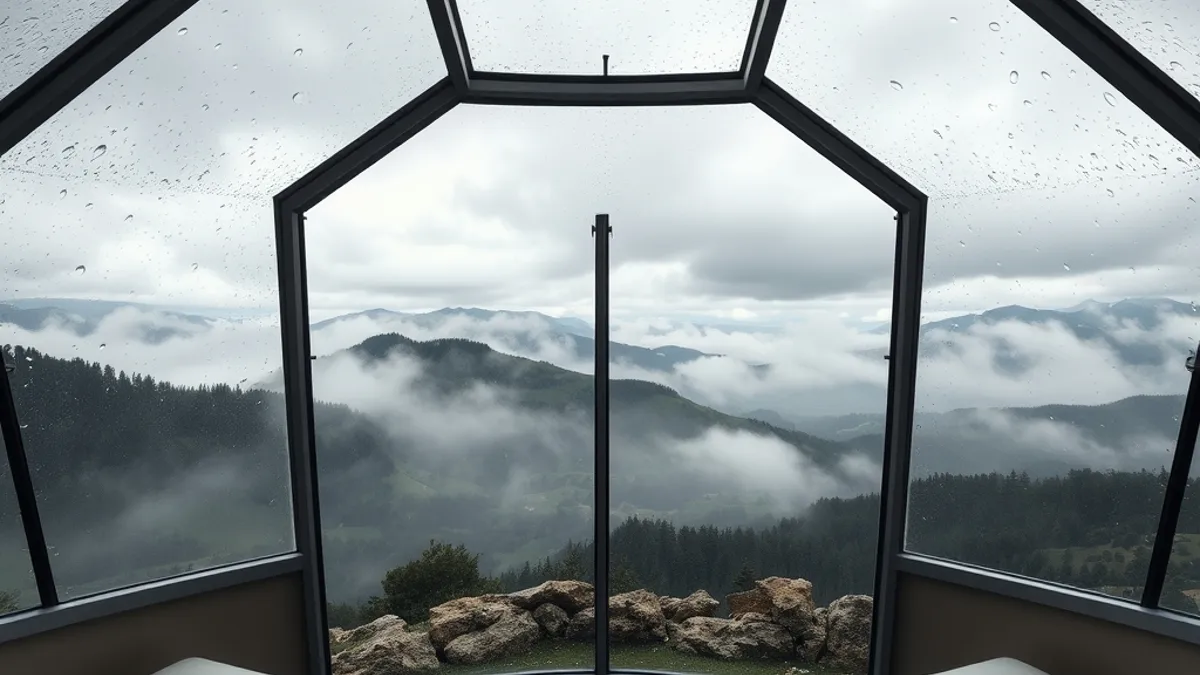
Transparent domes take this one step further. Lying in a proper bed while lightning flickers across the valley above you turns a storm into evening entertainment, and wide covered verandas do the same for more traditional tents. A dry lounge area with a couple of chairs and a blanket means you can watch the rain roll in without huddling inside a sleeping bag. When comparing options, ask hosts directly whether the covered outdoor space is big enough to sit in during a downpour, not just to store boots.
Book the Extras Before the Rain Arrives
Wet afternoons are exactly when on-site extras earn their money, so reserve them ahead rather than deciding on the day. A private dinner served in your tent, a massage at a small on-site spa or a hot tub slot at sunset can transform the wettest afternoon of your trip into its highlight. Availability at quiet-season sites is usually good, but hosts often need notice to arrange staff and supplies, so mention your preferences when you book. A storm you’ve planned around becomes atmosphere; a storm you’ve planned nothing for just feels like bad luck.
Wrapping Up Your Rainy-Season Glamping Plan
Glamping in the rainy season rewards travelers who plan ahead: lower rates, greener scenery and quieter sites make it one of the most atmospheric times of year to go. Rather than a reason to cancel, the rain becomes part of the experience — storm-watching from a covered veranda, cozy evenings inside a well-sealed tent and landscapes at their lush best.
Success comes down to three things: choosing genuinely rain-ready accommodation, timing your trip around the wettest weeks and packing a smart, weatherproof kit. Add a flexible itinerary with room to swap activities, and wet weather turns into atmosphere instead of a setback. If this guide helped you plan a rainy-season escape, leave a comment or share it with a fellow traveler.