A night under Sahara stars in a tent with a real bed and a hot shower sounds like a dream. But the details decide whether it lives up to the picture: pick the wrong month and you’re shivering at midnight or roasting at noon, book the wrong camp and you end up in a noisy resort of forty tents instead of a quiet dune-edge hideaway. And with the long drive from Marrakesh, there’s little room for error.
This guide to glamping in the Sahara walks through everything that shapes the experience. We’ll explain why the dunes of Erg Chebbi are so different from other desert stays, which seasons offer the best mix of warm days and comfortable nights, and how to choose between Erg Chebbi and the wilder Erg Chigaga. You’ll also find practical advice on booking, what “luxury” should actually include, the journey to the dunes, and what to pack for a night where days are warm and winter nights can approach freezing.
Why Glamping in the Sahara Is Different From Any Other Desert Stay
Most desert trips around the world demand days of overland travel before you see a single dune. Glamping in the Sahara works differently. The Erg Chebbi dunes near Merzouga rise up to 150 meters, and they sit within reach of Morocco’s paved road network. You can drive in from Marrakesh or Fes, sleep in a proper bed, and be standing on a crest at sunset the same evening. That combination of dramatic scenery and easy access is what sets this region apart from remote desert expeditions that require convoys, guides, and serious time commitments.
From simple berber tents to luxury suites
The camp scene covers a wide spectrum. At the simple end, traditional berber tents offer thick rugs, shared facilities, and an authentic feel at a modest cost. At the top end, luxury camps build permanent suites with en-suite bathrooms, hot showers, and king beds dressed with proper linens. Many of these camps are rebuilt or repositioned with the seasons, so the dune views stay good even as the sand shifts.
What you won’t find is a resort program of pools, spas, and scheduled entertainment. The experience centers on the desert itself: the deep silence after the generators go quiet, stargazing from a dune with zero light pollution, and reaching your camp by camel or 4×4 over the sand. The dunes are the activity. If you arrive expecting that rather than a hotel with sand, the night rarely disappoints.
Best Seasons for Glamping in the Sahara
Timing makes more difference in the Sahara than in almost any other destination. The desert has no mild middle ground for most of the year — you’re either in the comfortable window or fighting the extremes on both ends. The sweet spot falls in October-November and again in March-April, when days hover around 25°C and evenings stay pleasant enough for dinner outside and a long stretch of stargazing without a coat. These months also bring stable weather, so sandstorms and canceled plans are less of a concern than in the shoulder transitions.
Winter changes the character of the trip. From December to February, nights can drop near 0°C, which surprises travelers who associate deserts with heat. Days remain sunny and mild, the skies are often at their clearest, and the camps are quieter. If you pack proper layers, winter can be the most atmospheric time to sleep in the dunes.
- Book early for the sweet spot: October and April are the months that sell out first, so the best luxury camps are often fully reserved well before arrival.
- Winter rewards stargazers: the long, cold nights near 0°C come with exceptionally clear skies, ideal for photography and long sessions outside — if you bring a warm jacket and hat.
- Summer is a hard no for most travelers: daytime temperatures regularly exceed 40°C between June and August, making midday activity unsafe and even nights uncomfortably warm in a tent.
- Shoulder transitions need flexibility: the weeks just outside the main windows can bring unsettled weather, so keep some slack in your itinerary if you travel then.
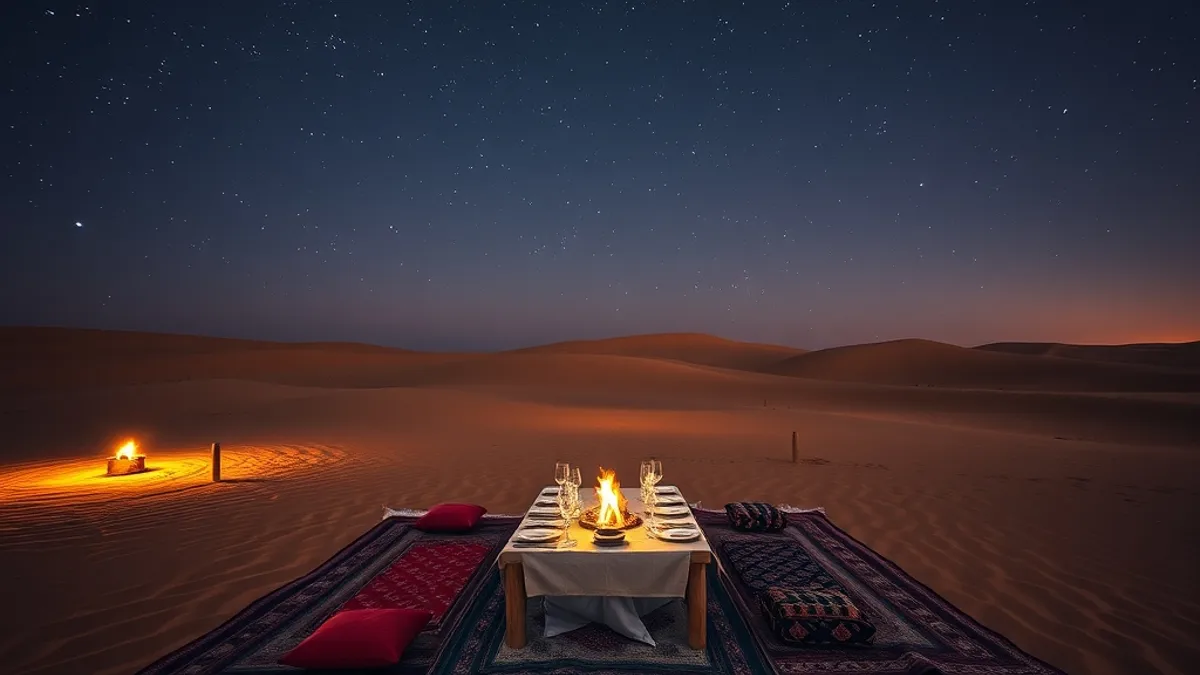
Where the Camps Are: Erg Chebbi, Erg Chigaga, and Beyond
Morocco has two main dune fields for overnight camps, and they offer genuinely different experiences. Picking between them shapes your whole itinerary, so it’s worth understanding the trade-off before you book.
Erg Chebbi: the accessible classic
Erg Chebbi, near the gateway village of Merzouga, is the most accessible dune field in the country. Camps line roughly 40-60 km of the dune edge, many within a short camel or 4×4 transfer of the village. Camel treks here are easy to arrange and typically short enough to fit into an afternoon arrival, sunset on a crest, and dinner back at camp. For a first visit to the Sahara, or a trip built around a tight itinerary, Erg Chebbi is the practical choice: you get the full dune experience with the least travel friction.
Erg Chigaga: the wilder option
Erg Chigaga, reached via the oasis town of M’Hamid far to the southwest, is wilder and remoter. The drive in is longer, usually the final leg of a 4×4 route, and the camps are spread across a much bigger area. That means fewer neighbors, darker nights, and a stronger sense of expedition — you’ll often hear nothing but wind for hours. It suits travelers who want isolation and don’t mind a longer approach.
The simple rule: choose Erg Chebbi for a first visit or a short itinerary, and choose Erg Chigaga if solitude matters more to you than convenience and you have time for the longer 4×4 journey.
How to Choose and Book Your Desert Camp
The difference between a magical night in the dunes and a disappointing one often comes down to the booking process. Desert camps vary enormously in comfort, size, and honesty about what they offer, and photos on booking sites rarely tell the whole story. A few pointed questions before you pay will save you surprises at the edge of the dunes, and the way a camp responds to those questions tells you almost as much as the answers themselves.
- Book early for the high season. For trips in October and April, reserve your camp 2-3 months ahead. The best luxury camps sell out first in these months, and the ones still available at the last minute are rarely the ones you want. If your dates are flexible, ask the camp which weeks still have space before you commit to anything else.
- Pin down what “luxury” actually means. Ask specifically whether your tent has an en-suite bathroom, hot water, and a reliable power supply, and whether full-board dining is part of the rate. Some camps mean all of this; others mean a canvas tent with a shared block a few steps away. Neither is wrong, but you should know which one you are paying for.
- Understand the price and what it covers. Expect roughly $100-300 per person per night for a full-board luxury camp. Confirm whether the camel or 4×4 transfer from Merzouga is included, since this is a common extra that changes your total. Also ask about drinks, which are often charged separately even at full-board camps.
- Ask how many tents the camp has. A camp of 10-15 tents keeps the night quiet and the dunes feel wild. Camps with 40+ tents can feel more like resorts, with generator noise and long lines at dinner. If silence and stars are your priority, a smaller camp is usually the better choice.
Once you have clear answers to these four points, comparing camps becomes simple. Write down what each one promised in writing, so there is no confusion when you arrive. The camp that answers your questions promptly and precisely is usually the one that runs a well-organized operation, and that tends to show in every detail of your stay, from the quality of dinner to how smoothly your transfer over the dunes is arranged.
Getting There: The Journey to the Dunes
Reaching the Sahara is a bigger part of the trip than many first-time visitors expect, and it is genuinely one of the highlights. The drive from Marrakesh to Merzouga takes about 8-9 hours, crossing the High Atlas mountains and winding through oases and kasbah country along the way.
Most travelers split the journey over two days, with an overnight stop in the Dades or Todra valley. This turns a long transfer into a scenic road trip and lets you arrive at the dunes rested rather than exhausted. If your schedule is tight, some operators do run it in one long push, but you will spend most of the daylight in a vehicle.
Two standard ways in
You essentially have two options: a private driver, which gives you flexibility to stop where you like, or a shared tour from Marrakesh or Fes. Tours typically bundle 2-3 days and handle the transport, the camp, and the transfers for you, which makes them a low-effort choice if you would rather not organize each piece yourself.
Once you reach Merzouga village, your camp usually takes over. Most camps arrange a 4×4 or camel transfer from the village out to the tents, and the ride over the dunes takes around 20-45 minutes depending on the camp’s location. Confirm the transfer arrangement when you book so you know exactly where to meet your driver or camel guide.
What to Pack for a Night in the Dunes
Packing for the Sahara is all about handling extremes within a single 24-hour stretch. Days can be warm and bright enough for a t-shirt, while nights, especially from December to February, can drop close to 0°C. The trick is layers you can add and shed easily, plus a few small items that make a desert night far more comfortable. Pack with the temperature swing in mind and you will enjoy both halves of the day.
Think in terms of three categories: clothing for temperature swings, protection from wind and sand, and practical gear for moving around camp after dark. Remember that space in a 4×4 or on a camel is limited, so aim for one soft duffel bag rather than a hard suitcase. Soft bags are also easier for camp staff to carry across the sand to your tent.
- A fleece and a warm jacket. Light clothing works for warm days around 25°C, but you will want both a mid-layer fleece and an insulated jacket once the sun drops, since winter nights can approach 0°C.
- A scarf or shemagh. Wind can pick up quickly in the dunes, and a wraparound scarf keeps sand out of your hair, mouth, and camera bag far better than a hat alone.
- Closed shoes. Sneakers or light hiking shoes make dune walking much easier than sandals, which fill with sand and offer no grip on steep slopes.
- A headlamp. Camp paths between tents and the dining area are unlit, and a headlamp leaves your hands free for dinner trays and camera gear.
- Sunscreen, lip balm, and a refillable water bottle. The desert air is dry and sun exposure is intense year-round, so protect your skin and lips and keep drinking water throughout the day.
One last tip: bring a power bank. Charging outlets in camp can be limited, and you will want your phone ready for the star photography that everyone ends up attempting after dinner.
Wrapping Up Your Sahara Glamping Plan
A luxury night in the Sahara is absolutely worth the long drive, as long as you match the season, the camp, and the booking to your expectations. Aim for October to April, with October-November and March-April offering the gentlest weather of the year — pleasant for dune walks and long dinners outside. Choose Erg Chebbi near Merzouga if you want easy access on a first visit, or Erg Chigaga if solitude matters more to you than convenience.
Book 2-3 months ahead for the high season, and verify exactly what your roughly $100-300 per person per night camp includes, from en-suite bathrooms to camel transfers. Plan the 8-9 hour journey from Marrakesh over two days rather than pushing through in one go, and pack for both daytime heat and nights that can drop near 0°C in winter. Get those details right, and the silence of the dunes will do the rest. If this helped you plan your trip, leave a comment or share the article.