Many couples book a villa that looks utterly romantic in photos, then arrive to find a neighbor’s terrace fifteen steps away, staff cutting through the garden, or a “private” pool shared with the unit next door. The privacy they paid a premium for simply never materializes. This happens because wide-angle photos and drone shots hide sightlines, service paths, and how close the nearest shared deck really is.
This guide walks you through what actually makes honeymoon villas feel secluded. We cover why privacy is the real test of a villa, the specific features to check before you book, and how the setting—beach, cliff, or garden—changes everything. You’ll also find advice on layouts that suit two travelers, when and how to book for the best mix of privacy and price, and destinations where secluded villas come naturally, before pulling it all together into a simple checklist.
Why Privacy Is the Real Test of Honeymoon Villas
The most common mistake couples make is judging a villa by its photos. A drone shot can make a property look completely isolated, while in reality the units share a pool deck, a dining terrace, or a stretch of beach with the rooms beside them. Ask the property exactly what is shared and what is exclusive to your booking, because “private villa” on a booking site can mean almost anything.
Staff movement counts as much as guest density
Even a villa with no neighbors nearby can feel busy if housekeeping, kitchen staff, and gardeners pass through your terrace several times a day. Before booking, ask about service paths: do staff reach your villa through a rear entrance, or do they walk past your pool and loungers? A well-designed property will have discreet service routes and a system for scheduling cleans around your day.
Define your own version of privacy
Privacy means different things to different couples. Some want total seclusion—no one in sight for days, with a private chef and no interaction at all. Others want the comfort of discreet staff on call, someone a phone call away without ever feeling watched. Neither is wrong, but villas are built for one or the other. Knowing which type you are, before you compare options, saves you from paying for seclusion you don’t want or settling for a busy resort when you craved silence.
Privacy Features to Check Before You Book
Real privacy in a villa comes from physical design, not from marketing language. Start with the fundamentals: a genuinely standalone unit has no shared walls and sits at least 30-50 meters from the nearest neighbor or shared area. Anything closer, and you’ll be waving to strangers over your morning coffee. Then look at how the property screens the space between buildings, because distance alone doesn’t block a view down onto your terrace from an uphill unit. Vegetation, walls, and changes in elevation all do work that a floor plan can’t show you.
Before you pay a deposit, send the property a short list of questions and ask for specifics, not reassurances. A confident manager will answer them easily; vague replies usually mean the villa has something to hide. Photos rarely show sightlines or service paths, so treat written confirmation as part of the booking, not an optional extra.
- Screening that already exists: look for mature planting, solid walls, or elevation changes that block sightlines from neighboring terraces and pools—freshly planted shrubs need years to actually screen anything.
- A pool that is truly yours: confirm in writing that the pool is reserved for your unit only, and check its length; at 8-10 meters or longer, two people can swim properly instead of paddling in place.
- A separate entrance and driveway: this keeps arrivals, deliveries, and staff movements away from your living areas, so you’re not having breakfast while a golf cart trundles past.
- A sound buffer: ask how far the villa sits from roads, beach clubs, and the resort’s communal restaurant, because music and traffic carry farther than most listings admit.
If a property hesitates to answer any of these points in writing, take that as useful information in itself and keep looking elsewhere.
Choosing the Right Setting: Beach, Cliff, or Garden
The setting of a villa does more for privacy than any amount of landscaping. Overwater and clifftop villas get their seclusion from geography itself: water below, open horizon around, and no neighbor at eye level. If you’ve ever wondered why couples pay a premium for these positions, it’s because nature has already done the screening. Our piece on floating between water, sky, and privacy captures exactly what that feels like in practice.
Garden villas: value with conditions
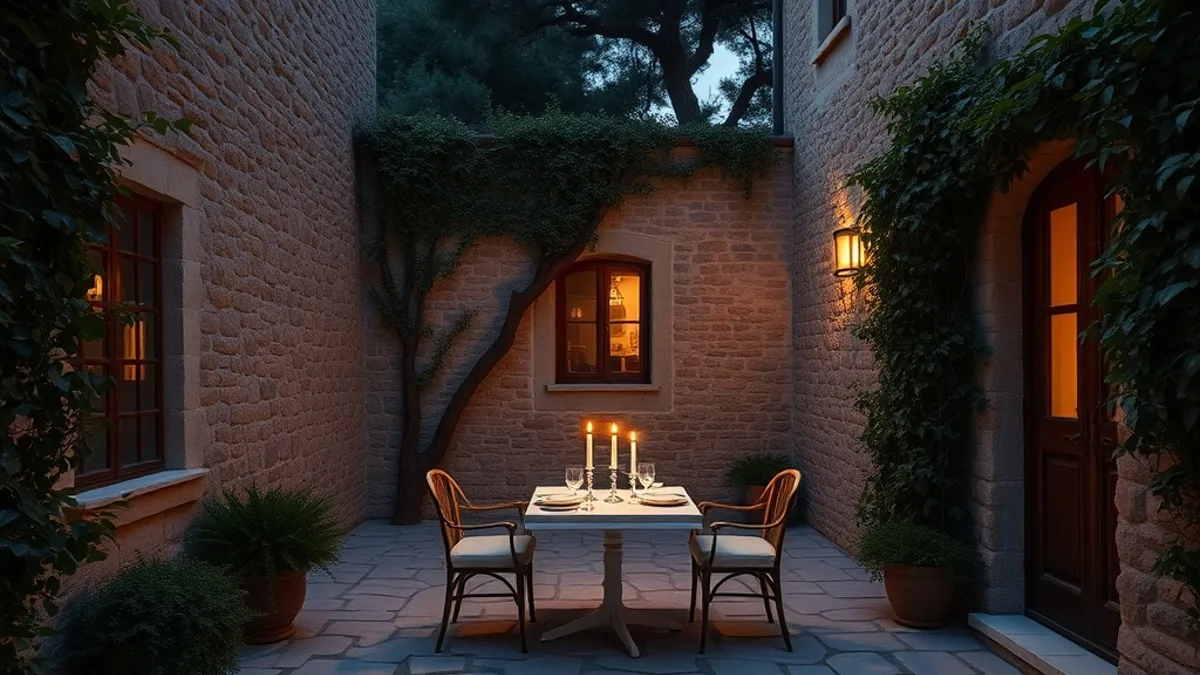
Garden villas are usually the most affordable option, and they can be wonderfully secluded—but their privacy depends entirely on planting and layout. A mature tropical garden with dense borders and staggered units can feel completely private; a young landscaped plot with villas in neat rows will not. Ask how old the property is and request photos taken from the terrace, not just of it.
Beachfront: convenience at a cost
Beachfront positions trade some privacy for the luxury of stepping straight onto the sand. That trade can be perfectly reasonable, but check how public the beach strip is before you commit. In many destinations, beaches are open to locals and day visitors, which means loungers, vendors, and walkers passing in front of your deck. A beachfront villa set back behind its own wall, or on a stretch of coast with no public access road, offers a very different experience from one that opens directly onto a busy shoreline. Match the setting to how you actually want to spend your days—swimming, walking the beach, or hiding away—rather than to the prettiest listing photo.
Layout and Amenities That Suit Two Travelers
For a honeymoon, villa size is not a status symbol. One generous bedroom suite, designed around a couple, will almost always feel better than a three-bedroom layout where rooms sit empty and the space feels hollow. Look for a suite with a proper lounging area, a bed positioned toward a view or garden wall, and enough separation from the kitchen and service zones that staff can work without crossing your path.
The best suites blur the line between indoors and out. An outdoor bathroom, even a simple one with a shower set among planting, turns a routine moment into something memorable. A shaded lounging deck matters just as much: you will spend hours there with coffee, books, and naps, so check photos for real shade structures rather than a bare terrace that turns unusable by mid-morning.
The covered living area is your real living room
A covered outdoor living area, open on two or three sides, effectively doubles the villa. It gives you a place for breakfast, afternoon reading, and evening drinks without ever heading to a shared restaurant or lobby lounge. When you compare villas, weigh the size and comfort of this space as heavily as the bedroom itself, because it is where you will actually spend your days.
Eating in keeps the bubble intact
Rest days are when privacy is tested. If every meal means walking to a communal restaurant, the bubble breaks quickly. Ask what in-villa dining looks like before you book: some properties offer full room service with set menus, others can arrange a private chef who cooks and clears in your own kitchen. Even a basic breakfast-delivered-to-your-deck option protects the quiet rhythm you came for, so confirm what is realistically available rather than assuming it is standard.
When and How to Book for the Best Privacy and Price
Booking a genuinely private villa is less about luck and more about timing plus a few pointed questions. Prices and availability shift with the seasons, and the villas with the best sightlines tend to disappear first. The good news is that the whole process can be managed from your laptop: a shortlist, a couple of well-timed emails, and a realistic budget will get you further than any amount of scrolling through photos. Here is a sequence that works.
- Lock in your dates early for peak weeks. If you are traveling during the December-March or June-August high season, reserve 6-9 months ahead. The most secluded standalone units are limited in number at any property, and they are the first category to sell out once honeymoon season approaches. Waiting until the last minute usually means choosing between leftovers.
- Consider shifting to shoulder months. May and October-November often cut rates 20-40% with comparable weather in many tropical destinations. Fewer guests also means less competition for the quietest corners of the resort, so privacy improves without changing your villa at all.
- Set a realistic nightly budget. Genuinely standalone honeymoon villas, with no shared walls and real distance from neighbors, typically start around $250-400 per night in most tropical destinations. Cheaper listings usually mean closer quarters, so treat that floor as a signal rather than a splurge.
- Budget for staff if you want full seclusion. A dedicated chef or butler who handles meals and housekeeping inside your bubble typically adds $50-150 per day. It is optional, but it removes most reasons to leave the villa on rest days.
- Email the property before paying the deposit. Ask directly and in writing: how far is the nearest neighboring unit, do staff use a separate service path, and is the pool reserved exclusively for your villa? Get the answers confirmed by email so you have something to point to on arrival.
One extra email takes ten minutes and can be the difference between the seclusion you pictured and a terrace that faces the walkway. Properties answer these questions readily when asked clearly, and a vague or evasive reply is itself useful information about what to expect. If a reservation team hesitates to confirm distances or pool access in writing, that tells you the answers probably are not the ones you want to hear. A confident, specific reply, on the other hand, is a strong sign the villa delivers what its photos promise. Build this verification step into your booking routine and treat it as seriously as comparing rates, because the cheapest option that fails the privacy test is no bargain at all.
Destinations Where Secluded Honeymoon Villas Come Naturally
Some destinations make villa privacy easy because of geography rather than clever landscaping. Low-density islands, where resorts are small and spread out, suit couples who want silence over nightlife. Inland valleys work the same way: with few neighbors and plenty of space between properties, seclusion comes as a default rather than an upgrade. If your priority is waking up to birdsong instead of beach music, these settings deserve a look first.
Green country with room to breathe
Rice-field and hillside regions offer a different kind of privacy. Villas sit scattered across terraced slopes and valley floors, with paddies, palms, and tree lines acting as natural buffers between properties. Instead of a fence, your sightline ends in green. Bali’s interior is the classic example, and areas around Ubud’s quiet rice-field enclaves show how effective this kind of natural screening can be when the villas are spaced generously apart.
Remote coastlines for barefoot seclusion
Then there are the far-flung coastlines: long stretches of sand or rocky shore a bumpy drive or small-plane hop away from the nearest town. These places reward couples willing to travel farther, because true barefoot seclusion is simply easier where the crowds have not followed. The trade-offs are real: fewer dining options, longer transfers, and sometimes simpler infrastructure. But if your ideal honeymoon is a hammock, a private pool, and nobody else in sight, the extra travel time is the price of admission, and most couples who choose it would pay it twice.
Bringing It Together
A villa can photograph beautifully and still disappoint the moment you step onto the terrace and wave at the neighbors. The privacy you pay for comes from three things working together: layout, distance, and screening. Price alone tells you very little, since an expensive villa with shared sightlines can feel less secluded than a modest one set 30-50 meters from everything else.
So match the setting to your style, whether that is a clifftop perch or a screened garden retreat, verify sightlines and service paths in writing before you pay, and book 6-9 months ahead if you are traveling in peak season. Do that, and the villa you arrive at will match the one you fell for online. If this helped you plan your honeymoon, leave a comment or share the article with another couple.