Many travelers love the idea of hostel prices and the easy social energy that comes with them, but hesitate the moment they picture a bunk bed and a stranger’s snoring a meter away. The good news is that the choice between privacy and savings is no longer either-or. The modern hostel-style hotel has quietly reshaped the budget accommodation scene, offering proper private rooms alongside the dorm beds, shared kitchens and communal lounges that made hostels appealing in the first place.
In this article, we’ll look at what a hostel-style hotel actually is and how it differs from both a classic hostel and a budget hotel. We’ll break down what private rooms cost and what you get for your money, show you how to squeeze real value out of shared spaces, and explain who these properties suit best. You’ll also find practical advice on booking the right place, choosing between dorms and private rooms, and deciding whether this smart middle ground fits your next trip.
What a Hostel-Style Hotel Actually Is
A hostel-style hotel is a hybrid property: it keeps the dormitory beds of a traditional hostel but adds private rooms, some with en-suite bathrooms and some with a shared bathroom down the hall. You book exactly the level of privacy you want, in the same building and often on the same floor. That flexibility is what separates these properties from both classic hostels and standard budget hotels.
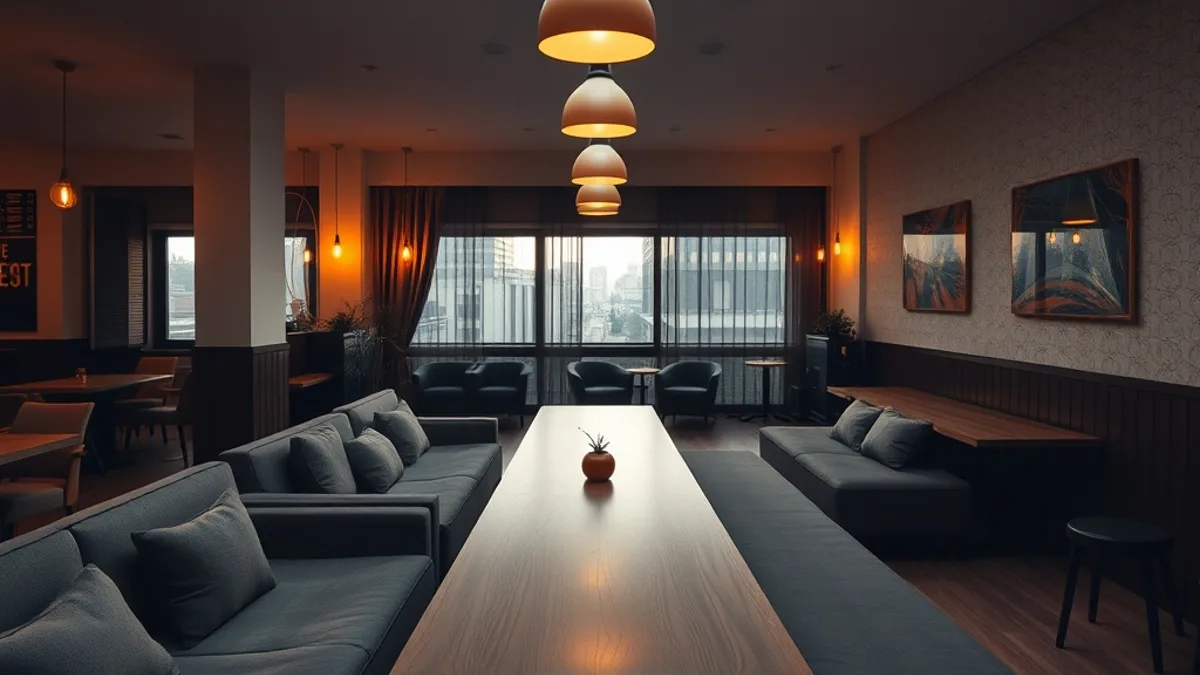
The second defining feature is the shared facilities. Instead of paying for a restaurant, gym and minibar you’ll rarely use, you get a guest kitchen, a lounge, laundry facilities and often a co-working corner. These spaces replace costly in-room amenities, which is a big part of how the prices stay low. For longer trips, a kitchen alone can change your daily budget.
From bunks to boutique
The image problem is fading fast. Design-led chains across Europe, Asia and the Americas have moved well past bare-bones bunks, with polished concrete floors, curated artwork, proper cafés and interiors that would not look out of place in a boutique hotel. Some now feel more like stylish apartment buildings with a social calendar attached.
The trade-off is worth understanding before you book. You exchange room size and service depth for price and atmosphere. There’s usually no room service, the front desk may be friendly but minimal, and rooms are compact. If you’re happy to live in the shared spaces rather than your room, the deal is excellent.
Private Rooms: What You Get for the Price
The headline reason to choose a private room in a hostel-style hotel is the price. Rooms commonly range from $40-90 per night depending on the city and season, which typically puts them 30-60% below comparable mid-range hotel rooms in the same location. In expensive cities, that gap can easily fund several extra days of your trip, or a nicer dinner every night.
Options vary more than most travelers expect. At the top end you’ll find double rooms with en-suite bathrooms that feel like compact hotel rooms. At the value end, twins share a bathroom located elsewhere in the corridor, trading a short walk for a lower rate. Both usually include lockable storage and the same access to shared facilities as dorm guests.
What the room is like
Expect a compact layout: a good bed, quality bedding and blackout curtains, but rarely a wardrobe, desk or armchair. These rooms are designed for sleeping, with lounges and co-working corners taking over the living functions. If you plan to spend evenings in your room, check photos carefully before booking.
Before comparing prices, check exactly what’s included. Some properties provide towels and daily housekeeping as standard, while others charge a small fee or skip housekeeping for short stays. Breakfast is another variable, ranging from a basic bread-and-coffee spread to nothing at all. For a sense of what a true luxury alternative costs in the same destination, compare with options like these Marbella sanctuaries with sea breezes and private poolside calm. Once you know what each rate genuinely includes, the real savings become clear.
Making the Most of Shared Spaces
The shared spaces are where a hostel-style hotel earns its keep, and treating them as part of your room rather than an afterthought changes the whole economics of a stay. The kitchen is the biggest win: cooking even one meal a day can cut food costs by 30-50% compared with eating out for every meal, which adds up fast on trips longer than a few days. Most guest kitchens come stocked with the basics, including stoves, fridges and shared pans, spices and oil left behind by earlier travelers.
The social side works almost by accident. Communal lounges and rooftop terraces are the easiest places to meet other travelers, because people drift there naturally in the evening with a drink or a laptop. Unlike forced hostel bar crawls, these spaces let you be as social or as private as you like, and conversations tend to start themselves over a shared table or a sunset view.
- Co-working corners with free Wi-Fi make longer stays workable for remote workers, and many properties now add power outlets at every seat plus printed Wi-Fi codes that work on multiple devices.
- Guest laundries let you pack lighter and wash mid-trip, which matters most on multi-week itineraries where airline baggage fees and hotel laundry services quietly drain your budget.
- Luggage storage before check-in and after check-out turns awkward arrival and departure hours into useful ones, letting you explore the city instead of hovering near reception with your bags.
None of these extras show up in the headline room rate, yet together they often save more per day than the price difference between this and a budget hotel. Use them deliberately and the value compounds.
Who a Hostel-Style Hotel Suits Best
A hostel-style hotel is not for everyone, but for a surprising range of travelers it hits a sweet spot that traditional hotels miss. The key is matching the property type to how you actually travel, not how you imagine you might travel someday. If your days are spent out exploring and your evenings are spent cooking, chatting or catching up on work, the shared-spaces model works in your favor.
Solo travelers are the most obvious fit. You get a door that closes and a bed nobody else can claim, then step outside your room into a lounge or rooftop where conversation starts easily. On longer trips, the math matters too: a kitchen and laundry that cost nothing extra to use save real money week after week, and those savings compound the longer you stay.
It is equally worth being honest about who should look elsewhere. If you are a light sleeper, a light-sleeper-in-a-shared-building situation rarely ends well, no matter how good the reviews are. The same goes for travelers who expect turn-down service, a bellhop or a guaranteed private bathroom without checking the room details first.
- Solo travelers: a private room removes the dorm worry of packing valuables away every morning, while common areas give you a ready-made social calendar you can join or skip.
- Couples and friend groups on longer trips: self-catering dinners and free laundry mean a two-week stay can cost noticeably less than the same nights at a mid-range hotel, freeing budget for experiences instead.
- Digital nomads and remote workers: co-working corners, dependable Wi-Fi and 24-hour reception often beat a hotel business center, and flexible check-in suits irregular arrival times.
- Light sleepers and service-focused travelers: thin walls, shared corridors and the absence of room service make these properties a poor match, so a conventional hotel is usually the better call.
- Travelers who need a guaranteed en-suite bathroom: some private rooms share a bathroom down the hall, so confirm the setup before booking if that matters to you.
How to Book the Right Hostel-Style Hotel
Booking a hostel-style hotel well takes a little more attention than booking a standard hotel, mostly because search results and pricing structures differ. Dorm beds and private rooms are often listed side by side on the same page, and the inclusions can vary from one property to the next even within the same city. A few deliberate steps at the start prevent the two most common disappointments: paying dorm prices for a worse room, or arriving to find the “included” extras were not included at all.
- Time your booking. Reserving 2-4 weeks ahead usually secures the best private room rates. If your trip falls in June-August peak season in Europe, book earlier still, since peak-season demand can push prices well above shoulder-season levels.
- Filter for private rooms specifically. Many booking platforms default to showing dorm beds, so the private rooms you actually want may be buried or invisible. Set the room-type filter before you compare anything, otherwise you may be looking at an entirely different property category.
- Read recent reviews with three things in mind. Look for comments on noise levels, bathroom cleanliness and locker security. Reviews from the last few months tell you far more than an overall score, because management and guest mix can change quickly in this segment.
- Compare the total cost, not the nightly rate. Check whether towels, daily housekeeping and breakfast are included, then factor in location. A slightly pricier room near the center can beat a cheaper one that adds daily transport costs to every outing.
It also pays to double-check the practical details that matter more in this segment than in conventional hotels. Confirm that lockers or an in-room safe are available if you plan to stay in a dorm, and look for 24-hour reception if your flight lands late, since some smaller properties use key-code entry or limited front-desk hours instead. If you intend to cook, glance at photos of the shared kitchen to make sure it looks genuinely usable rather than decorative.
Once you have run this checklist, the comparison becomes straightforward: two properties with similar rates are rarely similar in value once inclusions and location are counted. Ten minutes of filtering and review-reading is usually the difference between a room that works and one you merely tolerate.
Choosing Between Dorms and Private Rooms
The dorm-versus-private-room decision comes down to trip length, budget and how your mornings start. Dorm beds usually run $15-40 per night in Europe and $10-30 in Southeast Asia, which makes them hard to beat for a short city stay on a tight budget. If you are in town for one or two nights and plan to be out from morning until late, a dorm bed is simply the cheapest way to sleep centrally.
Private rooms, on the other hand, earn their keep over longer stays and on trips with early starts. Beyond three nights, the extra cost per night feels smaller and the benefits feel larger: you control your own lights, alarms and packing routine without negotiating around strangers. Anyone catching a 6 a.m. train or flight, or getting up early for a tour, will appreciate not fumbling in the dark for clothes while five other people sleep.
Dorm types matter more than you think
Not all dorms are equally rowdy. Mixed dorms are the cheapest option, but female-only dorms and small four-bed rooms typically offer quieter nights and a calmer atmosphere. If you are set on a dorm but wary of the chaos, choosing a smaller room is the single easiest upgrade.
When the price gap nearly disappears
Here is the comparison many travelers miss: split a private twin between two people and the per-person cost often comes close to a dorm bed. Two friends each paying half of a private twin may pay only a few dollars more than they would in separate bunks, while gaining a lockable door and a bathroom they do not share with eight strangers. For pairs traveling together, it is usually the smartest option on the board.
The Smart Middle Ground for Modern Travelers
If you have been skipping hostels because you assumed privacy was off the table, hostel-style hotels solve exactly that problem. You get a lockable private room at night, then all the energy, kitchens and lounges of a social property the moment you step outside your door. With private rooms commonly in the $40-90 range and shared kitchens trimming your food bill, the savings over a budget hotel are real, not marginal.
The formula is simple: match the room type to your trip length, book 2-4 weeks ahead, and check what is included before you compare prices. Do that, and you keep the low cost and the company without giving up a good night’s sleep. Have you stayed in one yet? Tell us how it went in the comments, or share this article with a traveler who still thinks hostels mean bunks only.