You’ve booked a hotel that promises a gym, arrived with your running shoes ready, and found two treadmills, a dusty elliptical and a line of guests waiting at 7 a.m. Knowing what hotel gym equipment to expect before you check in saves you from that disappointment, and knowing when the room is quiet makes any workout easier.
This guide walks you through the typical equipment lineup in hotel fitness rooms, how to judge a gym before you book, and when the crowds hit. You’ll also learn how to reserve peak gym times, which workouts actually fit small hotel gyms, and what to do when the gym falls short of what you need. By the end, you’ll have a simple strategy for keeping your training on track, whether you’re on a business trip or a beach vacation.
What Hotel Gym Equipment You Can Realistically Expect
Most hotel gyms follow a familiar formula, and knowing the pattern helps you plan realistic workouts before you arrive. The cardio section is usually the most complete part of the room, while the strength side is where things get limited fast.
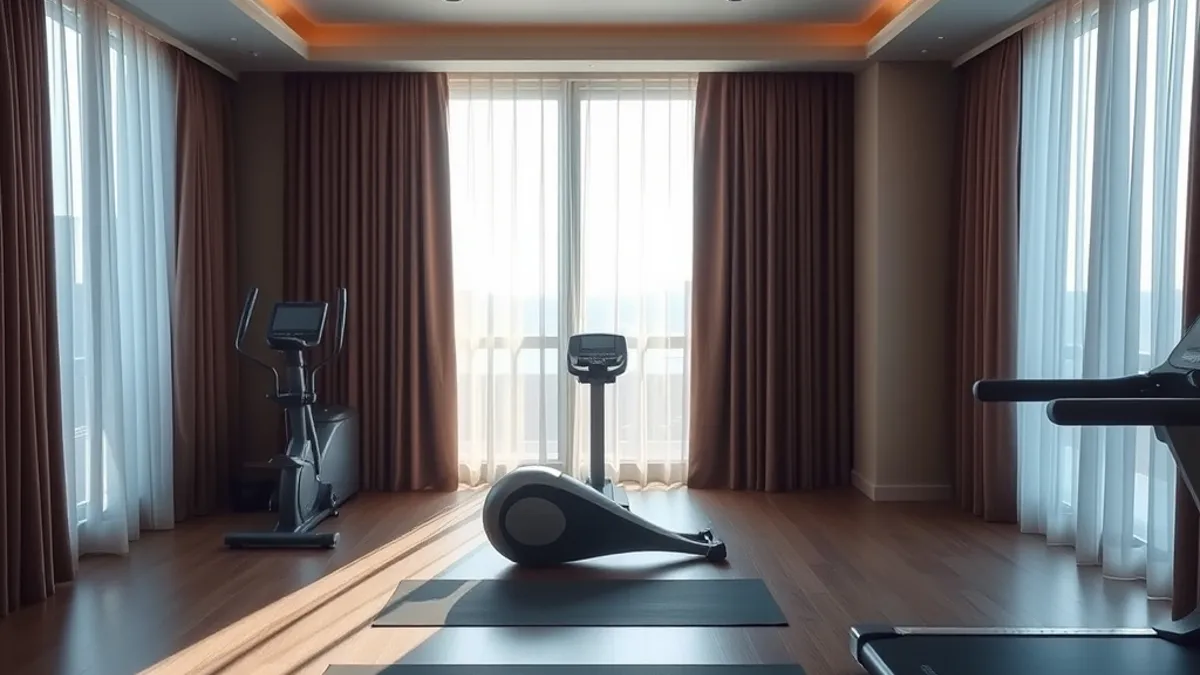
Expect a standard cardio lineup of two to four treadmills, one or two ellipticals, and often a stationary or spin bike. Some smaller gyms skip the bike entirely, while larger resort fitness centers may add a rower or stair climber, but treadmills remain the one machine you can almost always count on.
On the strength side, free weights usually stop at 20-25 kg dumbbells in most hotel gyms. Adjustable benches and a small weight rack are common in better gyms, so you can still get a solid session with dumbbell presses, rows and lunges. One multi-station cable machine is typical, which covers pull-downs, rows and triceps work in a single footprint. Full squat racks and barbells appear mainly in upscale or athletic-focused hotels, so don’t count on them unless the property markets itself to serious lifters.
Beyond the machines, look for these extras that make a small gym far more usable:
- Yoga mats and stability balls for floor work, stretching and core training when bench space is tight.
- Resistance bands that let you add rows, pull-aparts and warm-up movements the dumbbell rack can’t cover.
- Foam rollers for recovery after long travel days or hard sessions.
- A water station or cooler, which matters more than you’d think in gyms without a nearby vending machine.
How to Judge a Hotel Gym Before You Book
Booking pages rarely tell the whole truth about a hotel gym. Equipment lists on booking sites often exaggerate, and a “fully equipped fitness center” can turn out to be one treadmill and a few dumbbells in a converted storage room.
The most reliable check is recent guest photos rather than official renders. Guest photos show the actual machines, the real amount of floor space and whether the room feels cramped. Look for photos uploaded within the last year, since older images may show equipment that has since been removed or replaced.
Ask the hotel directly
When photos leave doubts, email the hotel and ask for the equipment inventory, opening hours and whether the gym is staffed. A specific question like “what is the heaviest dumbbell available” gets a far more useful answer than a generic “is there a gym.” Hotels that answer promptly and in detail usually take their fitness facilities seriously.
Also check access arrangements. If you train early or late, look for 24-hour access or keycard entry, since a gym that opens at 7 a.m. may not fit your schedule at all. Some properties require staff to unlock the room, which adds unpredictability to early sessions.
Watch out for semi-outdoor gyms
Resort gyms in warm destinations are sometimes semi-outdoor, with open walls facing the pool or garden. These can be pleasant, but midday heat and humidity make them tough for serious training. Confirm whether the space has air conditioning or at least a shaded setup before committing to a midday workout plan.
Understanding Peak Times in Hotel Gyms
Hotel gym crowds follow a predictable rhythm, and timing your sessions around it is half the battle. The two busy windows are the early-morning rush from 6:00-8:00 a.m. before breakfast, and a second wave from 5:00-8:00 p.m. as guests wrap up work or return from day trips.
Who fills the gym and when
The type of hotel matters. Business hotels are busiest on weekday mornings, when travelers squeeze in a workout before meetings. Leisure resorts behave differently: they peak on rainy days, when guests abandon the pool, and on weekends when occupancy is highest. If rain is forecast at a resort, expect the gym to be packed all day.
Treadmills fill first in almost every hotel gym, since they’re the most popular machine and often the scarcest. To manage the demand, many hotels enforce 20-30 minute caps on cardio machines during peak hours. If you’re planning a long steady run, a time cap can derail it, so check the rules posted in the gym or ask at the front desk.
The quiet window
Midday windows from 10:00 a.m. to 4:00 p.m. are typically near-empty, especially at business hotels where guests are out for the day. If your schedule allows a late-morning or early-afternoon session, you’ll usually have your pick of machines and no pressure to hurry. Shift your workout to that window whenever possible and the whole experience improves.
How to Book or Reserve Peak Gym Times
Not every hotel gym handles reservations the same way, and the front desk knows the system even if the website doesn’t. A two-minute conversation at check-in can save you several mornings of standing around waiting for a treadmill. Some properties run a simple clipboard by the door, others use their app, and plenty operate on a first-come, first-served basis with no system at all. Knowing which one you’re dealing with before your first workout makes everything smoother, especially if you’re trying to train during the busy early-morning window.
- Ask how the system works. Find out whether the gym runs on a sign-up sheet at the door, a booking feature in the hotel’s app, or simply first-come, first-served access. The answer changes your whole routine, so get it clear before your first workout. Ask who to contact if a slot opens up or your plans change.
- Reserve early at smaller gyms. Resorts with limited equipment and sign-up sheets commonly expect bookings 24-48 hours ahead, especially for morning slots before breakfast. If you arrive during a busy season, ask about availability the moment you check in rather than waiting until the night before.
- Request a recurring slot for longer stays. On multi-day trips, ask the concierge to block the same hour each day. Many will handle this for you, and it removes the daily scramble entirely. This works best at quieter properties where the same few guests compete for the same machines.
- Stack slots only when it’s quiet. If the hotel caps sessions, booking two back-to-back slots can extend your workout, but do it only during quiet hours so you’re not taking machines other guests need. Midday tends to be the safest time for this.
One final tip: confirm your reservation method works for the whole length of your stay. Some sign-up sheets are wiped and rewritten daily, which means a recurring booking needs a human, not an app. A quick word with the same staff member each morning often gets you further than any booking system, so learn a name or two at the front desk early in your stay.
Workouts That Fit Small Hotel Gyms
Most hotel gyms won’t match your home setup, and that’s fine once you adjust your plan. The typical free-weight ceiling of 20-25 kg dumbbells rules out heavy barbell work, but it still allows a surprisingly complete session if you program around it. The key is choosing movements where a moderate dumbbell goes a long way, rather than trying to replicate your usual lifts one-for-one. Think of it as a different training block, not a downgrade.
Single-leg and unilateral exercises are your best friends here. Because each side works independently, a 20-25 kg dumbbell feels far heavier than it would in a two-handed lift, and your stabilizers get extra work for free. That means Bulgarian split squats, step-ups and single-leg deadlifts can load your legs hard without needing a barbell at all.
- Build sessions around lunges, rows, presses and carries. Walking lunges, one-arm rows, single-arm presses and farmer carries all scale well to the dumbbell ceiling, and carries need almost no equipment beyond open floor space.
- Lean on the cable machine for pulling volume. Pull-downs and face pulls cover back and rear-shoulder work that light dumbbells handle poorly, and the single multi-station cable unit common in hotel gyms is ideal for both.
- Replace long runs with intervals or hill walks. When treadmills are capped at 20-30 minutes during peak hours, short hard intervals or an incline walk deliver more in the allowed window than a steady jog.
- Pack resistance bands in your bag. They weigh almost nothing, slot into any carry-on, and give you a full warm-up and accessory option if the gym is crowded or thinner on equipment than advertised.
With this structure, even a 10-40 square meter hotel gym can support solid training for the length of a typical trip. Rotate two or three full-body sessions across your stay, keep the rep ranges moderate, and you’ll land home without losing momentum.
Alternatives When the Hotel Gym Falls Short
Sometimes the hotel gym is genuinely a lost cause: two treadmills, a broken bench and a mirror. Rather than abandoning your training for the week, look at what the property and its surroundings can offer. Most hotels have more fitness options than the gym floor suggests, and staff are usually happy to arrange them if you simply ask. The trick is knowing what to request and when.
Start with the front desk or concierge before you write the gym off. A quick question at check-in often surfaces options that never appear on the booking page, from loaner equipment to local gym partnerships. Ask specifically, since vague questions get vague answers. Mention whether you need weights, cardio or just floor space, and the staff can match you to the right alternative.
- Request an in-room fitness kit. Many hotels keep mats, resistance bands and even light dumbbells on hand and deliver them to your room on request, which turns a small room into a private workout space. Some properties also offer streamed or on-demand workout videos you can follow along with.
- Ask for a partner-gym day pass. Upscale hotels frequently have agreements with nearby clubs, and a day pass gets you racks, barbells and proper weight stacks the hotel can’t provide. Confirm any transport details and whether the pass covers multiple days.
- Take your session outside. Pool laps, a run along the beach or through a nearby park, and stair climbs on hotel or parking-structure stairs all cost nothing and often beat the gym for scenery. Ask the concierge about safe running routes; they usually know which areas to avoid.
Between these three routes, you can usually piece together a full week of training even if you never touch the hotel gym. Check with the front desk about current arrangements, since partner agreements and kit availability vary by property and can change without notice. A two-minute conversation at check-in is often all it takes to keep your training plan intact.
Wrapping Up Your Hotel Gym Strategy
So what should you actually expect from that “fully equipped gym” in the booking photos? In most hotels, the reality is a compact room, often somewhere between 10-40 square meters, with a few cardio machines, light dumbbells and a single cable station. Full-service resort gyms can be far more generous, sometimes exceeding 100 square meters, but those are the exception rather than the rule. That smaller setup is still enough for a solid workout, as long as you know it going in and plan your sessions around it instead of hoping for a full weight room.
Timing matters just as much as equipment. The morning rush runs from 6:00-8:00 a.m., and a second wave builds in the early evening once guests finish their workday or come back from the pool. The stretch between late morning and mid-afternoon, roughly 10:00 a.m. to 4:00 p.m., is usually near-empty, so shifting your workout there can mean having the whole room to yourself. If this helped you plan your next trip, leave a comment or share the article with a fellow traveler.