It happens to travelers all the time: you open the mini-fridge to tuck in a soda from the corner store or cool down a bottle of water, and at checkout you find minibar charges you never agreed to. The fridge itself was free to use, but something inside it got moved, lifted, or consumed, and the billing system did the rest. Understanding hotel mini-fridge rules before you touch that little door can save you money and a frustrating conversation at the front desk.
This guide walks through the basics every guest should know, what you can store and take for free, which items count as paid minibar stock, and how sensor and weight-sensor minibars actually work. You will also find practical steps for avoiding surprise charges, what to do if you are billed by mistake, and how to use the mini-fridge with confidence on every trip.
Hotel Mini-Fridge Rules: The Basics Every Guest Should Know
The good news is simple: the mini-fridge itself is free to use. Hotels provide it as part of the room, and storing your own things inside costs nothing. What you pay for is the hotel’s stock sitting on those shelves, and only when you move, consume, or remove it. The charge comes from the products, not from the appliance.
Where to find the prices
Minibar stock is usually listed on a price card inside the fridge door or on the room’s service menu, so you can check exactly what each bottle and snack costs before you touch anything. If you cannot find a price card, ask at reception rather than guessing, since prices are rarely printed on the items themselves.
Rules change with property class
How strictly these rules are enforced varies a lot. Budget chains often stock a plain fridge with little or no minibar at all, so you can use it freely. Resorts and 4-5 star hotels tend to be stricter, with stocked minibars, sensor technology, and staff who check the fridge daily. The more upscale the property, the more carefully that little fridge is monitored, so treat it with extra caution when you check in somewhere polished.
What Is Free to Use
Plenty of things connected to the mini-fridge cost you nothing, and knowing them makes the whole setup less intimidating. Storing your own snacks, drinks, medicine, or baby food inside the fridge is completely free. You are simply using the storage space that came with your room, and no hotel can bill you for that. The same goes for chilling breast milk, keeping insulin cool, or stashing leftover pizza from dinner. If you are unsure whether an item counts as yours, keep the receipt or packaging visible on the shelf.
Ice is another freebie. The ice machine in the corridor is there for all guests, and filling your own bag or bucket costs nothing. The mini-fridge is just for storage; you do not need it to keep drinks cold for a few hours, so a bucket works fine for a short evening.
- Welcome water bottles: Complimentary water bottles marked as free, or set out as welcome amenities, are yours to take and consume. Some hotels even replace them daily, so check for a small card or label confirming they are complimentary.
- Your own groceries: Items you bought yourself, from supermarket drinks to yogurt and fruit, can be stored freely. Keep them clearly separated from minibar stock so staff do not confuse them during restocking checks.
- Medication and baby items: Refrigerated medicine, formula, and baby food belong in the fridge at no cost. If the fridge is packed with minibar products, ask reception for help making space.
A little organization goes a long way here. Put your own items on the same shelf, ideally the top one, and leave the branded products untouched below. If space is tight, a small cooler bag with ice from the hallway machine covers most short-term chilling needs, leaving the fridge free for anything that genuinely needs it.
What Counts as Paid Minibar Items
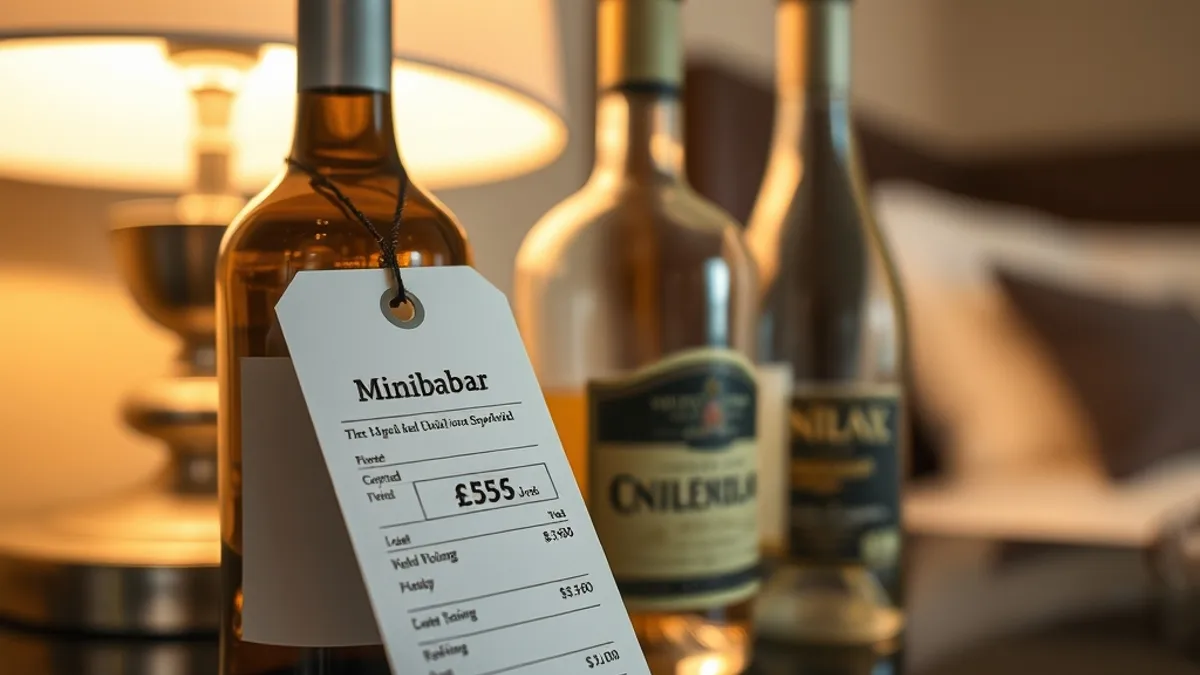
Paid minibar items are easy to identify once you know the pattern: any branded drink, snack, or alcohol listed on the minibar price card is billed when it is moved or consumed. If the bottle has the hotel’s price sticker or sits on a shelf with a sensor tag under it, treat it as untouchable unless you are willing to pay. This includes small items that look trivial, like a chocolate bar or a tiny juice bottle, which can carry surprisingly steep prices.
Those prices sting because minibar items typically cost 2-5 times regular retail prices. On top of that, restocking fees of roughly $2-5 per item may apply after minibar use, so a single soda can end up costing far more than the sticker price suggests. Even moving an item to make room for your own food can trigger a charge on sensor-equipped fridges, so rearranging shelves is not a safe workaround.
- Alcohol mini-bottles: These are usually the most expensive items in the fridge, often several times what the same miniature bottle costs at a store. Check the price card before pouring anything.
- Branded snacks and candy: Chocolate, nuts, and chips on the price card are billed the same way as drinks. A snack you lift to read the label can be enough on a sensor shelf.
- Non-food minibar extras: Some hotels stock toiletries, travel kits, or other small products in or near the fridge with minibar pricing. If it appears on the card, assume touching it creates a charge.
How Sensor and Weight-Sensor Minibars Work
Modern minibars are smarter than the little fridge in your kitchen. In many hotels, especially in the 4-5 star category, every bottle and snack carries a small sensor tag. The moment you lift an item out of the fridge, the system logs the removal, typically within 30-60 seconds, and posts the charge to your room automatically. Nobody visits your room to check; the fridge itself does the accounting.
Weight-sensor shelves explained
Some fridges go a step further with weight-sensor shelves. Each shelf measures how much weight sits on it, so even briefly lifting a can to read the label can register as a removal. Putting the item back does not always cancel the charge, because the system may have already logged the event. This is why housekeeping staff often leave a note asking you not to handle the minibar items unless you intend to consume them.
If you pull something out by accident, act fast. Return the item to exactly the same position, then call or visit the front desk and explain what happened. Hotels deal with this constantly, and a quick heads-up usually stops the charge from ever appearing on your bill. Waiting until checkout makes the conversation harder, since the automatic log will already show a removal with no explanation on your side.
How to Avoid Surprise Charges
A few minutes at check-in can save you from the most common minibar headache: a charge you never earned. The good news is that hotels expect these requests and handle them every day, so there is no need to feel awkward about asking. Front desk staff would much rather empty a fridge in advance than untangle a billing dispute at checkout. Here is how to set yourself up for a stress-free stay, step by step.
- Photograph the fridge contents and the price card. Open the minibar as soon as you settle in and take clear photos of every shelf, plus the price card inside the fridge or on the room menu. Snap a quick video as well if you want extra coverage. These photos are your proof of the room’s condition if a sensor logs a removal you did not make or an item was already missing when you arrived.
- Ask reception to empty or lock the minibar. When you check in, simply request that the minibar stock be removed or the fridge locked. Requesting minibar items be removed at check-in often costs nothing at most properties, and the staff can usually send someone up within minutes. If housekeeping cannot come right away, ask them to note the request on your reservation so it is not forgotten.
- Use the free emptying service where offered. Some hotels offer a free ’empty the minibar’ service on request, meaning they clear the stock entirely so you can fill the space with your own drinks and snacks worry-free. This works especially well on longer stays or in hot climates where you want cold water and soda on hand.
Once the fridge is empty or locked, you can store whatever you like without touching a sensor or a price card. Keep your photos until after checkout, just in case a charge shows up on your folio later. It is a small piece of admin on arrival day that pays off for your whole stay.
What to Do If You Are Charged by Mistake
Even careful guests occasionally find a minibar charge they never earned. Sensors misfire, housekeeping restocks late, and automatic billing does not ask questions. A charge can appear because a shelf registered a brief lift, because an item was moved to make room for your own drinks, or simply because the previous guest’s bill was never cleared. Whatever the cause, the fix is straightforward if you handle it methodically rather than in a rush at the checkout desk with your bags packed and a ride waiting outside.
- Review your folio the night before checkout. Ask the front desk to print or email your current bill the evening before you leave. Checking the night before gives you time to deal with any incorrect minibar charge calmly, with your photos and room still available as evidence, instead of juggling luggage and a taxi at the same time. It also leaves room for a second conversation if the first one does not resolve things.
- Dispute the charge at the front desk with your photos. Show the check-in photos of the fridge contents and price card, and explain which item you never touched. Front desk staff can usually verify sensor logs or housekeeping records on the spot and remove a mistaken charge immediately. Stay polite and specific; staff resolve clear, documented disputes far faster than vague complaints.
- Know your window after checkout. If a charge appears on your card after you have left, guests usually have 24 hours after checkout to dispute minibar charges. Contact the hotel promptly with the same photos and a short description of the issue, and keep a copy of any emails you send.
Hotels would rather fix a mistaken charge quickly than lose a guest over a can of soda or a snack nobody ate. Front desk teams handle these disputes regularly, so a calm, well-documented request is routine work for them. With dated photos, an early look at your folio and a clear summary of what you never touched, nearly every billing error can be sorted out in a single friendly conversation before it ever reaches your credit card.
Using the Mini-Fridge With Confidence
That moment of opening the hotel mini-fridge to stash your own drinks, then spotting a minibar bill at checkout, catches far too many travelers off guard. The good news is that the confusion is easy to avoid once you know how things work. The fridge itself is free to use; only the minibar stock inside it and sensor triggers create charges.
A quick snapshot of the shelves and their price list at check-in, plus asking reception to empty or lock the minibar, removes almost all of the risk. And if a charge does sneak through, checking your folio the night before checkout makes any billing mistake simple to fix before you leave. Have you ever been surprised by a minibar charge? Share your story in the comments or pass this article along to a fellow traveler.