Booking a room for a trip with a friend, sibling or colleague sounds simple until check-in, when you discover you have reserved one large bed instead of two separate ones. This mix-up happens constantly because hotel terminology is inconsistent: some properties use “twin” to mean two singles, while others treat it as a synonym for a double. If you specifically need a hotel twin room with two separate beds, assuming the label means what you think can lead to an awkward night of shared sleeping or a frustrating scramble at the front desk.
This guide clears up the confusion. We explain what a twin room actually is, compare twin, double and queen bed sizes, and walk through the configurations you will encounter, from classic twins to Hollywood twins and triple setups. You will also find advice on who twin rooms suit best, how to make sure your bed request is actually honored, and how regional differences around the world affect what you get when you book.
What Is a Hotel Twin Room?
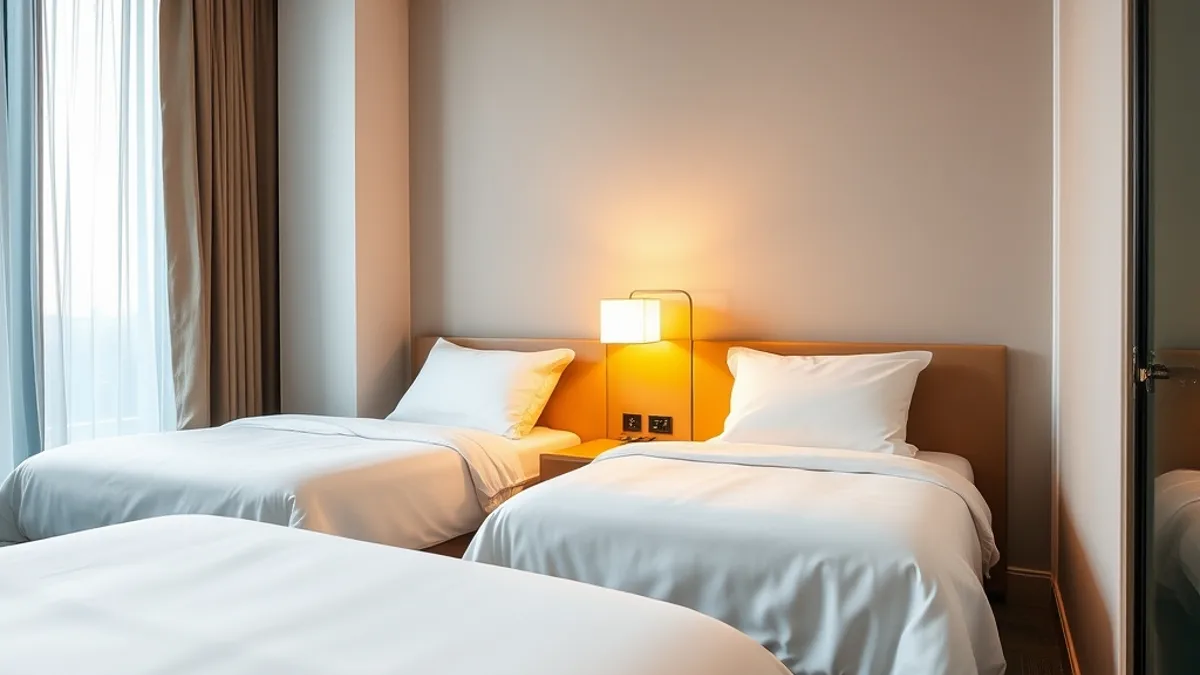
A hotel twin room is a guest room with two separate single beds, one for each occupant. That definition matters more than it sounds: a twin room is not a room with one bed of any size, and it is not automatically the same as a double. If a listing says “twin” but the photo shows one mattress, you are looking at something else entirely.
The whole point of the layout is separation. Twin rooms are designed for two people who want to sleep apart, whether that means friends on a city break, siblings sharing a room on a family trip, or colleagues on a work assignment who would rather not share a bed with a coworker. Each person gets their own mattress, pillow and usually their own reading light.
Where twin rooms are common
Regional habits differ a lot. Twin rooms are common and easy to find in Europe and Asia, where guesthouses, business hotels and resorts all offer them as a standard category. In North American hotels, the twin setup is less standard; properties there more often sell rooms with one large bed or two queens instead. If you are traveling in the US or Canada and need two singles, check the bed details carefully rather than relying on the room name.
You may also come across the term “twin double.” Some hotels use this label when they offer two beds that can be pushed together to form one large sleeping surface, or kept apart as two singles. It is a flexible middle ground, but it means the configuration on arrival is not always guaranteed unless you confirm it in advance.
Twin vs Double vs Queen: Bed Sizes Compared
Understanding bed sizes is the fastest way to avoid booking the wrong room, and the numbers here are worth memorizing. A single bed, often listed as a twin in hotel descriptions, measures roughly 99 x 190 cm (39 x 75 inches) and is built for one sleeper per bed. Two of these in one room give each person a proper mattress of their own, which is exactly what most friends and colleagues want after a long day of sightseeing or meetings.
A full or double bed measures about 137 cm wide, which sounds generous until two adults actually share it. It is technically meant for two people, but many couples find it snug, and two friends or coworkers will find it genuinely uncomfortable by the second night. A queen bed is 152 cm wide and comfortably suits couples, but it is a poor choice for two unrelated adults sharing a room, since there is no divider between sleepers and no agreed boundary for blankets.
- A single/twin bed at roughly 99 x 190 cm fits easily into smaller rooms, which is one reason European guesthouses favor the twin layout in compact spaces.
- A full/double bed at about 137 cm wide gives each sleeper only around 68 cm of width, noticeably less than a single bed provides on its own.
- A queen at 152 cm wide works well for couples but leaves unrelated adults sharing body heat and blanket territory with no separation at all.
- King and two-queen rooms are the North American alternative to the twin setup: two queens give each sleeper a 152 cm bed, which is far more space than a single, though the room itself costs more and takes up more floor area.
Common Twin Room Configurations You Will Encounter
Once you start comparing listings, you will notice that “twin room” covers several distinct layouts, and hotels rarely explain the differences up front. Knowing them helps you book exactly what you need and spot the setups that might not suit you. The most common versions fall into four categories, and each one changes how the room works in practice. Some give each sleeper more privacy, others quietly merge the beds into one, and a few are designed around mobility needs rather than sleeping arrangements at all.
The classic twin is what most people picture: two identical single beds, each around 99 x 190 cm, placed side by side with a nightstand between them. That nightstand matters more than it seems, since it gives each sleeper their own lamp, phone charger spot and a small buffer of personal space. Hollywood twins, triple setups and accessible versions all build on this basic template in different ways, and the differences are easy to miss in photos. A listing that shows two beds could be a true twin, a convertible Hollywood setup or a triple with a folding cot tucked in the corner, so it pays to read the room description carefully before you commit.
- Classic twin: two identical single beds with a nightstand between them; the most predictable option, and the one to ask for if you simply want your own bed.
- Hollywood twin: two twin beds pushed together to form one large bed, often with a shared sheet over both mattresses; hotels can usually separate them on request, but check whether the mattresses have a visible seam or gap.
- Triple twin: two singles plus a rollaway bed or sofa bed for a third guest; family twin setups often add this third bed or sofa bed for children under 12, so confirm the third sleeping spot is a real mattress, not a folding cot.
- Accessible twin: wider spacing between the beds to allow wheelchair clearance, with lower light switches and more open floor space around each bed; these rooms are limited in number at most properties, so request one well ahead.
Who Should Book a Twin Room
Twin rooms exist because plenty of travelers want to share a room without sharing a bed. Friends on a city break, siblings on a family trip, or two adults who simply sleep better apart all benefit from two separate single beds. A twin setup gives each person their own space while keeping the cost of one room instead of two.
Friends, siblings and colleagues
For friends and siblings, the appeal is obvious: nobody has to negotiate blankets, sleep schedules or a partner’s tossing and turning. A twin bed at roughly 99 cm wide is comfortable for one person, and everyone wakes up rested.
Business colleagues on shared work trips are another classic group. In many parts of the world, separate beds are simply expected when two coworkers share a room, and a twin room makes expense policies and personal comfort much easier to manage. If you travel for work with a colleague, checking that the room has true twin beds before booking saves an awkward conversation at the front desk.
Parents and solo travelers
Parents traveling with one child often find that a twin room plus a rollaway bed works just as well as a dedicated family room. Many properties will happily set up an extra sleeping spot for a young child, which can be easier to book and sometimes easier on the budget than a larger family category.
Solo travelers should not overlook twins either. Two beds in one room mean space for luggage on one, a workspace spread across the other, or the flexibility to sleep on whichever bed sits away from the window or the air conditioning. If you value room to spread out, a twin can be a surprisingly practical choice.
How to Make Sure You Actually Get Twin Beds
Booking a twin room sounds simple, but bed configuration is one of the most common things hotels get wrong at check-in. Room type alone does not always guarantee two separate beds, so a few deliberate steps make a real difference. The good news is that securing the setup you want takes very little effort, as long as you start early and put your request in writing.
- Write “twin beds” in the special requests field. Do not rely on the room type label alone. Some properties use “twin” loosely, and the special requests field is where staff look when assigning rooms. State clearly that you need two separate single beds, each roughly 99 cm x 190 cm, not a double bed or a convertible setup.
- Make the request 2-4 weeks before arrival. Early requests give housekeeping and front desk teams time to prepare the room. Last-minute requests depend entirely on what happens to be available that night, which is risky if the property only has one or two true twin rooms.
- Confirm by email or phone. A written confirmation creates a record you can reference at check-in. A short call to the hotel directly, rather than the booking platform, also helps because the property sees the note on your reservation itself.
- Expect to pay a little more. Twin rooms usually cost 10-20% more than a double in the same category, since two beds take up more floor space and more linen. Factor this into your comparison before booking, especially if you are choosing between several properties.
- Reconfirm at check-in. Politely remind the front desk of your request when you arrive, before you go up to the room. This is your last easy chance to fix a mistake without unpacking your bags first.
Keep in mind that some hotels convert twin rooms to doubles on arrival day if no request was logged in their system. That is why the written, confirmed request matters so much. A two-minute email weeks before your trip is far easier than arguing about bed configurations in the lobby at midnight, and it gives the hotel a fair chance to accommodate you properly.
Twin Rooms Around the World: Regional Differences
Where you travel shapes what “twin” means at the front desk. Bed conventions differ noticeably between regions, and knowing the local norm helps you set realistic expectations before you book.
Europe and Asia
European inns and guesthouses often offer twin rooms as a standard option, not an upgrade. In countries like Germany, Switzerland and the Netherlands, two separate single beds are a normal way for any two adults to share a room, so availability is generally good. Guesthouses in particular tend to list twin configurations openly.
Across Asia, twin options are common in both business hotels and resorts. Business travelers sharing a room is a familiar scenario in many Asian markets, so mid-range and upscale properties frequently offer a choice between one large bed and two singles. Resort tiers often do the same for families and friends traveling together.
North America and boutique properties
North American hotels lean toward two-queen rooms instead of true twins. If you ask for a twin in the United States or Canada, you will often be offered two queens, which gives each person more width but takes up more floor space and usually costs more. If you specifically want two single beds, read the room description carefully rather than assuming.
Boutique and design properties are a special case anywhere in the world. Because they often have a small number of rooms with individual layouts, a property may have only one twin room in the entire building. If that describes the hotel you have your eye on, book early and put your request in writing, because that single room will not stay available for long.
Key Takeaways on Twin Rooms and Bed Configurations
If you book a twin room expecting two separate beds, that is exactly what you should get: two single beds for two guests, not one shared mattress. The confusion usually happens when travelers assume “twin” means “double,” and the mix-up only surfaces at check-in.
The fix is simple. Know the difference between twin, double and queen setups before you book, since each suits a different pair of travelers and budget. Make your bed request clearly at booking, ideally 2-4 weeks before arrival, and confirm it in writing. And because regional norms vary so much, always read the full bed description on the hotel’s page instead of trusting the room label on its own. A quick look at photos and the fine print can save you an awkward conversation at the front desk. If this guide helped you sort out twin beds from doubles, leave a comment or share it with your travel partner.