It’s a frustrating moment many safari travelers know too well: you arrive at your lodge after a long flight, only to discover they expect a card type you didn’t bring, a deposit you didn’t plan for, or cash in a currency you never packed. Lodge payments work differently from ordinary hotel bookings, and the details matter — from the 20–50% deposit most lodges require at booking to the cards and currencies they’ll actually accept on site.
This guide walks you through the whole process, from booking to check-out. We’ll explain how deposits and cancellation windows typically work, which currencies are most widely accepted and how much cash to carry, and what to expect when using cards at remote properties. We’ll also cover budgeting for extras like drinks, laundry and tips, and share simple steps to avoid payment surprises before you travel — so you can pay for your lodge stay with confidence.
How Lodge Payments Work From Booking to Check-Out
Safari lodge payments follow a rhythm that feels unfamiliar at first, especially if you’re used to city hotels where you simply hand over a card at check-out. Most lodges work in three stages: a deposit when you book, the remaining balance a month or two before arrival, and any extras settled on site at the end of your stay. Once you understand that flow, budgeting for your trip becomes much simpler.
The deposit stage happens at booking, and the balance is typically due 30–60 days before you travel. That final invoice covers your room, meals and usually game activities, while incidentals like drinks or laundry are left open on your account and paid at check-out. It’s worth keeping a small running tally during your stay so the final bill holds no surprises.
Who actually charges your card
If you book directly with a lodge, the lodge itself invoices you and processes your deposit and balance. If you book a package through a safari operator or travel agent, the operator bills you instead, often bundling flights, transfers and multiple lodges into one invoice. In that case the lodge may never see your card details at all, and any payment questions go through the operator rather than the property.
Payment terms also tend to be stricter than at city hotels because remote camps have limited room stock and long booking lead times. High-season dates, especially around peak wildlife viewing months, often sell out far in advance, so lodges ask for firmer commitments earlier to protect their occupancy. A city hotel can resell a cancelled room the night before; a six-room camp in the bush usually cannot.
Deposits and Cancellation Windows Explained
Deposits are the first real money moment of any safari booking, and they’re bigger than most travelers expect. The standard range is 20–50% of your total stay value, due at the time of booking to hold your room. The remaining balance typically falls due 30–60 days before arrival, and if you miss that deadline, some lodges treat it as a cancellation.
The cancellation window matters just as much as the deposit size. Free cancellation usually ends 30–45 days before you arrive, which is earlier than the norms at city hotels. Cancel after that point and your deposit is typically non-refundable, no matter how compelling your reason. High-season dates can come with even stricter terms, so read the policy line by line before you commit.
How you pay the deposit also affects the final number. Some lodges add a surcharge when you pay by card, while bank transfers usually avoid it but need time to clear. A few things to check before you authorize anything:
- Ask whether the 2–5% card surcharge applies to deposits only or to the balance as well, since the difference on a long stay can be meaningful.
- If paying by bank transfer, build in 3–5 business days for the funds to clear, and send proof of payment to the lodge so your booking isn’t released while the money is in transit.
- Confirm whether the deposit is calculated on the quoted rate in the lodge’s own currency or on a converted figure, because exchange movements between booking and balance payment can change what you owe.
- Check whether travel insurance you hold covers deposit loss, since that is often the only way to recover funds inside the non-refundable window.
Currencies Lodges Accept and How to Carry Cash
Across southern and East Africa, three currencies will get you through nearly every lodge transaction: US dollars, euros and South African rand. Dollars are the safest default, since staff, camp managers and even local vendors around park gates deal in them daily. Euros work well at lodges with European ownership or clientele, while rand is handy in South Africa, Namibia and anywhere near the border.
The single most common cash mistake travelers make is carrying old or large-denomination notes. Many African banks and lodges refuse US dollar bills printed before 2014 because forgeries of older series circulated widely, and few places can break a $100 bill. Plan your cash around tips and small purchases, not big payments.
Remote lodges are the real reason to plan ahead. Many sit 100 km or more from the nearest ATM, and some camps have no banking facility within a full day’s drive. Withdraw everything you need in Johannesburg, Nairobi or Cape Town before you fly to your bush airstrip, and count it before you leave the city.
Before you head out, keep these cash specifics in mind:
- Choose small denominations: $5, $10 and $20 notes are easiest for tips, market stalls and drinks beyond what your rate covers.
- Check every bill’s print date: notes from 2013 or earlier are routinely turned away, so ask the teller for newer series.
- Carry crisp, undamaged notes: torn, taped or heavily worn bills are often rejected even if the series is current.
- Split your cash between bags and pockets so a single loss doesn’t leave you without tips at check-out.
If your safari ends with a coastal stopover, the same cash discipline applies — our guide to bluewater resorts in South Africa for safari elegance and coastal release covers what to expect at the beach end of the trip.
Using Cards On Site at Remote Lodges
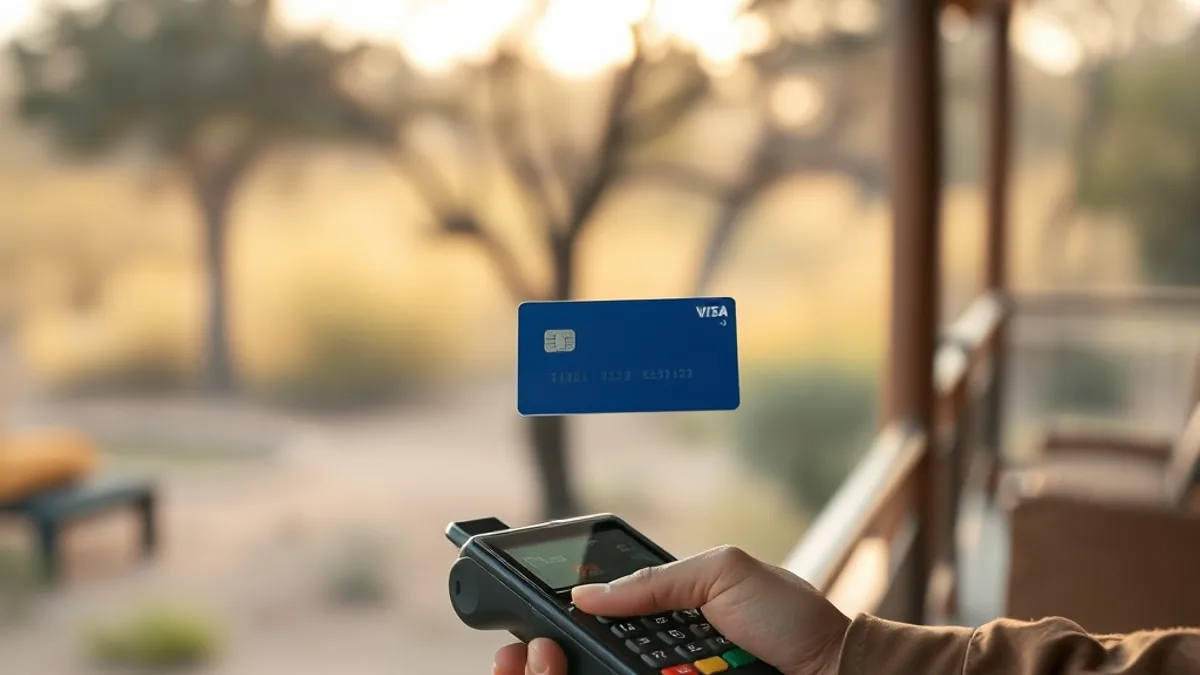
Good news first: Visa and Mastercard are accepted at most safari lodges, including some surprisingly remote camps. If you carry one of these two cards, you can usually settle your drink tab, spa booking and curio purchases without touching your cash reserve. American Express is a different story, though. Smaller properties frequently decline it because of higher processing fees, so treat Amex as a backup card at best and never as your primary one.
The catch with card payments in the bush is connectivity. Card machines at remote lodges rely on satellite links or mobile data, and both can drop out for hours, especially after storms or during peak times when the whole camp is trying to check out at once. Ask the front desk early in your stay whether their terminal is working, and settle your bill the evening before departure rather than in the morning rush. Keep enough cash on hand to cover your extras if the machine refuses to cooperate.
Watch for pre-authorisation holds
Many lodges swipe your card at check-in to pre-authorise an amount covering your stay and estimated extras. This is not a charge, but the hold can lock those funds on your card for several days after you have checked out, depending on your bank. If you are traveling on a tight budget or heading straight to another destination, that frozen amount can cause declined transactions elsewhere. Ask how much will be held, and consider using a card with a healthy available limit for the lodge while keeping a second card free for other expenses.
Budgeting for Extras: Drinks, Laundry and Tips
Even at an all-inclusive lodge, your final bill is rarely zero. Extras such as drinks, laundry and tips often add $20–50 per person per day on top of your quoted rate, so a couple staying five nights should plan for a few hundred dollars in incidentals. Knowing exactly what your rate covers before you arrive makes budgeting far easier and prevents that awkward moment when the bill lands at check-out.
Most all-inclusive safari rates cover your meals, accommodation, game drives and house drinks such as local beers, soft drinks and basic wines. What usually sits outside the rate are the items below, which are the ones that quietly inflate your bill.
- Premium wines and champagne: If the wine list includes imported or cellar-label bottles beyond the house pours, these are billed separately and can cost more per bottle than you would pay at home.
- Spa treatments: Massages and other treatments at bush spas are charged per session and usually need to be booked a day or two ahead, with payment added to your room tab.
- Laundry: Many camps offer same-day hand washing, but it is typically charged per item or per bundle, and costs rise quickly with a week’s worth of dusty safari clothes.
- Staff tip boxes and guide tips: Tipping norms run roughly $10–20 per day for the camp staff box and $5–10 per game drive for your guide, and these are expected in cash, not on your card.
Set aside small bills for tips before you fly, and keep a running note of what you sign for during your stay. Most lodges will show you a draft bill the night before departure, which is your chance to query anything unfamiliar while memories are fresh.
Avoiding Payment Surprises Before You Travel
A little preparation before you fly saves you from frozen cards, mystery charges and currency confusion later. Remote lodges in places like the Okavango Delta or the Serengeti are not somewhere you want to discover your card has been blocked, especially when the nearest bank branch may be a small plane ride away. The three steps below take minutes to do at home and cover the most common payment problems travelers run into at remote lodges. Do them a week or two before departure, alongside your packing, and you remove almost all of the financial friction from your trip.
- Notify your bank of your travel dates. Unfamiliar charges from countries such as Botswana or Tanzania are a classic trigger for automatic card blocks. A quick message through your banking app or a call to your card issuer, mentioning your destinations and dates, keeps your card alive when you need it most. Do this for every card you plan to carry, including your backup card, not just the one you expect to use daily.
- Confirm your invoice currency in writing. Some lodges quote in dollars but invoice in their local currency, which means exchange-rate shifts can be passed on to you between booking and payment. Ask the lodge to state in an email which currency your final balance uses and whether rate movements affect the amount you owe. That written confirmation is your reference if the numbers change, and it gives you something concrete to point to if a dispute arises months later.
- Photograph every receipt and terminal slip. Snap a picture of paper receipts and card machine slips as you go, and keep the physical slips until each charge appears and clears on your statement. If a charge is wrong, disputed or duplicated, that slip is the evidence your bank will ask for, and remote lodges can be slow to respond to queries weeks later. A dedicated album on your phone keeps everything in one place.
These steps matter more on safari than on a typical city break because lodge payments often happen in stages: a deposit months out, a balance closer to arrival, and extras settled on site. If any one of those transactions hits a snag, the others can unravel too. Ten minutes of admin at home is far easier than untangling a blocked card or an unclear invoice from a camp with patchy phone signal once you are already in the bush, where resolving a payment problem might mean waiting days for a reliable connection or a trip to the nearest town.
Paying for Your Lodge Stay With Confidence
Many travelers only discover at check-in that a lodge expected a different deposit method, currency or card type than they had planned for. The good news is that lodge payments follow a clear rhythm once you know it: a deposit at booking, the balance a month or two before arrival, and extras settled in cash or by card on site.
Carrying post-2013 US dollars and a Visa or Mastercard covers nearly every situation, and knowing typical deposit sizes, cancellation windows and tipping ranges removes the last money unknowns from your safari stay. If this guide helped you sort out your own lodge budget, leave a comment or share it with a fellow traveler.