You’ve picked the lodge. The photos look perfect, the reviews are glowing, and then a question stops you cold: how do you actually get there? If there’s no airport terminal, no highway sign and sometimes not even a proper road, figuring out how lodge transfers work can feel like the trickiest part of the whole booking.
The good news is that getting to a remote safari or wilderness lodge follows a fairly predictable pattern, usually a mix of small bush planes, rugged 4×4 vehicles and, for water-based camps, a motorboat. This guide walks you through each piece: what a transfer actually includes, what to expect on a bush flight, how road transfers work, what a boat arrival involves, and how to book and time it all without stress. We’ll also break down typical costs and share a few ways to keep them down, so the journey to your lodge becomes part of the adventure rather than a source of anxiety.
What a Lodge Transfer Actually Includes
A lodge transfer is the complete journey from wherever you first land to the lodge door itself. That might mean a flight from a major airport to a small bush airstrip, followed by a vehicle ride to camp, and in some cases a boat leg as well. It’s not just an airport pickup in the usual sense; it’s a chain of connections, each with its own timing and rules.
For most remote lodges, the final leg works the same way. A light aircraft touches down on a gravel or dirt airstrip, and a guide from the camp is waiting with a game-drive vehicle. From there, it’s typically a 30-60 minute drive to the lodge, often through wildlife areas, so don’t be surprised if your “transfer” turns into an impromptu game drive with elephants or giraffes along the way.
Check what your rate actually covers
Here’s where travelers get caught out: some lodges include transfers in the nightly rate, while others quote them separately, sometimes at a significant added cost. Before you book, ask exactly what the rate covers. Does it include the bush flight, the road leg, or only the final pickup from the airstrip? Getting this clear early helps you compare lodges on a true total price and avoids an unwelcome surprise on your invoice.
Arriving by Bush Flight
Bush flights are the backbone of travel to remote lodges. Small light aircraft, often Cessna-style planes with a handful of seats, hop between airstrips that are little more than a graded strip of gravel or dirt. There’s no terminal, usually just a shade structure and a pilot who weighs your bags on a scale. These flights commonly cost $150-$400 per person one way, depending on the route and whether the charter is shared or private.
Pack for the weight limit
Luggage rules on bush flights are strict, and for good reason: small aircraft have hard weight limits for safety. Most operators allow 15-20 kg per person, and bags must be soft-sided duffels, not hard suitcases, because they need to fit into tight baggage holds. If you show up with a rigid suitcase, you may be asked to leave it behind or pay for excess weight, so pack soft from the start.
Flight days shape your itinerary
Shared charter flights often operate on set days, commonly only two to three days per week. That means the day your flight runs may dictate when you can arrive and depart, and it can shape your entire trip. Build your itinerary around available flight days first, then book the lodge around them, rather than the other way around. On busy routes you may stop at several airstrips en route, which adds time but also gives you a bird’s-eye tour of the landscape.
Road Transfers by 4×4
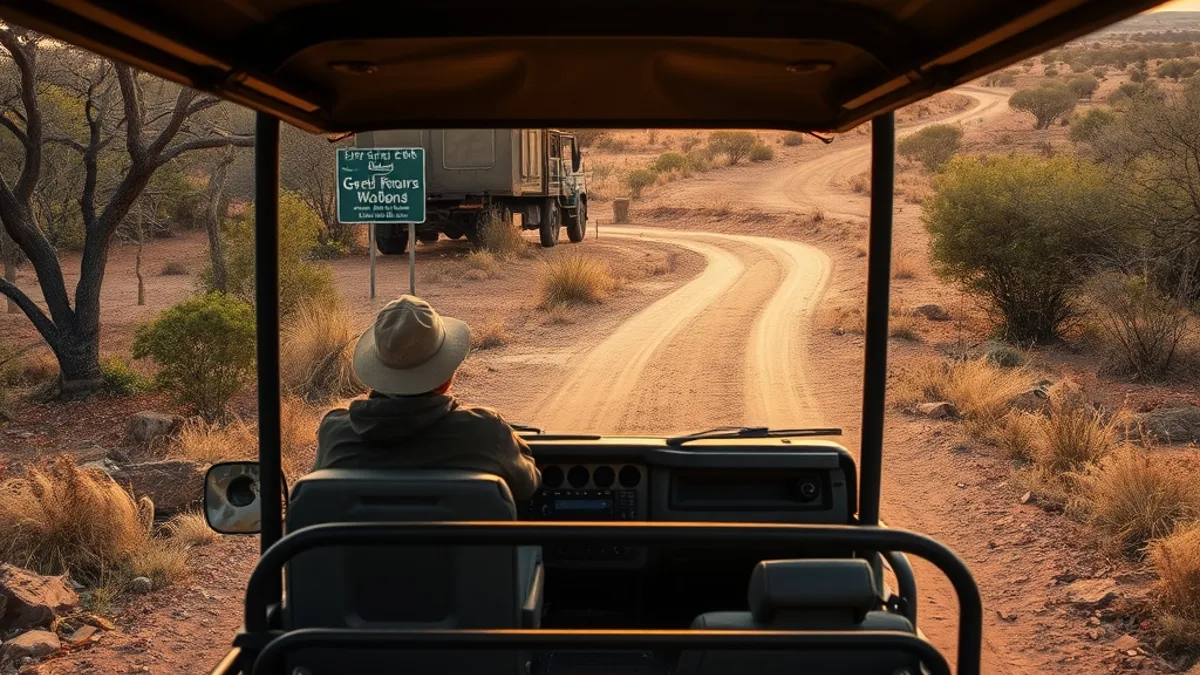
Not every lodge requires a plane. Many camps sit within driving distance of a regional airport or a sizable town, and road transfers from the nearest airport typically take 2-5 hours on dirt or corrugated roads. It’s a long stretch by most travelers’ standards, but it’s often the most affordable way in, and the scenery along the way is part of the experience.
Which vehicle picks you up
Transfers usually involve two kinds of vehicles. A closed 4×4 handles the longer highway and town-road sections, keeping you comfortable and your luggage dry. Then, for the final stretch into a reserve or conservancy, you switch to an open game-drive vehicle, which is built for rough tracks and offers better views of any wildlife you pass on the way in.
Season matters more than you think
Rain can transform a manageable dirt road into a muddy, slow-going ordeal, and rainy seasons can turn tracks impassable enough to add hours to the journey. Dry season travel, roughly June to October in southern and East Africa, offers the most predictable conditions and the most reliable transfer times. If you’re traveling in the wetter months, ask the lodge how the road typically behaves at that time of year and build extra buffer into your plans. Either way, confirm whether the transfer vehicle is shared with other guests, since that affects both the schedule and the price.
Boat and Water Arrivals
Some of the most memorable lodge arrivals happen on water. Camps set along rivers, lake shores and inside deltas like the Okavango are typically reached by motorboat, with transfers taking anywhere from 30 minutes to 2 hours depending on the distance and the route. You’ll usually be met at a small jetty, a riverbank landing or even a town harbor, and loaded straight onto an open boat with your luggage.
Water levels change with the seasons, and this is the single biggest variable in a boat transfer. During low-water months, channels can become too shallow for fully loaded boats, which may lengthen the journey or require a short vehicle leg to a different launch point. Lodges know these patterns well and will adjust your route, but it’s smart to ask how the season might affect your arrival when you book.
What to pack for a boat transfer
Most water transfers use open boats with no cabin, so expect spray, wind and strong sun on your face and arms. Pack your gear in waterproof bags or dry bags rather than hard suitcases, since luggage often gets stacked and splashed. A light rain jacket, a strap for your sunglasses and sunscreen applied before you board all make the ride far more comfortable. Keep your camera and documents in a sealed pouch within easy reach.
Booking and Timing Your Transfer
A lodge transfer often involves several operators, small aircraft with fixed schedules and remote pickup points, so a little coordination goes a long way. Most lodges ask that you confirm the details 2-4 weeks before arrival, and that window is your chance to catch problems before they become expensive. It also gives the lodge time to adjust vehicle schedules, boat departures or charter seats if something on your end has changed. Work through these steps in order:
- Confirm flight times and pickup points. Email the lodge to recheck your bush flight departure time and exactly where you’ll be met, whether that’s an airport terminal, a charter desk or a specific vehicle. Small airstrips and informal pickup spots are easy to misjudge if you’re relying on memory, so ask for a landmark or a staff name where you can.
- Go over luggage details. Reconfirm the weight allowance and bag type for your light aircraft flight, and ask what happens if your bags are overweight. It’s far easier to repack at home than to leave gear behind at a check-in counter.
- Build in buffer time. Leave generous space between your international arrival and any bush flight the same day. Missed light-aircraft connections can mean an overnight in town and a scramble to rebook, so many travelers plan to arrive the day before their onward flight.
- Clarify who coordinates the journey. Ask whether the lodge itself arranges the transfer chain or whether an outside transfer operator handles part of it. Knowing who is responsible for each leg avoids gaps on the day.
- Get a delay contact. Ask exactly who to call or message if your inbound flight is delayed, and save that number offline. Bush planes don’t wait long, and a quick message can hold a seat or rearrange a pickup.
Once these details are locked in, put them all in one place: a printed copy in your bag and a digital copy on your phone. Remote lodges often have limited connectivity, so you may not be able to look anything up after you leave the airport. Include your flight numbers, the lodge’s local contact, your pickup instructions and any reference codes for the transfer itself. A final courtesy email a day or two before you fly is also a smart habit, since it gives the lodge a fresh chance to flag any schedule changes before you’re already in transit.
What Transfers Cost and How to Save
Transfer pricing can feel opaque because it’s often quoted per leg rather than as a package. The biggest cost is usually the air leg: bush flights to major safari airstrips typically run $150-$400 per person one way, and the type of charter makes a real difference. Shared charters, which combine passengers heading to several lodges on one routing, cost noticeably less than a private charter booked just for your group. Road and boat legs are usually priced per vehicle or per boat rather than per person, which changes the math for couples versus groups.
Before you book, ask the lodge for a full transfer quote covering every leg of the journey, then compare it against the nightly rate at a few similar properties. Some lodges include transfers in the rate, others don’t, and the difference can easily outweigh a small gap in room prices. A few practical ways to trim the total:
- Travel as a group. Private road and boat transfers are priced per vehicle or boat, so a family or group of friends splitting one 4×4 pays a fraction per head compared to two couples booking separately.
- Ask about long-stay discounts. Some lodges waive or reduce transfer costs for stays of three nights or more, so it pays to mention your length of stay before accepting a quoted transfer fee.
- Choose shared charters where the schedule fits. If a shared charter’s set days align with your dates, you can save substantially over a private flight, though you’ll need to build your itinerary around those days.
Whichever route you choose, always compare total package prices rather than room rates alone. A lodge that looks pricier per night may work out cheaper once transfers are included, especially for longer stays.
Wrapping Up Your Transfer Plan
Getting to a remote lodge without a terminal or paved road sounds daunting, but the answer is simple: your transfer is the journey itself. A typical arrival chains together a bush flight, a 4×4 drive and sometimes a boat ride, each with its own timing and luggage rules. Once you understand how the pieces connect, the trip from airport to lodge door becomes far less mysterious.
Keep a few key numbers in mind: soft-sided bags limited to 15-20 kg per person on light aircraft, road legs of 2-5 hours from the nearest airport, and transfer details confirmed 2-4 weeks before arrival. Plan the transfer as part of the trip rather than an afterthought, and the journey to even the most isolated lodge feels smooth and predictable. If this guide helped you plan your own arrival, leave a comment or share the article with a fellow traveler.