Organizing a group glamping trip means juggling different budgets, sleep preferences and a booking window that closes months earlier than most travelers expect. Some in your group want a real bed and heating, others are chasing the campfire-and-canvas experience, and the best group-capable sites often fill up long before standard hotel rooms do. That combination makes glamping for groups trickier to plan than a regular weekend away.
This guide walks you through the whole process, step by step. We compare cabins, canvas tents and shared sites so you can pick the right stay type for your group’s mix, cover when to book and how far ahead to plan, and show you how to split costs fairly and handle guests who drop out. You’ll also find the questions to ask a site before paying a deposit, destination ideas that suit different group styles, and a packing plan that keeps shared gear from being duplicated.
Choosing Between Cabins, Tents, and Shared Sites for Your Group
The first decision shapes everything else: what kind of accommodation your group actually needs. Glamping sites usually offer three formats, and each one fits a different mix of people, budgets and seasons.
Cabins for comfort
Cabins are the safest choice for mixed-age groups and cooler months. You get solid walls, heating and usually a private bathroom, which matters a lot when grandparents or toddlers are in the party. Expect roughly $200-500 per night depending on the region and season. If your group spans three generations or you’re traveling in late autumn, cabins keep everyone comfortable without anyone “roughing it.”
Tents and shared sites for atmosphere
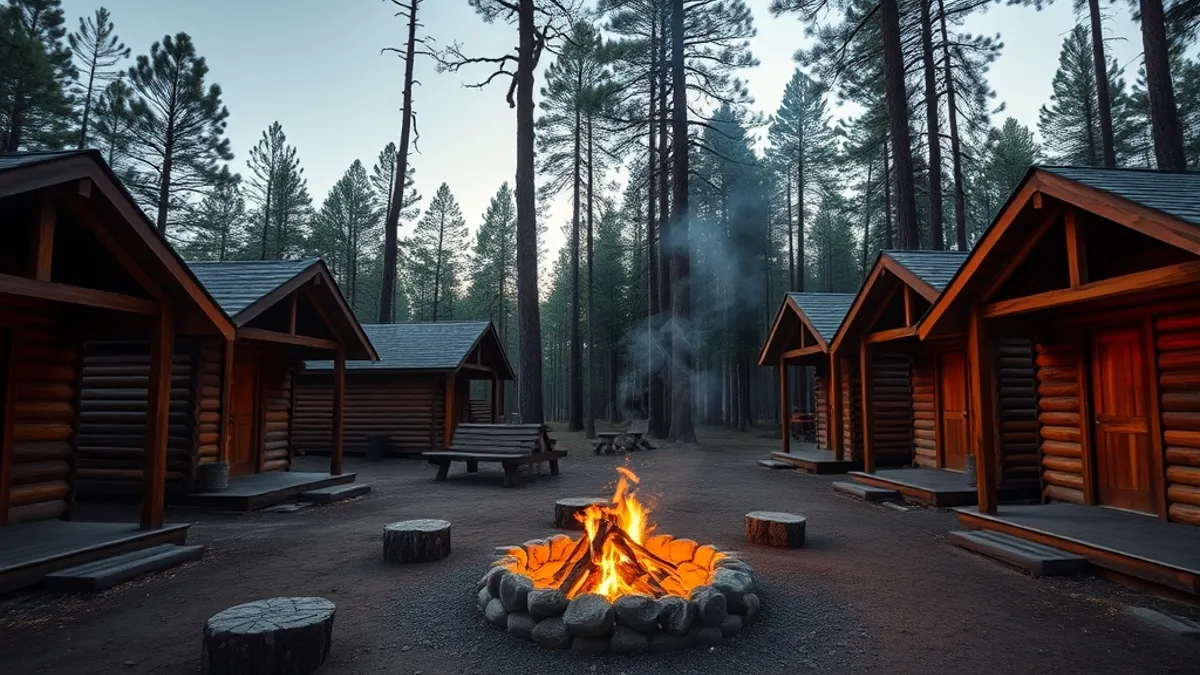
Canvas tents in safari, bell or yurt styles deliver the atmosphere most people picture when they hear the word glamping. Most large safari or bell tents sleep 2-4 guests each, with family tents accommodating up to 6, at about $150-400 per night. Shared sites take a different approach: a cluster of units arranged around a communal kitchen and fire pit, designed for groups of 10-20 who want to stay together without booking out separate properties.
Match the stay type to your group’s makeup. Families with toddlers usually prefer cabins for the safety and warmth, while friend groups often choose tents for the campfire experience and the feeling of camping together under one sky.
When to Book Glamping for Groups: Timing and Lead Times
Group glamping bookings run on a very different clock than ordinary trips. A hotel can absorb your party of twelve with a few room reservations, but a site built to host a whole group often has only one or two bookable setups. When those are gone, they’re gone. That scarcity is why timing matters so much here, and why the group organizer who plans the calendar carefully saves everyone money and stress. Here’s how to time your booking.
- Reserve peak-season dates 6-9 months ahead. For June-August trips in the Northern Hemisphere, book as early as you can pin down your group. Group-capable sites sell out far earlier than standard rooms, and by spring the best multi-cabin setups are usually gone. Put a tentative date on the calendar now, even if a few guests are still undecided.
- Target shoulder months for better rates. May or September-October often cost 20-40% less than July-August rates, and availability is far easier for last-minute planners. If your group’s dates are flexible, this is the single biggest saving available, and it also means less competition for fire pits, viewpoints and quiet mornings.
- Plan around minimum stays. Most multi-cabin and shared group sites require a 2-3 night minimum on weekends, so check this before you propose dates to the group. A two-night weekend plan that stretches to three can change the math for everyone.
- Collect funds before you commit. Deposits of 25-50% of the total are typical at the time of booking. Gather the money from your group first, then pay, rather than fronting it yourself and chasing people later.
Getting the timing right protects both your budget and your options. Book early for peak season, shift to the shoulder months if your group can be flexible, and have the deposit money ready before you contact the site. A little calendar discipline upfront means you spend the weeks before the trip getting excited instead of scrambling for a site that still has space.
How to Split Costs and Handle Headcount Changes
Money is where group trips most often go wrong, so sort out the payment system before anyone pays a cent. Start by finding out how the site prices its units: some charge per cabin or tent, while many group sites charge per person instead. With per-person pricing, every added or dropped guest changes the total, so a headcount that shifts after booking directly affects what everyone owes. Ask the site to confirm this in writing when you book.
A good rule of thumb is to budget roughly $150-500 per unit per night depending on the season and region, then divide that by the number of people actually sleeping in the unit. This gives you fair per-person contributions instead of everyone paying the same amount regardless of whether they’re in a private cabin or a shared tent. Share the math with the group early so expectations are clear from day one.
- Use a shared payment tool. Apps that let each member pay their share directly spare the organizer from fronting the booking deposit on a personal card and then waiting weeks for reimbursements.
- Set an internal cancellation rule before booking. Agree in advance on who covers a share if someone drops out after the deposit is paid. A simple written message to the group chat prevents most arguments later.
- Recalculate after every headcount change. If the site prices per person, confirm the new total with the site in writing whenever someone joins or leaves, so nobody is surprised by the balance due at check-in.
- Keep a small buffer in the group fund. On-site extras like firewood or activity rentals rarely appear in the nightly rate, and a modest cushion avoids last-minute collection rounds.
Handle the money system early and openly, and the rest of the trip planning gets noticeably easier.
Questions to Ask Before Confirming a Group Glamping Site
Before you hand over a deposit, treat the booking call or email as an interview. Group glamping sites vary widely in what they allow, and the details that matter most rarely appear in the listing photos. Ask direct questions now so nobody discovers a rule after the money is committed.
Start with headcount. Many shared glamping sites cap groups at 10-20 guests, and some enforce the limit strictly, turning away even one or two extra visitors. If your group runs larger, ask whether the property offers a private estate buyout, which typically suits parties of 20 and above and gives you exclusive use of the whole site.
Facilities are the next make-or-break topic. A cluster of tents with one shared bathroom block feels very different from units with private en-suite bathrooms, especially for a multi-night stay. Find out exactly which facilities are shared versus private, including kitchens, fire pits and parking, and how many people each facility serves at peak times.
Finally, get the ground truth in writing. A layout map lets you assign tents or cabins fairly before arrival, so the couple who values quiet gets the far corner and the night owls camp near the fire pit. Negotiating spots on site is how group trips start with arguments.
- Group size cap: Ask whether the limit counts day visitors as well as overnight guests, since some sites count everyone on the property.
- Shared versus private facilities: Confirm how many bathrooms and showers exist per unit or per person, and whether the communal kitchen has a fridge, stove and cookware you can actually use.
- Pets, vehicles and food: Many group sites restrict pets, limit parking to one or two vehicles per unit, and prohibit outside catering or open flames outside designated fire pits.
- Layout map: Request a map showing distances between units, noise separation and which spots sit closest to the fire pit or the bathrooms, so assignments are fair and settled before anyone packs the car.
Destinations and Settings That Work Well for Group Glamping
The setting you choose shapes the whole trip, so think about what your group will actually do between meals. Forest and lakeside settings suit cabin clusters especially well. You get hiking trails and swimming within walking distance, and evenings end around a shared fire pit instead of in separate cars driving back to town.
Coastal and cliffside glamping delivers the most dramatic views, but it rewards timing. Atlantic and Mediterranean sites are calmer and noticeably cheaper in shoulder season, when the summer crowds are gone and the wind is less of a tent-flapping problem. If your group dreams of ocean views, aim for May or the September-October window rather than peak summer.
Mountain and valley sites suit larger groups who want to cook and eat together under one roof. Many of these properties center the stay around a shared longhouse-style kitchen, which turns meal prep into a group activity rather than a chore split across separate units. The trade-off is access: mountain roads can be narrow and slow, so check driving times from the nearest town before you commit, especially if anyone in your group is arriving separately or late.
Match the Setting to Your Group’s Energy
Remote sites reward quiet, outdoorsy groups who are happy to entertain themselves after dark. If your group includes people who want restaurants, shops or a rainy-day backup plan, choose a site within easy reach of a town. For a sense of what deep quiet looks like done well, a stay in the Irish countryside shows how remote Atlantic settings suit groups who want weather, walking and stillness over nightlife.
Connemara hideout homes for Atlantic weather and deep Irish quiet are a good example of how a remote setting becomes the main attraction rather than a compromise.
Packing and Preparing for a Group Glamping Trip
Group packing falls apart when everyone assumes someone else is bringing the basics. Coordinate shared gear in advance with a simple sign-up list, so you end up with one lantern set, one cooler and one first-aid kit instead of five of each crowding the car.
Pack layers even in summer. Canvas tents cool quickly once the sun goes down, and shoulder-season mornings can drop near single digits Celsius. A fleece and a warm hat take up almost no space and make early coffee outside far more pleasant.
Also plan for the extras. On-site costs like firewood, kayak rentals or breakfast add-ons are rarely included in the nightly rate, so agree before departure whether the group covers these from a shared pot or individually. Bring cash or confirm the site takes cards, since some rural properties are cash-friendly only.
- Shared gear list: Assign one person per category, such as lighting, cooking equipment, board games and the group first-aid kit, and have them confirm quantities against your headcount.
- Per-tent essentials: Each unit should still bring its own headlamps, phone chargers, power bank and spare batteries, since shared lanterns will not reach every bunk.
- Weather kit: Pack a waterproof layer, quick-dry shoes and an extra blanket per person, because damp canvas and dewy mornings are part of the glamping experience.
- On-site extras budget: Set a small shared float for firewood bundles, rental gear and breakfast add-ons, and decide in advance who collects and reconciles it.
If you want a setting where slow mornings are the point, Provence hideaways with lavender air and slow French countryside mornings show how a well-chosen location makes the packing list feel lighter. See Provence hideaways for lavender air and slow French countryside mornings for inspiration.
Bringing Your Group Glamping Plan Together
Group glamping trips fall apart for predictable reasons: someone books too late, someone fronts money they can’t recover, and someone ends up in the tent nobody wanted. The fix is to make decisions in the right order. Pick the stay type first — cabins for comfort and cooler months, tents for atmosphere, shared sites for groups of 10-20 — then lock in dates. For peak season, that means reserving 6-9 months ahead; for easier budgets, aim for May or September-October, when rates often run 20-40% lower.
Before you pay the 25-50% deposit, confirm the group cap, which facilities are shared, and whether pricing is per person or per unit. Agree on how dropouts are handled, and coordinate shared gear so nobody packs three coolers. Get those pieces in place and the trip itself becomes the easy part. Have a group glamping story or a question? Leave a comment or share this article.