Booking a long hotel stay is a different game from a two-night getaway. Stretch a visit to a week or more and the nightly rate, the room itself and even the housekeeping schedule start working against you unless you know how to negotiate, what to look for and how to live in the space. Get it wrong and you’re paying premium prices for a room that feels cramped by day four.
Get it right, though, and a long hotel stay can cost far less per night than a short one, with meals handled in your own kitchenette and laundry on-site. This guide walks through when an extended stay makes sense, how to lock in weekly and monthly discounts, which room features matter most, the questions to ask before you book, and how to build a comfortable weekly routine. We’ll also look at destinations that reward slower travel, then pull everything into one simple planning pass.
When a Long Hotel Stay Makes Sense
A stay of 7 to 30 nights sits in an awkward middle zone. It’s too long to treat like a vacation, but often too short or too uncertain to justify signing a lease. That’s exactly the gap a long hotel stay fills, and it suits several very different situations: the weeks between moving out of one home and into another, a temporary work assignment, an extended medical visit near a specialist facility, or a deliberate slow-travel trip where you want to actually get to know a place.
Hotels versus short-term rentals
Short-term rentals look cheaper on paper, but the comparison changes once you add up what hotels include. Housekeeping comes standard, so you’re not scrubbing a bathroom mid-stay or paying a cleaning fee at checkout. A front desk gives you a human to call when the Wi-Fi drops or a package arrives. And there’s no minimum utility setup: no arranging internet installation, no deposits on electricity, no waiting for a technician. You check in and everything already works.
Location strategy matters too. Long stays work best in destinations with reliable public transport, because a month of rental car payments, parking and fuel can quietly become one of your biggest expenses. Pick a neighborhood where you can walk to a grocery store and reach the places you need by bus, metro or train, and you can skip the car entirely. Before committing, run the math both ways for your exact dates, including cleaning fees and utilities on the rental side.
How to Lock In Long Hotel Stay Discounts
The single biggest mistake travelers make with long stays is booking seven consecutive nights at the standard rate and assuming that’s the deal. Hotels price extended stays differently, and the discount is often substantial: extended-stay rates typically run 20-40% off the nightly price for stays of 7 nights or more. But you usually have to ask. Call the hotel directly or email the reservations team and request their weekly and monthly rates. These rates often aren’t shown on booking sites, and a two-minute conversation can be the highest-return negotiation of your whole trip.
Timing matters as well. For high-season stays, book 4-8 weeks ahead to secure the best long-stay availability, because extended-stay rooms with kitchens tend to be limited in number and sell out first. In low season, flip the strategy: walk in or call when occupancy is low and negotiate on arrival. A front desk manager with empty rooms and a guest offering 20 guaranteed nights has every reason to deal.
One more structural tip: weekly rates are usually quoted from Sunday-to-Sunday or Saturday-to-Saturday stays. Shifting your arrival and departure dates to match that cycle can unlock the quoted weekly price when a mid-week start would not.
- Stack rate categories. Corporate rates aren’t just for business travelers; many hotels extend them to anyone, and senior, military and membership organization rates can stack on top of extended-stay pricing. Check every category you qualify for before settling.
- Price a single long block. Quote a 14-30 night block as one booking rather than piecing together repeated weekly bookings. One continuous reservation locks your rate for the whole stay and protects you from being bumped between rooms or rate changes mid-trip.
- Get the quote in writing. Ask the hotel to email the agreed rate with the stay dates and total, so there’s no confusion at check-in about what was promised.
Choosing Rooms with Kitchens and Laundry
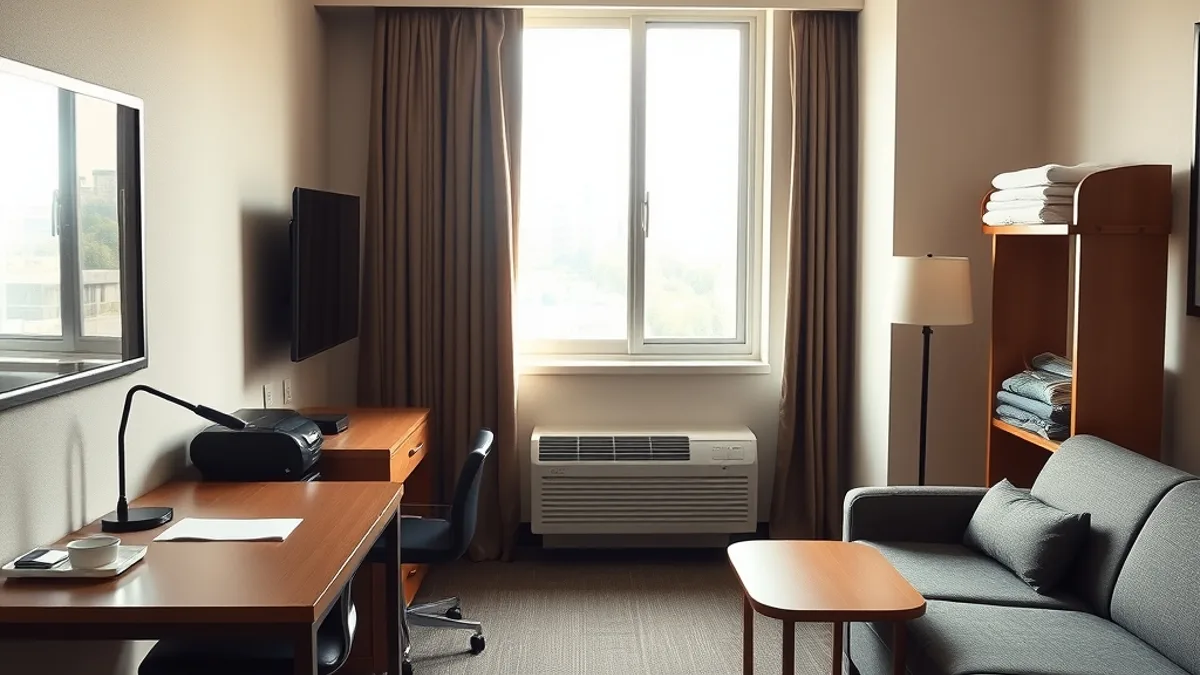
For any stay longer than a few nights, the room type matters more than the hotel’s star rating. The feature that changes your budget most is a kitchen. Rooms with kitchenettes usually cost 10-25% more than standard rooms, but that premium disappears fast: eating one or two meals a day in-room can cut food costs by roughly $20-40 per person per day. Over two weeks, a kitchenette can save you hundreds of dollars while letting you eat the way you actually like to, instead of restaurant food twice a day. A kitchenette with a two-burner cooktop, microwave and small fridge covers most needs; a full kitchen is a bonus, not a requirement.
Laundry is the second make-or-break feature. Housekeeping for long stays is often reduced to 1-2 times per week, which means nobody is refreshing your towels and linens daily. Confirm before booking whether the room has a washer, the hotel has a guest laundry room, or there’s a self-service laundromat nearby. On-site laundry, even coin-operated, turns a two-week pile of clothes into a non-issue.
- Separate sleeping area. A studio where the bed sits two feet from the kitchenette gets old by week two. A wall, divider or separate room lets one person sleep while the other reads or works.
- A real desk. Working from a bed or balancing a laptop on your knees for weeks wears you down. A proper desk and chair turn the room into a livable workspace, not just a sleeping spot.
- Blackout curtains. Over a multi-week stay, poor sleep compounds. Blackout curtains matter if you’re crossing time zones, working odd hours, or the room faces a busy street.
- Storage space. A closet or dresser you can actually unpack into makes a huge psychological difference between living somewhere and merely camping indoors.
Questions to Ask Before You Book
A long stay is a bigger commitment than a weekend booking, so the questions you ask before paying a deposit matter more than usual. The biggest surprise for first-time extended-stay guests is usually housekeeping: what felt like daily service on a short trip often drops to once or twice a week once you cross the seven-night mark. That single change affects how you plan laundry, meals and even how many towels you keep on hand. Get the details in writing before you arrive, not after you notice the towels piling up. A short email summary of what the front desk tells you by phone gives you something to point to if there is a dispute later.
Money terms deserve the same scrutiny. A rate that looks excellent can come with a deposit equal to several nights, a strict cancellation window, or a promotional price that only applies to part of your stay. Some properties also quote weekly rates on a fixed Sunday-to-Sunday or Saturday-to-Saturday cycle, which can leave you paying for a few extra nights if your dates don’t align. Ask the hotel to confirm, in an email if possible, that the quoted rate is fixed for the entire block of nights, and keep that confirmation with your booking documents.
- Housekeeping specifics: ask exactly which days the room is serviced, whether towel and linen changes happen on a separate schedule, and whether kitchen restocking (coffee, dish soap, paper towels) is included or charged.
- Deposit and payment terms: find out how much is due at booking, when the balance is charged, and whether the deposit is refundable if plans change.
- Cancellation windows: long-stay bookings often have stricter deadlines than standard rooms, so confirm how many days’ notice is required and what happens if you need to cut the stay short.
- Rate stability: verify the quoted price holds for all nights, especially if your stay spans a holiday period or a local event that could trigger repricing.
- Wi-Fi limits: some properties cap speed or bandwidth on standard rates or charge for premium internet, which matters if you work from the room.
- Parking and facility fees: ask whether parking costs extra per night, and confirm your rate includes access to the gym, pool or business center rather than treating these as paid add-ons.
Setting Up a Comfortable Weekly Routine
The difference between a hotel stay that feels like exile and one that feels like a settled routine usually comes down to structure. After the first two or three days, stop living like a tourist and start living like a resident, on your own schedule.
Eat simply, eat in
Keep most breakfasts and one other daily meal in your room, built around what a kitchenette handles well: pasta, scrambled eggs, simple salads, sandwiches. You do not need to cook anything ambitious. The goal is to cut restaurant dependence without turning your stay into a cooking project, and the savings add up quickly when two meals never leave the room.
Give every chore a fixed day
Pick fixed weekdays for the repetitive tasks: laundry on Tuesdays, a grocery run on Fridays, a proper room tidy-up on Sundays before the week starts. Anchoring chores to specific days keeps the stay feeling settled and stops small tasks from drifting into every evening. If housekeeping only comes once or twice a week, knowing your own tidy-up day makes the gap between services much easier to live with.
Unpack fully on day one, even if you usually live out of the suitcase. Empty every drawer you need, hang clothes properly and put the suitcase away. Then claim a work corner: one chair, one table spot, one outlet that becomes yours. A small comfort kit makes the room feel like yours too, so bring a favorite mug, a cable organizer for the tangle of chargers, and a sleep mask if the curtains never quite close all the way.
Where Long Stays Work Best: Destinations That Reward Slower Travel
Long stays reward destinations that have a rhythm worth settling into, and some places are simply better suited to fourteen or more nights than others. The key is picking somewhere that stays pleasant without constant activity, and where prices behave predictably over a multi-week block.
Lakes and mountains for quiet weeks
Lakeside and mountain regions suit multi-week stays beautifully. Life there moves at walking pace: morning coffee by the water, an afternoon hike, dinner cooked in your room. Outside the busy stretch of the season, pricing tends to be predictable and negotiable, which makes a quiet lakeside town in the shoulder months one of the easiest places to lock in a good long-stay rate.
Coastal towns in the off-peak
Coastal destinations get all the attention in peak months, but the towns themselves are often at their best before or after the crowds arrive. Outside the high season you typically find mild weather, restaurants running normal hours for locals, and long-stay value that vanishes once the beach crowds show up. A coastal stay of two or three weeks in these months feels unhurried rather than like a race for sunbeds.
Whatever destination you choose, match its rhythm to your stay length. Wine regions and canal villages are the classic example: their appeal is slow mornings, long lunches and small discoveries between villages, which is exactly why they reward unhurried visits of 14-30 nights. A rushed four-night visit to a wine region barely scratches the surface, while a month there lets you learn the producers, the paths and the pace of the place.
Your Long Stay, Planned in One Pass
A long hotel stay only gets expensive and uncomfortable when each piece is handled separately. Decide your stay length first, ideally aiming for that 14-30 night sweet spot, then negotiate a weekly or monthly rate directly with the hotel about 4-8 weeks ahead of a high-season trip. One phone call can secure the extended-stay discount that repeated short bookings never will.
Next, choose a room with a kitchenette and laundry access, since cooking one or two meals a day in-room saves roughly $20-40 per person daily and offsets the modest room premium within days. Before you pay, confirm housekeeping frequency, deposit terms and whether the rate is fixed for the whole stay. Once booked, unpack fully, set fixed days for laundry and groceries, and settle into a simple rhythm. If this helped you plan a longer stay, leave a comment or share the article with a fellow slow traveler.