You booked a hotel with great reviews, packed your bags, and then spent the night listening to bass through the ceiling, elevator chimes two doors down, or traffic rumbling past your window. If that sounds familiar, you are not unlucky — you simply never asked for a quiet hotel room, or you asked in a way that was easy for the front desk to overlook. The good news: most noise problems are avoidable with a few specific requests made at the right time.
This guide walks through the three levers that matter most: choosing the right floor, picking a view orientation that shields you from noise, and timing your request so it actually sticks. We will also cover what wording gets results, when a quiet room might cost extra, and the backup tactics to use if your room still disappoints on arrival night. None of it requires special status or insider contacts — just a little planning before you check in.
Why a Quiet Hotel Room Starts with the Right Floor
Most travelers think “higher is quieter,” but the sweet spot is more nuanced. Floors 4-8 are typically the quietest in a hotel: high enough that street traffic, delivery trucks and sidewalk conversations fade away, yet low enough that you avoid the steady stream of guests heading to rooftop terraces or pool decks at the top of the building. Ask for a room in that band and you have already solved half the problem before you arrive.
Just as important is knowing which floors to avoid. The ground floor puts you at ear level with the lobby, the entrance doors and anyone smoking or talking outside late at night. And the floor directly beneath a rooftop bar or pool can be the noisiest in the building, since music and footsteps on hard deck surfaces travel straight down through the ceiling.
Service areas and the elevator question
Housekeeping starts early — trolleys often begin rolling as early as 7-8 am — so request a room away from service closets, laundry areas and staff corridors. Those rolling carts are loud, and they pass your door repeatedly all morning. Similarly, rooms within roughly 2-3 doors of the elevator bank pick up the “ding,” the doors sliding and the hum of the motor. If the only availability is on an elevator floor, ask for a room at the far end of the corridor, two or three doors past the elevator bank. That short walk down the hall is a small price for a full night of undisturbed sleep.
Choosing Views That Work in Your Favor
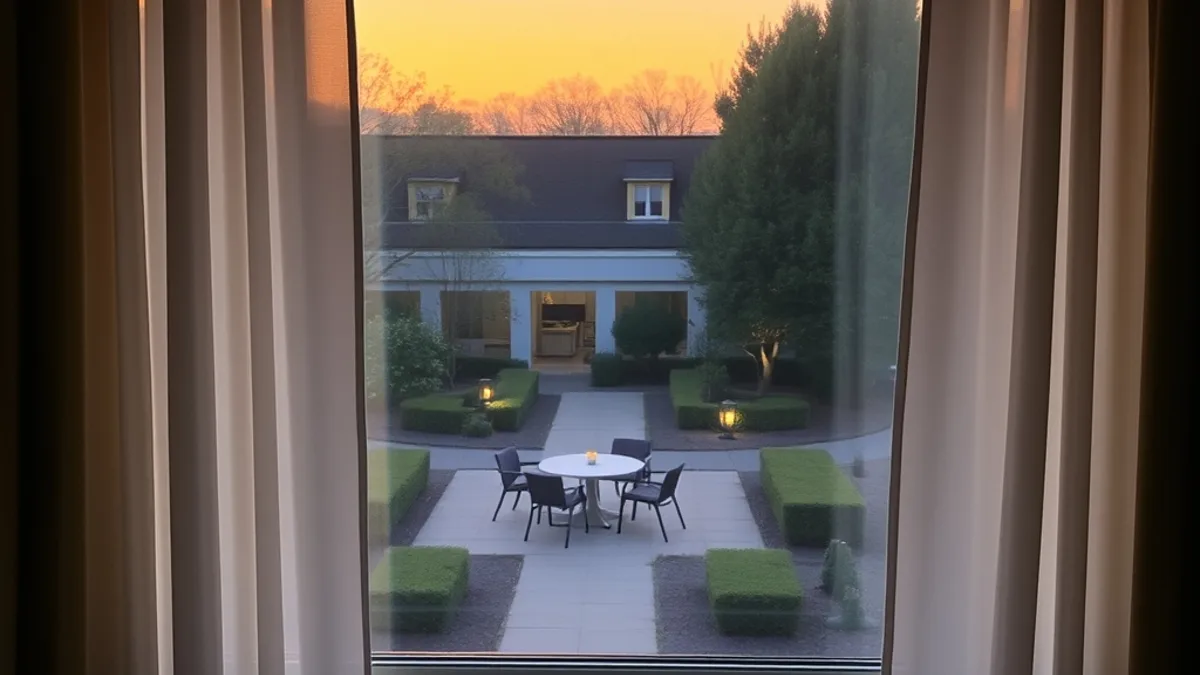
Once you have settled on a floor, the view you choose shapes how much noise reaches your window. Courtyard, garden or pool-facing rooms are usually 5-10 dB quieter than street-facing ones, which is the difference between hearing faint murmur and hearing every passing scooter. The building itself acts as a sound buffer, so your window becomes a wall instead of an open ear to the road.
Room position within the floor matters just as much as orientation. Corner rooms share walls with only one neighbor, which cuts both neighbor noise and the amount of hallway foot traffic passing your door. If you are choosing a coastal destination, there is a trade-off to weigh: sea-facing rooms give you calm mornings but often sit above an evening promenade that gets lively after dinner. Decide whether sunrise quiet or dinner-hour calm matters more to you before you request. For a destination where the sea breeze and poolside calm are the whole point, it can help to see how a property is laid out first — the guide to Marbella hotels with sea breezes and private poolside calm shows what to look for.
Some views are quietly bad for sleep, and they are easy to overlook when booking:
- Parking entrances: the barrier arm beeps, car doors slam and headlights sweep across your curtains from early morning until late night.
- Loading docks: deliveries typically happen before most guests are awake, and rolling crates over concrete is louder than it sounds from the lobby.
- Rooftop terraces: a room overlooking one inherits every conversation, clinking glass and playlist until the terrace closes.
Timing Your Request: When to Ask and How
A quiet room request only works if it reaches the right person at the right moment. Room assignments are not fixed the day you book — they get finalized in the days before arrival, which is exactly when your request can still shape the outcome. Treat it as a short process with a few clear steps rather than a single phone call you hope someone remembers. The good news is that the entire effort takes roughly ten minutes of your time across the whole trip, and it prevents most of the noise problems that ruin otherwise pleasant stays.
- Send a polite request 3-5 days before arrival. This is when room assignments are being finalized, so a friendly email at that point lands on the desk of whoever is actually allocating rooms — not lost in a queue of pre-booking messages.
- Put the request in writing. Use email or the booking notes field so the request is attached to your reservation. A written note survives shift changes; a phone call from a month ago does not.
- Book 1-2 weeks ahead in peak season. If you are traveling in June-August and want a high floor or a corner room, book early — those rooms go first, and last-minute requesters get what is left.
- Repeat the request at check-in. Front-desk staff have the final say on same-day allocations, so a one-line reminder when you arrive is often what converts the note into an actual room key.
Skipping the written request is the most common mistake travelers make. Verbal requests made at booking are rarely carried through, because the person you spoke to is often not the person assigning rooms days later. A note attached to the reservation, by contrast, follows your file all the way to the front desk and gives the arriving staff something concrete to act on. Pair the email with a warm, brief reminder at check-in and you have covered both ends of the process — the planning stage and the moment the key is actually handed over.
What to Say: Wording That Gets Results
The single biggest mistake travelers make is asking for “a quiet room” and leaving it at that. That phrase means something different to everyone at the front desk, so your request gets interpreted however the shift happens to be staffed that day. Instead, spell out exactly what you want: “a quiet room away from the elevator and street, on a mid floor” gives the receptionist a concrete target they can actually match to a room key.
It also helps to briefly mention why you’re asking. A light sleeper, an early work call, or a jet lag recovery day all count as genuine needs, and front desk staff quietly prioritize them over vague preferences. You don’t need a long story—one short sentence is enough. Saying “I have calls starting at 7 am” tells the agent exactly what’s at stake.
Know what’s guaranteed and what isn’t
Before you arrive, ask the hotel directly what they can guarantee versus what is “subject to availability.” Some properties will lock in a floor or a view category; others will only note your preference. Knowing the difference upfront means you can plan a backup instead of discovering it at midnight.
If the first offer is a dud, don’t give up. Ask whether rooms exist in a different wing, or on an upper floor of an adjacent building—many larger properties have annexes that guests never think to request. A polite follow-up question often surfaces options that were never offered.
When a Quiet Hotel Room Costs More
Here’s the part most booking sites don’t advertise: in some city hotels, the quietest rooms aren’t handed out by luck. High-floor rooms and courtyard-facing rooms are sometimes treated as formal upgrade categories, and weekend rates for them often run 10-20% higher than the standard rate. If you’re staying Friday and Saturday in a busy downtown property, expect that a guaranteed quiet room may come with a price tag.
That doesn’t mean you have to pay it. Loyalty status frequently unlocks quiet-room requests for free, so mention your membership at booking and again at check-in. Even mid-tier status can move your request up the queue, and staff tend to favor returning guests when allocating the good rooms.
It also pays to run the numbers on dates. Compare the upgrade price against a midweek stay: shifting your trip by one or two days can get you the same quiet room cheaper than paying a weekend premium for it. If your schedule has any flexibility, Tuesday and Wednesday nights are usually the easiest to score.
If you’d rather not spend anything, there are free alternatives that work surprisingly well:
- End-of-corridor rooms: these sit past the elevator bank, so you escape both hallway foot traffic and the noise that bleeds out from elevator lobbies.
- Rear-facing rooms: rooms facing the back of the property avoid street noise entirely and are typically the default assignment when nothing is booked up, so they’re usually free.
Backup Tactics If Your Room Still Isn’t Quiet
Even a well-planned request can land you next to a chatty family or a rattling minibar. The fix is speed: ask to change rooms within the first 15 minutes, before you unpack. Hotels accommodate early complaints far more readily than late ones, because an unopened suitcase means they can reassign you without any awkward logistics. Do a quick sound check—close the door, listen for hallway noise, run the tap—before you settle in.
Still, sometimes the hotel is full and a move isn’t possible. That’s when your standard kit earns its keep: foam earplugs and a white-noise app on your phone will carry you through the first night almost anywhere. They’re cheap, they weigh nothing, and they turn a rough room into a sleepable one while you sort out a longer-term fix in the morning.
Mask the noise you can’t move away from
Running the bathroom fan or the HVAC creates a steady background hum that masks hallway footsteps and neighbor conversations. It’s not glamorous, but consistent low-level sound is far easier to sleep through than sudden bursts of noise. If you’d rather not rely on equipment, some quieter properties—like the kind you’ll find in Jeju abodes with volcanic scenery and quiet designer comfort—are built with solid walls and peaceful surroundings from the start.
Finally, report persistent noise to the front desk rather than enduring it silently. A humming ice machine, a thin door that slams, a buzzing light fixture—these are maintenance issues the staff can often fix on the spot. Hotels can’t solve problems they don’t hear about, and a calm, specific complaint usually gets a faster response than you’d expect.
Putting It All Together for Your Next Stay
If you have ever booked a well-reviewed hotel only to find yourself above the bar, beside the elevator or staring at a busy street, the fix is not luck. A quiet room comes down to three levers: floor choice, view orientation and when you ask. Aim for floors 4-8, favor courtyard, garden or corner rooms, and send your request 3-5 days before arrival so it lands when room assignments are being finalized.
None of this costs anything. A short email with your request, plus a friendly word at check-in, prevents most noise problems before they start. If you want a high floor in peak season, remember those rooms go first, so plan a little further ahead. That is the whole system: know what to ask for, and ask at the right time. If this helped you sleep better on your last trip, leave a comment or share this article with a fellow light sleeper.