When you book a private villa, one question tends to sit quietly in the back of your mind: does all this talk of alarms, safes, gates and cameras actually protect you, or are they just brochure features? Villa security is easy to photograph and hard to verify, and that gap is exactly what this article is about.
We will walk through what villa security really means before you book, how gated entry works with codes, cards and guards, how villa alarms are typically set up, and where CCTV cameras should and should not be. We will also cover in-room safes and protecting your valuables, the questions worth asking a host, and a simple summary that pulls the whole picture together. By the end, you will know what to ask, what to check and what to walk away from.
What Villa Security Really Means Before You Book
The first thing to understand is that villa security is not a single device. It is a layered system, and each layer does a different job. The perimeter layer is the walls and gates that control who can physically reach the property. The detection layer is the alarms and CCTV that flag movement or record who came and went. The storage layer is the safe that protects your passport, cash and laptop even if someone does get inside. A villa with a strong gate but no working alarm, or cameras but no safe, has gaps in the chain.
Why villas are different from hotels
In a hotel, you have a front desk, a security team and corridors that strangers cannot easily wander down. In a private villa, none of that exists. There is no security desk to call at midnight and no lobby camera watching the entrance. That is precisely why the layers matter more: the gate, the alarm and the safe have to do the work that hotel infrastructure would normally handle.
The practical problem is that listings rarely spell any of this out. Photos show the pool, not the keypad or the safe. So before you book, email the host or manager with specific questions: what covers the perimeter, whether the alarm is active, where cameras are placed, and what the safe can hold. The answers, or the silence, will tell you a lot.
Gated Entry: Walls, Codes and Guards
The gate is the first thing a stranger meets, and it comes in a few common forms. Gated entries typically use keypad codes, key cards or staffed guards on 8-12 hour shifts. Each type has a different weak point, and each deserves a question before you arrive.
With a keypad gate, the code itself is the security. Ask the host who else knows it, including previous guests, maintenance workers and cleaners, and whether it changes between stays. A code that has not been rotated in months is effectively a shared password. With staffed gates, the key detail is coverage: a guard on an 8-12 hour shift leaves the other half of the day uncovered, so confirm whether protection is 24/7 or nighttime only. Villas with 24/7 staffed gates usually sit in the upper price tier of a destination, which is useful to know when comparing rates.
- Ask how the code is rotated. A good host changes the keypad code at every guest turnover; a vague answer suggests the same code circulates for weeks or months.
- Ask about guard handover. With shift-based guards, find out how information about visitors and deliveries is passed between shifts, since gaps in handover are where mistakes happen.
- Ask who holds spare keys or fobs. Gardeners, pool cleaners and housekeepers often need access; knowing exactly who is on that list, and when they visit, keeps surprises to a minimum.
Key-card or fob systems are generally the tidiest option, because access is limited to current guests and essential staff. Even then, ask how staff entries are logged, so there is a record of who entered the property and when.
How Villa Alarms Are Set Up
Alarms are the layer most guests never think about until they need one. Standard systems cover the main doors, ground-floor windows and motion sensors in shared living areas, which together catch the most common entry points. Upper-floor windows are usually left to locks rather than sensors, so the ground floor is where the alarm earns its keep.
Monitored or local only?
There is a real difference between an alarm that a monitoring company responds to and one that simply makes noise. A locally sounding siren may scare off an intruder, but nobody is calling the police on your behalf. Ask the host directly whether the system is monitored by a security company or just sounds on site, and what happens when it triggers. The answer shapes how much peace of mind the alarm actually provides.
During check-in, request the code and a short demo. Have the host show you how to arm it at night, how to disarm it in the morning, and what the keypad does if it is triggered by accident. This takes five minutes and prevents both false alarms at 2 a.m. and a system you never use.
One warning worth repeating: a silent or unset alarm is a red flag. If the keypad is dark, the code does not work, or the host brushes off the demo, treat the alarm as decorative and adjust your habits accordingly, keeping doors and ground-floor windows locked and valuables in the safe.
CCTV: Where Cameras Should and Should Not Be
Cameras at a villa are not a red flag by themselves. In fact, a well-placed CCTV system is one of the layers that keeps a private property safe, since villas lack the constant staff presence you find at a hotel front desk. The key is placement: legitimate setups cover entrances, driveways, pools and other outdoor areas only. Perimeter coverage like this deters trespassers and records who came and went, without ever pointing a lens at where you sleep or shower.
Cameras inside bedrooms or bathrooms are a dealbreaker, full stop. There is no legitimate reason for one, and hidden indoor cameras do exist in some poorly managed rentals. This is why you should ask for a camera map before booking. A host or manager who runs a professional operation can usually send a simple diagram or a clear written list of camera locations within a day or two. Vague answers, or a refusal to say where cameras point, should be treated the same way as a missing alarm code: a reason to look elsewhere.
Once you know where the cameras are, ask what happens to the recordings. Footage is only useful if it is kept long enough to matter and seen only by the right people. Before you book, get answers to these questions:
- Retention period: ask how many days footage is stored before it is automatically overwritten, since a clip deleted after a day is of little use if a problem surfaces later in your stay.
- Who can view it: confirm whether access is limited to the owner or manager, and whether you would be shown relevant footage if you reported an incident during your stay.
- Recording vs. live view only: some budget setups only display a live feed with nothing saved, which means an incident would leave no evidence behind.
- Camera condition: during your check-in walkthrough, glance at each visible camera to confirm it looks intact and positioned as described.
In-Room Safes and Protecting Valuables
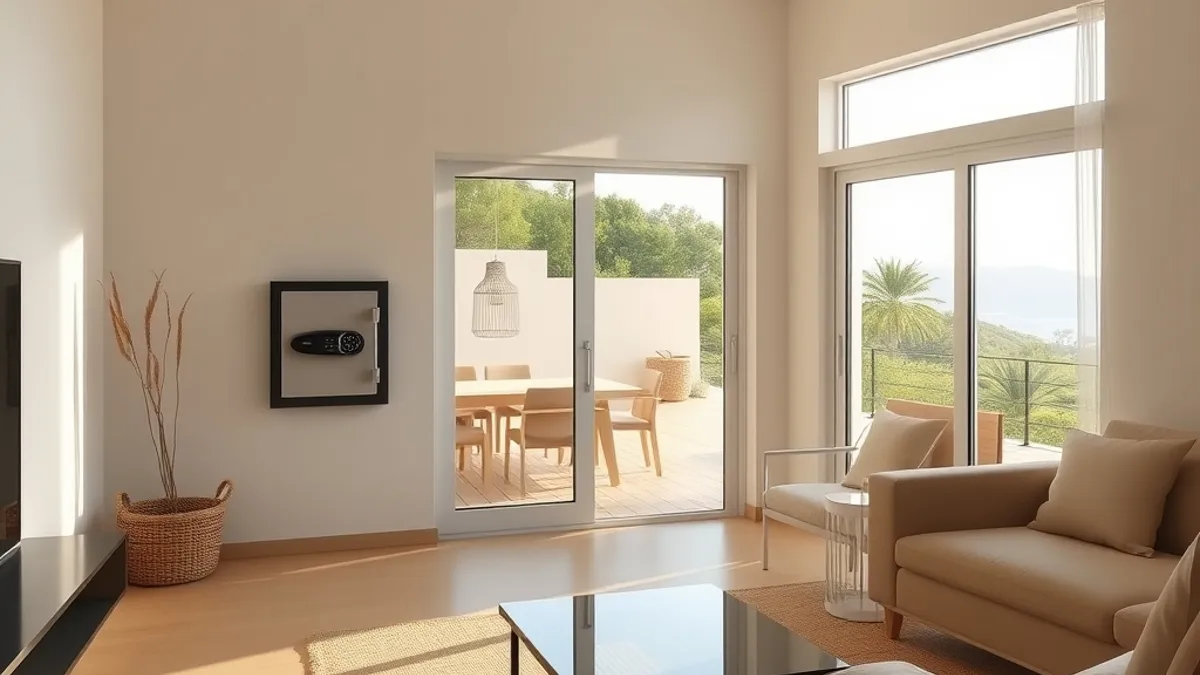
The in-room safe is the last layer of villa security, and the one you interact with most. Typical safes in villas hold laptops up to 15-17 inches, along with passports, cameras and small electronics. If you travel with larger gear, such as a professional camera body with a long lens or a 17-inch-plus workstation, ask for the safe’s internal dimensions before booking so you are not improvising on arrival.
Check how the safe is installed
A safe that simply sits in a wardrobe can be carried out of the villa by anyone strong enough to lift it, which defeats the purpose. Ask the host whether the safe is bolted to the floor or wall. Most well-run villas anchor their safes, but some use freestanding units, and it is better to know in advance. If the safe is not anchored, factor that into how you handle valuables, perhaps by splitting items between the safe and locked luggage.
Make it a habit, not an afterthought
Use the safe from the very first night, not after you have settled in. Passports, spare cash, backup cards and electronics should go in as soon as you unpack, because the first evening is when you are most distracted by check-in tasks. Set your own code rather than leaving any factory default in place, and choose something unrelated to your birth date or room number.
Photograph your valuables at check-in as a record. A few quick photos of your laptop, camera, watch and phone, ideally showing their condition, take two minutes and give you documentation if anything goes missing or is damaged. Pair the photos with a note of serial numbers for the most expensive items, and store them in cloud-backed photos rather than only on the device itself.
Questions to Ask and Habits That Make Villa Security Work
Villa security only works if the layers are actually in place and you know how to use them. Walls, cameras, alarms and safes are just equipment until someone operates them correctly. The good news is that the effort required is small: three questions before booking, one walkthrough after arrival, and a handful of daily habits. Here is how to put it together, step by step.
- Send three questions before booking. Email the host or manager asking about camera locations, alarm type, and gate access control. Camera locations tell you whether CCTV is limited to entrances and outdoor areas, alarm type tells you whether the system is monitored or just sounds locally, and gate access control tells you whether the villa relies on a keypad code, key cards or staffed guards. Specific written answers also give you a record if the property falls short on arrival.
- Request a security walkthrough within the first 24 hours of arrival. Ask the host, manager or a staff member to show you how the gate operates, where the alarm panel is, how to arm and disarm it, where the cameras are, and how the safe works. A walkthrough in the first 24 hours means you are not figuring out the alarm at midnight or discovering a jammed safe when you need it.
- Lock the gate every time. Close and secure the gate behind you and behind anyone else entering, including staff. A gate left open for a delivery or a taxi cancels out everything else the villa has in place.
- Arm the alarm at night. Once you know the code and the zones, make arming the system part of your bedtime routine, just like locking a hotel door. An alarm that is never set offers no detection at all.
- Keep ground-floor windows closed when you are out. Even in warm destinations, an open ground-floor window while you are at the beach is an easy entry point. Enjoy the views while you are home, and close everything up before you leave.
None of these steps costs anything, and together they turn the villa’s walls, alarm, cameras and safe from equipment into a working system. The habits take less than a minute each once they become routine, and they protect everything from your passport to your peace of mind. Just as important, pay attention to how the property responds to your questions. A host who answers clearly and welcomes the walkthrough is usually a host who takes security seriously. Vague replies or reluctance to demonstrate the alarm are signals to book somewhere else. Ask early, verify on arrival, and then relax and enjoy your stay.
The Security Picture in One View
So, do alarms, safes, gates and cameras actually protect you in a private villa? The honest answer is that they work when they work together. A keypad or staffed gate controls who reaches the property, an alarm covering doors, ground-floor windows and living areas detects anything that slips past, cameras at entrances and pools record it, and a safe protects what matters most inside. No single layer does the job alone.
The good news is that most of the protection comes from you, not the hardware. Asking a few direct questions before booking and doing a quick walkthrough within the first 24 hours of check-in costs nothing, while villas with 24/7 staffed gates usually sit in the upper price tier if you want that extra coverage. If this helped you book with more confidence, leave a comment or share the article with a fellow traveler.