Most safari travelers happily pay a conservation levy at check-in, assuming the money goes straight to protecting wildlife. But ask what those dollars actually bought last month, and even front-desk staff at some lodges struggle to answer. Guest contributions often fund anti-poaching units, yet the link between your nightly fee and the ranger walking a fence line at dawn usually stays invisible.
This guide pulls back the curtain. We break down what levies typically cost and where the money goes, from salaries to patrol gear. You’ll learn what a day of anti-poaching work really looks like, how to tell a genuine program from green marketing, which regions run the most established lodge-funded security models, and how you can add value beyond simply paying the levy. By the end, you’ll know exactly what questions to ask before booking.
What Guest Contributions Actually Pay For
At most safari lodges, the conservation or community levy is a separate line on your bill, typically adding USD 10-30 per guest per night. That money is pooled into the lodge’s security and wildlife budget rather than treated as profit. Over a week-long stay for a family of four, this can add up to a meaningful contribution to the unit that patrols the concession you’re game-driving in.
Where the money goes first
Staffing dominates the budget. A trained scout earns roughly USD 150-400 per month, which sounds modest by Western standards but represents a stable, skilled job in rural areas near reserves. Because rangers and scouts are the backbone of any anti-poaching effort, salaries absorb the largest share of most security budgets, often well ahead of vehicles or equipment.
Not every lodge uses a separate levy, though. Some earmark a fixed percentage of their room rates instead, folding the contribution into the price you see online. Neither model is inherently better, but the structure affects transparency. Before booking, ask exactly how contributions are structured: is there a named levy, a percentage of the rate, or both? A lodge that can answer clearly and without hesitation is usually one that takes the program seriously.
Patrols, Rangers and the Daily Work of Anti-Poaching Units
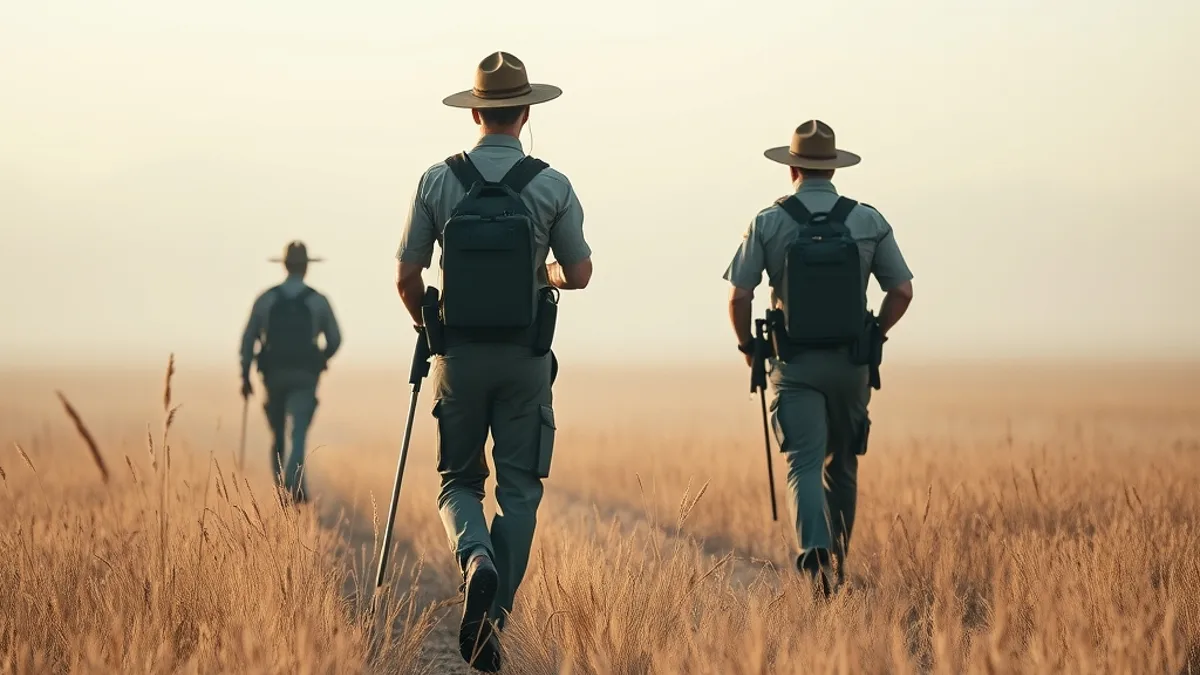
The daily work of an anti-poaching unit is far less dramatic than the word “anti-poaching” suggests, and far more exhausting. Foot patrols typically cover 15-25 km per day on foot, across thick bush, rocky terrain and seasonal floodplains. Most of that distance is spent removing wire snares, cutting out old traps and reading suspicious sign: fresh footprints, disturbed vegetation, or smoke where no camp should be.
The scale of the challenge
A single scout unit often patrols 50,000-100,000 hectares of concession land. That’s an area larger than many entire national parks elsewhere in the world, covered by a handful of people on foot and in one or two vehicles. This scale explains why coverage gaps and response times matter so much: a snaring team that enters the concession overnight may have a head start of many hours before anyone picks up their trail.
Timing shapes the workload too. Patrol intensity rises during the dry season from June to October, when poaching risk peaks. Water sources shrink, animals cluster at rivers and pans, and poachers know exactly where to wait. During these months, units often extend patrol hours and add night operations, which is precisely when an underfunded team feels the strain most, and when your levy dollars are doing the heaviest lifting.
Equipment and Technology Funded by Your Stay
Salaries may be the biggest line item, but none of it works without gear. Radios, GPS units and patrol vehicles are recurring costs, not one-time purchases. Communications gear in particular takes a beating from dust, rain and hard use, so replacement cycles typically run every 3-5 years. A unit with dead radios is effectively patrolling blind, unable to call for backup when it matters.
Beyond the basics, contributions also fund some genuinely expensive capabilities. Tracker dogs, night-vision equipment and vehicle fuel are all high-cost line items that many lodges quietly struggle to maintain. Fuel alone can consume a surprising share of a small budget when vehicles cover rough terrain daily.
- Tracker dogs: a trained dog and handler team can follow a spoor trail for hours in heat where human trackers lose the scent, dramatically improving the odds of intercepting poachers before they leave the concession.
- Night-vision equipment: much poaching activity happens after dark, so thermal monoculars and night scopes turn a nighttime stakeout from guesswork into an observation post.
- Vehicle fuel and maintenance: constant driving on corrugated tracks means tires, suspension and servicing costs that recur monthly, not just at purchase.
How do you know the money is really spent this way? Well-run lodges itemize equipment spending in their annual conservation reports, showing levy allocation percentages alongside patrol statistics. That level of detail is one of the best transparency signals you can look for before booking.
How to Judge Whether a Lodge’s Anti-Poaching Program Is Genuine
Not every lodge that mentions “conservation” in its brochure actually runs a serious anti-poaching operation. The strongest signal is a named partnership. Genuine programs work hand in hand with reserve authorities, national park services, or established conservation NGOs, and they usually say so openly. Vague phrases like “we support wildlife protection” with no partner named deserve a follow-up question before you book.
Ask where the money goes
The nightly conservation or community levy you pay at check-in is usually earmarked for protection work, but how that money is split matters. Ask the reservations team what share reaches rangers directly versus what covers lodge overhead or marketing. Many lodges publish annual conservation reports showing levy allocation percentages, and if a lodge can produce one, that is a very good sign. If the answer is vague or the figures are never shared, treat that as a warning rather than a formality.
You can also read a lot from the ground, literally. Long-serving ranger teams are a practical marker of a real program, because trained scouts stay where conditions, pay and leadership are decent. High turnover usually means something is off. During your game drives, notice whether you see patrol vehicles, foot patrols or rangers walking with trackers. Visible, routine patrol activity in a concession that often spans 50,000-100,000 hectares is what a funded, functioning unit looks like in practice.
Where Guest-Funded Security Models Are Most Established
If you want your conservation levy to do real work, geography matters. The most mature lodge-funded ranger networks operate in private concessions in Botswana’s Okavango and in South Africa’s greater Kruger area. In these systems, lodges have run their own anti-poaching units for years, often coordinating with reserve authorities, so the funding channels and reporting structures are well tested. If Botswana is on your shortlist, it is worth reading about rainshore resorts in Botswana for safari serenity and beautifully paced comfort before choosing a concession.
Kenya’s community conservancy model
Kenya works differently, and arguably more transparently. Around the Maasai Mara, the conservancy model links bed-night fees directly to community scout salaries. Local Maasai landowners set aside grazing land for wildlife, and every guest night pays the scouts who patrol it. That direct line from your invoice to a ranger’s paycheck is one of the clearest funding structures in African safari tourism.
The key point in all three regions is this: your levy is often the primary funding source for the unit protecting the reserve you game-drive in. In remote private concessions there is rarely a government budget covering daily patrols, snare removal and vehicle fuel. State-backed rangers tend to concentrate in national parks, while concession land depends on the lodges operating inside it. That means your choice of lodge is not just a travel decision. In these areas, picking a property with a genuine, well-funded unit is effectively choosing whether the area you visit stays protected at all.
Beyond the Levy: How Guests Can Add Value
Guests do more for anti-poaching work than they realize, and it starts with paying attention. You spend hours on game drives with eyes on the bush, which makes you an extra pair of scouts. Report anything unusual to your guide immediately: a snare in the grass, a vehicle where none should be, fresh campfire smoke in a remote block. Guides radio these sightings to the ranger team, and an early report can turn a slow response into a same-day one.
Your booking choices matter too. Walking safaris and ranger-accompanied activities usually direct a portion of the activity fee straight to the scout team, so choosing them adds funding beyond your nightly levy. Timing helps as well. During the dry season, roughly June to October, poaching risk peaks and patrol budgets are stretched thinnest, so extra occupancy in those months does the most good. For ideas on combining a strong safari region with coastal downtime, see these bluewater resorts in South Africa for safari elegance and coastal release.
- Photograph anything suspicious from a safe distance, such as a cut fence line or tire tracks heading into restricted terrain, since a dated image helps rangers prioritize their response.
- Ask your guide which areas the unit considers hotspots, then keep extra alertness there, because guest sightings in known risk zones carry the most operational value.
- Leave honest feedback naming rangers or trackers who made your stay safer and richer, since lodges use guest reviews to justify keeping scout budgets intact.
- Book longer stays rather than short hops, because fewer arrivals mean less vehicle traffic on patrol routes and more levy income per unit of disturbance.
The Takeaway for Conservation-Minded Travelers
That mystery over what your conservation levy actually buys now has a clearer answer. Guest contributions of USD 10-30 per night flow directly into ranger salaries, foot patrols and equipment across lodge concessions, with staffing typically absorbing the largest share of the budget. In many private reserves, these bed-night fees are the primary funding source keeping anti-poaching units in the field at all.
So how do you know your money is well spent? Transparency, published conservation reports and named partnerships with reserve authorities or established NGOs are the clearest markers of a genuine program. And remember that your choice of lodge and season shapes how much security your stay actually delivers to the reserve. If you have stayed somewhere with a standout program, share your experience in the comments or pass this article along to a fellow traveler.