Booking a lodge stay with children sounds simple until you start asking questions. Which programs actually exist at the lodge? What ages do they cover? And will your six-year-old even be allowed on a game drive, or will the whole family be stuck around the pool? Many parents only discover the answers after paying a deposit, which is exactly the wrong way around.
This guide walks through lodge children’s programs step by step, so you know what to expect before you book. We start with what these programs actually include, then look closely at kids’ clubs: typical ages, hours and what children do in a session. Next come junior ranger programs, the badge-earning safari-style activities that many children remember for years. We then tackle age limits on game drives, in camps and in rooms, followed by a practical comparison checklist for booking. Finally, we cover how to shape each day for children of different ages, and close with a short checklist you can keep on hand.
What Lodge Children’s Programs Actually Include
Most family lodges bundle three things together under one roof: a supervised kids’ club, outdoor activity sessions and child-friendly meal times. The kids’ club usually runs from a dedicated room or tent with its own staff, while the outdoor sessions might be guided nature walks, pool games or animal-focused activities arranged around the camp grounds. Child-friendly meal times matter more than many parents expect, since an early dinner slot can be the difference between a relaxed evening and a meltdown at the adults’ table.
Here is the catch: programs differ sharply between safari lodges, beach resorts and wilderness retreats. A beach resort kids’ club often runs all day with a big play area, while a safari lodge may only open its club during morning and late-afternoon game drive slots. A wilderness retreat might have no formal club at all, just a folder of self-guided ideas. The label “family-friendly” alone is not enough to tell you which of these you are getting.
Supervised or self-guided: the question to ask first
The single most useful question to ask a lodge is whether its activities are supervised by trained staff or simply offered as self-guided ideas for parents. A supervised program means you can hand over your children for a session and take that game drive or spa treatment you have been looking forward to. A self-guided program means the lodge hands you a scavenger hunt list and wishes you luck, which is fine on some trips and useless on others.
It also helps to ask how many staff work with the children and what training they have. First aid experience, familiarity with young children and comfort around nervous first-time visitors all make a real difference, especially in bush settings where a scared child needs calm handling. Get the answer in writing when you can, because front-desk answers on the phone and the actual schedule on arrival do not always match.
Kids’ Clubs: Ages, Hours and What Children Do
Typical lodge kids’ clubs cover children aged roughly 4 to 12, and they run in two main blocks: a morning session and a late-afternoon session. This timing is not accidental. The blocks line up with adult game drive times, so parents can head out at dawn and again in the late afternoon while the children are occupied. Between the two blocks, most lodges expect families to spend the middle of the day together, usually over lunch and a swim.
A good session mixes several types of activity rather than sitting children in front of a screen. Expect crafts, animal tracking games where kids match plaster casts of paw prints to species, baking sessions with the kitchen team, and short nature walks close to camp with a guide. The best clubs tie what children do back to what they saw on drive that morning, so a lion sighting turns into a craft project by lunchtime.
One limit catches many parents off guard: under-4s are usually excluded from group clubs entirely. Staff ratios and insurance rules make it impractical to take toddlers into a mixed-age group, so families with toddlers need to budget for a babysitter instead. Many lodges can arrange one, but it is typically booked about 24 hours in advance and charged per hour, so add that cost to your trip budget early rather than discovering it on arrival.
Finally, check whether lunch and an early dinner are included in the club session or billed separately. Some lodges feed club children as part of the session, while others deliver children back to parents hungry at midday.
- Staff-to-child ratios: ask how many children each staff member supervises, since a small ratio usually signals a genuinely supervised club rather than a loose playroom.
- Walk distance from camp: confirm how far the nature walks go and whether children are always within sight of buildings, which matters in unfenced bush locations.
- What to send with your child: many lodges ask parents to pack a hat, sunscreen and closed shoes for club sessions, and some provide aprons for baking days.
- Collection rules: check whether children are signed in and out by a parent or guardian, and whether older kids in the club can come and go on their own.
Junior Ranger Programs and Safari-Style Learning
Junior ranger programs are the highlight of many family safari trips, and for good reason. They are generally aimed at children aged 6 to 12, sometimes extended to 8 to 14 at larger lodges, and they work on a simple reward loop: children complete activities, earn badges and slowly build up a set of bush skills. A typical program includes tracking walks where a guide teaches children to read spoor and dung, bush skills such as learning which plants are used for what, and star-gazing sessions after dinner when the southern sky puts on its show.
Unlike kids’ club sessions, which are often included in the rate, junior ranger activities are usually run as add-ons. Expect to pay roughly $20 to 50 per child per session, and check the current rate with the lodge before you book since fees change. Another important difference: these activities are led by field guides rather than club staff. That means your child gets real expertise, and often a guide who is happy to answer the hundredth question about elephant behavior.
Where the programs run deepest
Safari regions with strong family traditions tend to offer the deepest junior ranger line-ups, with more sessions, more badges and more experienced guides. Kenya’s Laikipia plateau around Nanyuki is a well-known example, where many properties have hosted families for generations and treat children’s programs as a core part of the stay rather than an afterthought. If a deep program matters to you, it is worth reading about the region first; the article Nanyuki homesteads near safari country with spacious calm gives a good feel for what the area offers families.
The parts children remember longest are often the ceremony pieces. Many lodges end a stay with a small graduation ceremony where children receive certificates, recite a short ranger pledge they learned during the week, and keep a khaki “ranger” kit with a cap and badges. Parents regularly report that these kits are still on bedroom shelves years later, which tells you something about how well this format works. Ask the lodge in advance whether a graduation is part of the program, and whether it can be timed for your last evening so the whole family can be there.
Age Limits: Game Drives, Camps and Room Rules
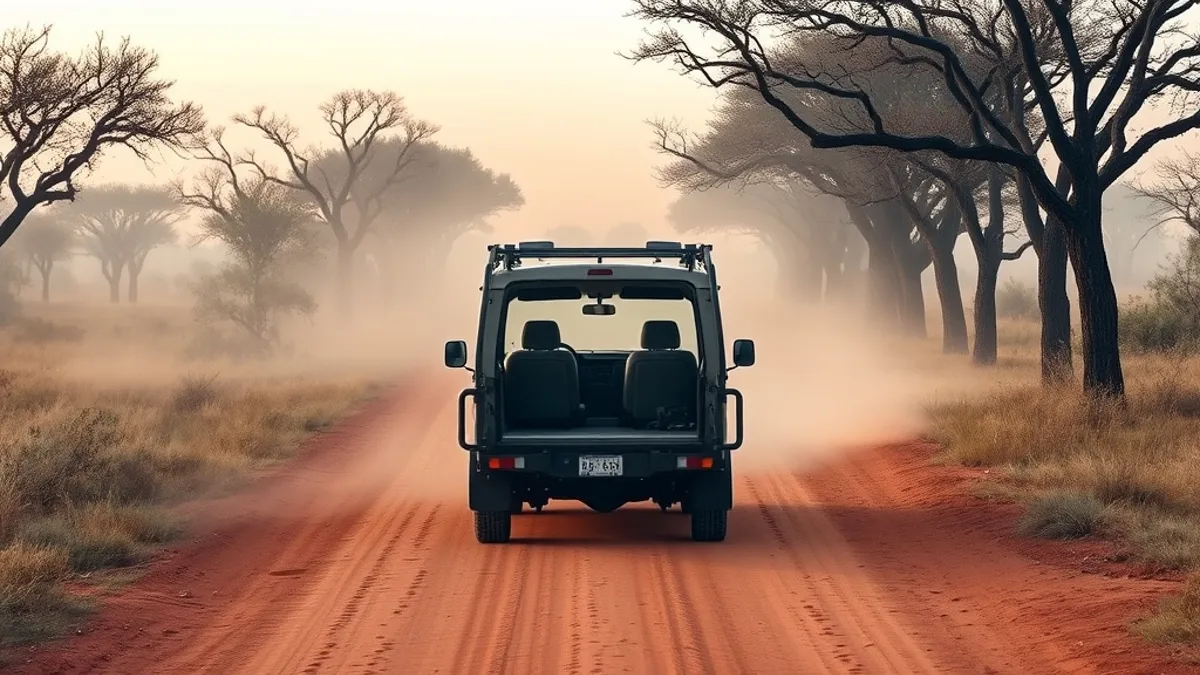
Game drives are the heart of any safari lodge stay, and they are also where most age rules apply. Shared open-vehicle drives commonly require a minimum age of 6-8 years. The reasons are practical: young children struggle to sit still for several hours, noise can spoil sightings for other guests, and safety briefings assume a certain level of understanding and self-control.
If you are traveling with younger children, booking a private vehicle is the usual workaround. You pay a supplementary daily rate, but in exchange the vehicle is yours alone, the guide can shorten drives when attention runs out, and the lodge will often lower its minimum age for your family. Ask about this option when you book, since private vehicles are limited in number and go first in peak season.
Accommodation rules are just as important as activity rules. Some tented camps and walking-focused lodges set minimum ages of 12-16 and are effectively adults-only, no matter how family-friendly their marketing sounds. For families with children under 12, family suites or two-bedroom units are the standard room type, and these sell out before standard rooms. Teens bring a different requirement: interleading rooms give them privacy while keeping them close, so ask specifically about connecting configurations.
- Vehicle type matters: closed vehicles with doors and windows feel safer for nervous parents of young children, while open vehicles offer better views but demand more stillness and attention from kids.
- Walking safaris and night drives: these usually carry stricter minimum ages than standard game drives, sometimes several years higher, so treat them as separate activities when checking policies.
- Camp layout questions: in unfenced bush camps, ask how far your family unit is from the main area and whether children must be escorted after dark, since some lodges require an adult walk-along for under-12s.
- Meal seating: some lodges restrict children from the main dinner area or set early sittings, so confirm where and when your family eats before assuming everyone sits together.
How to Compare Programs Before You Book
Brochures age quickly, and a lodge that welcomed four-year-olds two seasons ago may have tightened its rules since. Websites are updated when marketing teams find the time, not when policies change, so the family page you bookmarked last year can quietly be out of date. The safest approach is to treat every children’s program claim as unverified until the lodge itself confirms it in writing. A short email exchange before you pay a deposit costs you ten minutes and can save you from arriving with a toddler at a camp that turns out to be adults-only, or from budgeting for activities that are priced very differently once you’re on site.
- Request the current children’s activity schedule by email. Ask for this season’s actual schedule rather than the website brochure, which may be years out of date. A real schedule shows session times, what each session includes and whether meals are part of it. It also reveals how many sessions run per day, which tells you how much of your itinerary the lodge can realistically cover.
- Confirm three numbers in writing. Get the kids’ club age range, the game drive minimum age for your family configuration, and any per-activity fees such as junior ranger sessions. Ask the lodge to reply by email so you have a record you can refer to if anything differs on arrival. Vague answers like “we’re very family-friendly” are not confirmation; ask them to restate the exact ages and amounts.
- Book early for school holiday peaks. For June-October and December travel, reserve family lodges 3-6 months ahead. Family suites and two-bedroom units sell out first, long before standard rooms do, so late bookers often end up splitting across two rooms or choosing a less suitable lodge. If you need a private vehicle for younger children, request that at the same time, since availability is limited.
- Ask about safety around the camp. Find out whether the pool, playground and club room are fenced or supervised, especially in unfenced bush camps where wildlife can wander through. This is also the moment to ask whether children must be escorted between their room and the main area after dark, and whether an escort is provided by staff or expected to be a parent.
Keep all replies in one email thread and bring a copy on your trip, ideally saved offline on your phone since connectivity at remote lodges can be patchy. If a lodge hesitates to put age limits or fees in writing, treat that as useful information in itself and compare it against lodges that answer clearly and promptly. A quick, detailed reply before booking is often a good sign of how the lodge handles guest requests once you arrive.
Making the Days Work for Different Ages
The best family lodge days follow a simple rhythm: one shared activity that everyone does together, and club sessions covering the rest. An afternoon game drive works well as the shared anchor, since it is short enough for younger children and exciting enough for teens. Let the kids’ club fill the early-morning and midday slots, when long drives and adult-focused activities would test everyone’s patience.
Handling a wide age spread
Split-age families have an easy pairing available. Younger children spend the slot in the kids’ club, doing crafts and nature walks close to camp, while older ones join junior ranger sessions with a guide, learning tracking and bush skills. The two groups reunite for the shared drive or dinner, and each child gets an experience pitched at their own level instead of a compromise that suits nobody.
Evenings and packing
If you want an adults-only dinner or an evening drive, arrange babysitting at least 24 hours in advance. Lodges that offer it usually charge per hour and keep a limited roster of sitters, so last-minute requests often fail even at family-focused properties.
Packing makes a bigger difference than most parents expect. Bring familiar comfort items for bedtime in a strange room, refillable water bottles for each child, and layers for everyone. Early mornings on an open vehicle are cold even in warm months, and a shivering child is a child who wants to leave the drive early. A warm jacket and a snack stash can turn a reluctant rider into an eager one.
The Family Lodge Checklist in Short
So which children’s programs actually exist, and will your kids be allowed on game drives? In most cases, lodge children’s programs rest on three pillars: kids’ clubs for ages 4-12, junior ranger sessions for ages 6-12 and clear game drive minimums of 6-8 for shared vehicles. Under-4s usually need a babysitter, and some camps are effectively adults-only, so the details matter.
Age limits and fees vary lodge by lodge, so confirm them in writing before booking. Reserve 3-6 months ahead for peak school holiday seasons, and choose family suites or private vehicles where needed. Do that, and the whole trip gets easier to plan. If this helped you sort out your own lodge shortlist, leave a comment or share this article with another traveling family.