If you have ever wondered why a so-called five-star lodge inside a famous national park has only eight rooms, or why two neighboring camps seem to sit in their own private worlds, you are not alone. Lodge grading in national parks confuses many travelers because the star or tier rating is only part of the story. Park authorities also limit how many beds, rooms and lodges can operate in a given area, and those limits shape everything from your nightly rate to how many vehicles you share a lion sighting with.
This article breaks down what grading systems actually measure, why bed limits and density rules exist, and how they affect price, seasons and booking strategy. You will also learn how to choose between graded tiers for your trip and confirm a lodge’s credentials before you pay a deposit. By the end, the system will feel less like a mystery and more like a practical planning tool.
What Lodge Grading Actually Measures
Most travelers assume a star rating tells them how plush the lobby looks. In reality, lodge grading in national parks measures much more than décor. A proper grading system scores room size, staff-to-guest ratios, the qualifications and consistency of guides, and dining quality. Two lodges can look similar in photographs yet sit a full tier apart once you weigh service depth and guiding standards.
The footprint check most guests never see
Inside a national park, there is an extra layer. Before a lodge can earn or keep its rating, it typically has to pass environmental and footprint checks set by the park authority. These cover things like water use, waste handling, energy sources and how much physical space the buildings occupy. A lodge with beautiful suites but poor environmental compliance can lose its grade, which is why the rating is a more meaningful signal inside parks than a similar label at a city hotel.
Why the same grade can mean different things
Ratings also differ by country and even by park. One system may run on four tiers, another on five, and the criteria behind each level are rarely identical. A four-tier property in one destination may offer a comparable experience to a five-star property somewhere else. The practical takeaway is to read what the grade is based on, not just the number itself, and to ask an operator what standards sit behind the label before you compare lodges on rating alone.
Bed Limits and Why They Exist
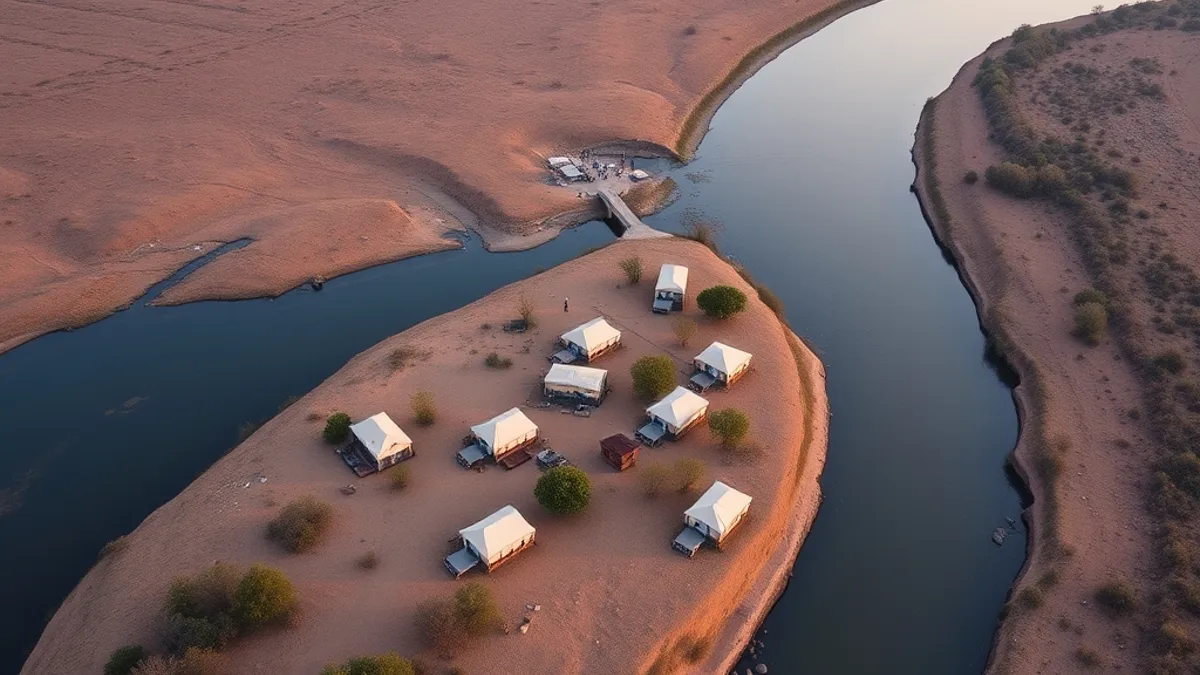
The high nightly rates at graded park lodges are not simply a luxury markup. They are largely a consequence of deliberate scarcity built into park management. Many low-density safari parks cap lodges at roughly 6-12 guest units per property, a rule designed to protect wildlife corridors and keep vehicle traffic manageable around sensitive habitats.
Bed caps at the zone level
The limits do not stop at individual properties. Some parks limit total beds per concession area, often around 100-150 beds per zone. That cap means even a busy concession cannot turn into a strip of full camps. In practice, it keeps game drives uncrowded, because the number of vehicles operating in an area is tied directly to the number of beds it holds.
Why this drives your nightly rate
Fewer units mean fewer rooms, and a lodge with eight tents simply cannot spread its costs across a hundred guests. Fixed expenses such as guiding teams, staff housing, food logistics and conservation contributions must be covered by a small number of bookings. That is the main reason why smaller bed counts push nightly rates up, and why two lodges with similar service levels can charge very different rates depending on how many units each is allowed to run. When you understand this math, the price of a low-density lodge starts to look less like an indulgence and more like the true cost of keeping a park uncrowded.
Density Rules: Spacing Between Camps
If bed limits control how many guests can sleep in an area, density rules control how those lodges are laid out across it. Most park authorities and concession managers set minimum distances between properties, often several kilometers, so camps stay out of sight and sound of each other. The goal is to preserve the feeling of being alone in the bush rather than in a resort row.
Private concessions enforce stricter spacing
Density rules are typically tighter in private concession areas than in public park zones. Public zones may allow lodges closer together along a river or waterhole, while a private concession will usually insist on much wider spacing and exclusive traversing rights. This is the main reason private concession camps feel more exclusive: fewer properties share the same ground, and each one effectively has its own corner of the ecosystem.
Fewer vehicles at every sighting
Low density has a direct benefit on game drives. When only a handful of lodges operate in a zone, the number of vehicles that can arrive at a leopard sighting is naturally limited. Many graded lodges treat this as a core quality marker, and guides will often cap how many vehicles wait at one animal rather than queueing everyone in. Before you book, ask an operator how many lodges share the area your camp sits in and what the vehicle policy is at sightings. The answer tells you more about your daily experience than the star rating does, and it explains why two lodges of the same grade can feel completely different in the field.
How Grading Affects Price and Seasons
Graded lodges inside national parks sit at the top of the safari price range for a reason. Rates typically run from about $300 to $1,500+ per person per night, all-inclusive, with the most expensive tier found in private concession areas where bed limits and density rules keep guest numbers low.
What your rate actually covers
At most graded camps, the nightly rate bundles in far more than a room. Accommodation, all meals, house drinks, game drives with a professional guide, park fees and often laundry are included, which is why the per-person figure looks steep compared with a standard hotel. When comparing quotes, ask exactly what is included, since a lower headline rate that excludes park fees and drinks can end up costing more.
Timing your stay around the seasons
High season in East and Southern African parks runs June to October, with a second peak from December to February. These months bring peak rates and the strictest availability, because the small number of rooms at each graded lodge sells out quickly when wildlife viewing is at its best.
Shoulder months like May and November offer the same graded standards, the same guiding quality and the same room for noticeably lower rates. You may trade some certainty about weather or wildlife movements, but the lodge experience itself does not change. For travelers with flexible dates, these months are the easiest way to stay in a top-tier graded camp at a mid-tier price.
Booking a Graded Lodge: Timing and Minimum Stays
Graded lodges have very little inventory to sell, and that scarcity shapes every booking decision you make. A camp with a handful of units can be full months before you even start looking, so booking well ahead is not a luxury but a requirement for peak-season travel. The process is straightforward if you work through it in the right order, because each step depends on the one before it. Rushing the sequence is how travelers end up overpaying, settling for the wrong lodge, or losing a deposit on a property that never matched its marketing. The steps below take you from first idea to confirmed reservation with nothing left to chance.
- Choose your dates and tier first. Decide whether you want peak season or shoulder months and which grade fits your budget, because availability differs sharply between them and this determines everything that follows.
- Book 9-12 months ahead for peak-season stays. Bed limits mean small inventory sells out first, and the most sought-after graded camps are often fully committed close to a year in advance for June to October.
- Ask about minimum stay rules. Many high-demand graded lodges require 2-3 nights, especially in private concessions, so build this into your itinerary before you plan the rest of your route.
- Confirm the grading certificate and unit count directly with the operator. Ask for proof of the lodge’s current grading and how many guest units the property has, so you know exactly what you are paying for.
- Only then pay your deposit. Once grading, unit count, dates and minimum stay are confirmed in writing, you can commit with confidence.
Following this sequence protects you from the two most common mistakes: assuming a room will be available close to your travel date, and paying a deposit for a property whose grading or size was not what the marketing suggested. It also gives you leverage. If a lodge cannot confirm its grading or unit count in writing, treat that as a signal to look elsewhere. Keep copies of every confirmation email, and recheck your dates and minimum stay requirements before each payment milestone. A little patience at the start of the process saves real money and stress later, and it means you arrive at camp knowing precisely what you booked and why.
Choosing Between Graded Tiers for Your Trip
Grading tiers are not a ranking of which lodge is “best” but a description of what you are buying. Top grades buy exclusivity and guiding depth, while mid grades trade some service for value. The right choice depends on what matters most to you, and on where the lodge actually sits.
Location matters more than many travelers expect. A mid-grade lodge in a prime game area can outperform a top-grade lodge in a quiet zone, because the quality of your safari comes from what is outside the room as much as what is inside it. Study the lodge’s position within the park, its distance from key habitats and how long drives to productive areas will be.
Before comparing tiers, weigh these factors:
- Guiding depth. Higher grades usually mean longer-trained guides, lower guest-to-guide ratios and specialists such as walking or photographic guides, which changes what you see and learn each day.
- Shared space. Top-graded camps tend to have fewer units per property, so dining areas, pools and viewing decks stay quiet even at full occupancy.
- Rate inclusions. Grading standards do not guarantee identical inclusions across operators, so check whether park fees, premium drinks, transfers and private vehicles are part of the rate or billed separately.
- Flexibility of the itinerary. Some top-tier camps build the daily schedule around your interests, while mid-grade properties often run fixed game drive times.
Match the tier to your priorities rather than chasing the highest grade available, and you will often find a mid-tier lodge in a superb location gives you a better trip than a top-tier one chosen on grade alone.
The Takeaway on Grading, Limits and Density
So why does a “five-star” lodge in a famous park often have just eight rooms, and why can’t more camps simply open nearby? The answer is that grading and capacity rules work on two different fronts. Grading reflects service and footprint standards, covering room size, staff ratios, guiding quality and dining, while bed limits and density rules protect the park experience itself by keeping game drives uncrowded and wildlife corridors intact.
Once you understand this, the pricing makes sense. Small unit counts and zone caps explain both the exclusivity and the price of graded park lodges. Booking early and matching tier to your priorities turns the grading system into a practical planning tool rather than a confusing label. If this helped you decode lodge ratings, leave a comment or share this article with a fellow traveler.