Many travelers book a safari lodge expecting hotel-style freedom — eat when you like, order what you like — then discover on arrival that dinner is at 7pm sharp and the whole day bends around game drives. The obvious question follows: what actually happens if you miss a meal, arrive late, or simply want to eat on your own schedule? The answer is more reassuring than most people expect, but it helps to understand the system before you arrive.
This guide explains lodge meal times in plain terms: why meals follow the wildlife rather than hotel convention, how set dinners work in remote kitchens, what a boma dinner actually involves, and what breakfast, lunch and afternoon tea look like on a typical day. We’ll also cover how flexible lodges really are with private dining and special requests, how to plan your day around the schedule, and the key things to confirm at booking so the fixed rhythm works in your favor rather than against you.
Why Lodge Meal Times Follow the Game Drives
The first thing to understand about lodge meal times is that they are built around wildlife activity, not hotel convention. Animals are most active at dawn and dusk, so game drives — and therefore meals — are arranged around those windows. Breakfast comes after the morning drive, not before it, and afternoon tea is deliberately placed just ahead of the evening drive so you’re fueled and ready when the vehicles roll out.
Morning drives typically depart between 5:30 and 6:30am, because dawn is when predators are on the move and the bush is at its coolest. Waking you for a full breakfast first would mean leaving later and missing the best sightings, so most lodges offer just coffee and a light bite before you head out, then serve the proper breakfast when you return around 9:00–10:00am.
Why dinner lands at the same hour everywhere
Evening drives usually return between 6:00 and 6:30pm, which leaves roughly 30–60 minutes to wash off the dust and change before dinner. That’s why dinner sits at 7:00–7:30pm at almost every safari lodge, whether it’s a tented camp in the Serengeti or a lodge in the Kruger area. The kitchen needs to know when the vehicles are back; the schedule is less about tradition and more about logistics. Once you see the pattern, the whole day makes sense: drive, eat, rest, drive, eat.
Set Dinners: What a Fixed Evening Schedule Really Means
Most safari lodges serve dinner as a single seating between 7:00 and 7:30pm, and rather than an à la carte menu you’ll usually get one or two choices per course. In city hotels that would feel restrictive, but on safari it’s simply how remote kitchens operate. Menus are often announced at lunch or displayed on a chalkboard, and most lodges are happy to adjust a course if you ask early in the day.
Why kitchens can’t improvise
Set dinners exist because of supply, not stinginess. Many lodges are hours from the nearest town, and ingredients arrive on scheduled supply runs — sometimes only once a week. The chef plans menus around what’s on the truck and what needs using first, which is why you might have fresh fish early in the week and heartier, store-cupboard dishes later. Wasting food in the bush is expensive and impractical, so portions and menus are planned carefully.
If you plan to skip dinner — perhaps because of a late lunch or fatigue — tell the kitchen by mid-afternoon. Most lodges can hold a plate for you or arrange a light in-room option, but they can only do that if they know in advance. In a small camp, one unclaimed dinner genuinely affects what gets ordered on the next supply run.
Private dining is often possible too: a table set in your suite or on your deck, usually at a supplement. It’s typically arranged 24 hours ahead so the kitchen can prepare and staff it properly — just ask the manager or your host at breakfast the day before.
Boma Dinners: The Fireside Tradition Explained
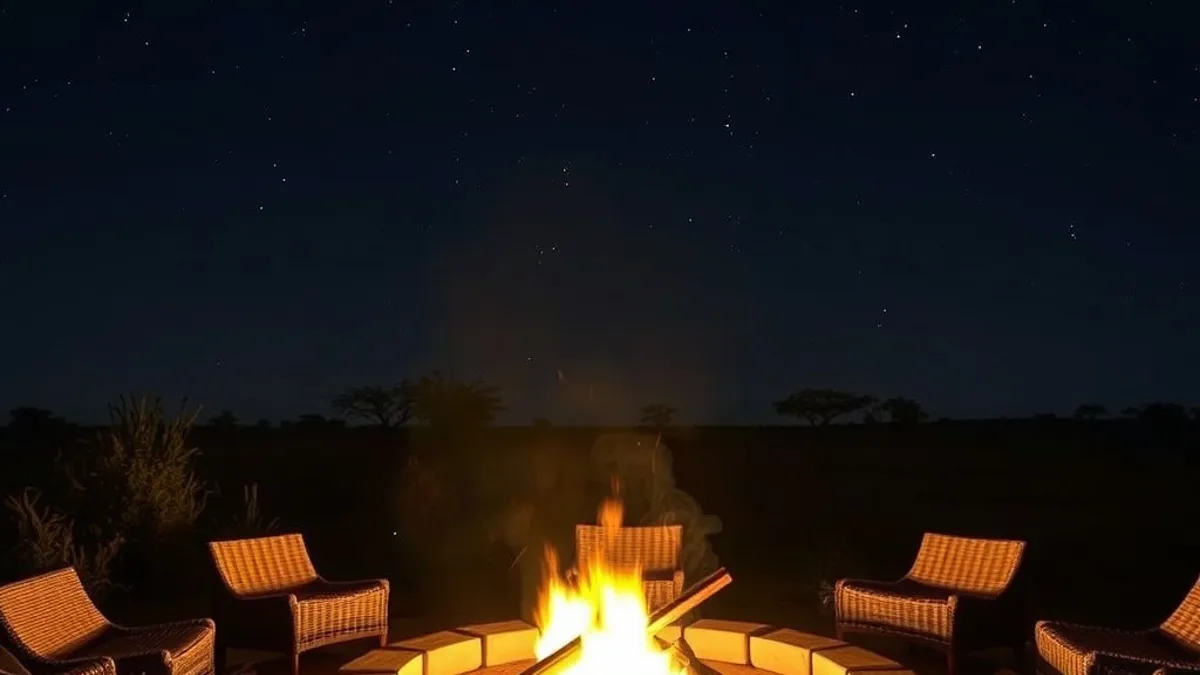
A boma is an open-air enclosure, traditionally built of branches or reeds, where dinner is cooked and served around a fire. Many lodges host boma dinners typically 2–3 nights a week, weather permitting. Instead of the dining room’s set tables, you’ll find a crackling fire, lanterns, and a long, relaxed evening under the stars — often one of the most memorable nights of a safari.
What’s on the menu
Boma menus lean toward food that suits fire cooking: grilled meats, potjiekos — a slow-cooked South African stew made in a three-legged cast-iron pot — and traditional sides like pap, chakalaka, roasted vegetables and salads. Service is usually buffet-style, so you wander between pots and grills rather than ordering from a menu. It’s hearty, generous food, and there’s almost always something for lighter appetites alongside the braai-style grills.
Because boma dinners depend on the weather, they’re often swapped for indoor dining when rain sets in or the wind picks up. Don’t be disappointed if your boma night moves inside — lodges make the call for comfort and safety, and the food is usually the same.
The social heart of the week
Boma nights double as the social evening of the stay. Guides join guests around the fire, and stories from the day’s sightings get traded — the leopard that walked past the vehicle, the elephant that blocked the road. If you want to pick your guide’s brain about tomorrow’s route, this is the moment to do it. Bring a jacket; bush evenings cool down quickly once the fire burns low.
Breakfast, Lunch and Afternoon Tea on a Typical Safari Day
A day at a safari lodge runs on the rhythm of the game drives, and nowhere is that clearer than at breakfast. Because morning drives typically return between 9:00 and 10:00am, breakfast is served after you come back, not before you leave. Most lodges lay out a solid buffet of fruit, cereals, pastries and cold cuts, then cook eggs to order — omelets, poached, scrambled, however you like them.
Lunch follows the same logic. It is served around 12:30 to 1:00pm, and it is deliberately light: salads, quiches, cold meats and fresh bread. The midday heat peaks right around then, and nobody wants a heavy plate in 35-degree shade. Kitchens know this and keep portions modest.
The quiet stretch after lunch is when housekeeping moves through the suites. If you want an undisturbed nap on your private deck, that is the window. If you want to swim, time it before or after the room service cart appears.
Afternoon tea, served between 3:30 and 4:00pm, is the small ritual that surprises first-time visitors. It bridges the long gap between lunch and the evening drive, and it is more substantial than the name suggests.
- Afternoon tea usually includes both sweet and savory options — think cakes and scones alongside mini quiches or sausage rolls — because it doubles as a pre-drive snack for guests who skipped lunch.
- Coffee, teas and often iced drinks are served at tea time, so it is a good moment to hydrate before three hours in an open vehicle.
- Tea is commonly taken in a shared lounge or on a main deck, which makes it an easy place to compare notes with other guests on where the day’s cats were seen.
- If you are combining safari with a coastal stay, the same unhurried meal rhythm carries over at properties like Bluewater resorts in South Africa for safari elegance and coastal release, just without the 5:30am wake-up call.
How Flexible Is Flexible? Private Dining and Special Requests
How much can you bend a lodge schedule? It depends mostly on size. Small camps with fewer than 12 rooms cook for a handful of guests at a time, so the chef can shift a meal, plate something off-menu or serve you privately with little fuss. Large lodges with dozens of rooms run on tighter logistics and are far less nimble. Either way, the rule is the same: raise special requests when you book, not when you check in. A kitchen that hears about your needs two days before arrival can plan; one that hears about them at dinner cannot.
Celebration dinners
Honeymoon dinners and anniversary setups are a lodge specialty. Think a table on your private deck, a lantern-lit spot in the bush, or a poolside spread at sunset. These take real coordination — staff, furniture, lighting, sometimes a chef working away from the kitchen — so confirm the details 30 to 60 days ahead, along with any dietary needs at the same time. Properties that specialize in romantic occasions, such as the ones described in Le Morne nests for honeymoon calm and polished tropical living, build this kind of private dining into the stay, and safari camps can match it if you ask early.
Timing shifts and dietary needs
Early flights, small children and photographers chasing golden light all call for meals at odd hours. The good news is that most lodges can move a breakfast earlier or hold dinner back with just one day’s notice. Dietary requirements are equally manageable: vegetarian, vegan, halal and allergy-friendly meals are standard at most lodges. The catch is the word “declared.” A kitchen in a remote reserve orders supplies on scheduled runs, sometimes weekly, so a request made at check-in may simply not be cookable. Put every dietary need in writing when you reserve, and confirm it again before you travel.
Planning Your Days Around Lodge Meal Times
Once you know the meal rhythm, you can plan the rest of your day around it instead of fighting it. The long gap between the end of breakfast and the start of afternoon tea is your free block, and it is exactly when lodges schedule their optional extras. Use it well and you never miss a meal or an activity. The trick is to treat that midday window as the anchor for everything else you want to do, from relaxation to logistics, and to communicate your plans to staff early rather than on the spot.
- Book spa treatments and guided bush walks for the 10:00am to 3:30pm window. A massage at 11:00am or a walking safari at 2:30pm fits neatly between meals; the same booking at 7:00pm collides with dinner.
- If your departure flight leaves in the afternoon, ask about a packed lunch or an early lunch when you reserve your stay. Kitchens need lead time to prepare a picnic box, and asking on the day often means leaving hungry.
- Before you arrive, check whether your rate is full-board and whether drinks are included. Meal times are identical across rate types, but a fridge stocked with paid minibar items and sundowners at the bar can quietly double your bar bill over a week.
- Families with young children should ask about a separate children’s sitting, which many lodges run around 6:00 to 6:30pm. Kids eat early and go to bed, while parents sit down to the adult dinner at 7:00 to 7:30pm with a babysitter arranged.
One more practical habit: write your day’s plan on the card most lodges leave in your suite. Sign up for the bush walk, flag the early breakfast, note the packed lunch. The kitchen and guides plan their work off those cards each morning, so a filled-in card is the difference between a smooth day and a series of apologies.
It also pays to think about how the schedule interacts with travel days and rest days. On arrival days, ask at booking whether a late lunch or a light plate can be held for you, since transfer timings rarely line up perfectly with the kitchen’s service. On your final morning, confirm checkout and brunch arrangements the night before so you are not rushed. And if you plan to skip a meal entirely for a long siesta or a photography session, mention it at breakfast rather than at the door — the kitchen orders food on tight supply schedules, and a simple heads-up avoids waste on both sides. A few minutes of coordination each evening keeps the whole next day running smoothly.
The Takeaway on Lodge Dining Rhythms
So what happens if you miss dinner? The short answer: tell the kitchen by mid-afternoon and most lodges will hold a plate or arrange something light, but the schedule itself rarely bends. Lodge meal times follow the game drives — breakfast after the morning drive, afternoon tea before the evening one, and dinner at 7:00–7:30pm once the vehicles are back. Set dinners and boma nights are the norm, not a limitation.
The good news is that flexibility exists if you ask for it early. Special dinners and dietary needs are best confirmed 30–60 days ahead, and planning spa treatments or bush walks inside the midday window keeps the whole day running smoothly. Work with the rhythm rather than against it, and the fixed schedule becomes part of the safari’s charm. Have a lodge dining story of your own? Share it in the comments below.