Many guests book a safari based on price, location or lodge photos, then discover on day one that the quality of every game drive depends on something they never thought to ask about: the guiding team. Some vehicles carry a single ranger, while lodge ranger and tracker teams work in pairs, and the difference in what you see from the seat is often dramatic.
This guide explains what a ranger actually does during a drive, how a tracker reads spoor and signs in the bush that most eyes would pass right over, and how the two roles work together as a team. We also break down how drives differ by time of day, from early morning departures to afternoon runs and night drives after dark, and finish with practical questions to ask when choosing a lodge based on its guiding team.
What a Lodge Ranger Actually Does
A ranger is the person who leads your game drive from start to finish, and the role goes far beyond simply driving a vehicle along a dirt road. The ranger decides where to go, interprets animal behaviour as it unfolds, and manages safety for everyone in the vehicle. If an elephant shows signs of agitation or a buffalo herd shifts direction, it is the ranger who reads the situation and moves the vehicle accordingly.
Throughout a standard shared drive, which typically runs roughly 3-4 hours, a good ranger keeps up a steady flow of information. You will hear about ecology, animal behaviour, bird identification and the conservation challenges facing the reserve. Many guests find these conversations become the highlight of their trip, turning a sighting into a story they actually understand.
Behind the wheel and on the radio
Rangers also handle constant radio communication with other vehicles on the reserve. When one vehicle finds a predator, the ranger relays positions, coordinates sightings and decides in real time whether to change route. That judgment call, balancing a fresh sighting against the risk of crowding a sighting with too many vehicles, is a skill that comes with experience, and it is one of the clearest reasons to value a seasoned guide.
Most lodges require rangers to hold field guiding qualifications, and many expect several years of hands-on experience before they lead drives on their own. When you meet your ranger, do not hesitate to ask about their background; the answer usually tells you a lot about the drive ahead.
The Tracker’s Role: Reading the Bush
On lodges that run proper ranger and tracker teams, the tracker sits on a dedicated seat mounted at the front of the vehicle, ahead of the ranger and guests. From this position they scan the sand and dust of the road for fresh spoor, looking for prints, drag marks and disturbed earth that reveal what passed through and how long ago. It is a skill built over years, often passed down within families in communities living near reserves.
Signs beyond footprints
Tracking is not only about footprints. A tracker reads broken grass stems to judge the direction an animal moved, estimates the age of dung to work out how recently a buffalo or elephant passed, and listens for alarm calls from birds and baboons that signal a predator nearby. Each sign is a piece of a puzzle, and experienced trackers assemble them at speed while the vehicle is still moving.
The practical payoff for guests is enormous. A tracker signals the ranger to slow down or turn long before any animal is visible, which cuts search time dramatically. Instead of circling the reserve hoping for luck, the vehicle follows a trail that leads somewhere. On a good morning, that can mean the difference between a brief glimpse of a lion in the distance and an extended, close sighting of a leopard heading toward a kill. If you want to appreciate the craft, sit near the front on your next drive and watch how quickly the tracker spots signs you would drive straight past.
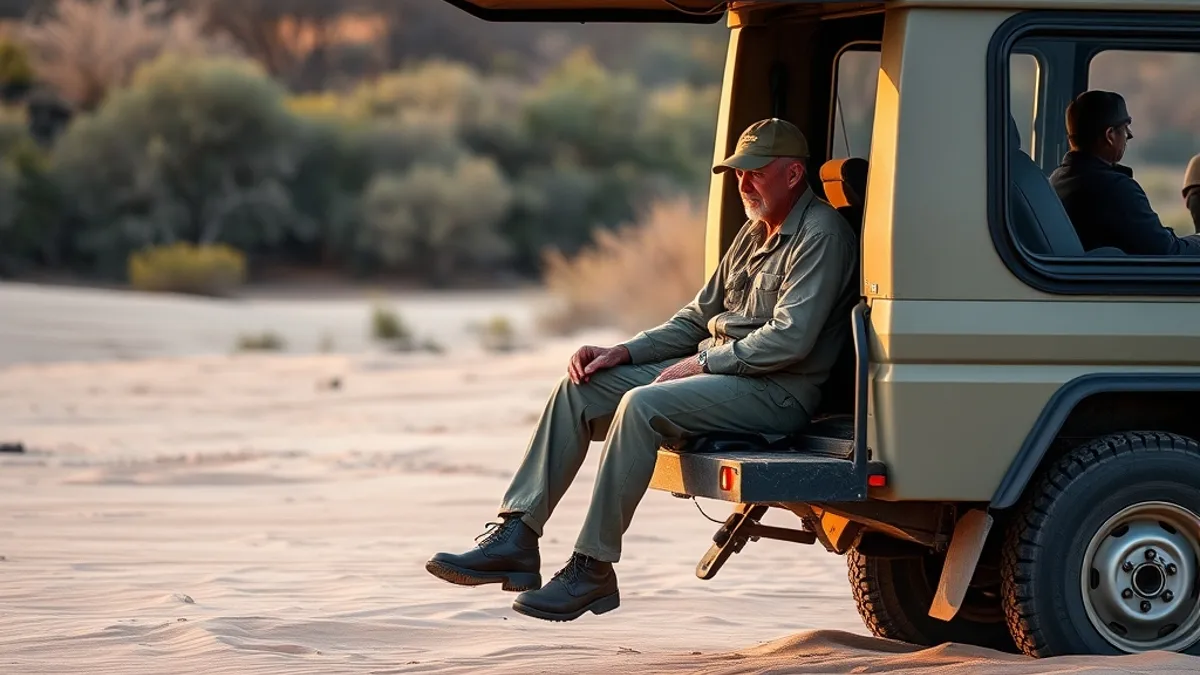
How Ranger and Tracker Teams Work Together
The magic of a good team lies in how the two roles complement each other. The tracker spots the initial sign, a fresh set of tracks or a snapped branch, and the ranger takes over from there, confirming the direction of travel and judging the best approach angle. A skilled ranger thinks about light, keeping the sun behind the vehicle so guests get clear views and better photos, and about wind, so the scent of the vehicle does not drift toward the animals and end the sighting before it begins.
A quiet, constant conversation
Watch closely and you will notice the ranger and tracker talk almost continuously, but quietly, often in a local language such as Shangaan, Zulu or Setswana depending on the region. This low-level exchange keeps guests immersed in the bush rather than in a lecture, and it means decisions happen in seconds without shouting or confusion. Guests who understand a few words quickly realize how much detail is being shared between the two seats.
On difficult sightings the teamwork becomes even more obvious. When the team picks up leopard or lion tracks, they may follow silently for 20-30 minutes before the animal is ever seen, pausing at every print, checking thickets and listening for birds. Those stretches can feel quiet to guests, but they are exactly when the team is working hardest. When the sighting finally comes, you understand why the pairing of a ranger and a tracker is worth seeking out when you book.
Morning Drives vs Afternoon Drives
Most safari lodges run two shared game drives a day, and the timing is not random. Morning drives typically depart between 05:30 and 06:30, before the heat builds, because predators are still active from their night hunts. Lions may still be feeding on a kill, and leopards often drag prey into thick cover during the first hour of light. The air is cool, the tracks are quiet, and animal movement is at its most generous.
Afternoon drives usually leave around 15:30-16:30 and run into dusk, which follows the opposite rhythm. Animals that slept through the midday heat begin to stir, herds move steadily toward water, and the outing often ends with a sundowner stop as the light fades. Expect the first stretch to be slower; sightings tend to stack up once temperatures drop and the bush comes alive again.
Midday is deliberately avoided because most animals rest in shade, and the heat makes both wildlife and guests uncomfortable. That window is better spent at the pool, over lunch, or on a guided walk where the lodge offers one. Treat the gap as part of the rhythm rather than dead time.
Seasonal variation matters too. In the cool dry season months, roughly May to October in southern Africa, morning movement lasts longer and dust makes tracks easier to read. In hotter months, animals may retreat to shade earlier, so punctuality at the departure point really pays off. Check with your lodge for exact drive times, as they often shift with the seasons and sunrise.
Night Drives and What Changes After Dark
Night drives are a completely separate experience from day drives, and not every lodge offers them. They commonly last 1-2 hours after sundowners, using a spotlight to pick out animals that are invisible in the dark. If a night drive matters to you, ask about it before booking rather than assuming it is part of the package.
The species list changes completely after dark. Bushbabies leap through the trees, genets slink along the road edges, owls hunt silently, and leopards that rested through the heat of the day may begin to move. Hippos leave the water to graze, and nocturnal predators start their patrols. Many guests count the night drive as the highlight of their stay for exactly this reason, since it reveals a side of the bush that daytime visitors never see.
There are strict rules about how the light is used. Only rangers may hold the spotlight, and trackers watch for eyes reflecting in the beam, scanning the bush in a way that a driver managing the vehicle cannot. The filtered light is used briefly and selectively, to avoid disorienting animals or interfering with their natural behavior.
- Filtered spotlights protect the wildlife: the filter softens the beam so animals are not blinded or panicked, and rangers typically switch the light off when an animal shows stress.
- Red and amber filters reveal different species: some lodges use colored filters because certain animals react less to them, allowing longer observation.
- Eyes reflect at different colors: the tracker can often identify a species from the color and height of the eyeshine before the animal is ever seen in full.
- Night drives are usually vehicle-only: walking after dark is generally not offered, so the vehicle acts as your safe viewing platform.
- Not all reserves allow night drives: national parks often close gates at dusk, while private concessions can drive at night, which is worth checking when you book.
Choosing a Lodge Based on Its Guiding Team
The guiding team is one of the biggest differences between a good safari and a great one, yet it is the thing travelers most often forget to ask about when comparing lodges. Two camps can sit on the same reserve with access to the same animals, and the one with a stronger guiding team will deliver noticeably better sightings. Start with the tracker question: some lodges employ a dedicated tracker per vehicle, while some budget camps run rangers only. A dedicated tracker dramatically increases your chances of finding shy animals like leopards, so it is one of the first things to confirm before you book.
Next, ask about vehicle space, because it shapes every drive. Vehicles usually seat 6-10 guests, and a vehicle with six guests gives everyone a window seat, while ten means sharing and jockeying for views on the good side. Private vehicles are often bookable at extra cost, which is worth considering for photographers or families who want flexibility on timing and routes.
Season matters too. Dry season months, roughly May to October in southern Africa, make spoor easier to follow on dusty roads, so tracker skills shine brightest at that time of year. In the green season, thick vegetation makes sightings harder work, which puts even more weight on the experience of your guiding team.
- Ask about ranger qualifications: rangers must hold field guiding qualifications, and many lodges require several years of experience, so it is fair to ask how long your ranger has been guiding.
- Check whether the tracker stays with the same guests: continuity helps, because a tracker who knows your interests will prioritize the animals and birds you care about.
- Ask about the radio network: lodges that share sightings between vehicles can find more animals, though some travelers prefer camps that limit radio chatter for a wilder feel.
- Confirm whether children are welcome on drives: some lodges set minimum ages for game drives, especially night drives, so check before booking with young kids.
- Read recent guest reviews for guiding mentions: comments about specific rangers and trackers are often the most reliable signal of a lodge’s guiding quality.
The Takeaway on Ranger and Tracker Teams
The next time you compare safari lodges, look closely at who sits in the vehicle. Rangers lead the drive and interpret what you see, while trackers find the animals your eyes alone would miss. That pairing often explains why some camps deliver consistent sightings while others leave you circling the same roads.
It also helps to remember that every drive is different by design. Dawn, dusk and night each bring their own sightings, and lodges time their departures around those windows. If a camp pairs a qualified ranger with a dedicated tracker on every drive, that is one of the clearest markers of a quality safari experience. If this helped you plan your trip, leave a comment or share the article with a fellow traveler.