Many travelers assume a winter mountain trip demands ski skills, lift passes and expensive gear. In reality, some of the calmest and most restorative stays in the mountains require none of that. Mountain lodge winter breaks reward a different kind of traveler: the one who wants a quiet trail in fresh snow, a long sauna session as darkness falls, and an evening spent by a crackling fire with a good book.
This guide walks through the whole plan. We’ll look at why ski-free lodge trips work so well, how to choose a lodge with the right sauna, trails and dinner service, and how to structure snowshoeing days around limited winter daylight. You’ll also find the rhythm of a good sauna cycle, ideas for slow fireside evenings, and practical advice on when to go and how to book for the best mix of snow, quiet and price.
Why Off-Slope Mountain Lodge Winter Breaks Work
Ski-free winter trips work because they swap the most stressful parts of a mountain holiday for the most enjoyable ones. Instead of lift queues, rental fittings and crowded runs, your day holds a quiet trail, a thermos of something hot and a slow lunch back at the lodge. The evening belongs to the sauna and the fireside, and nobody is checking the snow report with anxiety.
The quietest week of the season
January midweek stays offer the lowest rates and the emptiest trails of the whole winter. The holidays are over, the slopes have thinned out, and lodges that were full in late December now have fireside corners free all evening. If your goal is silence rather than spectacle, this is the window to aim for.
One lodge, two kinds of traveler
Lodge-based breaks also solve a common group problem: only some of you want winter sport. The skiers can head off to a nearby area if they wish, while everyone else snowshoes from the door or simply stays put with a book. Because you share the same lodge, the same dinners and the same fire, the day splits cleanly and reunites by evening. No one has to compromise on how they spend their winter, and no one has to drive anywhere after dark.
Choosing the Right Lodge and Setting
The lodge you pick shapes the whole trip more than the destination does. Since evenings outdoors and by the fire are the core of a ski-free break, the first filter is simple: does the lodge have its own sauna or hot tub? A lodge without one turns every cold evening into an indoor evening, and you lose half the experience.
Trail access matters just as much. A lodge where you can clip into snowshoes at the back door gives you flexible, daylight-limited walking windows. If you have to drive thirty minutes to a winter trailhead instead, you spend your best daylight hours in the car and arrive back too late for the sauna. Before booking, ask the host directly which trails start on the property and how far the nearest marked winter route is.
Dinner is the third dealbreaker. Remote winter locations often have no nearby evening dining at all, and a lodge without a kitchen can leave you cooking on a camping stove in your room. Confirm at booking whether dinner is served nightly and whether you need to reserve it.
- Room count sets the mood. Small lodges of roughly 5-15 rooms give the quietest fireside atmosphere, with one shared fire and conversations you can actually join.
- Larger resorts trade quiet for facilities. Expect more dining options, spas and equipment rental on site, but also busier common rooms and less of the intimate lodge feel.
- Ask about the sauna setup specifically. A wood-fired sauna with scheduled evening sessions runs differently from an always-on electric one, and it helps to know which you’re booking.
- Check winter access to the door itself. Some remote lodges sit up unplowed roads, so ask how you reach the property after a snowfall and whether transfers are offered.
Snowshoeing Days: Trails, Timing and Gear
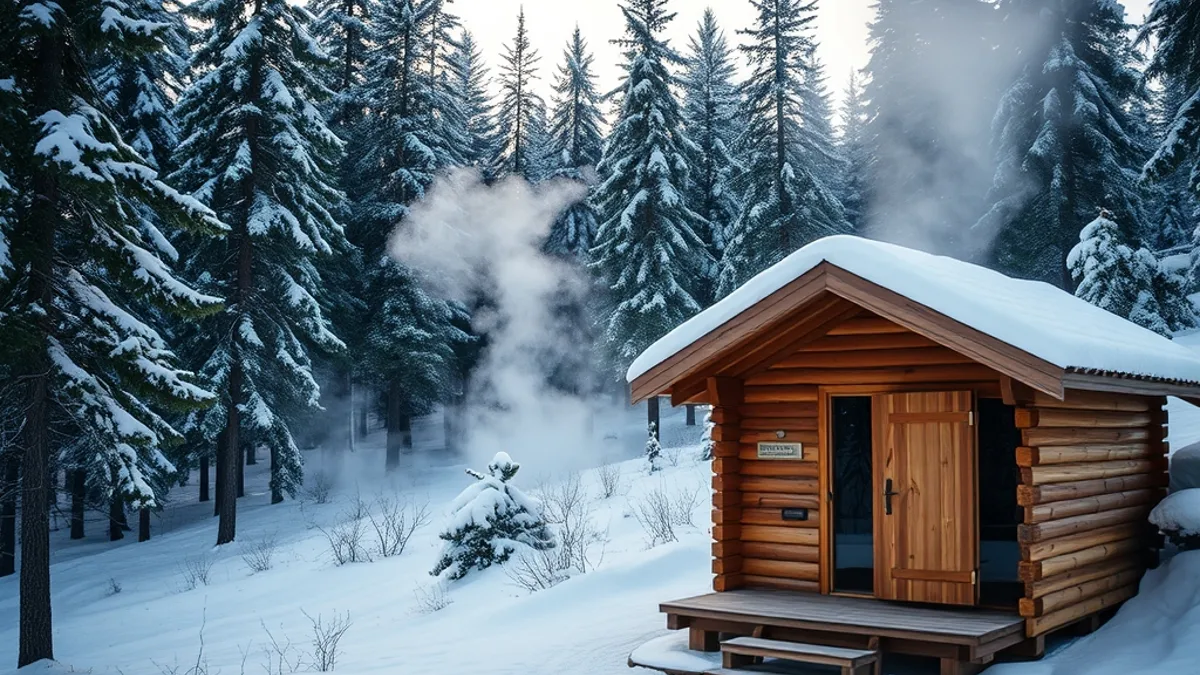
Snowshoeing is the easiest winter sport to pick up: if you can walk, you can snowshoe. There is no lift ticket, no lesson requirement and no steep learning curve. The only real skill is planning around winter light, which fades fast in midwinter, when you may only have a few usable hours of daylight. Here is how to structure a good day on the trails so it ends at the lodge door rather than in the dark.
- Plan a 2-4 hour loop and start by early afternoon. Midwinter walking windows are short, and finishing in daylight is both safer and far more pleasant than navigating a snowy trail by phone light. Turn around at your halfway time even if the view ahead looks tempting.
- Sort your snowshoes locally. Renting runs about $15-30 per day at mountain towns and outdoor shops near trail networks, which beats flying with your own pair. If you want route-finding handled for you, guided half-days typically cost $40-90 per person with gear included, and a guide is a smart first step if you have never walked on snow before.
- Stay on marked winter trails at first. Until you can read avalanche and ice cues for yourself, valley and forest routes stay the safest choice. Open slopes and steep gullies are for later, and only with proper training.
- Dress in layers with a windproof shell on top. You heat up fast on the climb and freeze fast when you stop, so a shell you can zip up at the viewpoint makes all the difference. Warm hat, gloves and spare socks go in the pack too.
- Carry a thermos. Midwinter trail temperatures often sit well below freezing, and a hot drink at the halfway point is the moment most people remember from the whole trip.
One last timing note: snowshoe trails typically need 20-30 cm of settled snow, which at mid altitudes usually becomes reliable from mid-December onward. Check conditions with your lodge or local trail center before you commit to a route, and keep your first day or two deliberately short while you learn how fast the snow slows you down. Fresh powder can easily double your walking time compared with a packed trail, so build in a buffer rather than planning to the minute.
Sauna Rituals for Cold Evenings
The sauna is the heart of a lodge winter break, and at small properties it often works on a schedule rather than on demand. Many lodges run set evening sessions, especially when the sauna is wood-fired, so confirm your slot at check-in rather than assuming you can wander in whenever you like. If sessions are sign-up based, book early in your stay to lock in the times that fit your snowshoe days.
The classic cycle
A good evening follows a simple rhythm: 10-15 minutes in the heat, a cool-down outside on the deck or in the snow, then a rest with water or tea before repeating if you feel like it. The outdoor cool-down is the part most first-timers skip, and it is the part that makes the next round of heat feel so good. Take it slowly on your first evening; the heat hits harder at altitude and after a day on the trails.
Wood-fired saunas need 1-2 hours to reach temperature, so ask staff when the fire gets lit instead of expecting instant heat. Electric units warm up faster, but the ritual of a crackling stove is half the appeal. If you want a deeper dive into lakeside sauna culture, this piece on Saimaa lakeside cabins for sauna nights shows how the evening cycle works when the water is just steps from the door.
Fireside Evenings and Slow Days
Plan at least one day with nothing in it. No trail goals, no timings, no driving. A no-plan day built around the fireplace is the reason this kind of trip exists: a stack of books, a borrowed board game, an unhurried lunch and a long lodge dinner that stretches past dark. Bring a paperback you have been saving; lodges with a small book shelf are a bonus, but selection is rarely deep.
Firewood and fire duty
Ask about firewood logistics on the day you arrive. Many lodges keep a wood store near the hearth and expect guests to keep the fire topped up themselves, which is part of the charm once you know the routine. Find out where the logs live, whether kindling is provided and who lights the first fire of the evening. If you have never managed a open fire, the first evening is a good time to learn with staff nearby.
The evenings hold their own highlights. On clear nights, step outside for stargazing; mountain skies away from towns can be striking, and the cold makes the stars seem sharper. Many lodges run a hot drinks service in the evening, mulled wine or cocoa at the bar, and smaller properties often seat everyone at a communal dinner table. That shared table is where you pick up trail tips for the next day, so say yes to it even if you usually dine alone.
When to Go and How to Book
The off-slope lodge season runs roughly December to March, but the weeks are not equal. Mid-January to early March is the sweet spot: snow is usually settled enough for trails, the hills are quiet after the holidays, and rates dip well below the festive peak. December can be lovely, but snow cover at mid altitudes is less certain early in the month, and the holidays push prices up sharply. If you want the calmest possible atmosphere, aim for the weeks right after New Year, when family groups have gone home and small lodges feel almost private.
Booking windows depend on when you travel. Peak weeks need real lead time; quiet January midweeks do not. As a rule of thumb:
- Christmas, New Year and February half-term: reserve 3-6 months ahead, as family-heavy weeks fill small lodges first and the best sauna-facing or fireplace-adjacent rooms go early.
- January midweeks: 4-6 weeks out is often enough, and some lodges discount empty rooms close to arrival if snow conditions look good.
- Stay length: packs of 3-4 nights midweek commonly price 15-25% below weekend rates in January and early March, so four midweek nights can cost less than two weekend ones.
- Budget check: a double typically runs about $150-450 per night, higher over the holidays; confirm whether dinner is included before comparing rates.
If your winter trip stretches toward the southern hemisphere, the same lodge logic applies upside down. These Queenstown chalets with lake stillness and mountain light show how the formula works when July is the snowy month, with the same trade-off between peak-week rates and shoulder-season quiet. Wherever you book, confirm the sauna situation and dinner service before you pay; those two details shape the whole stay far more than a small difference in room rate.
Wrapping Up Your Slope-Free Winter Lodge Plan
If your mental image of a mountain winter involves skis and lift passes, think again. The off-slope lodge break rewards walkers, sauna lovers and fireside readers instead: snowshoe mornings, evening sauna cycles and long nights by the fire make up the whole itinerary, no lift queue required.
Time it well and the trip gets better. Mid-January to early March midweek stays deliver the best mix of settled snow, quiet trails and lower prices. And when choosing your lodge, keep it simple: door-step trails, an on-site sauna and dinner service keep every evening easy. If this plan sounds like your kind of winter, leave a comment or share this article with a fellow slow-travel fan.