Off-season villa stays can cut 30-50% off high-season rates, which sounds like a dream deal until the doubts creep in. Will the pool be cold, the weather gray, half the staff gone and the beach club shut? Many travelers hesitate precisely because they don’t know what they’re trading away for that lower price, and guessing wrong on a week-long rental feels risky.
This guide breaks the decision down. We’ll look at why off-season villa stays cost so much less, what you give up in weather, daylight and services, and what you gain in privacy, space and a more local experience. You’ll also find advice on choosing destinations where the low season still delivers, how to book smart, and a framework for weighing the trade-offs against your own travel style.
Why Off-Season Villa Stays Cost So Much Less
Villa pricing follows demand, not the calendar. Owners set their rates around the weeks when they know the property will fill — school holidays, festive periods, the driest months — and everything outside those windows is priced to attract whoever is willing to travel. That is why off-season rates typically run 30-50% below high-season prices. The villa itself has not changed; only the demand around it has.
The discount deepens when you commit to a full week. Weekly stays in low season often unlock a further 10-15% off the seasonal rate, because owners would rather have one confirmed booking covering seven nights than gamble on several short ones that may never materialize. If your schedule allows it, asking for the weekly rate rather than a nightly one is the simplest way to stack savings.
Why owners are open to a deal
Low occupancy changes the negotiating dynamic entirely. In peak season, the owner holds the leverage — decline, and someone else takes the dates. Off season, empty nights cost the owner money regardless, so there is real room to negotiate, especially for longer stays. Travelers who ask politely often walk away with extras thrown in: a late checkout, airport transfers, a mid-stay clean, or a reduced rate on an extended booking.
None of this means you should treat every owner as desperate. Well-run villas in popular areas still fill reasonably well in shoulder months, and their flexibility will be smaller. But if you are comparing two or three properties and mention that you are considering a two-week stay, you will usually find at least one manager willing to sharpen the price. The worst outcome is a polite no; the best is a substantially cheaper stay in a villa that would cost far more a few months later.
What You Trade Away: Weather and Daylight
The biggest thing you give up in the off-season is reliable weather, and it helps to be honest about that before you book. In tropical destinations, the low season lines up with the monsoon months. In much of Southeast Asia, that roughly means May through October, which is exactly when villa discounts run deepest. The good news for many travelers: rain often arrives as short, heavy bursts rather than all-day gray skies. You might lose an afternoon by the pool, then get a clear, steamy evening. Still, some days will simply be washouts, and humidity is a constant companion.
If lush green landscapes and dramatic skies appeal to you, the trade can feel worthwhile. Areas like the rice-field enclaves around Ubud in Bali take on a richer, more vivid character during the wet months, and many travelers find the atmosphere worth a few soggy afternoons.
Shorter days in Europe
European off-season stays bring a different limitation: daylight. In the quieter months, you can expect around 2-3 fewer hours of daylight compared with summer. That shrinks your pool time, cuts terrace dinners short, and makes slow mornings feel less indulgent when it’s still dark at breakfast. A villa with a great outdoor kitchen or sunset deck loses some of its value when the sun sets mid-afternoon.
Coastal locations add one more consideration. On exposed coastlines, off-season winds and swells can make swimming impractical and push boat trips, snorkeling outings, and island-hopping days off the schedule entirely. Check with local operators before assuming water activities will run during your dates. If your villa’s main appeal is the sea itself, you may spend more time looking at it than getting in it.
Reduced Services and Closed Amenities
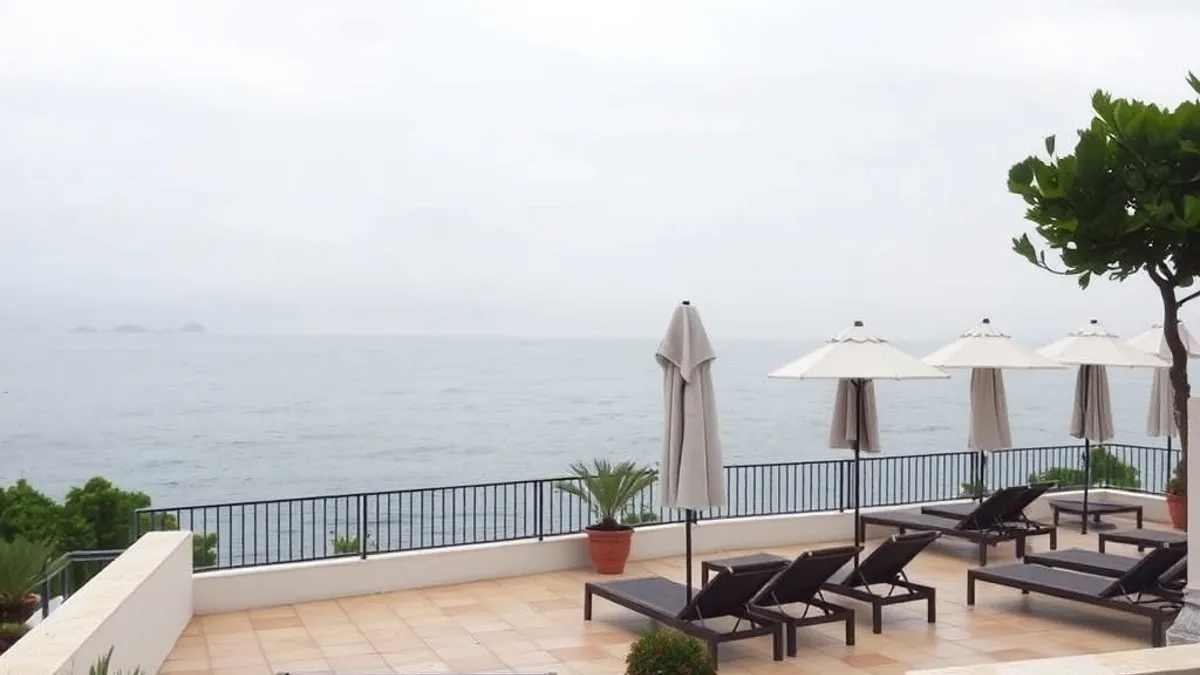
The biggest surprise for many off-season villa guests is not the weather — it’s discovering that the infrastructure around the villa runs on a quieter schedule too. Beach clubs that hum with DJ sets and full sun loungers in August may shut entirely or open only on weekends. Poolside bars often operate reduced hours, and some restaurants within walking distance of villa areas close for their own annual holidays during the slow months.
Services inside the villa can also thin out. In high season, managers keep a deep roster of staff on call; in low season, that roster shrinks. If you decide mid-stay that you want a private chef for a celebration dinner or a last-minute in-villa massage, you may need several days of notice instead of a few hours. Housekeeping schedules can shift too, with visits happening every other day rather than daily.
Smaller teams also mean slower fixes. A broken air conditioning unit or a clogged pool filter that would be handled within an hour at full staffing might take half a day off season, especially if the nearest technician lives in another town. Before you book, it helps to understand exactly where the gaps tend to appear:
- Beach clubs and day spas: Some operate seasonally and reopen only when visitor numbers justify the staffing costs, so a five-minute walk to a beach club in July may become a 30-minute drive in February.
- Poolside bars and villa restaurants: Even when open, reduced hours can mean no evening service, turning your sunset cocktail into a self-poured drink from the villa kitchen.
- Private chefs and in-villa dining: Low-season chefs often split their time across multiple properties, so menus may be limited and bookings confirmed closer to your arrival date.
- Concierge and housekeeping coverage: A single manager may cover several villas at once, which can slow responses to special requests, extra cleaning, or same-day errands.
- Maintenance and repairs: With fewer technicians on call, non-urgent fixes — a flickering light, a slow Wi-Fi router — may wait until the next scheduled property visit.
None of this ruins a stay if you plan around it. Ask your host which services run daily, which need notice, and which pause entirely, then build your expectations — and your grocery list — accordingly.
What You Gain: Privacy, Space and Local Life
The most obvious reward of an off-season villa stay is space. Beaches that require towel-to-towel positioning in August can be nearly empty in the low season, and a morning walk along the sand may mean passing only a handful of people. The same goes for rice-field paths, coastal trails and village streets near your villa: without peak crowds, you move at your own pace and actually hear the place you came to see.
Eating and shopping like a local
Restaurants and markets shift their focus when tourist numbers drop. Menus lean toward what residents actually eat, staff have more time to chat, and prices often sit closer to what locals pay than to high-season tourist rates. A market visit becomes a conversation instead of a queue, and the warung or taverna around the corner may become your regular table by day three.
There is also a practical advantage most travelers overlook: inventory. The villas that get snapped up months in advance during high season, the ones with the best layouts, the sunset-facing pool deck or the master bedroom over the water, tend to sit open in the low season. That gives you real choice. Instead of taking whatever remains, you can compare floor plans, ask for the corner unit or the upper floor, and match the villa to how your group actually lives. For travelers who care more about the house itself than the crowd around it, this is the strongest argument for traveling off season.
Choosing Destinations Where the Off-Season Still Delivers
The off-season is not the same everywhere, and picking the right destination makes the difference between a bargain and a washout. Some places keep functioning, and even improve, when the crowds thin out. Others genuinely shut down. A little destination planning protects the discount you worked to get.
Mediterranean travelers have an easy answer in the shoulder months. May-June and September-October bring warm sea temperatures, workable daylight and rates well below the July-August peak, with restaurants still fully open. Wellness-focused destinations operate on a different rhythm: they cater to a year-round crowd, so yoga studios, clinics and healthy restaurants stay busy regardless of the calendar, and green-season landscapes are often at their most vivid.
- Highland and mountain regions swap swimming weather for moody skies, misty valleys and near-silence, which suits hiking, reading and slow mornings more than beach days.
- Landlocked cultural areas often run ceremonies, markets and daily life on a normal schedule year-round, so you experience the destination as residents do rather than as a staged high-season version.
- Places with a genuine green season reward you with the lushest scenery of the year, when gardens, rice fields and hillsides are at their most photogenic.
If cultural depth and quiet luxury appeal to you, it is hard to beat hillside villa stays in the Sacred Valley, where dramatic Andean skies replace beach weather and the pace only slows in the low season.
How to Book an Off-Season Villa Stay
Booking an off-season villa is simple, but a few extra questions separate a smooth stay from a frustrating one. Because owners and managers have fewer guests to handle in the low season, they usually have more time for you, which makes this the perfect moment to ask detailed questions and negotiate extras. Treat the process like a conversation rather than a transaction: the more specific your questions, the fewer surprises you will face on arrival. Work through the steps below before you transfer any money, and keep written records of every answer you receive.
- Book 2-4 months ahead. Low season has more supply, but the best-value villas with reliable management still fill first. Booking inside this window usually secures the strongest availability and rates, without needing to commit a year out. It also gives both sides time to arrange staff and services properly.
- Confirm exactly what operates during your dates. Ask in writing which amenities are open: is the pool heated, is the poolside bar running, are nearby restaurants and beach clubs on reduced hours? Get specifics, not vague promises that “everything is usually open.” Amenities can change month to month.
- Check the service lineup. If you want housekeeping, a private chef or airport transfers, confirm they can be staffed for your dates. In low season, smaller teams may need more notice to arrange these, so ask early rather than a few days before arrival.
- Ask about flexible cancellation and date changes. Off-season weather is less predictable, and plans shift. A policy that allows a date change or a partial refund is worth more here than a slightly lower fixed rate, especially for longer stays.
- Get the agreed extras in writing. Any negotiated discount, free night or included service should appear in the booking confirmation, not just an email chain. This protects you if management changes hands between booking and arrival.
Once the booking is set, keep the conversation going. A quick message a week before arrival to reconfirm services and arrival times costs nothing and prevents most low-season surprises. Ask for a local contact number too, in case anything needs fixing during your stay. Owners who respond quickly at this stage are usually the ones who look after you well on the ground, so treat slow replies as a warning sign worth investigating before you pay the balance.
Weighing the Trade-Offs
The math is hard to argue with: off-season villa rates typically run 30-50% below high-season prices, and you get more privacy and space as a bonus. What you give up is mostly weather reliability and some services, since beach clubs, poolside bars and certain amenities may close or run reduced hours, and housekeeping or chefs can be harder to arrange on short notice.
Most of those trade-offs shrink if you aim for shoulder-season windows and book 2-4 months ahead. For travelers who value quiet and space over guaranteed sunshine, the low season is often the better deal. If this helped you decide, leave a comment or share the article.