A private chef at a villa sounds like the ultimate luxury: someone shops, cooks, and serves while you watch the sunset from your own terrace. But the moment you start looking into it, the questions pile up. What does it actually cost per person? What kind of food do you get for that money? And how far ahead do you need to book before the good chefs are taken?
This guide walks through the whole picture. We break down real per-person pricing, the grocery markup most chefs add, and what upgrades like tasting menus or wine pairings do to your bill. You’ll see what a typical three-course dinner includes, how breakfast and lunch services differ, and exactly how the booking process works, from lead times to cancellation windows. We also cover how to choose the right chef, which destinations suit villa dining best, and practical tips that keep the experience smooth from the first message to the last plate.
What a Private Chef at a Villa Actually Costs
Most villa chefs price their services per person, and the typical range runs from $40 to $120 per meal depending on the destination and the menu. That quoted rate covers the chef’s fee and the standard courses they prepare. What it usually does not cover is premium ingredients, so lobster, imported beef, or specialty cheeses typically get added to your bill separately.
The grocery markup
On top of the per-person rate, expect a grocery markup of 10–20% on ingredients. This covers the chef’s time shopping at markets and stores, and sometimes transport costs to a remote villa. It’s a normal part of how these services work, so factor it into your budget rather than treating it as a surprise. Ask upfront whether the markup applies to all ingredients or only to items the chef sources personally.
Upgrades that change the final bill
The base quote usually reflects a standard menu. If you want more, the price climbs: a 5-course tasting menu typically costs 30–50% more than the standard offering, and wine pairings add roughly $15–$40 per person. Staff meals, if you want the chef and any assistants fed, are another common add-on. None of these extras are hidden charges in the sneaky sense, but they only appear once you ask, so build them into your planning from the start rather than negotiating at the dinner table.
Typical Menus and What’s Included
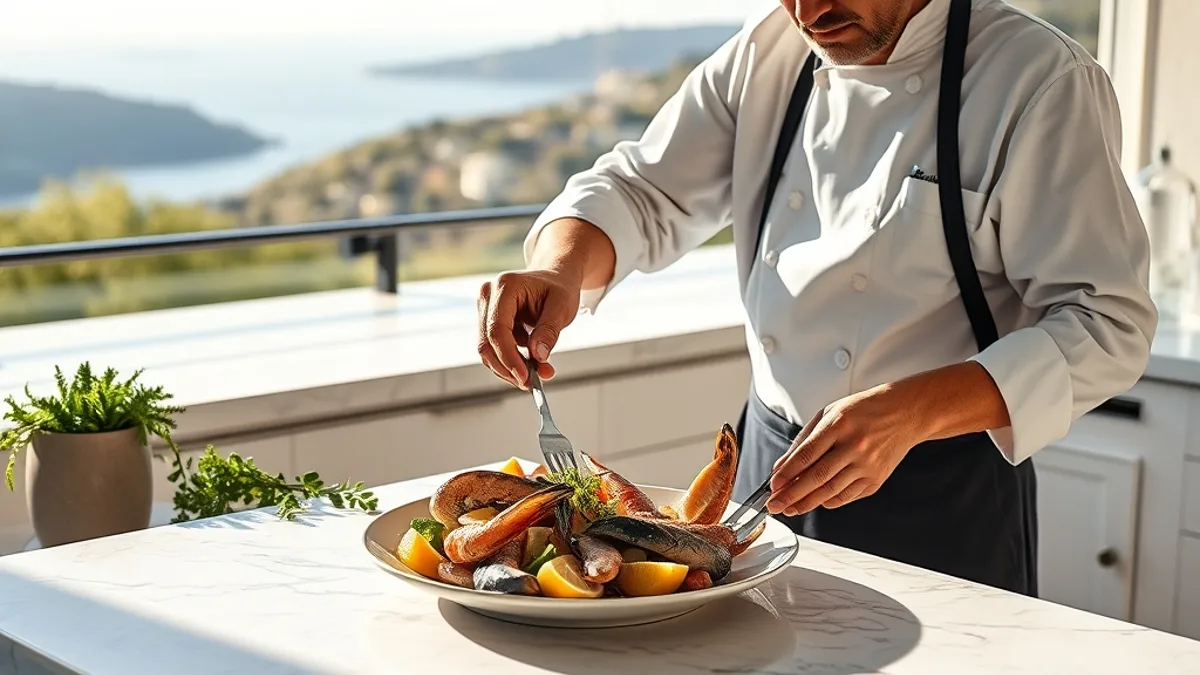
A standard villa dinner is a 3-course affair: a starter, a main, and a dessert. Good chefs build the menu around what’s fresh that day, often local seafood or produce from the morning market. That means the menu you agreed to a week ago might shift slightly based on what looked best at the fish stall, which is usually a good thing, not a problem.
Breakfast and lunch services are simpler and cheaper than dinner. These typically run $25–$50 per person and lean toward fruit plates, eggs, pancakes, salads, and light local dishes. If your group plans long day trips, a hearty breakfast plus a few dinners during the week is a common way to use a chef without paying for every meal.
The service usually goes well beyond cooking, but a few boundaries are worth understanding:
- Shopping: The chef handles ingredient sourcing, either at markets or stores, which is where the grocery markup on your bill comes from.
- Cooking and serving: Most chefs plate and serve courses themselves, timing each dish to your group’s pace rather than a restaurant schedule.
- Kitchen cleanup: The chef leaves the kitchen tidy and deals with pots, pans, and prep mess after cooking.
- Dishwashing during the meal: This one is sometimes excluded, meaning used plates may stack up between courses, so ask before booking if it matters to you.
Knowing exactly where the service ends avoids awkward moments mid-dinner, especially in villas without other staff on hand.
How Booking Works: Timing and Lead Times
Getting the chef you want is mostly about timing. Popular villa chefs fill their calendars quickly, especially in destinations where private dining is part of the appeal, such as quiet villa enclaves around Ubud. The good news is that booking is rarely complicated — it just rewards travelers who plan a few steps ahead. Most villa agencies and independent chefs follow a similar process: you inquire with your dates and group size, receive sample menus and a quote, then lock in the booking with a deposit. Where travelers get caught out is leaving the inquiry too late, or assuming a chef who replied quickly last year will have space this year. Demand shifts with the seasons, and the chefs with the best reputations are often the first to fill up. Here’s how the booking process typically unfolds, step by step:
- Start early in low season: Book 2–4 weeks ahead when demand is lighter. That window gives you enough choice of chefs without needing to commit months in advance, and you can still swap menus later if your plans change.
- Move earlier for peak season: For December–February stays in tropical destinations, aim for 6–8 weeks ahead. The best chefs are often fully booked well before arrival, and waiting usually means settling for whoever is left.
- Check guest minimums: Many chefs require a minimum of 4–6 guests per booking, or a minimum-stay commitment, because a single evening for two rarely covers their travel and prep time. If your group is smaller, ask whether they can still accommodate you before getting attached to a menu.
- Confirm cancellation terms in writing: Cancellation windows are usually 48–72 hours for a partial or full refund, but terms vary by chef. Get the exact policy in writing before you pay any deposit, so there’s no debate later.
One more habit worth building: keep the whole agreement in one written thread, covering dates, guest count, menu, and deposit terms. Verbal promises made over a villa agent’s phone tend to evaporate when a schedule conflict appears. A short written confirmation protects both sides and makes any later disagreement easy to resolve without stress. It also gives you a handy reference on arrival day, when everyone is settling in and nobody wants to re-litigate the dinner plans.
Choosing the Right Chef for Your Villa
The villa agency or rental manager may promise you a “world-class chef,” but descriptions on a listing page tell you very little about how the food actually looks and tastes. Before you commit, ask the chef directly for sample menus and photos of past plated dishes. Real photos of finished plates reveal plating style, portion sizes, and whether the cooking leans rustic or fine-dining. A confident chef will have these ready to send within a day.
Get dietary needs agreed in writing
Dietary requirements are where villa chef bookings most often go wrong. Vegetarian, vegan, gluten-free, and allergy-friendly menus are usually possible, but they need to be agreed before you pay a deposit, not mentioned on arrival. If someone in your group has a serious allergy, say so explicitly and ask how the chef prevents cross-contamination in a villa kitchen. Chefs who work in private villas handle this regularly, but the details should be settled upfront so the chef can plan shopping and menus around them.
Solo chef or full team?
Finally, ask whether the chef works alone or brings assistants. A solo chef typically cooks, plates, and serves in a more relaxed, personal style, but courses may take longer between the kitchen and the table. A chef with their own staff can run a smoother, restaurant-like service for larger groups, often with someone dedicated to serving and clearing. Neither approach is better — it depends on whether your group wants an intimate experience or a polished dinner-party feel. Knowing the answer also helps you plan timing, since a solo chef will usually suggest an earlier start for a multi-course meal.
Where Villa Chef Services Shine
Some destinations have turned the villa chef into an art form, and choosing the right place makes a real difference to the experience. Tropical islands with strong chef cultures top the list: Bali, the Maldives, and Mahé in the Seychelles all have established communities of private chefs who shop local markets daily and cook to international standards. If you’re weighing an overwater or beachfront stay, our piece on Maldives villas floating between water and sky shows just how dramatic the setting can be.
Remote islands get the most value
Remote island villas arguably benefit most from a private chef. When the nearest restaurant is a boat ride away, having someone cook in-house isn’t a luxury — it’s the practical way to eat well. These locations often have an added bonus: market-fresh seafood is abundant, so the day’s catch frequently anchors the menu at a quality restaurants elsewhere simply can’t match.
Hillside and retreat-style villas
Hillside and retreat-style villas suit a different kind of dinner. Multi-course meals served at sunset on a private terrace, with the valley or ocean spread out below, turn a standard 3-course dinner into the highlight of the trip. Chefs at these properties often time courses around golden hour, so the main lands on the table just as the light fades. If your villa has a standout view, mention it when booking — a good chef will build the menu and service timing around it.
Practical Tips for a Smooth Chef Experience
A private chef experience lives or dies on communication, and most problems come from information arriving too late. Share your group size, dietary needs, and preferred dinner time at least one week before arrival. This gives the chef time to plan menus, source ingredients, and adjust staffing — and it gives you time to fix anything that doesn’t match what you pictured. If your group includes young children or guests with serious allergies, flag those details in the same message so nothing gets lost between emails.
Grocery shopping logistics deserve an early conversation too. Some chefs shop independently and simply present a receipt with the agreed markup; others prefer you approve a shopping list first. Decide which approach suits your group, especially if you want control over ingredient choices or you’re watching the final bill. It’s also smart to ask whether premium items like lobster or imported wine are quoted separately, since those can shift the total more than you expect.
Before you settle the bill, set money aside for a tip. Where service isn’t already included, a gratuity of 10–15% of the chef fee is customary. A few other small habits make the whole week run more smoothly:
- Confirm on-site practicalities early: the chef will need clear access to the villa kitchen, fridge space cleared for deliveries, and a confirmed arrival time for the first service.
- Agree on table settings in advance — whether the chef sets the villa’s dining table, uses your existing dinnerware, or brings their own serving pieces for terrace dinners.
- Ask how leftovers are handled; many chefs will package extra food for your next lunch, which stretches the value of the grocery budget.
- Keep one group contact person for the chef rather than taking requests from every guest separately, so menus and timing stay consistent.
The Bottom Line on Villa Chef Services
So, what does a private chef at a villa actually cost? The honest answer: typically $40–$120 per person per meal, plus a 10–20% grocery markup on ingredients. That covers a proper 3-course dinner, shopping, cooking, and cleanup — and extras like 5-course tasting menus or wine pairings push the bill higher.
Booking is the other half of the puzzle. Plan for 2–4 weeks ahead, or 6–8 weeks if you’re traveling in high season, and confirm menus, guest minimums, and cancellation terms in writing before paying a deposit. Do that, and the whole experience runs seamlessly. If this helped you plan your villa stay, leave a comment or share this article with your travel group.