Many travelers arrive at a resort with a suitcase full of clothes and still feel unsure about what to wear where. Resort dress codes are often described in vague terms like “smart casual” or “resort wear,” leaving guests guessing whether swim shorts are fine at breakfast, or whether long trousers are genuinely required for dinner. Pack too light and you risk being turned away from a restaurant; pack too much and you have hauled clothes across the world for nothing.
This guide breaks down what resort dress codes actually mean in practice, venue by venue. We look at why resorts set them and how strictly they are enforced, what works poolside and in daytime restaurants, and what smart casual really involves in the evenings. We also cover how to pack for a typical 7-10 night stay without overpacking, and how expectations differ between beach destinations and European resorts, so you can dress right without the guesswork.
Why Resort Dress Codes Exist and How Strict They Really Are
Resort dress codes exist for one simple reason: to keep the evening dining atmosphere consistent for every guest at the table next to you, not to exclude anyone. When a couple books a fine-dining restaurant for an anniversary dinner, they expect a certain ambiance, and the resort protects that by asking everyone to meet the same minimum standard. Think of it less as a rule aimed at you and more as a shared agreement among all guests.
How strictly are codes actually enforced?
Enforcement varies widely by region and resort style. European resorts in Spain, Italy, France, Greece and Croatia tend to hold guests to evening smart casual more firmly, and resorts in the Middle East often take a similarly polished approach. Tropical island destinations are usually more forgiving, and evening dress codes are typically relaxed in beach spots like the Maldives, Thailand and the Philippines, where elegant linen often passes without comment.
The good news is that resorts rarely surprise you. Most venues publish their dress code on the restaurant reservation page, and staff will usually confirm the requirement when you book a table. If the information isn’t listed, a quick message to the resort before your trip settles it.
When you’re still unsure, smart casual is the safe default that works almost everywhere. A neat outfit that would feel at home at a nice restaurant in your own city will rarely be turned away, and you can always dress down slightly rather than be caught underdressed.
Poolside Dress Codes: What You Can and Cannot Wear
Swimwear is exactly what the pool deck is for, so no resort expects you to cover up while swimming or lounging on the loungers. The rule kicks in the moment you step away from the water. Bars, lobbies, shops and indoor restaurants almost always require a cover-up, t-shirt or sarong plus footwear, even if you are just passing through to grab a drink.
Not everything that passes as swimwear at home will get you into a shared resort pool. Lifeguards and pool attendants at many resorts quietly enforce a basic standard, and you may be asked to change if your swimwear falls short of it. Cut-off shorts, gym shorts and sportswear are the most common items turned away, since they are considered street or athletic clothing rather than proper swimwear.
Inflatable toys and street clothes in the water are often restricted too, especially at family resorts where pools get crowded. Full-size inflatables are usually limited to designated areas or banned outright, and t-shirts worn as swim shirts are generally fine, but jeans or regular shorts in the water are not.
Spa and wellness pools follow their own, often stricter, set of rules. These areas typically require proper swimsuits only, and robes are usually provided so you do not need to worry about cover-ups between the changing room and the water. If your resort has both a main pool and a spa pool, treat them as two different dress code zones.
- Rash guards and swim shirts are widely accepted in the water, which is handy for sun protection and for families with kids who burn easily.
- Wet swimwear is the quickest way to be refused at an indoor venue, so keep a dry cover-up in your pool bag rather than wringing out your suit and hoping for the best.
- Thong or micro swimwear that is fine on some European beaches is commonly considered too revealing for shared family pools, where more modest cuts are the norm.
- Glassware around the pool is restricted at many resorts, with drinks served in plastic or paper instead, so do not carry your bar glass back to the water.
- Topless sunbathing is accepted at some European resorts but prohibited at family-focused and Middle Eastern properties, so check posted pool rules on your first walk around.
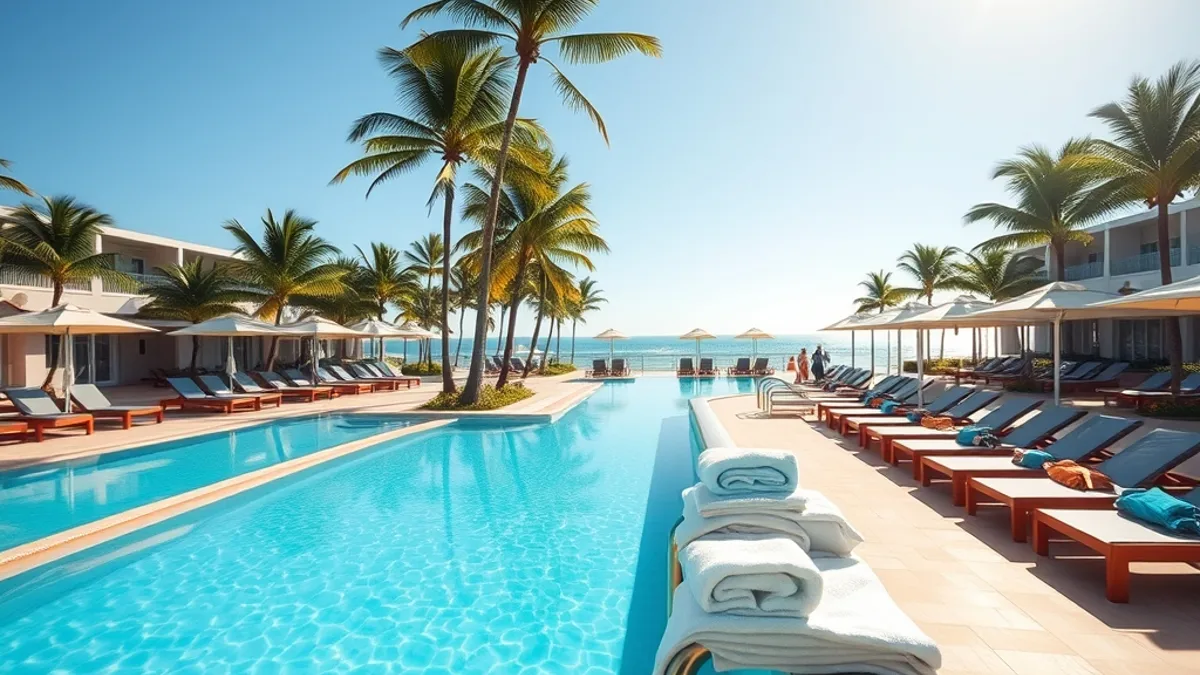
Daytime Restaurant Dress Codes: Breakfast to Beach Bars
Daytime is the easy part of any resort dress code. Breakfast buffets and casual cafes are the most forgiving venues on the property: swimwear with a dry cover-up and sandals is generally accepted. The key word is dry. Sitting down to eat in dripping swimwear alone is usually not allowed, mostly because of the chairs and floors rather than any fashion rule. Toss a t-shirt or sarong over your suit and you are set.
Lunch venues by the pool or beach stay relaxed, but the moment you step indoors, shirts and footwear are expected. A poolside grill may wave you through in a swimsuit and shorts, while the indoor seating area of the same restaurant will typically ask for a shirt on your back and shoes on your feet. Keeping a light shirt in your beach bag solves this without any effort.
Beach bars and all-inclusive lunch spots
Beach bars are the most laid-back of all. In destinations like Portugal, Spain and Thailand, they rarely enforce anything beyond a shirt and shoes, and even that is often just for the indoor counter or restroom access. If you are heading to the Portuguese coast, it is worth browsing foamline resorts in Portugal for surfside serenity and polished coastal comfort to see how relaxed the daytime atmosphere can be.
All-inclusive main restaurants at lunch follow the same relaxed daytime standard as poolside venues. You will usually be fine in shorts, a t-shirt and sandals, though some resorts ask that swimwear be covered. The main shift in expectations comes later in the day, so enjoy the easygoing lunch hours while they last.
Evening Dress Codes: Smart Casual at Resort Restaurants
Once the sun drops, most resorts shift gears. The general rule of thumb: fine-dining venues expect smart casual after 6:30pm. For men, that typically means long trousers with a collared or tailored shirt; for women, a dress, skirt or smart trousers. You don’t need a jacket or heels at most properties, but you do need to look like you made an effort.
Beach destinations vs. city-edge resorts
Location matters more than most travelers expect. Beachfront fine-dining venues in the Maldives or Greece are often happy with elegant shorts and linen, especially if you pair them with a proper shirt and closed or dressy sandals. A resort I stayed at on a Greek island welcomed linen everything, as long as it looked intentional — properties like those featured in this guide to white stone resorts with horizon-wide peace in Greece lean into that barefoot-elegant style. City-edge and European resorts, on the other hand, usually expect full smart casual, so pack trousers even if the beach is ten steps away.
The items most often refused at dinner are the same three everywhere: flip-flops, beach cover-ups and swimwear. If your evening plans include a specialty restaurant, raise your game another notch. Teppanyaki counters and chef’s tables usually have the strictest evening standard on the property, and some will politely turn away guests in shorts regardless of how upscale the shorts are. When you book these venues, ask about the dress code at the same time — it saves an awkward trip back to your room.
How to Pack for Resort Dress Codes Without Overpacking
Packing for resort dress codes sounds complicated until you realize everything shares a common core. The trick is building a small capsule that flexes from pool deck to dinner table without doubling your suitcase. I’ve tested this approach on trips ranging from island escapes to European coastal resorts, and it works because resort evenings repeat the same few scenarios. You need enough variety to feel fresh each night, but not so much that your luggage becomes a burden. Here’s how I approach it for a typical 7-10 night stay.
- Start with 2-3 evening outfits that mix and match. Pick a color palette — navy, white and one accent works well — so trousers, skirts and shirts can swap partners. Three outfits rotated across a week and a half is plenty, since resort laundries are usually fast and affordable.
- Add swimwear and two cover-ups. Rotate two or three swimsuits so one is always dry, and bring two cover-ups: one casual for breakfast, one slightly dressier that can pass at a poolside lunch. A large sarong counts and takes no space.
- Limit yourself to one pair of dressier shoes. Neutral leather sandals or loafers work for dinner and for walking to the restaurant. Anything more is dead weight.
- Choose linen and cotton blends. These fabrics look relaxed enough for a beach bar but sharp enough for a smart-casual dinner, and they handle heat and dry overnight. Avoid anything that wrinkles into a mess by the second wear.
- Check the restaurant list before you leave home. Scan your resort’s dining venues and their dress codes, then pack to the strictest one you actually plan to book. There’s no need to dress for a chef’s table you’ll never visit.
Kids are the easy part. Children under 12 are usually exempt from formal dress requirements, so a neat polo and shorts cover dinner for them at nearly every resort. Pack one spare shirt for spills and you’re done.
One last habit that saves space: lay everything out before it goes in the bag. If an item doesn’t pair with at least two other pieces, leave it behind. A capsule built this way handles a full resort stay with room to spare for a souvenir or two, and you’ll never open your suitcase at dinner time wondering what actually works together.
Dress Codes at Different Resort Types and Destinations
Dress codes aren’t one global standard — they shift with the resort type and the destination’s culture. A property built around wellness will read your gym shorts very differently than a beach club with a swim-up bar. Knowing the general character of your destination helps you pack right the first time.
Wellness and mountain resorts in Switzerland or Japan lean toward modest, quiet attire in spas and dining rooms — think covered shoulders, neat layers and a quiet palette rather than bold resort prints. At the other end of the spectrum, family resorts in Malaysia and Indonesia are among the most relaxed anywhere, with flexible standards across venues and staff who care more about comfort than collars. Desert retreats in Jordan play by their own rules: modesty and sun protection matter far more than formality, so loose long sleeves and trousers serve you better than a blazer ever would.
For a closer look at the Swiss style, this piece on mountain wellness resorts in Switzerland with fresh-air restoration shows how the setting shapes the atmosphere. A few destination-specific notes worth knowing:
- Swiss and Japanese wellness resorts: Many spas ask guests to remove outdoor shoes at the entrance, so slip-on footwear makes transitions painless, and robes are typically provided for moving between treatment areas.
- Family resorts in Malaysia and Indonesia: Wet swimwear with a cover-up is often tolerated at casual dinner venues too, a flexibility you’ll rarely find at European properties.
- Jordanian desert retreats: Lightweight long sleeves and a scarf or hat are as much about sun and sand as etiquette, and evenings can call for an extra layer.
- Adults-only and luxury coastal resorts in Italy and France: These maintain the most polished evening expectations, where tailored linen is the floor rather than the ceiling — skip shorts entirely at dinner.
Wrapping Up: Dressing Right at Any Resort
Resort dress codes feel vague because they cover three different settings at once, but once you split them apart, the rules become simple. Poolside is relaxed. Daytime venues are casual as long as you add a cover-up, shirt and sandals. Evenings are where the real standard kicks in, with most fine-dining restaurants expecting smart casual after 6:30pm.
The easiest way to avoid surprises at dinner is to check your resort’s restaurant list before you pack, then dress to the strictest venue you plan to book. A small capsule of 2-3 versatile evening outfits, plus swimwear and cover-ups, covers nearly every resort scenario without overstuffing your bag. If this helped you plan your next trip, leave a comment or share this article with a fellow traveler.