Most travelers book a resort on the strength of one photo: a huge pool with palm trees, a vanishing edge over the sea, kids squealing down a slide. Then they arrive and discover the resort has three or four different pools, each designed for a completely different kind of guest. Choosing the wrong one can mean hauling the family to an adults-only terrace or trying to read quietly beside a splash zone.
Resort pools generally fall into three types: lagoon pools, infinity pools and family zones. Each is built around a different priority, whether that is space to wander, views for photos or safe depths for children. This guide explains how each type is designed, which trips they suit best, how the season and climate change the experience, and what to sort out at check-in so you end up at the right pool from day one.
What Makes Lagoon Pools Different
Lagoon pools are the giants of the resort pool world. Instead of straight lanes and sharp corners, they are large free-form basins, often covering 1,000 to 3,000 square meters, shaped with sweeping curves, planted islands and sandy beach entries you can walk into gradually. If you have ever waded into a pool with no edge or ladder, that beach-style entry is the lagoon signature.
Built for wandering, not laps
The layout is designed for guests who want to swim, wander and socialise in a single space. Bridges cross over narrow sections, grottos hide quiet corners, and swim-up bars sit at the edges so you can park yourself on a submerged stool with a drink in hand. You are not swimming lengths here; you are exploring, drifting between shaded spots and open sun, and meeting people along the way.
The trade-off: space versus location
Because of their sheer size, lagoon pools tend to feel far less crowded in high season than a standard rectangular pool of the same guest count. The downside is placement. These basins need a lot of land, so they often sit toward the center or edge of the grounds, which can mean a longer walk from many rooms. If you plan to return to your room several times a day, check the pool’s position on the resort map before you book.
Why Infinity Pools Are Built for Views
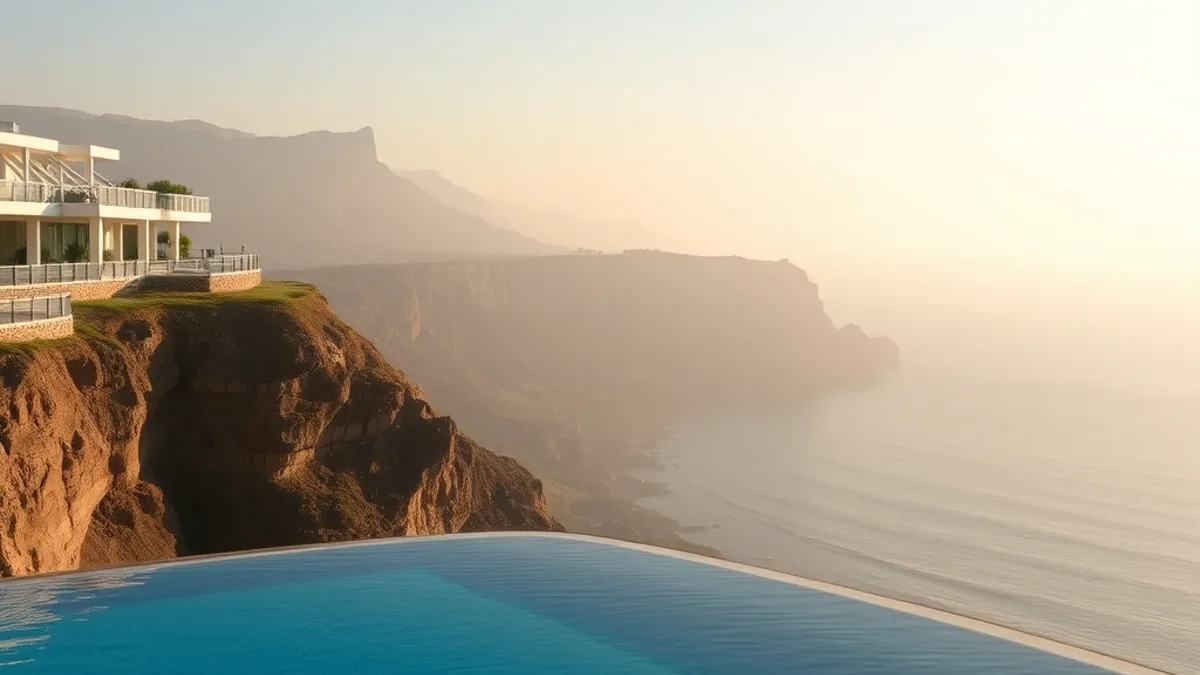
Infinity pools exist for one reason: the view. A vanishing edge on one or more sides lets water spill over a hidden rim, so the surface appears to merge directly with the sea, a city skyline or a mountain range. To pull off the effect, resorts usually place these pools on upper terraces or cliff edges, high enough that the horizon lines up with the water.
Small pools with a big purpose
Unlike lagoon pools, infinity pools are typically smaller, usually around 20 to 40 meters long. They are not built for play or exploration. They are geared toward adults who want quiet, a good photo and a slow hour at sunset, ideally with a lounger facing the horizon. Expect a calmer atmosphere, fewer children and a more considered design around the deck.
Check the age policy before you book
Many resorts restrict infinity pools to adults or designate them as quiet zones, and the rules vary widely from one property to the next. If you are traveling with children, ask the resort directly about the age policy before booking rather than assuming the main pool rules apply everywhere. Families that ignore this often find their kids limited to one pool for the whole stay, while couples who pick a resort without these restrictions may find the sunset terrace less peaceful than the photos suggested.
How Family Pool Zones Are Designed
Family pool zones are the most thoughtfully engineered areas of any resort, because they have to keep two very different swimmers safe at the same time. The design separates a shallow children’s pool, usually 0.3 to 0.5 meters deep, from a main pool of 1.2 to 1.5 meters. Toddlers can splash standing up while older kids and parents swim properly, all within sight of each other.
Everything within one line of sight
Expect splash features, slides, shaded cabanas and a snack bar nearby, and notice how they are positioned. The layout is deliberate: parents can sit on one lounger line and keep an eye on the slides, the shallow pool and the deeper water at the same time. Shaded cabanas matter more here than anywhere else, since children tire quickly in full sun and families tend to stay at the pool for hours rather than minutes.
Placement keeps the peace
Resorts also locate these zones carefully. They sit close to family rooms, so the morning walk with inflatable toys is short, and well away from spa areas and adult wings, which keeps the noise contained. For an example of how this works in practice, the family-friendly setup described in Nautica resorts in Malaysia for family-friendly luxury and island-green quiet shows how a dedicated zone can serve kids without disturbing the rest of the property. When comparing resorts, ask whether the family pool is genuinely separate or simply a roped-off corner of the main pool, because the difference shows quickly once the children arrive.
Choosing the Right Pool Type for Your Trip
The pool you choose shapes your whole resort day, so it pays to match it to who is traveling. Couples and honeymooners usually get far more value from an infinity pool with horizon views and adult-only quiet hours. The atmosphere tends to be calm, the sunsets are the main event, and you will not spend the morning dodging inflatable toys.
Families with children under ten should prioritize resorts with a dedicated family zone rather than one shared central pool. A shared pool means juggling quiet swimmers and splash-happy kids in the same water, which rarely satisfies either group. A purpose-built zone gives children room to play while adults keep their own space nearby, and everyone comes home happier at the end of the day.
Guests who swim for exercise face a different challenge. Lagoon and infinity pools rarely offer marked lanes, and their free-form shapes make lap swimming frustrating. If training is part of your trip, this matters more than views or bars, so make it a deciding factor rather than an afterthought.
- Check depth levels before booking: a dedicated family zone commonly pairs a shallow children’s area of 0.3 to 0.5 meters with a deeper section of 1.2 to 1.5 meters, so both age groups swim safely in the same zone.
- Ask about age policies on infinity pools: many resorts restrict them to adults or quiet zones, and a quick email to the resort confirms this before you commit.
- Look for lap pools or marked lanes: some larger resorts add a separate rectangular pool for exercise swimming, which is the most reliable option if you want to keep up a training routine.
- Consider room location alongside pool type: the best pool for your trip style loses its appeal if it sits a long walk from your room, especially with small children in tow.
Season and Climate Effects on Resort Pools
Where you travel decides when the pool is actually usable, and this is easy to overlook when booking. In tropical destinations, peak pool season runs roughly November to April, when humidity drops and rain is less frequent. Mediterranean resorts work on a different rhythm, with pools typically operating about May to October and many closing or reducing hours outside that window.
Heated Pools and Cooler Destinations
Mountain and shoulder-season destinations rely on heated pools to extend the swimming season. Water in heated resort pools is usually kept between 26 and 30 degrees Celsius, which makes an autumn or spring alpine stay far more comfortable than you might expect. If you are considering a mountain resort, it is worth reading about Swiss mountain wellness resorts with heated outdoor swimming to see how this works in practice.
When Heat Changes Your Priorities
In very hot months, pool size matters less than shade and timing. A shaded family zone lets children play through the middle of the day without overheating, and early-morning infinity pool hours give you the best views before the sun makes upper terraces uncomfortable. Check whether the resort offers shaded cabanas and ask what time pools open, because these details often matter more than the square meters of water on offer.
Getting the Best Pool Experience on Arrival
Your first hour at the resort sets the tone for the whole stay, and a few questions at check-in can save you days of frustration. Lounger demand peaks between 9 and 11 a.m., when most guests claim the best shaded spots, so a little planning goes a long way. Instead of wandering around on day one trying to work things out for yourself, treat the front desk as your information hub and ask a handful of targeted questions before you unpack. The answers will shape where you request a room, which pool becomes your default spot and how early you need to set your alarm each morning.
- Ask about towel-reservation policies at check-in. Some resorts allow guests to reserve loungers with a towel, others remove unattended items after a set time, and a few ban reservations altogether. Knowing the rule on day one tells you exactly how early you need to claim your spot, and it also tells you whether you can safely leave your lounger for lunch without losing it. If the policy is strict, plan your first pool morning around the peak window rather than arriving mid-morning and settling for whatever is left in the sun.
- Request a room within a short walk of your preferred pool type. Lagoon pools in particular can sit far from some room wings, and a ten-minute trek in swimwear with towels and children quickly wears thin. If the room you booked is far away, ask at reception whether a closer wing is available. Even if nothing is free on arrival, the staff can sometimes note your preference for later in the stay or suggest which wing will be quietest at the hours you plan to swim.
- Find out which pool is heated and which closes for cleaning on your dates. Resorts often rotate maintenance between pools, and discovering mid-stay that your favorite spot is drained for two days is an avoidable disappointment. A single question at the front desk gives you the full schedule. This matters most in shoulder season, when a heated pool may be the only comfortable option, and in hot months, when you may want to know which pool gets shade in the afternoon.
These three questions take less than five minutes at the front desk, yet they shape every poolside morning of your trip. Ask them before you unpack, and you will spend your stay swimming rather than problem-solving. It is also worth asking whether the resort adds extra loungers or umbrellas in high season, since availability can change noticeably between low and peak periods. A couple of minutes of curiosity at check-in is the cheapest upgrade you will get on the entire trip.
Wrapping Up the Three Pool Types
So which pool actually suits your trip? If you want space to swim, wander and socialise, a lagoon pool delivers scale, with its curves, islands and sandy entries built for lingering. If your priority is a quiet hour, a sunset photo and a horizon that seems to melt into the sea, an infinity pool trades sheer size for views and calm. And if you are traveling with children, a dedicated family zone keeps the shallow splash area safely apart from deeper water, so everyone relaxes.
The real answer is that no single pool type is best for everyone. Matching the pool to your trip style, the season you travel and the location of your room is what turns a good resort stay into a great one. If this helped you decide, leave a comment with your own pool preferences or share this article with a friend planning their next resort escape.