Every traveler has stood at a resort bathroom sink at some point, toothbrush in hand, wondering whether the tap water is actually safe. Resort water quality is one of those details that rarely appears in glossy brochure photos, yet it can shape your entire trip. A bad sip on day one can mean days of discomfort, while a needless fear of ice can make a poolside cocktail feel like a gamble.
The good news is that a few simple habits and questions cover most of the risk. In this guide, we look at why water safety varies so much between destinations, how to read the signals in your room, when to switch from tap to bottled water, and why ice deserves special attention. We also cover daily drinking habits, the questions worth asking before and during your stay, and a short checklist to wrap it all up. By the end, you will know exactly what to check before you take that first sip.
Why resort water quality varies so much between destinations
It is tempting to assume that a five-star resort automatically means safe water, but that is not how it works. Water safety depends on the local municipal supply and the property’s own treatment system, not on the star rating or the nightly rate. A modest hotel in a country with excellent water infrastructure can be safer to drink from than a luxury resort in a region with unreliable supply.
That said, many high-end resorts do invest heavily in their own water systems, and it helps to understand why. Island resorts in places like the Maldives often sit far from any municipal network, so they run their own desalination or reverse-osmosis plants on site. This turns seawater into drinking water, and the quality can be very good, but it still depends on how well the plant is run and maintained.
Where the water is usually safe from the tap
Mountain and Alpine regions such as Switzerland typically have treated municipal water that is safe straight from the tap, and many resorts there simply pass that supply through to your room. Coastal and tropical destinations are far less predictable, though. Water quality can vary widely even within a single country, between the mainland and outlying islands, or between one coastal town and the next. That is why destination-specific guidance matters more than general rules, so check current advice for the exact region you are visiting before you travel.
How to read the signals in your room and around the resort
Your room tells you more about water safety than any website will. The moment you check in, take a slow look around the bathroom and the welcome amenities, because most resorts communicate their water situation if you know where to look. The signals are usually subtle, but they are consistent across properties and easy to learn.
Start with the bathroom sink. Most resort bathrooms provide a small tap-water notice card, either on the counter, taped to the mirror or draped over the tap itself. It marks the water as non-potable, meaning do not drink, or confirms it is safe. If the card is there, follow it. If it is missing, do not assume that silence means safety.
- Check the bottled water setup: see whether the resort provides complimentary sealed bottled water daily, and how many bottles per guest. Two bottles per person per day suggests the property expects you not to drink from the tap; a single bottle for the whole room is a weaker signal.
- Look at how the bottles are presented: sealed, branded bottles with an intact cap are a reliable sign. Refillable glass carafes or open pitchers, however pleasant, tell you nothing about the water’s source.
- Ask at check-in about the ice machines: find out whether they use filtered or bottled water. A confident, specific answer is a good sign; a vague one tells you to stick to drinks without ice.
Treat an absent notice card as “unknown”, not as an all-clear. Some resorts simply forget to restock the cards, and a few skip them entirely. When the room gives you no answer, ask a staff member directly rather than guessing.
Tap water: when it is safe and when to switch to bottled
In destinations with reliable treated supplies, tap water is generally drinkable, and there is no reason to buy bottled water out of habit. Much of Western Europe falls into this category, and so do Japan and Singapore. If you are staying at a resort in Singapore where city-edge calm meets poolside composure, the tap water in your room comes from one of the world’s most tightly monitored municipal systems, and drinking it is normally fine.
When to assume the tap is off limits
In high-risk regions, the safer assumption is the opposite: treat tap water as unsafe even in luxury properties, unless staff confirm otherwise. Filtration systems at resorts can fail or be poorly maintained, and a marble bathroom is no guarantee of what flows through the pipes. If you are unsure, use tap water only for brushing your teeth, keeping your mouth closed as you rinse, or switch to bottled water for that too.
If you must drink tap water, make it safe yourself first. Boil it for 1 minute, or 3 minutes if you are above 2,000 meters altitude, which covers most trekking and mountain destinations. A quality filter or purification tablets also work well and are lighter to pack than a kettle. The World Health Organization estimates that around 2 billion people worldwide use drinking water from sources contaminated with faeces, which is a useful reminder that “it looks clear” is not the same as “it is safe”.
Ice and cold drinks: the hidden risk at pools and bars
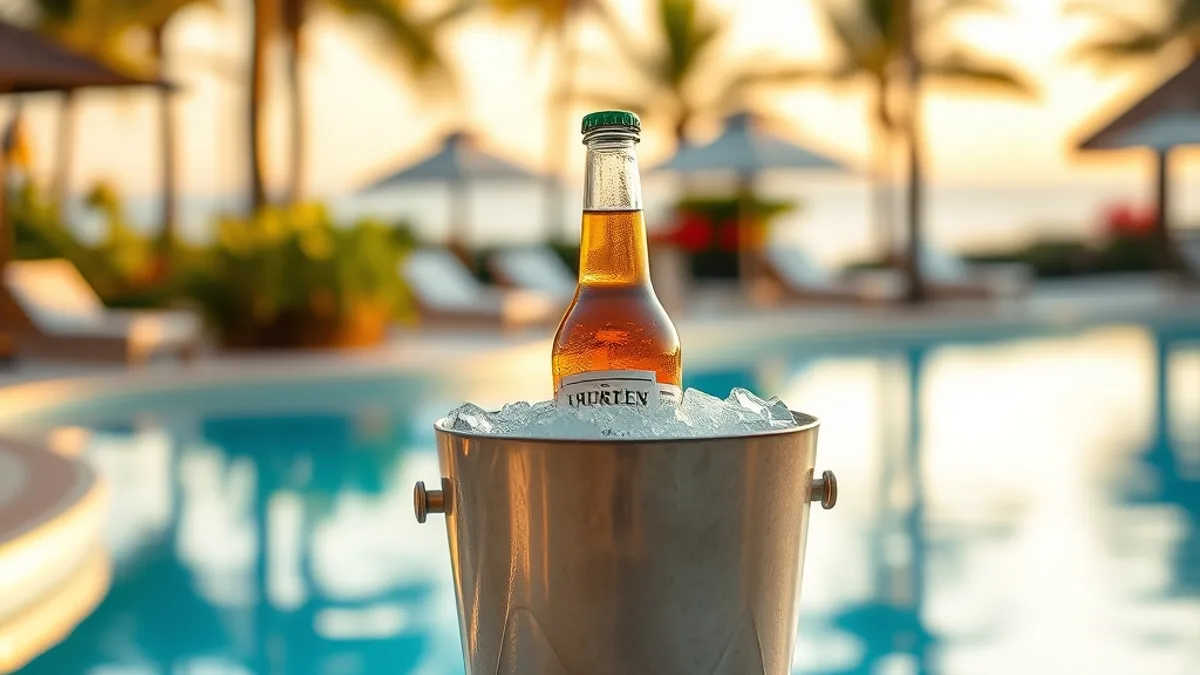
Ice is one of the sneakiest drinking-safety risks at any resort. It carries exactly the same risk as the water it was made from, but unlike a tap or a bottle, its source is rarely visible to guests. A beautifully presented frozen cocktail can be mixed with purified water and contaminated ice in the same bar, and you would never know the difference until later.
In destinations where the water supply is uncertain, the simplest move is to order drinks with no ice. If you would rather keep your drinks cold, ask the bartender directly whether the ice is made from filtered or bottled water. Staff at larger resorts can usually answer this quickly, and a clear, specific answer should reassure you. Hesitation or a shrug should do the opposite.
It is easy to remember this rule for a beer at the bar and forget it everywhere else. Frozen cocktails, iced coffee and fresh juices served with ice are among the most common ways travelers end up with stomach trouble, precisely because nobody questions them. The same applies to the self-serve options around the pool.
- Buffet ice wells: scoops sitting in melted ice water can transfer whatever that ice carries onto food and into drinks, so treat them with the same suspicion as bar ice.
- Self-serve drink machines: ice hoppers on soft-drink and juice dispensers are refilled by staff whose water source you cannot see, so ask before filling your glass.
- Ice brought to your lounger: poolside bucket service bypasses the bar conversation entirely, so mention your no-ice or filtered-ice preference when ordering.
- Blended drinks: smoothies and frozen cocktails dilute ice completely, which means any contamination ends up in the glass rather than melting harmlessly at the bottom.
Drinking water habits that keep you healthy through the trip
Once you know the water situation at your destination, the rest comes down to habits. A handful of simple routines, applied consistently, cover most of the risk without turning your vacation into a logistics exercise. This matters most in the first days of a trip, when your stomach has not yet adjusted to local microbes and the temptation to relax your guard is strongest. It is also when you are most likely to be dehydrated from travel, which makes it tempting to grab whatever water source is closest rather than the safest one.
- Default to sealed bottled water from a recognized brand. This is the safest choice wherever the supply is uncertain. Check the seal before drinking, because refilled bottles do circulate in some regions, and an intact factory seal is your best evidence the bottle is genuine.
- Be strict in the first week. Travelers’ diarrhoea affects roughly 30-70% of visitors to high-risk regions, and it usually strikes within the first seven days. The habits you keep on day one and day two matter more than the ones you keep on day eight, when your system has often already adapted.
- Carry a refillable bottle. Fill it only from trusted sources such as dedicated resort water stations or large sealed dispensers in the lobby or restaurant. This cuts plastic waste without forcing you back to small bottles every time you get thirsty, and it means you always have water on hand for day trips.
- Pack oral rehydration salts. If stomach trouble does arrive, rehydration salts from any pharmacy help you recover far faster than water alone. They weigh almost nothing and take no space in your bag, so there is no good reason to leave them home.
- Consider a portable filter bottle for day trips. Excursions often take you away from the resort’s trusted water sources, and a quality filter bottle gives you a backup when the only alternative is an unverified tap or a warm soda from a roadside stall.
None of these steps requires much effort once the routine is set. Keep a bottle by the bed, refill before you leave the resort each morning, and double-check you have water in your day bag before any excursion. Do that, and you will rarely have to make a thirsty, risky decision on the fly, which is exactly when most travelers slip up.
Questions to ask before and during your stay
The easiest time to protect yourself is before you arrive. A short email to the resort, sent while you are still comparing properties, tells you more about drinking-water safety than any brochure or glossy photo gallery. Well-run resorts answer these questions readily, and the tone of the reply is often as informative as the content itself. A prompt, specific answer suggests a property that takes guest health seriously; a vague or evasive one suggests you should dig deeper. If a property cannot explain where its ice comes from, that silence tells you something too.
During your stay, keep the conversation going at check-in and beyond. Larger resorts usually have consistent systems across the property, but smaller boutique hotels may handle each building, pool or outlet differently. Villas spread across large grounds, beach bars and excursion boats can all have their own arrangements, so it pays to confirm rather than assume. A two-minute conversation with the concierge can settle most of it, and staff who know the answers without checking are a good sign.
- Water treatment specifics: ask whether the property treats its own water on site, buys purified supply, or relies on the municipal system, since each carries a different level of assurance.
- Pool and spa maintenance: at smaller properties, ask directly whether pools and spas are chlorinated and monitored on a regular schedule rather than assuming a shared standard.
- Remote rooms and villas: confirm how drinking water reaches accommodations far from the main building, because delivery routines for overwater villas or hillside rooms can differ from the main wing.
- Excursions and boat trips: ask what drinking water is provided on trips booked through the resort, since a boat or island picnic may rely on ice coolers and local supply rather than sealed bottles.
- Refill points: ask where you can refill a bottle safely on the property, so you are not hunting for trusted water in the middle of a hot afternoon.
Wrapping up your resort water checklist
So, is your resort’s water safe to drink? The honest answer is that it depends less on the nightly rate than on what happens behind the scenes at your destination. A five-star property can sit on an unreliable local source, while a modest hotel in Switzerland pours perfectly safe tap water. Price tells you about comfort and thread count, not about what flows from the faucet.
The practical path is simple: read the signals in your room, default to sealed bottled water from a recognized brand, and question the ice in any region where the tap water is uncertain. A few questions at check-in about bottled water, ice sourcing and villa supplies will cover most drinking-safety risks, and a small packing list does the rest. If you’ve had an experience with resort water, good or bad, share it in the comments below.