Booking your first African safari, you will run into a problem almost immediately: websites use the words lodge and tented camp interchangeably, and the photos all show the same acacia-dotted landscapes. Yet the safari lodge vs tented camp decision shapes nearly everything about your trip, from how well you sleep to how far in advance you must book to what you hear at midnight.
The two stay types differ in more than just walls versus canvas. One offers solid buildings, pools and air conditioning; the other puts you close enough to the bush to hear hippos grunting in the dark. This article breaks down what each one actually is, how comfort and noise compare night by night, what you get for the money, when to book each type, how to match a stay to your travel style, and how a single itinerary can combine both.
What a Safari Lodge Actually Is
A safari lodge is a permanent property, built to last through every season. Expect stone, timber or thatch buildings with solid walls and doors that lock, air conditioning in the rooms, and often extras like swimming pools, spas and gym areas. If you have stayed at a resort anywhere else in the world, the feel will be familiar the moment you walk in.
Scale is the other defining feature. Lodges commonly run 40 to well over 100 rooms, which means buffet dining, several shared lounges and bars, and enough staff that requests get handled quickly. Large lodges often exceed 50 rooms, so you will meet other travelers at breakfast and share vehicle space more often than at smaller properties.
Location: close to the action, in more ways than one
Most lodges sit near park gates or along main access roads. That placement has a practical upside: game drives start faster because you are minutes from the reserve rather than an hour away. The trade-off is atmosphere. Roads, other vehicles and neighboring properties are part of the view, and the surroundings feel busier than a remote camp ever will. For travelers who value quick access, reliable infrastructure and predictable service, that trade is usually worth it.
What a Tented Camp Really Means
A tented camp sounds rustic but delivers far more comfort than the word tent suggests. Each unit is a canvas structure on a fixed platform, with a real bed, proper furniture and an en-suite bathroom. The difference is the walls: they are canvas, so you hear the bush through them. Lions calling, hyenas laughing, wind moving through the grass—all of it reaches you as you fall asleep.
Small scale, shared evenings
Permanent tented camps usually have 8-15 tents, which changes the whole rhythm of a stay. Dinners are often family-style around one table, drinks happen at a shared fire pit, and the guides and staff get to know you by name. Many operate on an all-inclusive basis, with meals, drinks and guided activities bundled into the rate. If you want a taste of that blend of remoteness and polish, bluewater resorts in South Africa for safari elegance and coastal release show how the concept extends beyond the classic bush setting.
Seasonality matters here too. Many camps are deliberately sited on migration routes to follow the wildlife, and most tented camps are closed or reduced for 4-6 weeks in the April-May rains, when tracks flood and grass grows tall. Some are packed down entirely and rebuilt elsewhere. Check whether your dates fall inside that window before you commit, because a camp you loved in photos may not exist in May.
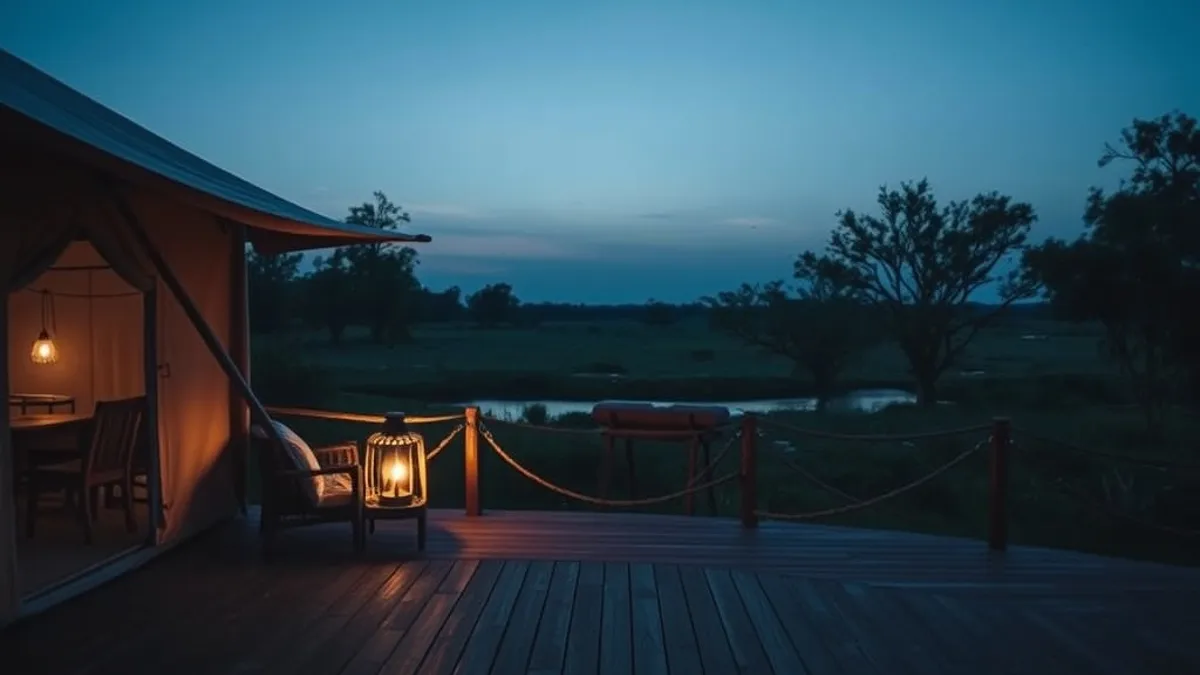
Comfort and Noise: The Real Nightly Difference
The comfort gap between the two stay types shows up most clearly after dark. In a lodge, you get climate control, solid walls and genuine soundproofing, so the night is quiet and the room stays at whatever temperature you set. In a tented camp, the canvas is the whole acoustic story: hippos grunting at a waterhole, lions calling across the valley and wind snapping the canvas are all audible, often for hours. Some people find this magical. Others lie awake.
Infrastructure differs too. Tented camps frequently rely on solar power, and in some cases showers work on the bucket or gravity-feed principle rather than pressurized plumbing. Lodges rarely have such limits, running on grid power or large generators with full plumbing. Beyond the basics, the practical choice comes down to what you genuinely need. The list below covers the details that tip the decision:
- Wi-Fi reliability: lodges generally provide a stable connection suitable for video calls; tented camps often have slow or satellite-based internet that drops in bad weather.
- Laundry service: lodges can usually turn laundry around in a day; many tented camps wash by hand and need two days, or skip laundry during rains.
- Medical accessibility: lodges near park gates are typically closer to clinics and airstrips, which matters if anyone in your group has a condition needing quick care.
- Immersion factor: canvas puts dawn birdsong, distant lions and night sounds inside your room, which is exactly the point for travelers who came for the wild, not the walls.
A simple rule: if you need reliable Wi-Fi, same-day laundry and quick medical access, pick a lodge. If you want to feel the bush around you all night, pick canvas and bring earplugs just in case.
Price Ranges and What You Get for the Money
Safari pricing can look confusing at first, because the two stay types bundle very different things into their nightly rate. Once you know what each price band typically includes, comparing quotes becomes much easier.
Mid-range lodges generally run $300-600 per person per night in high season. That rate usually covers your room, meals and two daily game drives, so the headline figure is closer to an all-in package than a hotel room price. Alcohol, laundry and park fees are the extras that most often surprise travelers on the final bill.
Luxury tented camps sit higher, typically $500-1,200 per person per night. These rates are usually fully all-inclusive, meaning drinks, guiding, meals and often laundry are wrapped in. You are also paying for fewer tents, more staff per guest and camps positioned deep in wildlife areas rather than near a park gate.
- Green-season discounts are substantial: from November to March, rates at both lodges and tented camps commonly drop 30-40%, and you trade crowds for lush landscapes and newborn animals.
- Check what “all-inclusive” actually covers: some camps exclude premium spirits, champagne or private guides, so read the fine print before comparing two quotes.
- Park and conservation fees are usually billed separately: these government charges change regularly, so ask your operator for the current rate rather than trusting an old quote.
- Solo travelers pay more per person: many small tented camps charge a single supplement, which can push the effective nightly cost well above the advertised per-person rate.
For a sense of how mid-range pricing works in practice, this guide to rainshore resorts in Botswana for safari serenity and beautifully paced comfort shows what a calmer, slower-paced safari stay looks like for the money.
When to Book Each Stay Type
Booking windows matter more on safari than on almost any other kind of trip, because the best camps are small and the peak season is short. A camp with a dozen tents can be full for an entire month from a single family reunion or a handful of group bookings. Leave it too late and you will be choosing from whatever remains rather than what actually suits you, which often means longer transfers, weaker locations or compromises on the experience you originally wanted.
- Lock in peak-season dates first. For July-October travel in the Serengeti or Masai Mara, book 9-12 months ahead. Small tented camps sell out first, so if a specific camp is on your wishlist, reserve it before flights.
- Confirm your camp choices, then build the rest of the itinerary. Once your nights are held, work backward to arrange internal flights, transfers and park arrangements around those fixed dates.
- Use large lodges as your flexible fallback. Lodges with 50+ rooms have far more availability and can typically be booked 4-6 months out, and their size gives you more room to shift dates if plans change.
- Check shoulder-season dates against camp closures. Many seasonal tented camps close or run reduced operations during the April-May rains, so verify whether your chosen camp is actually operating before you commit to those months.
If your dates are fixed and your trip is only a few months away, call a safari operator before searching online. They often hold allotments at popular camps that never appear on booking sites, and they can tell you honestly which properties still have space in your window. Operators can also suggest comparable camps you may not have considered, which matters when your first choice is full. Ask about cancellation terms before paying a deposit, since peak-season nights at small camps usually carry stricter policies than standard hotel bookings.
How to Choose Between a Safari Lodge and a Tented Camp
There is no universally better choice between a lodge and a tented camp. The right answer depends on who is traveling, how many safaris you have done before, and what you want your evenings to feel like after the game drives end.
First-time safari-goers and families usually get more from lodges. Predictability counts for a lot on a first trip: solid walls, air conditioning, a pool for the kids between drives and staff on hand if someone feels unwell. Parents with younger children also appreciate that a lodge near a park gate shortens transfer times and keeps the daily rhythm simple.
Photographers and repeat visitors tend to prefer tented camps, especially those positioned near migration corridors. Being inside the wildlife area means you can be positioned at dawn before the light turns golden, and the quiet of canvas puts you closer to the sounds and movement that make repeat trips rewarding. If you want a sense of that spacious, unhurried style of stay, these Nanyuki homesteads near safari country with spacious calm show how quiet, roomy bases can work well alongside tighter safari itineraries.
- Ask about private vehicles before booking a photographic trip: at some camps, sharing a vehicle means you cannot linger at a sighting or position for the light, which matters more to photographers than tent count or decor.
- Check minimum stay requirements at remote camps: many small tented camps ask for three or more nights, which shapes how you split an itinerary.
- Match camp location to the migration timing: camps in different areas of the Serengeti suit different months, so a camp that is perfect in August may be quiet in January.
- Consider children’s policies at tented camps: some small camps set minimum age limits for safety reasons around unfenced sites, so families should confirm this before falling in love with a camp online.
The most practical answer for many travelers is a split: 2-3 nights in a lodge near a park gate, then 2-3 nights in a remote tented camp. You get the comfort and convenience of a lodge at the start, then the immersion of canvas once you have your safari bearings.
The Difference in One Trip Plan
So what are you actually paying for when you book one over the other? A lodge means permanence: solid walls, larger scale and climate control, usually close to a park gate so your morning game drive starts on time. A tented camp means intimacy and immersion: a small number of tents, canvas walls that let the bush in, and seasonal placement that follows the wildlife rather than the infrastructure.
The right choice comes down to trade-offs in price, booking lead time and comfort. If those trade-offs feel impossible to settle, mixing both stay types in one itinerary captures the strengths of each, and it is a common approach for good reason. If this helped you sort out the difference, leave a comment or share the article with someone planning their first safari.