You scroll through the listing one more time. The pool glows turquoise, the living room looks enormous, and the terrace seems to float above an empty coastline. Then you arrive, and the villa feels half the size, the “beach” is a road crossing away, and a crane towers over the neighbor’s roof. If you have ever wondered why villa photos vs reality rarely match, you are not alone, and the good news is that the warning signs are usually visible before you pay.
This guide walks you through the most common red flags, starting with why listing photos distort reality in the first place. We then cover the gaps to spot in the photo set itself, the wording tricks in listing text that photos cannot fix, and practical steps to verify a villa before booking. You will also learn when timing and price signals deserve extra scrutiny, which villa types hide the biggest photo-reality gaps, and how to book with confidence using reviews, maps and a short cancellation window.
Why Villa Photos Differ From Reality
The gap between listing photos and the villa you actually walk into usually starts with the lens. Most professional villa shoots use ultra-wide 10-16mm lenses, which stretch small rooms and short pools so they often look 30-40% bigger than they measure in person. A bedroom that fills the frame may barely fit a bed and a nightstand, and a pool that appears to run the length of the terrace can be a few strokes from end to end. The effect is legal, common and almost impossible to detect from a single image, which is why it catches so many travelers off guard.
Styling and timing do the rest
Even an honest floor plan can be dressed up. Professional shoots are timed to golden hour, when low, warm light flatters every surface, and the villa is styled with fresh flowers, neatly set dining tables and props that never appear during a normal stay. Your Tuesday afternoon arrival will look nothing like that glowing sunset frame, and that is before anyone has cooked a meal or left a towel on a chair.
Drone shots add the final layer of distortion. Shot from heights and angles you will never experience on the ground, they can hide nearby construction sites, roads or neighbors entirely. A villa that looks isolated from the air may sit beside an active build or a busy access road, and you only discover it from the terrace, at eye level, after check-in.
Red Flags in the Photo Set Itself
Before you even analyze individual images, look at the shape of the gallery itself. A trustworthy listing usually shows you the whole property, room by room, from several angles. When a gallery is thin, padded or suspiciously repetitive, that structure alone can tell you more than any single photo. Count the images that actually show the villa: fewer than 8-10 real photos of the property, or a gallery filled with beach sunsets and town scenery instead of rooms, is a sign the host is selling the destination rather than the accommodation.
Pay attention to what is missing as much as what is shown. A hero shot of a beautiful pool means little if you cannot see the kitchen you will cook in, the bathroom you will shower in, or the bedrooms beyond one carefully angled frame. And if the same images seem to appear under different villa names across multiple listings, you may be looking at a reused gallery rather than the actual property.
- Missing exterior shots from ground level: if every outside image is aerial or taken from the far end of the garden, you cannot judge what the villa really looks like when you pull up to it, including its condition and surroundings.
- No daylight photos of the terrace or pool area: images shot only at dusk or night can hide neighboring buildings, power lines and the true size of the outdoor space.
- Editing tell-tales: impossible blue skies, over-saturated water and cloned-out power lines suggest the photos have been heavily manipulated, so treat every image as a best case rather than a baseline.
- Inconsistent furniture between images: if the same room appears twice with different chairs or layouts, the photos may come from different properties or different stages of renovation.
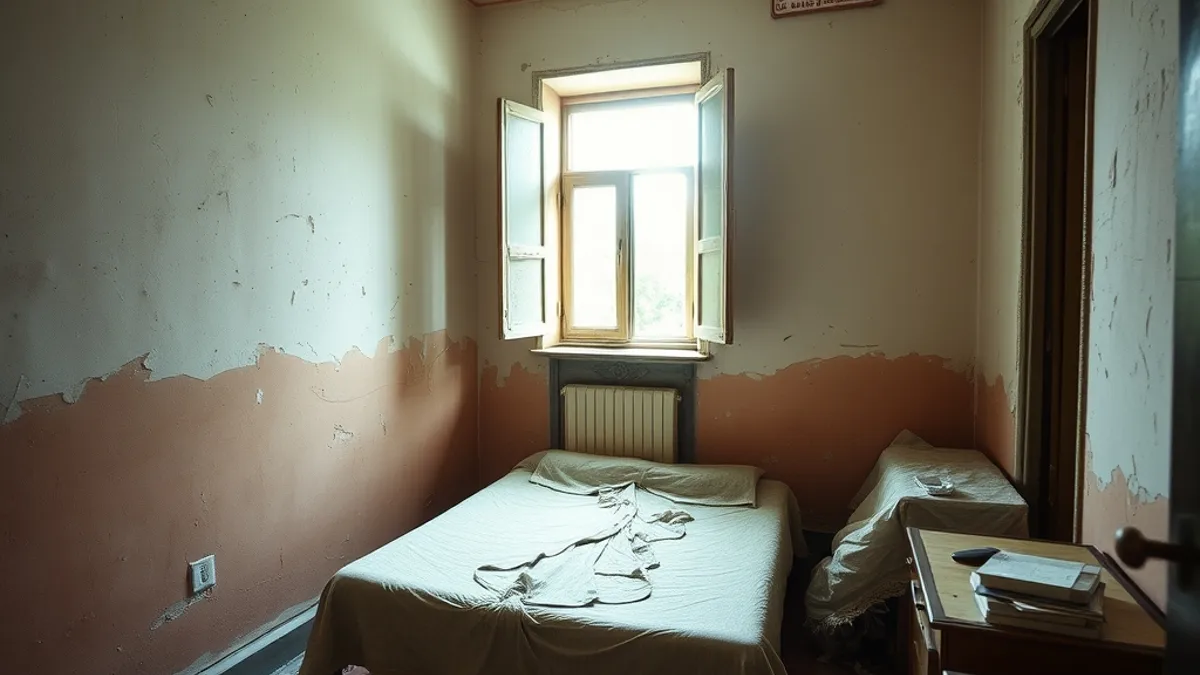
Listing Text Red Flags That Photos Cannot Show
Photos can stretch a room, but listing text can stretch the truth in ways no image ever reveals. The most common trick is vague location wording: “close to the beach” means nothing without a stated distance in meters or walking minutes. A villa can be close to the beach by car, close to a beach road, or close as the crow flies with a steep cliff in between. Honest listings state the distance plainly, and vague wording is often a deliberate choice rather than an innocent oversight, because it gives the host room to argue the claim was never false.
View claims deserve the same skepticism. “Sea view” may mean a sliver of water between rooftops that you only notice from one corner of the upper terrace, while “beachfront” is a much stronger claim that usually puts the sand at the property line. Read the wording literally, and treat every softened phrase as a reason to open the map and check the pin yourself before you commit any money.
- Missing basics: if the description does not mention air conditioning, pool heating, wifi speed or whether the pool is private or shared, ask directly, because silence on any of these usually means the answer is not the one you want.
- Shared facilities described ambiguously: phrases like “pool access” or “communal gardens” often signal that the pool, gym or grounds are used by other guests, even when the photos show empty spaces.
- New listings with zero reviews: a listing with no guest feedback is statistically harder to judge for photo accuracy, so cross-check it on a second platform before booking to see whether the photos, description and host history all match.
- Copy-paste descriptions: generic text that could describe any villa in the region, with no mention of the specific layout, bedroom separation or access route, suggests the host has not engaged closely with the property.
How to Verify a Villa Before You Book
Even a listing that looks convincing in the gallery can hide surprises, so it pays to verify before you pay. The good news is that most checks take only a few minutes and can be done from your laptop, often the same evening you find the villa. I have been burned enough times by beautiful photos that turned out to flatter the property, so I now run the same short routine before booking any villa, anywhere. It costs nothing, and it has saved me from at least two disappointing rentals that I would otherwise have paid for in full.
- Search guest photos and reviews for keywords. Filter or skim recent reviews for words like “photos”, “size” or “view”. Guest photos are unedited reality, and listings with 20+ of them typically give a far more accurate picture than a professional gallery alone. Pay attention to how recent the reviews are, since older feedback may not reflect current management or condition.
- Check the map and satellite view. Zoom in on the exact pin, not just the neighborhood. Satellite imagery shows surrounding buildings, nearby roads and the true walking distance to the beach or town, which you can measure yourself rather than trusting the description.
- Message the host with specific questions. Ask about pool depth, how far apart the bedrooms are, and whether any construction is active nearby. Vague or evasive answers are themselves useful information, and a host who answers quickly and clearly is usually a good sign for the rest of your stay.
- Book with a safety net. Many major booking platforms offer a 24-hour free cancellation window on most villa rates, so you can walk away and get a refund if the villa misrepresents itself.
None of these steps takes more than a few minutes, and together they catch most of the common tricks. If a listing survives all four checks, you can book with far more confidence than the photo gallery alone could ever give you.
When to Book: Timing and Price Signals
Timing matters as much as scrutiny when it comes to villa bookings. The same property can be a great value in one month and an overpriced gamble in another, and the listing photos will not tell you which is which. Your calendar and the price tag carry those clues.
Book early for choice, not just price
Booking 3-6 months ahead gives you the widest choice of verified villas in popular destinations. That window matters because you can pick properties with long review histories and plenty of guest photos, rather than settling for whatever is left once peak-season pressure narrows your options. Early bookers get to be selective; late bookers get to hope.
Reading the price signals
Peak season rates in tropical destinations often run 40-60% higher than low season for the same property. That is normal supply and demand, but it means a “deal” advertised in high season deserves extra scrutiny. If the price looks generous against the season, ask yourself what the photos are not showing.
The same logic works in reverse. A villa priced far below comparable properties in the same area is usually telling you something: smaller space, shared facilities instead of a private pool, or a weaker location than the drone shot suggests. Compare at least a handful of similar villas before deciding anything is a bargain, and let the gaps between prices guide your questions to the host.
Where Photo-Reality Gaps Matter Most
Some villa types are far more prone to photo-reality gaps than others, and it usually comes down to geography. Where the setting is dramatic, the photography gets dramatic too, and that is exactly where ultra-wide lenses and drone angles do the most editing of reality. Knowing the weak spots for each type helps you ask the right questions.
Overwater and cliffside villas
In tropical destinations, overwater and cliffside villas trade heavily on privacy and views. Drone shots taken from out over the water can exaggerate how isolated the property is, so verify the sightlines to neighbors using satellite view before you assume you will be alone. A good example of the genre done honestly is these Mahé retreat villas hidden in greenery with endless ocean views, where the greenery itself is part of the privacy story.
Hillside retreats and remote coastal escapes
Hillside and mountain retreats have their own blind spots. Wide angles can hide steep access roads, and the real drive time from town may be much longer than the listing implies, especially on winding roads. Ask the host directly about the route and the surface before committing.
Remote coastal escapes are perhaps the trickiest of all. A “secluded” listing may lean on one dramatic beach shot while the villa itself sits inland, well away from the water in the photo. Check the pin against the shoreline, measure the distance yourself, and treat any beach photo that appears without a stated distance as a prompt for one more question to the host.
Booking With Confidence
So why did the villa you booked look nothing like the listing photos? In most cases, the gap comes down to technique rather than outright deception: ultra-wide lenses that stretch rooms, staged styling with flowers and props, and drone angles that hide neighbors and construction. Knowing these tricks is half the battle.
The strongest signals of an honest listing are 20+ guest photos, detailed reviews that mention size and views, and a precise pinned location you can check on satellite view. Combine those verification steps with a 24-hour free cancellation window, and you remove most of the risk before you pay. If you have ever been burned by a too-good-to-be-true villa, share your story in the comments below.