Sleeping under the stars sounds magical, until you picture a thin tent floor, a chilly night, and a headlamp hunt for the bathroom. That is where the glamping dome comes in. These curved, geodesic shelters look like something from a sci-fi film, but they are one of the most practical ways to stay close to nature without giving up a real bed, warmth, or a proper roof.
Still, many travelers hesitate because they are not sure what a dome actually is, how it stays warm in winter, or whether the photos match the reality. This guide walks you through the whole picture: what a glamping dome is, how the geodesic design handles wind, snow, and temperature swings, what you typically find inside, where these stays work best, what they cost, and how to pick the right one for your trip.
What Is a Glamping Dome, Exactly?
A glamping dome is a spherical geodesic shelter that combines a triangulated frame with a weatherproof covering. Instead of straight walls and a flat roof, the whole structure curves gently from the ground up, forming a rounded pod that feels surprisingly spacious once you step inside. The covering is usually a heavy-duty, weather-resistant membrane stretched tight over the frame, which keeps out rain, wind, and dust while staying far lighter than solid building materials.
The design traces back to Buckminster Fuller’s geodesic concept, which popularized the idea that a sphere built from interconnected triangles is one of the strongest shapes you can build. Each triangle shares the load with its neighbors, so the frame supports itself without needing interior posts or beams. That engineering principle, originally explored for everything from radar enclosures to exhibition halls, is what makes today’s dome stays both sturdy and quick to assemble on remote sites.
How a dome differs from a tent or cabin
Unlike a tent or a cabin, the curved shell creates an open interior with no load-bearing walls. There is no center pole crushing your headroom and no corridor lost to structural supports, so the entire floor area is usable space. In a cabin, walls and roof beams eat into the layout; in a dome, the triangle network does the structural work from the shell itself.
That open, rounded interior also changes the feel of the stay. Light bounces evenly around the curved surface, sound carries softly instead of echoing in corners, and even a modest floor plan feels larger than the numbers suggest. It is this combination, the strength of a geodesic frame with the freedom of a wall-free interior, that sets a glamping dome apart from every other kind of outdoor accommodation.
How Geodesic Domes Stay Warm, Cool, and Standing
The first thing to understand about a geodesic dome is that its strength comes from geometry, not brute materials. The triangle network distributes loads evenly across the entire shell, so weight from snow or pressure from wind gets shared between hundreds of small triangles instead of hammering against a single flat surface. Flat walls take the full force of a gust head-on; a dome lets wind flow around the curve while the triangles hand the remaining load from one to the next.
This is why domes handle snow and strong wind better than structures with flat walls. Snow slides off the rounded roof instead of piling up, and there are no broad, flat panels for wind to push against. For a traveler, that means a dome stay is far less likely to be closed off by weather than you might expect from something that looks so lightweight.
Why domes hold their temperature so well
The same geometry helps with temperature. A dome has a lower surface-to-volume ratio than a rectangular building of the same size, which means less of the interior touches the outside air. Less surface area means less heat escapes in winter and less heat leaks in during summer. As a practical result, domes warm up and cool down noticeably faster than cabins: a small heater gets the space cozy quickly, and on hot days the interior does not bake the way a sun-facing cabin wall would.
Of course, the shell alone is only half the story. Most quality dome stays add insulated liners, often a 4-layer soft shell system, between the frame and the outer cover. These liners trap a layer of air that keeps interiors comfortable well below freezing and takes the edge off summer heat, so you get the openness of a tent-like structure with thermal performance closer to a small cabin.
Inside a Glamping Dome: What You Actually Get
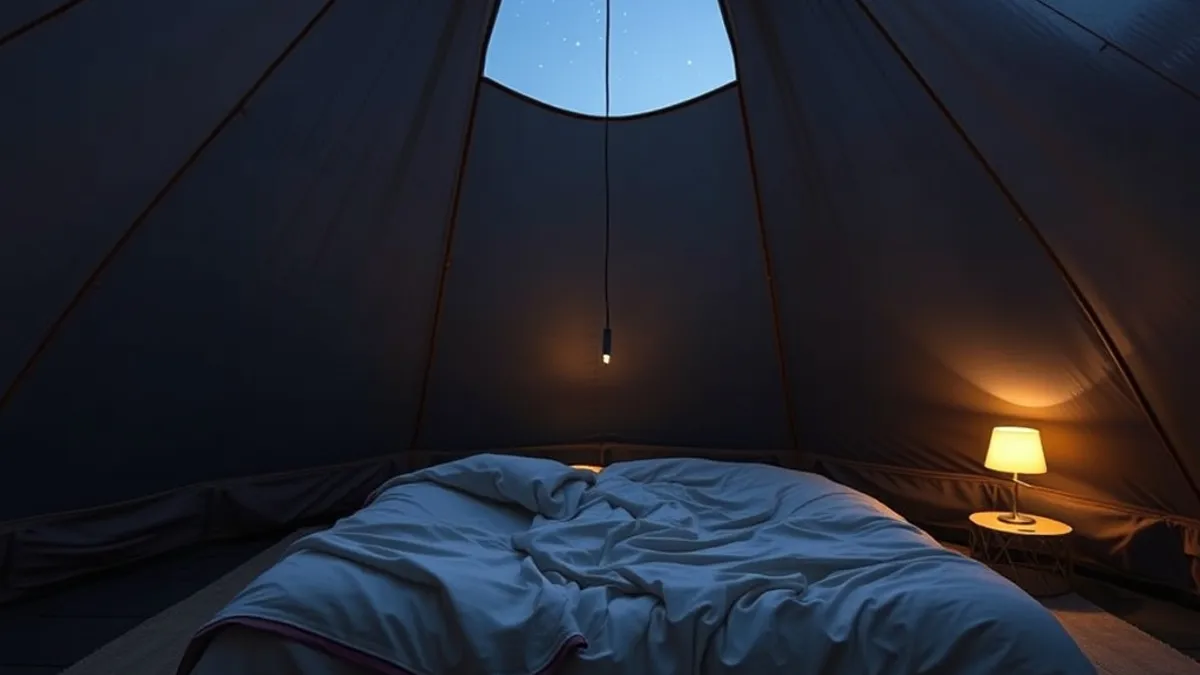
Step inside a typical glamping dome and the first surprise is how normal it feels. Most 5 to 7 meter domes, roughly 16 to 23 feet across, are set up for couples, while larger family units sleep four. The standard setup usually includes a real bed with proper bedding, a wood stove or heater for cold nights, and lighting, so you are not fumbling with headlamps or sleeping bags. The curved walls give the space an open feel, and there is generally room to stand and move around the bed without ducking.
The second surprise is the view. Panoramic windows or a transparent skylight panel are common features, and many travelers book a dome specifically for stargazing from bed or waking up to a landscape through curved glass. What you get beyond that varies from site to site, so it pays to know the typical options before you book.
- Wood stove details: In heated domes, the wood stove is often a small cast-iron unit with a glass door, so you get both warmth and a fire to watch, with firewood typically supplied by the site.
- Skylight positioning: Transparent skylight panels are usually placed at the top of the dome or above the bed, letting you lie flat and watch the stars, which is a different experience from a side window with a landscape view.
- Furniture beyond the bed: Many domes add a small seating area, a table, and storage shelves or a bench, since the open floor plan leaves space that a same-sized tent would never have.
- Power and charging: Lighting is usually electric rather than battery lanterns, and many sites provide outlets for charging phones, though off-grid domes may rely on solar power with limited capacity.
Bathroom setups vary widely, and this is the detail that separates one dome stay from another. At the upper end, you get an en-suite bathroom built into or attached to the dome itself, sometimes with a shower and even a small kitchenette. At simpler sites, bathrooms are shared facilities in a separate building, closer to a campsite experience. Neither option is wrong, but the difference matters enough that you should always check which setup you are booking before you commit.
Where Glamping Domes Work Best
Glamping domes are surprisingly versatile, but they shine brightest in certain landscapes. One of the best matches is the cold north. Thanks to the triangle network that distributes weight evenly, a dome sheds snow instead of letting it pile up, and the insulated shell keeps the interior cozy even when the temperature outside drops well below freezing. That is why Iceland and the forests of Scandinavia have become such popular places to find them.
Open landscapes and remote corners
Deserts and mountain valleys are another natural fit. A dome’s curved wall means you can place a panoramic window or a transparent skylight almost anywhere, so the view becomes the centerpiece of the room. In wide-open terrain, where there are no trees or cliffs to block the sightline, you can lie in bed and watch the sunset and the stars without leaving your pillow.
Remote locations benefit too. Domes arrive as prefabricated kits and can be assembled on uneven ground with minimal foundations, so operators can set them up on ridges, lakeshores, or forest clearings where building a cabin would be difficult or simply not allowed. For travelers, that means dome stays often turn up in places with the quietest surroundings and the darkest night skies. If you are picturing a hideaway far from roads and light pollution, a dome is usually the easiest way to make it happen.
When to Book and What a Glamping Dome Costs
So what does a night in one of these domes actually cost? Rates typically run from $120 to $450 per night, depending on the region, the season, and the level of amenities. A simple dome with a shared bathroom at the low end of that range can be a genuine bargain, while a large unit with an en-suite bathroom, a wood stove, and a panoramic view sits at the top.
Timing your booking
Timing matters more than you might expect. For summer weekends, plan to reserve 2 to 4 months ahead. If you have your heart set on July or August in a popular region, push that to 3 to 6 months in advance, because the best domes fill up fast once the season approaches.
Peak season for most dome stays runs from June through September, when the weather is most reliable and the nights are shortest. If your schedule allows, consider the shoulder months instead. May and October often bring lower rates and much better availability, and in many destinations the landscape is still beautiful, with fewer people around. A midweek stay in the shoulder season is usually the easiest and cheapest way to try a dome for the first time. Whatever you choose, it is smart to check cancellation terms before booking, since weather in remote areas can occasionally affect travel plans.
How to Choose the Right Glamping Dome Stay
Not all dome stays are created equal, and the differences between sites can be bigger than the photos suggest. Two listings can look nearly identical online while offering very different experiences once you arrive, especially when it comes to warmth, privacy, and how far you have to walk with your bags. Before you book, it pays to look closely at a few practical details that determine whether your night is magical or merely adequate. The two biggest comfort factors are heating and the bathroom situation, so start there and work through the rest of the checklist below. A quick message to the host before paying can clear up most of these questions in minutes.
- Heating source: A wood stove gives atmosphere and steady warmth, while an electric or propane heater is lower maintenance and easier to manage overnight. Confirm which one the unit has, especially if you are traveling in the colder months, and ask whether extra firewood or fuel is included or charged separately.
- Bathroom type: An en-suite bathroom means no midnight walk across a field in the dark, while shared facilities usually signal a simpler, cheaper site. Know which you are booking before you pay, and check how far the shared facilities are from the dome if you go that route.
- Window orientation: Study the photos to see where the panoramic window and skylight face. Your view from bed, whether it is a sunrise, a mountain, or the night sky, depends entirely on this placement, so match it to what you actually want to see.
- Access in bad weather: Some remote sites require parking a short walk from the dome, which feels very different in rain or snow. Ask about the distance and the path surface before you commit, and pack accordingly.
Finally, think about the setting itself. A dome in a truly remote spot, like the hideaways around Khuvsgul’s remote lakeshores, offers open-sky stillness that busier regions cannot match, but it also demands a bit more planning around access, meals, and supplies. Weigh the solitude against the convenience, and you will end up with a stay that fits exactly what you are looking for.
Wrapping Up Your Glamping Dome Questions
If you came here wondering whether a dome is a tent, a cabin, or something else entirely, here is the short answer: a glamping dome is a geodesic, triangle-based shelter that pairs strength and insulation with an open, wall-free interior. Those interconnected triangles are what let it handle snow and wind, while the curved shape helps it warm up and cool down faster than a rectangular cabin. Comfort is real, too—most units sleep 2 to 4 guests and come with a proper bed and heating.
On the practical side, expect nightly rates from $120 to $450 depending on region, season, and amenities, and plan to book 2 to 6 months ahead for the most popular dates. The best stays share three things: reliable heating, a bathroom setup that matches your expectations, and a well-placed window or skylight so the view is the first thing you see from bed. If a dome stay has answered your questions—or you still have one—leave a comment or share this article.