Patagonia has a well-earned reputation for weather that refuses to sit still. A dome with a panoramic view of the towers can offer a glass-walled sunrise one morning and a howling gale the next, so choosing when to go matters as much as choosing where. For anyone planning glamping in Patagonia, the difference between a magical stay and a miserable one often comes down to the calendar.
This guide walks through the seasons one by one, explains what the wind, rain and temperatures actually feel like on the ground, and shows how daylight hours shape your hiking and photography. We also cover how to pick a dome or eco-lodge built to handle the elements, when to book for each season, and how to build a flexible itinerary. By the end, you should know exactly which month matches your travel style.
Why Timing Matters for Glamping in Patagonia
When travelers compare dome camps in Patagonia, the first question is usually about price. That is the wrong starting point. In this region, weather is the real variable that decides whether your stay feels luxurious or punishing, because wind, rain and daylight hours change everything about life inside a fabric-walled structure.
Exposure changes everything
Most glamping sites are deliberately placed away from towns, on open steppe or beside lakes, precisely for those big-sky views. The trade-off is exposure. A hotel in El Calafate or Puerto Natales shelters behind streets and neighboring buildings, while a dome on the steppe takes the full force of every front that rolls through. Conditions you would barely notice in town can rattle the fabric and hum through the frame at a remote camp.
Same dome, different experience
The calendar transforms the identical accommodation. In March, with calmer air and softer light, the same dome can feel like a serene retreat where you fall asleep to nothing but wind in the grass. In the peak of January, gusts and crowds can turn the stay into a battle with the elements. Understanding this before you book is the single biggest factor in enjoying glamping in Patagonia rather than merely surviving it.
Best Months to Go: Season by Season
Patagonia’s seasons divide cleanly into three travel windows, and each one delivers a very different glamping experience. The austral summer, running from November to March, is the reliable choice for most travelers. December and January sit at the heart of it: the warmest weeks, the longest days and, inevitably, the busiest trails and fully booked camps. November and March bookend the summer with slightly cooler air and noticeably fewer people, while still offering near-summer conditions on most routes.
The shoulder months of October and April reward travelers who value quiet over warmth. Daytime temperatures are cooler, trails are far less crowded, and rates typically drop 30-50% compared with peak season. You trade some comfort and stability for space, better availability and lower costs. April also brings about 10-11 hours of daylight, so plan shorter activity days than you would in midsummer. Winter, from May to September, is a different trip altogether: most dome camps close or run reduced operations, and the region belongs to snow-focused travelers only.
Before picking a window, think about what your days will actually look like. Hikers usually want maximum daylight, while photographers often prefer the softer, calmer shoulder-season mornings. Match the month to your priorities rather than defaulting to peak dates.
- November: wildflowers start appearing on the steppe, and wildlife such as guanacos and nesting birds is active, but some high trails can still hold lingering snow.
- December and January: demand peaks around the holidays, so even simple domes require the earliest reservations and flexible dates rarely help.
- February: winds begin easing from their summer peak while daylight remains generous, making it a sweet spot for hikers who missed the earliest bookings.
- April: the last reliable month for most camps, when services wind down toward winter and you should confirm exactly what is still open before committing.
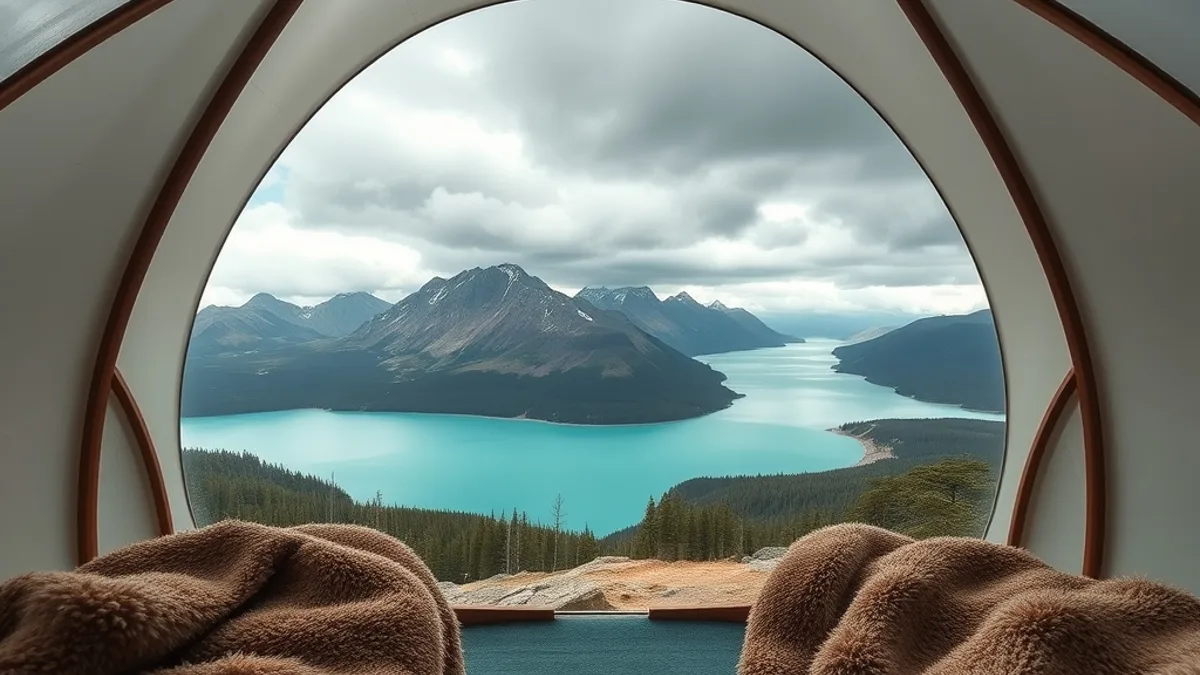
What the Weather Actually Feels Like
Patagonian summer is not Mediterranean warmth. On a good day, temperatures reach a comfortable 15-20°C (59-68°F), ideal for hiking in a light layer. But once the sun drops, so does the temperature, with nights falling toward 5°C (41°F). Even in January, you will want a warm jacket, a beanie and thick socks for evenings outside the dome. Packing for summer here means packing for two seasons at once.
Wind: the defining feature
If one element shapes daily life in a dome, it is the wind. Gusts frequently exceed 60 km/h (37 mph), and they are strongest in December and January. Inside a well-built geodesic dome this is mostly noise and a gentle shudder, but it changes your plans: stoves and open flames may be restricted, terraces become unusable on the worst days, and every door needs a firm hand. Pack windproof shells rather than umbrellas, which rarely survive here.
Rain and four seasons in a day
Rainfall across southern Patagonia totals roughly 300-500 mm a year, which sounds modest until you meet how it arrives: in sudden, unpredictable bursts rather than steady all-day soaks. A morning can open with blue sky, deliver hail by lunch and end with a fiery sunset. Four seasons in one day is not a marketing cliché here, it is simply the norm, and flexible daily plans are the only sensible response.
Daylight, Landscapes and When the Views Are Best
Daylight is one of the biggest reasons to aim for a summer glamping trip. In December you get roughly 16-17 hours of light, which means you can wake late, linger over coffee in your dome and still finish a full day on the trail. That window makes long hiking days around Torres del Paine and El Chaltén far more relaxed, and the two hubs sit about 300 km apart, usually linked via El Calafate, so many travelers split their stay between them.
By March and April the equation changes. You lose several hours of daylight, but you gain calmer, clearer mornings and the lenga forests turning copper and red. If your ideal day is a slower breakfast, a mid-morning walk and a long dinner by the stove, autumn delivers that rhythm better than the frenetic energy of midsummer.
When the views photograph best
Shoulder-season light is lower and softer, and photographers prize it for exactly that reason. The granite towers of Torres del Paine catch warm color at dawn and dusk instead of harsh midday glare, and glaciers read with more texture and depth. April’s roughly 10-11 hours of daylight still allows solid hiking days, just with earlier finishes and a better chance of still, mirror-calm lakes at sunrise.
How to Choose a Dome or Eco-Lodge That Handles the Weather
Not all glamping structures cope with Patagonian conditions equally well, and the differences only show up once the weather turns. Before you book, look past the photos and ask concrete questions about how each dome is built and heated. A camp that looks dreamy in a summer photo can feel very different when gusts exceed 60 km/h (37 mph) on an exposed hillside, so it pays to quiz operators directly before committing.
- Frame and anchoring: reinforced geodesic frames with deep anchoring handle sustained wind far better than lightweight tent-style domes; ask whether the structure was engineered specifically for Patagonian gusts.
- Heat source: a wood stove or heated floor changes everything on a night that drops toward 5°C (41°F); check whether heat runs all night or only while staff are on site.
- Sheltered outdoor space: a terrace protected from the prevailing wind lets you actually sit outside with a drink, rather than watching the weather from indoors.
- Common areas: enclosed lounge and dining domes give you somewhere comfortable to spend a stormy afternoon beyond your own bed.
It is also a good sign when a camp publishes clear wind and weather protocols, covering everything from stove safety to trail closures. Operators who plan for bad weather tend to run smoother trips when it arrives, and they are usually more honest about what a dome stay involves in a storm.
Location matters as much as construction. Steppe sites near El Calafate sit in wide-open country and are noticeably windier, while forested lakeside sites around Villa La Angostura feel naturally sheltered, with trees breaking the gusts. Neither is better; they simply suit different tolerance levels for wind. Ask each camp where its domes face, how exposed the site is, and what a typical windy day actually feels like on the ground.
Booking Windows and Trip Planning by Season
Glamping in Patagonia is not a book-last-minute kind of trip. The best weather-ready domes are few, small and fiercely contested in the summer window, so your booking lead time should match the season you are targeting. Unlike a city hotel, a dome camp might have a dozen units in total, and the ones with wood stoves, sheltered terraces and the postcard views go first. Leave it too late and you are not choosing between good options; you are choosing between whatever is left, which may mean a less sheltered site or a location farther from the trails you came for.
- Reserve peak-season domes 6-12 months ahead. December and January dates around Torres del Paine sell out first, often a full year in advance for the most sought-after camps with wood stoves and prime views.
- Plan shoulder-season trips 3-6 months out. October and April give you more flexibility, and travelers who can shift dates by a week or two are rewarded with noticeably lower rates.
- Build buffer days into your itinerary. Weather routinely delays ferries, road travel and flights between El Calafate and Puerto Natales, so add at least a spare day before any fixed connection or international flight home.
- Confirm everything before departure. Recheck dome details, transfer times and park conditions shortly before you travel, since reduced services and schedule changes do happen outside peak months.
Treat your booking as part of your weather strategy. Locking in a well-built dome early means that when the wind picks up or the rain rolls in, you have a warm, solid base waiting for you instead of a compromise you settled for months too late. It also gives you time to plan around your dates properly: to match your dome location to the hikes you want, arrange transfers between El Calafate, Puerto Natales and the camps, and sort out the layers of gear a Patagonian night demands. Flexibility pays too. If your schedule allows a midweek arrival or a stay split between two camps, ask when you book; smaller operators can sometimes accommodate requests months out that they cannot handle at short notice. And once your dates are set, put transfer and cancellation details somewhere you will actually find them, because remote dome camps often have different policies from standard hotels.
Planning Your Patagonia Glamping Trip
Patagonia’s weather has a reputation for being unpredictable, and that makes choosing a month for a glamping trip genuinely tricky. The short answer: November to March offers the most reliable conditions, while October and April strike a nice balance between cost and calm. December and January bring the warmest days and the longest light, and travelers who can shift their dates are rewarded with quieter trails and lower rates.
Whatever month you pick, expect wind, big temperature swings and changeable skies. Choose weather-ready domes with proper heating and solid construction, and book far ahead to lock in the season that suits your travel style. If this helped you plan your Patagonia dome stay, leave a comment or share the article with a fellow traveler.