Glamping for honeymoons sounds perfect in theory: a stylish tent in the woods, a glass roof full of stars, no check-in lines. In practice, many couples book a listing that photographs beautifully and then discover thin canvas walls, a bathroom block shared with six other guests, and a host who stops by the deck several times a day. The gap between the photos and the reality is exactly why picking the right stay takes a bit of homework.
This guide walks you through what actually separates a romantic private unit from a regular family glamping trip, how to choose between a dome, safari tent, treehouse or cabin, and which months offer the best mix of warmth and quiet. You will also find a privacy checklist for vetting listings, an honest look at which amenities are worth paying for, a booking timeline with realistic budgets, and the questions to ask hosts before you commit.
What Makes Glamping for Honeymoons Different From a Regular Glamping Trip
The biggest difference between a honeymoon stay and any other glamping trip is privacy. On a normal trip, sharing a kitchen block or walking a short path to a bathroom building is part of the experience. On a honeymoon, it is a dealbreaker. Look for a unit that sleeps exactly two, has its own en suite bathroom, and sits at a distance from neighboring tents so that no one hears your evening conversations.
Romance, meanwhile, rarely comes from the type of accommodation itself. A dome is not automatically romantic, and a tent is not automatically cozy. What creates the feeling is the detail: a true king bed with good linens, a wood stove crackling on a cool evening, a private hot tub under the trees, and warm, dimmable lighting instead of a single cold bulb. These are the things to hunt for in photos and descriptions.
Service matters more when it is your honeymoon
On an ordinary trip, you can cook your own dinner and figure things out. On a honeymoon, small touches carry real weight: a breakfast basket left at your door, a welcome note, firewood already stacked by the fire pit. Just as important are hosts who respect your seclusion — available if you need them, invisible if you do not. Read reviews with this in mind, because a chatty, hands-on host can be wonderful or intrusive depending on what you want.
Finally, expect to pay a premium for all of this. Romantic private units typically run $200-$600 per night, while family-oriented glamping sites generally charge $100-$200. The higher price buys the things that matter here: fewer guests on site, better bedding, private facilities and a more attentive level of service.
Choosing the Right Stay Type: Dome, Safari Tent, Treehouse or Cabin
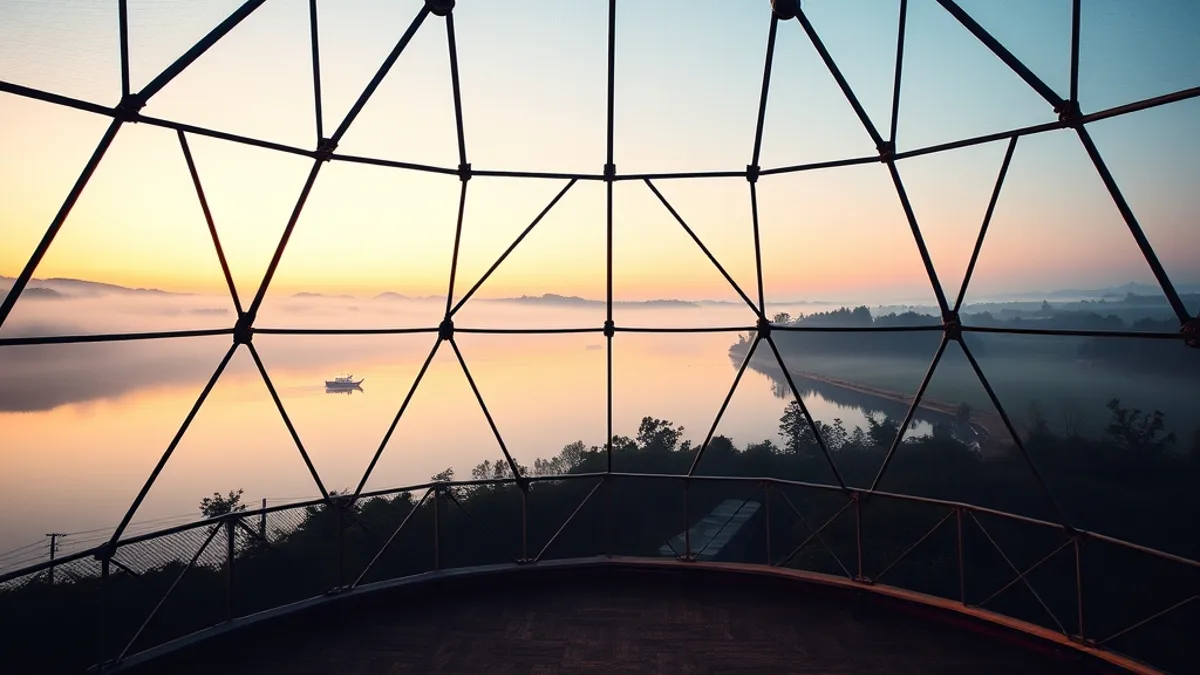
The four main stay types each suit a different kind of couple, and the wrong choice can quietly undermine the whole trip. A transparent dome is stunning on a clear October night and stifling on a July afternoon. A canvas safari tent feels wonderfully romantic at dusk and less so at midnight in the cold. Before falling for a photo, think about how the structure behaves in the conditions you will actually face.
It also helps to think about space and layout. Treehouses tend to be compact and sometimes rely on outdoor bathrooms, which adds charm for some couples and friction for others. Insulated cabins sit at the comfortable end of the spectrum, closer to a boutique hotel room than a tent, and they are the least risky option when temperatures drop.
- Geodesic domes: transparent panels give you the Milky Way from bed, but the same glass turns the interior into a greenhouse in midsummer heat — plan these for spring or autumn stays instead.
- Safari tents: canvas walls deliver the classic romantic atmosphere, yet they insulate poorly, so confirm a wood stove or real heating system for any stay where nights fall below 15°C.
- Treehouses: maximum seclusion and often the best views on the property, but check the floor plan carefully — interiors are frequently compact and bathrooms may be outdoors.
- Insulated cabins: solid walls, panoramic windows and a private hot tub push them firmly into glamping territory, and they are the safest pick for cold-weather honeymoons.
Whichever type you choose, the structure is only half the story. Heating, bed size and bathroom arrangements matter just as much, and those details are easy to miss in listing photos. Ask about them directly before booking.
Picking the Season and Location for Your Dates
Dates make or break a honeymoon glamping trip. Aim for May, June or September: you get warm weather, nightly rates of roughly $150-$350 instead of peak-season prices, and noticeably fewer neighbors on site than in the July-August crush. Many of the best properties book out months in advance for summer weekends, so the shoulder months also give you a wider choice of the most private units.
Before booking a canvas stay, check typical night temperatures for your dates. When nights drop below 10°C, a small heater is not enough — you need a real wood stove or insulated walls to stay comfortable. Canvas that feels charming at 8 p.m. can feel damp and cold by 3 a.m. if the listing relies on a portable electric heater.
Match the landscape to the mood you want
The setting shapes the atmosphere more than most couples expect. Forest clearings deliver cozy, enclosed seclusion — the kind of setting you can see in properties like the forest houses tucked into Latvian woodland, where the trees themselves provide the privacy. Lakeside and coastal sites reward early risers with sunrise views over the water, while desert and mountain locations trade greenery for dramatic skies and stargazing that a transparent roof was made for.
One last caution: even in quiet shoulder months, avoid festival and holiday weekends near popular areas. A normally secluded site can fill up with music, cars and crowds for a single long weekend, and that is not the soundtrack anyone wants for a honeymoon. Check the local events calendar for your dates before you pay the deposit.
Privacy Checklist: How to Vet a Listing Before You Book
Photos can make a cramped unit beside a busy path look like a secluded love nest. Before you fall for a listing, spend twenty minutes playing detective — it’s the cheapest way to avoid a honeymoon spent waving at neighbors from your “private” deck.
- Study the site map or aerial photos. Many glamping sites publish a layout plan, and drone shots on the listing or the host’s social media reveal what marketing photos hide. Look for units at least 50 meters from neighbors, or better, standalone properties with no visible neighbors at all.
- Confirm a fully private, en suite bathroom. This is the single most common honeymoon disappointment — a “private bathroom” that turns out to be a shared block fifty meters down a gravel path. Ask the host directly and check photos of the actual bathroom inside your unit.
- Ask who can use the deck, hot tub and fire pit. A shared hot tub with two other couples is not the soak you imagined. Get written confirmation that everything on or attached to your unit is exclusive to you.
- Mine the reviews for privacy clues. Search reviews specifically for mentions of noise, hosts living on site, and whether staff or other guests regularly walk past the deck. One review saying “we heard every conversation next door” tells you more than ten photos of fairy lights.
Doing this homework takes minutes, and it separates genuinely secluded stays from cleverly photographed ones. If a host answers your privacy questions clearly and willingly, that’s usually a good sign the rest of the stay will match. If they dodge, treat that as your answer.
Romance Amenities Worth Paying For (and Which to Skip)
Romance in a glamping stay comes from atmosphere, not from the novelty of sleeping in a dome. That atmosphere is built from a handful of concrete amenities, and knowing which ones earn their price — and which are marketing padding — keeps your budget focused on the things you will actually remember. Since a romantic private unit already runs $200-$600 per night, every add-on should justify itself. Here is what genuinely delivers.
- A private wood-fired hot tub. Nothing sets a honeymoon mood like steaming water under open sky, but confirm the tub is wood-fired and exclusive to your unit — some sites use shared tubs or slow electric models that never quite heat up in cool evenings.
- An outdoor bath or a fire pit with wood supplied. A deep tub on the deck turns a cool night into an event, and a fire pit is only romantic if you are not driving to a gas station for logs. Ask whether firewood is included and how much, since per-bundle charges add up fast.
- Blackout curtains or opaque dome shades. A transparent roof feels magical at midnight and far less so when daylight floods the room at 5 a.m. on a summer morning. If the unit has clear panels, check that proper shades or curtains are provided — if not, pack eye masks.
- Breakfast basket delivery. A basket left at your door means slow mornings without driving anywhere, and it signals a host who understands seclusion. It is usually one of the more fairly priced add-ons.
- Skip themed decor packages and arrival champagne. Paid add-ons like champagne on arrival are typically overpriced — bring your own bottle and a string of battery lights instead, and spend the difference on the hot tub.
- Check the bed size in the photos. Many glamping units still use doubles, which is a genuine problem for a week-long honeymoon. Zoom into the bedroom shots and confirm a true king before you book; if the photos are ambiguous, ask the host to state the mattress size in writing.
The pattern is simple: pay for amenities that create the mood and skip the ones that only decorate the listing. Think about how you will actually spend your evenings — soaking, stargazing, sitting by the fire — and direct your money there. A themed welcome basket will be forgotten by day two; a hot, private tub on a cold night will not be. If a host resents being asked about bed sizes or tub exclusivity, that tells you as much as the answers do.
Booking Timeline, Budget and Questions to Ask the Host
Once you know what kind of stay you want, the booking itself becomes a small project: timing, budget and a short list of questions that remote sites make essential. Getting these right protects both your money and your arrival day, which on a honeymoon matters more than usual. Here is how to work through it step by step.
- Reserve on the right timeline. Book 4-6 months ahead for May-September dates, when the best private units fill first and honeymoon weekends go quickly. For shoulder season, 2-3 months is typically enough, and hosts are often more flexible on rates and arrival times then. If your dates fall over a holiday weekend, add a month to that buffer.
- Budget realistically for the unit and the extras. Beyond the nightly rate, set aside roughly $50-$150 for add-ons like a private dinner or a celebration setup, and remember that remote sites may charge for things a hotel includes, such as luggage transport from the parking area. Ask for a full cost breakdown before you pay the deposit.
- Ask the host the practical questions. Confirm how the unit is heated and whether that heating runs all night, what the mobile signal is actually like (some sites have none, which affects navigation and emergencies), whether the road allows you to bring luggage to the door or requires a walk, and what the cancellation terms are if weather closes the site. For truly remote stays, such as the kind of hideaways covered in this guide to remote lakeside retreats, these details matter even more.
- Confirm check-in flexibility. Remote sites often have narrow arrival windows — sometimes just a couple of hours before dark — that can clash badly with a late flight or a long drive. Ask whether a late arrival is possible, whether someone will meet you or the key is in a lockbox, and plan your travel day around the window rather than hoping it will bend.
A honeymoon glamping booking rewards directness: hosts who answer in detail before you pay almost always look after you once you arrive. Lock in your dates early, put your questions in writing so nothing gets lost in back-and-forth messages, and keep the confirmation handy for the trip out. A few extra emails before booking are a small price for a smooth first night of your honeymoon.
The Recipe for a Perfect Honeymoon Glamping Escape
If you take away one thing, let it be this: privacy is what separates a real honeymoon escape from a gimmicky tent with thin walls and a bathroom block down the path. Choose a unit that sleeps two, sits well apart from other guests, and comes with a fully private bathroom before you get excited about anything else.
From there, the rest falls into place. Travel in May, June or September and book 4-6 months ahead for the popular dates. Spend your budget on the details that create atmosphere — a private hot tub, a fire pit, a true king bed — and skip the overpriced extras you can bring yourself. Finally, vet the listing properly: study the maps and photos, and ask the host direct questions before you commit. If this helped you plan your trip, share it or leave a comment below.