You’ve seen the photos: a canvas tent on a rocky ridge, mint tea on the terrace, snow-dusted peaks beyond. But glamping in Morocco’s Atlas mountains raises practical questions fast. Which valley is closest to Marrakesh? Which months bring warm days instead of freezing nights? And what’s the real difference between a simple Berber eco-camp and a luxury tented lodge with an en-suite bathroom?
This guide sorts it out. We’ll explain why the Atlas works so well for a tented escape, when to go for the best weather, and where to base yourself — from the Toubkal foothills and the Ourika Valley to the Agafay desert and the remote Happy Valley. You’ll also find what to expect at different price levels, how far ahead to reserve, and how to pair your mountain nights with a stay in Marrakesh. By the end, you should know exactly which valley, season and stay type fit your trip.
Why Glamping in Morocco’s Atlas Mountains Works
What makes glamping in Morocco’s Atlas mountains so appealing is the combination on offer: you can be sipping coffee in a Marrakesh café in the morning and standing in a high-mountain valley by early afternoon. Most camps sit within easy reach of the city, yet once you arrive, the setting feels a world away — terraced fields, mud-brick Berber villages and peaks that stay snow-capped much of the year.
The range of stays is wider than many travelers expect. At one end, Berber-run eco-camps keep things simple and authentic, with local meals cooked over fire and hosts who grew up in the valley. At the other, luxury tented lodges offer private terraces, en-suite bathrooms and proper beds, so you get the mountain experience without giving up comfort.
Who it suits
This style of trip works especially well for travelers who want trekking, stargazing and genuine quiet, but don’t want to rough it in a basic refuge or carry camping gear. Mule trails start near many camps, the night skies are dark enough for real stargazing, and the absence of traffic noise is part of the appeal. If your idea of adventure ends at a hot shower, a well-chosen tented lodge still delivers it.
Timing shapes the whole experience of an Atlas glamping trip. The sweet spots are March to May and September to November, when daytime highs sit at a comfortable 18-25°C, the valleys are green after winter rains or before the autumn cool-down, and trekking conditions are at their clearest. These windows also suit slow, scenic travel elsewhere — if you enjoy that pace, you might like these Provence hideaways for lavender air and slow French countryside mornings, which share the same shoulder-season logic.
Winter and summer trade-offs
Winter, from December to February, transforms the high mountains: snow settles above 2,000 m and nights drop to near or below freezing. The views are dramatic and the crowds thin out, but you’ll need serious cold-weather gear and a camp with reliable heating. Summer brings the opposite problem — lower elevations can exceed 35°C, making midday activity uncomfortable. If you travel between June and August, choose high valleys such as Imlil, where the thinner air stays noticeably cooler than the plains around Marrakesh.
For most travelers, spring and autumn offer the best balance of mild days, clear trails and pleasant evenings on the tent terrace. Check specific camp availability early for those months, as they fill fastest.
Best Seasons for Atlas Mountain Glamping
Timing makes a huge difference in the Atlas Mountains. The sweet spots are March to May and September to November, when daytime highs sit comfortably between 18-25°C. Valleys are green after the rains, wildflowers appear in spring, and trekking trails are dry and clear. These windows also match the harvest and planting rhythms of Berber villages, so you’ll see plenty of local life as you walk between camps.
Winter: dramatic, cold and quiet
From December to February, everything above 2,000 m gets snow, and nights can drop to or below freezing. Waking up to white peaks from a heated tent is genuinely spectacular, and the crowds are thinner. The trade-off is practical: you’ll need proper cold-weather layers, and some passes and trails become difficult or unsafe. Before booking, confirm your camp has reliable heating and hot water, and keep expectations flexible if weather disrupts your plans.
Summer: head for altitude
June through August can push past 35°C at lower elevations, which makes riverside camping feel more like survival than relaxation. The fix is simple: choose high valleys like Imlil, where the thinner air keeps daytime temperatures pleasant and evenings genuinely cool. Higher ground also means better trekking and clearer nights for stargazing.
One more thought if you’re chasing that shoulder-season feeling elsewhere: the same mild-weather logic applies to slow countryside escapes built around lavender fields and quiet mornings in Provence. Spring and autumn reward travelers almost everywhere.
Where to Go: The Top Glamping Areas
The Atlas offers several distinct glamping zones, each with a different character and drive time from Marrakesh. Most sit 1-2 hours from the city, so your choice comes down to altitude, remoteness and how much trekking you want at your doorstep. Picking the right zone before you book saves you from long, unnecessary transfers, especially if you only have a few nights to spare. If you’re building a city-plus-mountains itinerary, it helps to know where you’ll sleep on the Marrakesh side too — these riads full of texture, shade and fragrant calm pair beautifully with a mountain escape.
- Imlil and the Toubkal foothills: about 1.5 hours from Marrakesh, this is the classic base for high-altitude trekking, with mule trails heading toward Toubkal, North Africa’s highest peak, straight from the village. Camps here sit among walnut groves and terraced fields, and the cooler air makes it a smart pick when lower valleys feel warm.
- Ourika Valley: the easiest option, under an hour from the city, with riverside camps where you can fall asleep to running water and still fit in a same-day return if you’re short on time. It suits families and travelers who want a taste of the mountains without committing to a long transfer.
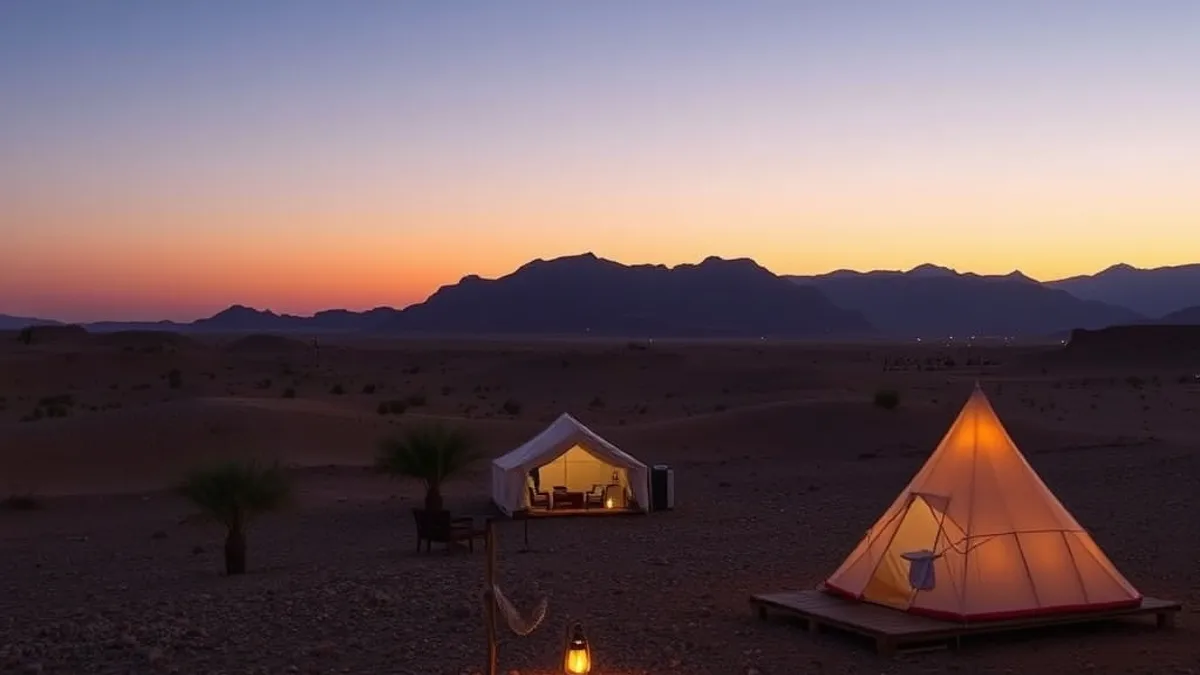
- The Agafay rocky desert: a stone desert roughly 40 km from Marrakesh, offering dune-style tented camps and camel rides without the long drive to the Sahara. Expect wide open skies, sunset views and a genuinely quiet night despite the short journey.
- Aït Bouguemez, the “Happy Valley”: the most remote of the four, deeper in the central Atlas, rewarding travelers who want off-the-beaten-path stays, traditional villages and far fewer visitors. The drive is longer, so plan at least two nights here to make the journey worthwhile.
A practical rule of thumb: choose Imlil or Ourika for convenience and trekking, Agafay for desert scenery on a short schedule, and Aït Bouguemez if remoteness matters more than quick access.
Types of Stays and What to Expect
Glamping in the Atlas Mountains spans a wide range of comfort levels, and knowing what each type of stay includes helps you match your budget to your expectations. At the simpler end, Berber-run eco-camps typically cost around $120 per night and focus on the essentials done well: a comfortable tent, hearty local meals and genuine hospitality in a spectacular setting.
Facilities at eco-camps are often shared or fairly basic. Expect a communal dining tent, simple washrooms and heating that may be limited to extra blankets and a hot water bottle rather than a proper radiator. The trade-off is atmosphere — falling asleep to complete silence and waking up to mountain views right outside your tent flap.
At the other end of the scale, luxury tented lodges start at around $400 per night and behave more like boutique hotels. These properties usually offer en-suite bathrooms, proper heating, swimming pools and staff who arrange guided excursions directly from the camp. Many sit on private terraces positioned specifically for sunset and stargazing.
- Solar power: Many remote camps run entirely on solar panels, so charging sockets may be limited to the dining tent and lights switch off early — bring a power bank.
- Berber-owned operations: Camps run by local families keep tourism income in the village and often serve recipes passed down through generations.
- Included activities: Mule treks to nearby viewpoints, bread-baking sessions and tagine cooking workshops are frequently bundled into the rate rather than charged separately.
- Meal style: Most camps serve set multi-course dinners of Moroccan classics, so mention dietary requirements when booking rather than on arrival.
How to Book and When to Reserve
Booking an Atlas glamping trip is straightforward, but the best camps are small — often fewer than a dozen tents — so availability disappears quickly in the popular months. A little planning goes a long way, especially if your dates are fixed or you are traveling during a holiday period. Unlike large hotels, most camps cannot simply add another tent, and once a weekend sells out there is usually no waiting list. Working through the steps below in order will save you a lot of back-and-forth later.
- Choose your dates first. Spring and autumn weekends are the busiest slots of all, so lock these in before arranging anything else on your itinerary, including flights and Marrakesh accommodation.
- Reserve 2-3 months ahead for spring and autumn weekends, and stretch that to 4-6 months if you are targeting peak April or October dates, when demand is at its highest.
- Confirm your transfer from Marrakesh. Many camps are reached only by 4×4 track or mule path, so ask exactly where you will be met, whether the transfer is included in the rate and how long the final leg takes.
- Ask about heating and hot water if you are traveling between December and February, when nights at altitude drop near or below freezing and not every camp handles winter equally well.
- Reconfirm a few days before arrival with the camp directly, since mobile coverage in the mountains can be patchy and last-minute changes are easier to sort out from the city.
One final tip: get your booking confirmation in writing, including transfer details and exactly what the rate covers — meals, activities and equipment can all vary between camps. Small family-run operations are not always quick to answer email, but a phone call or a message passed through your hotel in Marrakesh usually resolves any loose ends quickly. It also helps to keep a copy of your confirmation offline on your phone, as signal can be unreliable once you leave the city behind.
Pairing Your Stay with Marrakesh
One of the best things about glamping in the Atlas Mountains is how little effort it takes to combine with city time. The camps sit within easy reach of Marrakesh, which means you can land in Morocco, sleep in the medina that night and be watching the sun rise over the peaks the next morning — no domestic flights, no long overland hauls. The transfer itself is part of the experience, a scenic climb through the foothills rather than a wasted travel day.
The classic split is 2-3 nights in Marrakesh followed by 2-3 nights in the mountains. This order works well: you arrive, recover from the journey amid the energy of the souks, then head uphill for quiet, star-filled nights and trekking before returning refreshed. Because the camps are so close, there is no backtracking.
Using Marrakesh as your base
Treat Marrakesh as your arrival hub for the whole trip. The airport has connections from across Europe and the Middle East, and most camps offer pickup from the city or the airport itself. It is also the practical place to provision: withdraw cash, pick up any gear you forgot, and sort out a local SIM card before heading into areas where shops are small and signal can be patchy.
Some travelers reverse the order, starting in the mountains to decompress before the medina. That works too, but arriving directly at a remote camp after a long-haul flight is more tiring, so the city-first version tends to suit most people better.
Planning Your Atlas Escape
The answer to a luxury tent escape near Marrakesh comes down to three choices: valley, season and stay type. Aim for spring or autumn, when daytime temperatures sit between 18-25°C, then pick the area that fits your style — Imlil for high-altitude trekking, Ourika for easy riverside access, the Agafay for desert-style camps, or Aït Bouguemez for somewhere remote. Book early either way: 2-3 months ahead for spring and autumn weekends, and 4-6 months if you want peak April or October dates.
Match the stay to your budget, from eco-camps at around $120 per night to luxury tented lodges at $400+ with en-suite bathrooms and guided excursions. For the fullest experience, split your trip between the mountains and Marrakesh — most camps sit just 1-2 hours from the city, so a few nights in each gives you both worlds without backtracking. Have you glamped in the Atlas, or are you planning your first trip? Leave a comment or share this article with a fellow traveler.