Glamping in Greece sounds simple until you actually start planning it. Should you wake up in a safari-style tent overlooking the Aegean, or fall asleep to mountain air near a Byzantine village? Most travelers get stuck here, because the islands and the mainland offer genuinely different experiences, different prices and different seasons, and almost no booking site explains the trade-offs clearly.
This guide breaks the decision down properly. We compare island glamping across the Cyclades, the Ionian islands and Crete against mainland stays in the Peloponnese, Epirus and Meteora. You will find realistic nightly rates, transfer times and costs from Athens, the best months to book for each region, and a straightforward way to match the stay to your travel style, whether you are a couple chasing sunsets or a family road-tripping between ancient sites.
Why Glamping in Greece Splits Between Islands and Mainland
The first thing to understand about glamping in Greece is that it is really two different holidays wearing the same canvas. On the islands, everything revolves around the sea: tents are positioned for water views, days are built around beaches and swims, and the scenery is the classic whitewashed-village postcard. The trade-off comes in logistics. Getting to a remote island camp means a ferry or a flight, the season is compressed into the warm months, and demand in high summer pushes prices up fast.
The mainland case
The mainland plays a different game. Here you will find glamping sites set among mountains, rivers, gorges and olive groves, often within driving distance of major archaeological sites. The season stretches longer at both ends, road access is straightforward, and peak rates tend to stay lower than island equivalents. If your ideal day involves a gorge hike rather than a beach club, the mainland usually wins.
This choice shapes everything downstream: your budget, your booking window, how you get around, and what your days actually look like. Decide the region first, and the rest of the planning falls into place far more easily.
Island Glamping: What the Cyclades, Ionian and Crete Offer
Island glamping in Greece leans heavily on one thing: the view. In the Cyclades, sites are built around sea panoramas and minimalist tent design, with clean lines, neutral tones and decks aimed at the horizon. Most of the action is in Paros and Naxos, plus a handful of lesser-known islands where camps feel quieter and more spread out. These plots book out earliest because the combination of a designer tent and a Cycladic sunset is exactly what many travelers picture when they imagine Greece.
Crete’s range
Crete works differently. As the largest island, it combines beachfront tents with settings among olive groves and near gorges, so you can mix swims with hiking in a single trip. It also has the widest price spread of any island, from relatively affordable inland plots to premium beachside sites that command top rates in summer.
On budget, expect nightly rates of roughly €120 to €350 across the islands in normal weeks. The most scenic plots climb toward €400 in August, when demand peaks and availability shrinks. If you want a specific tent with a specific view, book months ahead rather than hoping for a late deal.
Mainland Glamping: Mountains, Rivers and Ancient Backdrops
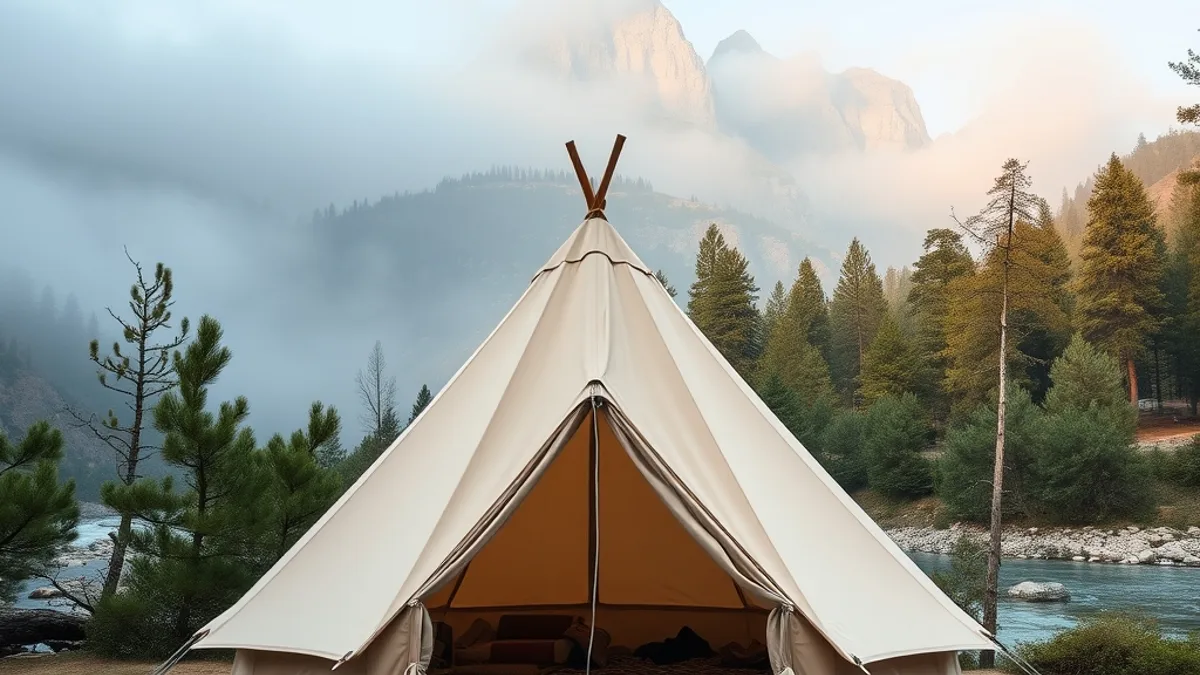
The mainland is where glamping in Greece gets varied. The Peloponnese is the easiest entry point: tent camps here sit among olive groves, small coves and Byzantine towns, all within an easy drive of Athens. That short transfer makes it a natural choice for a first mainland trip, and it pairs well with visits to ancient sites scattered across the region, from Mycenae to the Venetian harbor town of Nafplio.
Mountains and monasteries
Head northwest and the character changes completely. Epirus and the Zagori area suit travelers who want stone villages, hiking around Vikos Gorge and genuinely cool nights, even in summer. Camps here feel more rural and less polished, which is exactly the appeal for many visitors. Expect fewer organized extras and more emphasis on the landscape itself.
The Meteora area offers something you will not find on any island: tents pitched under the famous rock pillars, with monasteries perched on top. Sunrise and sunset here are the main events, so book a site with a clear view of the rocks if you can. Across these mainland regions, you trade sea access for landscapes, trails and history, and for many travelers that trade is well worth making.
One practical note: mainland sites like the Peloponnese, Meteora and Epirus sit 2-5 hours by car from Athens, so a rental car is essential. Check current rates and availability directly with operators, as they vary by tent type and season.
Season and Timing: When Each Option Shines
Greece’s glamping calendar looks very different depending on where you pitch your tent, and planning around it can make or break a trip. Island sites typically run from May to early October, and the season narrows further on smaller Cycladic islands where many camps only open once the sea has warmed and the ferries are running at full frequency. July and August are the busiest months by far, so if you have your heart set on a sea-view tent in peak summer, book 3-6 months ahead to avoid settling for whatever plot is left. Many of the most scenic island sites have fewer than a dozen tents, so availability disappears quickly once summer flights go on sale.
The mainland plays a longer game. Sites in the Peloponnese, Epirus and around Meteora generally welcome guests from April through late October, which makes them the natural pick for spring wildflower season and for autumn hiking when the gorges and mountain trails are quiet again. The longer season also means more flexibility if your travel dates are fixed around school holidays or work schedules. Cool nights arrive earlier in the mountains, so pack layers even in summer.
For the sweet spot, aim for the shoulder windows:
- Late May to mid June: sea temperatures are already swimmable on most islands, yet rates sit well below August levels and beaches are noticeably calmer.
- September: the sea is at its warmest of the year, crowds thin after the first week, and both island and mainland camps drop into their best-value pricing.
- April and October: mainland-only months in practice, ideal for Vikos Gorge walks, archaeological sites without queues, and tents with blankets instead of air conditioning.
- Midsummer trade-off: July and August bring reliable heat and lively atmospheres, but also the year’s highest rates and the tightest availability, especially on small islands with only a handful of tents.
Costs and Transfers: Where Your Budget Actually Goes
Island glamping looks affordable until you add up the journey. Getting to your tent usually means a ferry or a domestic flight from Athens, with transfer times ranging from around 40 minutes by air to as long as 8 hours on slower ferry routes. Ferry and flight fares vary widely by season, route and how early you book, so price the round trip for everyone in your party before committing to a specific island. A crossing that seems cheap one way can quietly become one of the biggest line items in your budget once you double it for the return.
Mainland trips swap tickets for tires. You will want a rental car for almost any mainland glamping stay, since sites in the Peloponnese, Epirus and the Meteora area typically sit 2-5 hours of driving from Athens airport. The drive itself is part of the experience, winding past olive groves and mountain villages, but factor in fuel, tolls and parking on top of the nightly rate. Book the car early in summer, when availability tightens and rates climb.
The cost gap between the two widens sharply in summer:
- August island peaks: the most scenic sea-view plots command the year’s highest rates, and minimum-stay rules over the peak weeks are common on small islands.
- Mainland ceilings: peak rates usually stay under €300, and mountain sites often include extras like breakfast or guided hike discounts that islands charge for separately.
- Car-free savings: some mainland camps offer airport pickup or sit near bus routes, which can remove the rental car line from your budget entirely if you plan day trips through the camp.
- Ferry flexibility: booking ferries early or choosing a fast catamaran route instead of a conventional ship can cut both transfer time and cost, so compare operators before locking in dates.
How to Choose: Matching the Stay to Your Travel Style
The right choice comes down to what your ideal day looks like. If it starts with a swim before breakfast, includes an afternoon stretched out on sand, and ends with a sunset over the water from your tent deck, the islands are built for you. Sea-view plots in the Cyclades and on Crete deliver exactly that postcard rhythm, and the trade-off is accepting ferry transfers, tighter booking windows and higher peak rates as the price of the view.
Pick the mainland for active days
If your perfect morning is a hike into a gorge, an afternoon wandering a Byzantine town or an ancient site, and an evening cool enough for a blanket outside your tent, the mainland fits better. The Peloponnese, Epirus and Meteora combine dramatic landscapes with archaeology, and their longer season means you can travel in April or October when the islands have largely gone quiet. Road access also makes multi-stop itineraries easy.
Who suits which
Couples and honeymooners tend to lean island, where the minimalist tent design, privacy and sunset views do the romantic heavy lifting for you. Families and road-trippers generally get more value on the mainland: driving between sites keeps costs down, cooler nights make sleeping easier with kids, and the mix of hikes, rivers and ruins keeps different ages entertained. Whichever way you lean, be honest about how much logistics you enjoy handling, because that often decides the trip more than the scenery does.
The Verdict on Islands vs Mainland
So, which side wins? If the classic Greek postcard is what you are after — whitewashed villages, a tent above the sea, a swim before breakfast — the islands deliver it better than anywhere else. That scenery comes at a price, though: higher nightly rates in August, transfer costs on top of your stay, and the need to book 3-6 months ahead for peak summer weeks.
The mainland plays a different game. You get a longer season from April to late October, peak rates that usually stay under €300, and richer landscapes for anyone who wants hiking, ancient sites and cooler nights alongside the tent experience. For most travelers, the smartest move is the same either way: aim for the shoulder months of late May to mid June or September, when the weather is mild and the rates are at their best. Have you camped in Greece yet? Tell us which side you picked in the comments, or share this article with someone planning a trip.