Glamping photos online rarely match reality. That dreamy safari tent framed by golden light may sit beside a highway, share a bathroom block with six other tents, or turn into a sweatbox on the first warm afternoon. Because you often pay a deposit weeks before arrival, the gap between the listing photo and the actual site can cost you hundreds of dollars and a disappointing weekend.
The good news is that you can choose a glamping site with far more confidence if you work through a simple checklist instead of trusting pretty pictures. This guide walks you through eight practical checks: location and season fit, accommodation type and space, amenities and comfort level, price transparency, reviews, cancellation terms and booking timing. Each check takes only a few minutes on the site’s listing page or in a short email exchange, yet together they separate genuine luxury sites from overpriced tents. Read through them before your next deposit, and you will book knowing exactly what you are getting.
Why Choosing the Right Glamping Site Matters
Glamping sits in an awkward price territory. Mid-range sites typically charge $150-300 per night, while luxury properties run $400-800 or more. At those rates, a wrong choice hurts far more than a disappointing budget hotel, where a bad night might cost you $60 you shrug off. Book the wrong tent for three nights and you have spent the equivalent of a nice weekend in a city hotel — with fewer guarantees.
The core problem is that listing photos are engineered to flatter. Wide-angle shots crop out the road 20 meters away, the thin canvas wall between you and the neighboring tent, and the bathroom block you will walk to at 2 a.m. in the rain. None of this shows up in a gallery of twelve sun-drenched images, and few listings volunteer these details in the description either.
What actually defines the experience
In practice, three things decide whether a glamping stay feels like luxury or like camping with a markup: how the structure handles real weather, how much private space you get, and whether the bathroom is yours alone. Photos rarely answer any of these questions, which is why so many travelers arrive surprised.
A structured checklist of 8 checks removes the guesswork. Instead of comparing sites by gut feeling, you compare them on location, season fit, accommodation type, space, amenities, total cost, reviews and booking timing. It also speeds things up: once you know what to ask, you can eliminate half the options in a single evening of browsing and focus on the two or three that genuinely fit.
Check 1-2: Location and Season Fit
Location matters more in glamping than in most hotel stays, because you cannot simply switch rooms if the setting disappoints. Start with practical access: confirm the site sits within roughly 30-60 minutes of an airport or a major road unless full remoteness is exactly what you want. A “secluded wilderness retreat” that turns out to be three hours down a gravel track is romantic on paper and exhausting after a long-haul flight, especially if you plan short day trips during your stay.
Season fit is the second half of this check. In most of Europe and North America, peak glamping season runs May to September, when canvas structures perform at their best and the full activity program operates. If your dates are flexible, booking in the off-season from October to April often brings rates down by 30-50%, but only do this if the structure and heating can handle colder, wetter weather.
Finally, ask the host what the landscape actually looks like in your specific month. A site marketed with rolling lavender fields may be brown stubble by late summer; a forest dome that looks magical in June can mean mud and bare branches in November. If Provence in bloom is on your list, this guide to lavender-season hideaways in the slow French countryside shows what to time your visit around.
- Road quality on the final stretch: ask whether the last kilometers are paved or gravel, and whether a regular rental car can manage them — some remote sites become genuinely difficult to reach after rain.
- Harvest and agricultural calendar: vineyards, lavender fields and farm-based sites change dramatically between flowering, harvest and post-harvest, so request photos from guests who visited in your exact month.
- Daylight hours: in northern Europe, June gives you light until late evening while October darkness falls before dinner — this changes how much you actually use outdoor decks, fire pits and stargazing spots.
- Local events and crowds: village festivals, harvest weekends and school holidays can fill nearby roads and restaurants, so ask what is happening in the area during your dates.
Check 3-4: Accommodation Type and Space
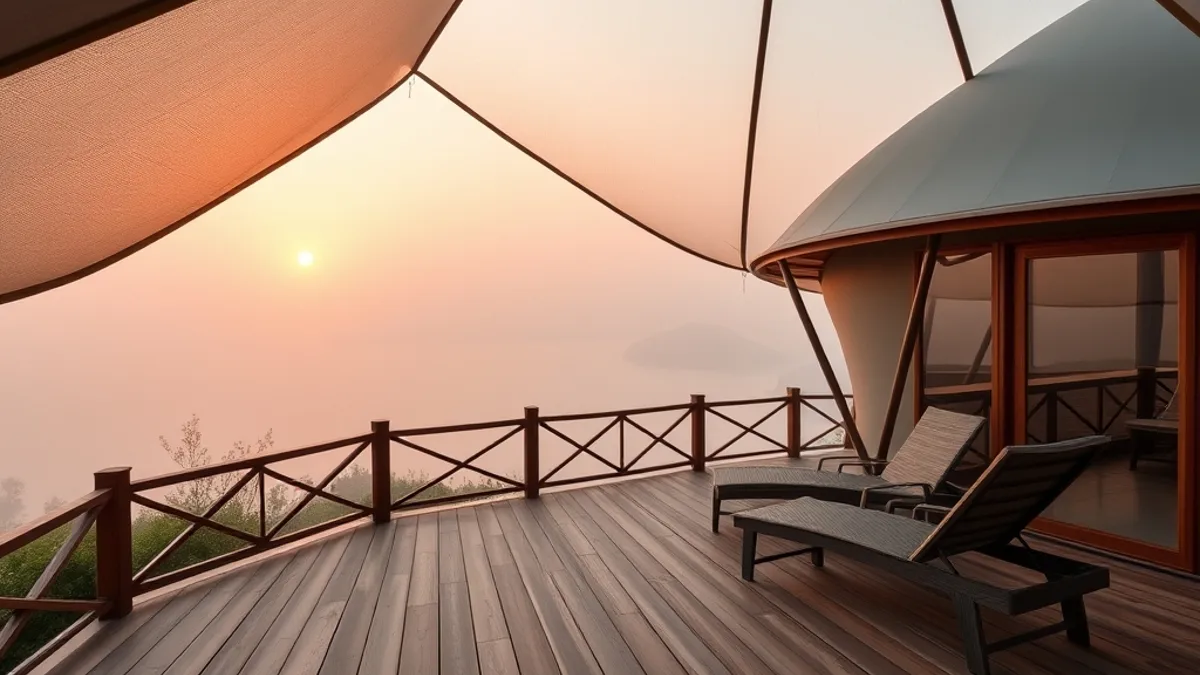
Glamping structures are not interchangeable, and the differences show up the moment the weather turns. Safari tents offer space and airflow but are essentially heavy canvas — they cool down fast at night and can feel steamy in heat. Geodesic domes handle wind and snow better thanks to their shape, but can overheat in direct sun without good shading or ventilation. Treehouses deliver atmosphere and elevation but are often the smallest and the most exposed to wind. Cabins and lodges are the safest all-weather bet, with solid walls, real insulation and windows that actually seal.
Space is the second dealbreaker. For two guests, insist on roughly 30-50 sqm of interior floor space; anything smaller tends to feel cramped once you add luggage, a bed the size of a real one, and a bathroom. Many listings quote the deck area or the total plot size to inflate the numbers, so ask specifically for the interior floor space of the sleeping structure.
Temperature control is the check most travelers skip and most regret. Canvas and dome structures sit comfortably in the roughly 10-28°C range, but if you travel off-peak, verify that heating or cooling is actually rated for the outside temperatures you are likely to face — a small electric heater in a 40 sqm dome will not keep January at bay.
- Window and ventilation quality: in domes and treehouses, ask whether windows open fully and whether there is cross-ventilation — a sealed dome in summer heat can be unusable by mid-afternoon.
- Bed type and size: confirm whether the “double bed” is a real king or queen on a frame, or a mattress on the floor, which changes both comfort and how the space feels.
- Structure age and canvas condition: canvas tents typically need replacement or reproofing after several seasons, so ask when the tent was last renewed and whether leaks have been reported.
- Private outdoor space: check whether each unit has its own deck, terrace or garden area, since shared outdoor space erodes much of the privacy you are paying a premium for.
Check 5: Amenities and Comfort Level
The single most important amenity question you can ask is simple: does the unit have its own bathroom? An en-suite bathroom with a proper hot shower puts a site firmly in the luxury category, while a shared bathroom block a short walk away means you are really booking upscale camping. Both can be enjoyable, but they are very different experiences at very different price points, so never assume which one you are getting.
Next, think about how you will eat and stay connected. Some glamping sites offer a full kitchen in each unit, others provide a shared cooking area, and many rely on an on-site restaurant with fixed meal times. If you have dietary needs or travel with children, this detail matters more than you might expect. The same goes for Wi-Fi: many sites advertise it, but reliability varies enormously, so check recent reviews if you actually need to work or stream in the evenings.
Heating is the other comfort factor people overlook. Even in summer, nights in the mountains or by the coast can drop well below what a thin canvas tent holds in, so confirm the unit has a wood stove, heater or proper insulation before you book.
- Private hot tubs are one of the most common premium add-ons — ask whether it is wood-fired (charming but slow to heat) or electric, and whether there is an extra charge per use.
- Outdoor showers can be a highlight in warm weather, but check whether they are a design feature alongside an indoor bathroom or a substitute for one.
- Fire pits vary too: some sites include firewood and fire grates, while others ban open flames entirely, which changes the evening atmosphere considerably.
- Included breakfast adds real value at remote sites where the nearest cafe may be a long drive away — confirm whether it is served to your unit or at a set time in a dining hall.
Check 6: Price Transparency and Total Cost
Glamping pricing spans a huge range, and knowing the typical bands helps you spot both bargains and red flags. Mid-range sites sit well below the luxury tier, where operations with en-suite bathrooms, hot tubs and full service typically run $400-800 or more. A site priced dramatically below the standard bands usually has a catch — shared bathrooms, thin canvas, or a location next to a busy road. One priced far above them needs to justify every dollar with genuinely exceptional facilities.
Look past the headline price
The nightly rate is only the starting point. Many sites add cleaning fees, charges for additional guests, and fees for activities like kayaking, guided hikes or sauna sessions. A tent that looks $50 cheaper than its neighbor can easily end up more expensive once these extras are totaled. Before comparing two sites, build the full cost for your exact dates and group size, including any minimum-stay requirements that force you to book extra nights.
Use the off-season to your advantage
Between October and April, many sites drop their rates by 30-50% to fill units outside the May-September peak. That discount is your negotiating leverage: ask about midweek stays, longer-stay discounts or included extras such as breakfast or a firewood bundle. Site owners would rather fill a dome at a reduced rate than leave it empty, and a polite email asking directly about midweek pricing often gets a better deal than any online booking engine shows.
Check 7-8: Reviews, Cancellation Terms and Booking Timing
Star ratings flatten everything into a number, and they hide exactly the details that make or break a glamping stay. Instead, search recent reviews for specific mentions of weather, noise and cleanliness. Did guests mention condensation inside the tent after rain? Could they hear a nearby road or a generator running at night? Were the shared bathrooms spotless or grimy by day three? These concrete comments tell you far more than a five-star average ever will, and prioritize reviews from the same season you plan to visit.
Cancellation terms deserve the same scrutiny as the reviews. Plans change, weather turns, and a rigid policy can turn a $400 booking into a total loss. A cancellation window of 14-30 days before arrival with a partial refund is standard at reputable sites — if a site offers less flexibility than that, ask why before you pay a deposit, and get the terms in writing.
Finally, timing your booking matters as much as choosing the site. The best units — the ones with the best views, the most privacy or the private hot tub — go first, not last.
- Summer weekends at popular sites often sell out months in advance, so booking 3-6 months ahead gives you the full choice of units rather than the leftovers.
- Holiday periods such as Christmas, New Year and national school holidays are even tighter — plan 6-12 months ahead if you want a specific unit or are traveling as a group needing several tents.
- Midweek and off-season dates are the exception: availability is usually good, and last-minute deals or negotiated discounts are far more realistic then.
- Set a calendar reminder for the exact date that booking windows open at sites you love, since some high-demand operators release all summer inventory on a single day.
Book Your Glamping Trip with Confidence
That gap between glossy photos and reality is exactly why a checklist matters. Instead of trusting a few pretty shots of a canopy bed at sunset, you now have eight concrete things to verify, each one catching a different way a site can disappoint. A shared bathroom masquerading as luxury, a tent that turns icy the moment temperatures drop outside the 10-28°C comfort zone, a headline price that doubles once fees are added — all of these hide behind attractive photography.
Run through the full list before you pay a deposit, and glamping stops being a gamble and becomes a planned luxury escape. You will compare sites faster, spot inflated prices, and know exactly which questions to ask a host before committing. If this checklist helped you plan a trip, leave a comment or share the article with a fellow traveler.