Here’s the frustrating part about planning your first glamping trip: the glamping cost for a single night can look like a campsite fee or a boutique hotel rate, and it’s often hard to tell which until you’re deep in a listing. A basic tent might run $100–$150 per night for two, while a luxury dome can easily top $600. Then come the extras — cleaning fees, hot tub add-ons, minimum stays — that quietly push your total well past what the headline price suggested.
This guide breaks it all down so you can budget with confidence. We’ll cover what glamping actually costs per night, how season and location change the price, and the hidden extras that inflate your bill. You’ll also learn when and how to book for the best rate, which glamping style fits your budget, and we’ll walk through sample budgets for a first trip — so there are no surprises when the final total appears.
What Glamping Actually Costs Per Night
Glamping prices vary enormously depending on what you’re sleeping in, but the ranges are actually fairly predictable once you know the three main tiers. The biggest surprise for most first-timers is that even the budget end costs far more than a traditional campsite — you’re paying for the bed, the setup, the location and the view, not just a patch of grass. A canvas tent on a working farm is a completely different product from a heated dome with a panoramic window, and the price reflects that.
The second thing to understand is how rates are structured. Nearly every glamping site prices per unit, not per person, which changes the math completely. A couple splitting a $200 tent pays $100 each; a solo traveler pays the full $200 alone. If you’re traveling with a partner, you automatically get roughly double the value compared with going solo. The same logic applies to families: many units sleep four or more, so a larger safari tent or lodge can work out cheaper per head than two separate budget tents, provided the capacity is genuinely listed and usable.
- Budget tents and A-frames ($100–$150 per night for two): These are usually simple canvas tents or compact wooden cabins on small farms or private land, often with a shared bathroom block a short walk away and a fire pit outside your door.
- Mid-range safari tents, yurts and cabins ($150–$300 per night): At this tier you typically get a real bed on a proper frame, wood-burning stoves or electric heating, and often a private deck with outdoor furniture.
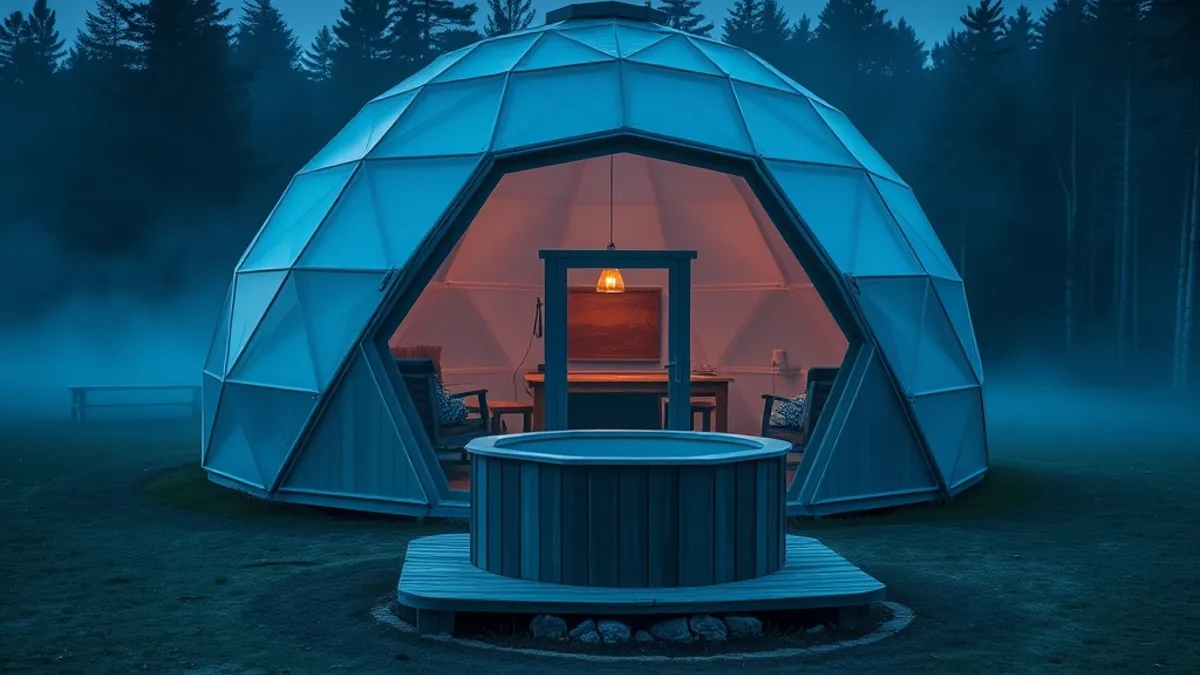
- Luxury domes and lodge-style sites ($300–$600+ per night): The top tier adds en-suite bathrooms, full kitchens or kitchenettes, panoramic windows, and extras like private hot tubs or daily housekeeping.
One last framing tip: treat these tiers as a spectrum rather than rigid categories. A well-run mid-range site with exceptional views can feel more luxurious than a poorly maintained “luxury” dome, so read recent guest reviews and look closely at the photo gallery before deciding which tier actually suits you.
How Season and Location Change the Price
The same tent can cost two very different prices depending on when you book it. Peak summer months — June through August in the Northern Hemisphere — add roughly 20–50% to nightly rates, because that’s when families and couples all compete for the same limited inventory. A yurt that books easily in September might be sold out or heavily marked up at the height of summer.
The good news is that the shoulder seasons of May and September often deliver nearly identical weather at noticeably lower prices. Days are still warm enough for evenings on the deck, sites are quieter, and hosts tend to be more flexible with arrival times and special requests. If your dates aren’t tied to school holidays, shifting your trip by a few weeks is the easiest saving you’ll ever make.
Location premiums are real
Where a site sits matters almost as much as when you go. Coastal sites and those overlooking iconic landscapes — think ocean cliffs, famous mountain ranges or national park gateways — command clear premiums over inland meadow sites with equally comfortable tents. You’re paying for the view out of the window, and hosts know it. If a famous viewpoint isn’t essential to your trip, looking just outside the most photographed areas can bring the nightly rate down without sacrificing comfort.
Weekends versus midweek
Weekend nights often cost 20–40% more than midweek nights at the same site. Friday and Saturday are also the first nights to sell out, so if you can arrive on a Sunday or Monday, you’ll typically pay less and choose from better availability. Midweek stays also mean quieter sites — fewer neighbors, easier access to shared facilities and a more relaxed atmosphere overall. For first-timers with flexible schedules, a midweek trip is the single best value move in glamping.
The Hidden Extras That Inflate Your Glamping Budget
Here’s where first-timers get caught: the nightly rate on the listing is rarely the number that shows up on your final bill. Booking platforms and site owners layer on fees and add-ons that can push your outlay well beyond what you budgeted, and on a short trip those extras can rival the cost of the accommodation itself. None of these extras are scams — they’re just rarely highlighted upfront, and they only appear once you reach the final checkout screen.
The most frequent surprise is the cleaning or service fee. On most major booking platforms, these run $30–$75 per booking regardless of how many nights you stay, which stings most on a one-night getaway. The fee is the same whether you stay one night or five, so shorter trips absorb a proportionally bigger hit. Some hosts skip the platform entirely and skip the fee too, so it’s worth comparing both routes before you commit.
- Hot tub or wood-fired bath add-ons ($30–$80 per stay): Many sites list the soak as an optional extra rather than an included perk, so check whether the tub in the photos costs more before assuming it’s yours.
- Breakfast and meal packages ($15–$30 per person per day): Breakfast baskets, BBQ kits and campfire dinner packages are convenient in remote locations where the nearest restaurant may be a long drive away, but for a couple over a weekend they can add $60–$120 to the bill.
- Minimum stays of 2–3 nights on weekends: Even if you only wanted one night, a weekend minimum effectively doubles or triples your outlay, and it also explains why some listings look oddly cheap until you read the fine print.
Before booking, scroll past the headline rate and open the full price breakdown on the listing. Add up the nightly rate, the service or cleaning fee, any add-ons you actually want, and the total number of nights the minimum-stay rule requires. That final figure — not the per-night number in bold at the top of the page — is the one your budget needs to cover. If the total feels higher than expected, check the site’s own website or social pages, since booking direct sometimes trims the fees and occasionally includes a perk the platform version doesn’t.
When and How to Book Glamping for the Best Rate
Glamping sites fill up faster than most first-timers expect, especially the small ones with only a handful of units. A site with three safari tents can sell out a summer weekend months in advance, and once those units are gone, there is no workaround. The good news is that timing your booking well can save you real money, not just secure the spot you want.
- Reserve 3–6 months ahead for summer weekends. If you have your heart set on a July or August Friday and Saturday night, book as soon as the calendar opens. Popular sites in scenic regions often release dates in winter, and the best units go first. Waiting usually means choosing between leftover dates or paying peak-season rates that run roughly 20–50% higher than quieter months.
- Off-season, 1–2 months out is usually enough. In quieter months, availability is wider and owners sometimes discount last-minute openings to fill empty units. If your dates are flexible, browsing a few weeks ahead can surface genuine bargains on the very same tents that command premiums in summer.
- Aim for midweek arrivals. A Sunday-to-Tuesday stay often costs noticeably less than the same two nights on a weekend, when minimum-stay rules of 2–3 nights are common. Midweek, you will also share hot tubs, fire pits and viewpoints with fewer people, which makes the whole stay feel more private.
- Try booking directly with the site owner. Many small glamping operations run their own websites or social pages, and a direct reservation can skip the cleaning or service fees of $30–$75 per booking that booking platforms frequently add. It also puts you in direct contact for questions about heating, bedding and arrival logistics before you commit.
One practical habit: once you pick a site, sign up for its newsletter or follow its social media. Owners frequently post cancellations and off-season deals there first, and a freed-up summer weekend slot is exactly the kind of opportunity a first-timer wants to grab. Set a reminder to check in every few days as your dates approach, because cancellations often appear just one or two weeks out and disappear within hours.
Choosing a Glamping Style That Fits Your Budget
Glamping is not one product but a whole ladder of comfort levels, and your budget should decide where on that ladder you start. The cheapest end of the market is the best place to test whether you actually enjoy sleeping in a canvas structure in the middle of a field. If the answer is no, you will be glad you did not pay for extras you never used.
Starting simple: tents and A-frames
Basic bell tents and small A-frame cabins sit at the bottom of the price range, and the setup is usually simple: a real mattress, bedding, lighting, and washing facilities you share with other guests in a separate building. That is a fair trade for a first trip. You get the fresh-air-and-stars side of glamping without paying for luxuries you may not miss, and if you love the experience, you can always step up next time.
Stepping up: yurts, safari tents, domes and lodges
Mid-range yurts and safari tents, usually $150–$300 per night, add genuine beds, heating and often a small kitchenette or private deck. This is the sweet spot for couples who want comfort without a showroom. At $300 and above, luxury domes and lodge-style sites bring en-suite bathrooms, private hot tubs and full-service touches, and the price reflects it.
Before comparing any two prices, check three things: whether heating is included, whether the bathroom is private or shared, and whether bedding and towels come with the unit. A cheaper tent with communal facilities and a slightly pricier yurt with heating and an en-suite are not really the same offer, and the lower rate is not always the better deal.
Sample Budgets for a First Glamping Trip
Numbers make planning easier, so here is what a first glamping weekend for two typically looks like at each level of the market. These figures assume a two-night stay and include the fees and add-ons most travelers actually end up paying for, not just the headline nightly rate. Treat them as realistic planning ranges rather than quotes, since exact prices vary by site, season and how many extras you add on.
- Budget weekend: about $250–$350. Two nights in a tent or A-frame at the entry-level rate, plus a cleaning or service fee and one small add-on such as a firewood bundle or breakfast package for one morning. This is the sweet spot for testing whether glamping suits you at all.
- Mid-range weekend: roughly $400–$700. A safari tent or yurt for two nights, a hot tub add-on, and a breakfast or meal package for both days. This is the range where most first-timers land, and it buys a noticeably softer landing: real beds, heating and space to spread out.
- Luxury weekend: $700–$1,300+. A dome or lodge-style unit with an en-suite bathroom and private hot tub, plus premium add-ons like catered dinners or welcome hampers. At this level you are paying as much for the setting and service as for the structure itself.
Do not forget the journey itself. Remote countryside sites are part of the appeal, but getting there costs money: budget an extra $50–$150 for fuel, a rental car or a taxi from the nearest train station. Check whether your chosen site has parking on-site, and if you are relying on public transport, confirm the distance from the nearest station before booking rather than after. Some rural spots have no food options nearby, so a grocery stop on the way can save both money and an evening. A cooler box with breakfast supplies and wine for the hot tub goes a long way. For inspiration on where a mid-range budget goes a long way, the slower corners of the French countryside are hard to beat—this guide to Provence hideaways with lavender air and slow countryside mornings shows what that kind of trip looks like in practice.
Planning Your Glamping Budget With Confidence
So, is glamping priced like a campsite or a boutique hotel? The honest answer is that it spans everything in between: nightly rates run from around $100 for a simple tent up to $600 and beyond for a luxury dome, depending on the style you pick, the season you travel and where the site sits. A basic stay can cost less than a modest hotel room, while a high-end one can easily outprice it.
The trick is to budget for the extras, not just the nightly rate. Cleaning fees, add-ons and minimum-stay rules can add 30–50% to the base price, so a tempting $150 tent may really cost closer to $220 for the weekend. Booking early for summer, or traveling midweek in the off-season, keeps costs down and gives first-time glampers the widest choice. If this guide helped you plan your first trip, leave a comment or share it with a friend who’s curious about glamping too.