You’ve seen the photos: a canvas suite perched above the savanna, a steaming coffee on the deck, the distant roar of a lion as the sun comes up. Safari tent glamping sounds like the perfect blend of adventure and comfort, but most travelers have no idea what the experience actually involves. What’s inside the tent? Is it cold at night? And which months make the difference between a trip of a lifetime and a soggy disappointment?
This guide walks you through the reality of sleeping under canvas in Africa. We’ll explain what a safari tent really is, what a stay feels like from dawn wake-up calls to campfire dinners, and when to go depending on whether you’re chasing the Great Migration, desert dunes or lower rates. We’ll also cover the best regions, from the Serengeti to the Okavango Delta and Morocco’s dunes, plus realistic budgeting and booking tips. By the end, you’ll know exactly what to expect from your first night in the bush.
What Safari Tent Glamping Really Means in Africa
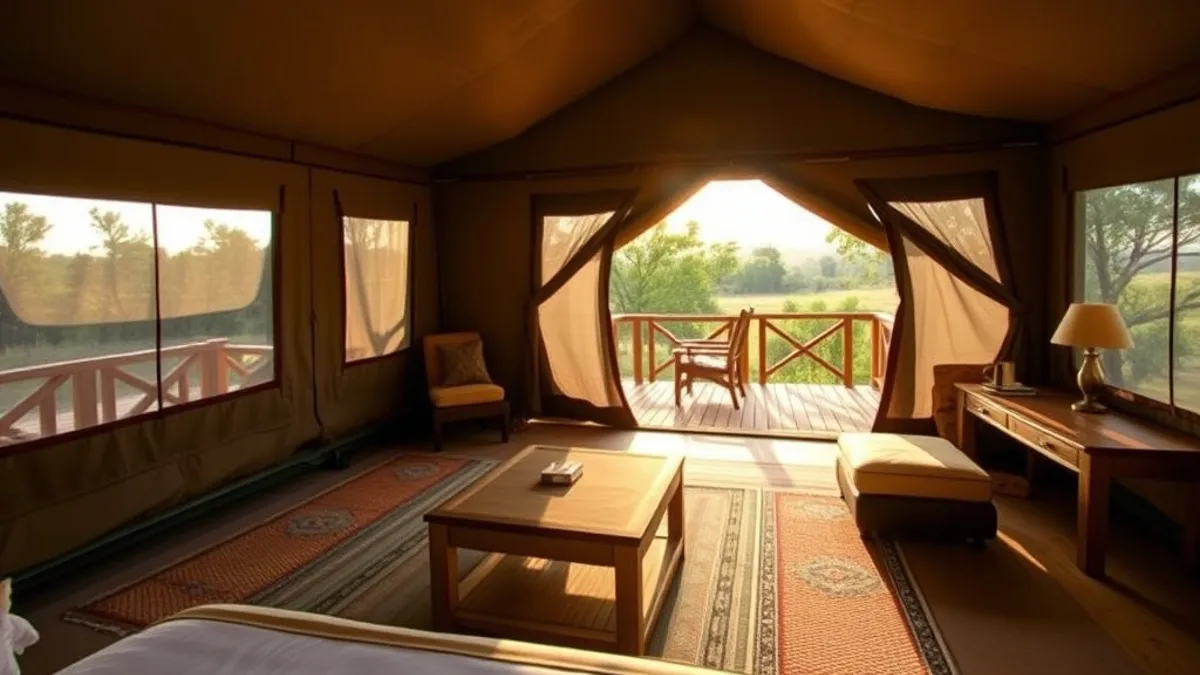
The term “safari tent” covers a wide range of accommodations, but the classic version is a permanent or semi-permanent canvas structure, usually spanning 40-100 square meters. It sits raised on a platform, and inside you’ll find a proper bed, real furniture and an en-suite bathroom. This is not something you pitch yourself after a long drive.
Unlike a pop-up camping tent, these structures are furnished like hotel rooms. Think crisp linens, proper lighting, hot showers and, in many cases, a private deck facing the bush. Some camps keep things simple and sociable, with shared dining around a long table, while others compete with high-end city hotels in comfort and service. At the ultra-luxury end, nightly rates can exceed $1,500.
Why canvas beats a hotel room
The real appeal is proximity to nature. Canvas walls are thin by design, which means you hear lions, hyenas and birdsong at night instead of traffic. You fall asleep to the sounds of the bush and wake up to them too, all without giving up a comfortable bed or a hot shower. It’s the closest most travelers will get to sleeping in the wild, with a safety margin that makes it enjoyable rather than nerve-wracking.
Inside the Tent: What a Stay Actually Feels Like
Step inside a safari tent and the first thing you’ll notice is that it feels more like a stylish room than a shelter. The walls zip up and include mesh screens, so the tent breathes during the day but keeps insects out when you close it at night. Most tents feature a four-poster or king bed, a writing desk, charging points and power from solar panels or a generator. Be aware that some camps switch off lights late at night, so a small flashlight on your bedside table comes in handy for midnight trips. Canvas also carries sound, so expect to hear every rustle, breeze and lion call as though it were beside your bed — most guests find this becomes the highlight rather than a nuisance. Temperatures can swing between warm days and surprisingly chilly nights, so pack a light fleece even in the dry season, and ask your camp whether hot water bottles or extra blankets are provided.
Bathrooms vary widely depending on the camp’s level. At the simpler end, you might have a flush toilet and a hot bucket-style shower, with water heated on request. At the top end, you’ll find full stone bathrooms with freestanding tubs positioned so you can watch the bush while you soak. Many tents also include an outdoor shower on the private deck, which is worth trying at least once. Because water is often trucked in or carefully rationed, keep showers short and ask staff about the camp’s conservation practices.
- Meals are communal: dinner is usually served around a shared fire or in a dining tent, with set menus rather than à la carte choices, so dietary needs should be flagged when you book.
- Dawn wake-up calls are part of the deal: staff knock softly before your morning game drive with tea or coffee delivered straight to your tent, often before the sun is up.
- Expect wildlife to pass close by: many tents have no fencing around them, so an escort may accompany you after dark and you’ll learn quickly to zip up at night.
When to Go: Africa’s Safari Seasons Explained
Timing is the single biggest factor in whether an African safari tent trip delivers. Wildlife moves with the seasons, and so do prices, so it pays to match your dates to your priorities.
Dry season: the classic safari window
East Africa, covering Kenya and Tanzania, is at its best from June to October, when the weather is dry and cool. If you want the Great Migration, plan for the river crossings, which happen roughly between July and September in the Masai Mara and Serengeti. Southern Africa, including Kruger, Botswana and Namibia, runs on a similar rhythm with its dry season from May to October, when thinning vegetation makes animals easier to spot as they gather at waterholes.
Green season and desert escapes
From November to March, the green season brings afternoon rains, lush scenery and newborn animals, with rates typically 20-40% lower than peak months. Birdwatchers should favour these months too, since migratory species arrive and the landscapes photograph beautifully. Desert destinations work on a different calendar: Morocco’s Sahara camps are best from October to April, when nights are cold but days are pleasant instead of dangerously hot. Check the exact conditions for your chosen region before locking in dates, as patterns vary from year to year.
Where to Sleep Under Canvas: Africa’s Great Glamping Regions
Choosing where to sleep under canvas matters as much as choosing when to go, because Africa’s great glamping regions offer completely different experiences. Some put you in the path of a million migrating wildebeest, while others trade game drives for dunes and star-filled skies.
The classic migration country
Tanzania’s Serengeti and Kenya’s Masai Mara are the heartland of the tented safari camp. Many here are migration-focused, positioning guests close to the Great Migration river crossings, which roughly run July to September. Some are mobile camps that pack up and shift location with the herds, so you’re never far from the action. Accommodation is often simpler than a permanent lodge, but the trade-off is proximity to wildlife that’s hard to beat.
Botswana’s Okavango Delta works differently. Water-based camps here are reached by mokoro, a traditional dugout canoe poled quietly through the channels. You’ll spot wildlife from the water itself, gliding past elephants, hippos and antelope at a pace that vehicles can’t match.
Desert skies and first-timer favorites
South Africa’s private reserves near Kruger National Park are a smart pick for first-timers. They’re fenced, malaria risk is manageable, and big five sightings are near-guaranteed thanks to experienced trackers and a dense concentration of game.
Namibia pairs desert tented camps with the towering Sossusvlei dunes, and thanks to some of the world’s darkest skies, stargazing from your deck becomes a nightly event in itself.
North Africa offers a different style entirely. Berber-run desert camps in Morocco’s dunes come with layered rugs, drums around the fire and camel treks at sunset rather than game drives. It’s glamping as cultural experience, and it pairs beautifully with a city stay in Marrakech or Fes.
The Daily Rhythm: Game Drives, Sundowners and Bush Nights
A safari camp runs on a rhythm shaped by the animals, and once you settle into it, the days feel effortless. Activity peaks at dawn and dusk when wildlife is most active, so your schedule follows the sun rather than the clock.
Expect a wake-up call between 5:30 and 6:00 am, often with tea or coffee delivered to your tent. The morning game drive runs about 3 to 4 hours, and you’ll return to a full brunch rather than a rushed breakfast. Midday belongs to the heat: nap on your private deck, read, or watch waterhole traffic from camp. Afternoon tea precedes the second game drive, which ends with a sundowner drink at a scenic spot before you head back after dark.
Evenings revolve around the campfire. Dinner is served, guides recount the day’s sightings, and the sounds of the bush become your only soundtrack. If your schedule allows a slower trip afterward, the same slow-travel mindset works well in places like Provence hideaways for lavender air and slow French countryside mornings, where mornings and evenings also set the pace.
Beyond the standard game drive
- Night drives: Where permitted, these use spotlights to reveal nocturnal animals you’ll never see by day, including leopards on the move, hyenas on the hunt and bushbabies leaping between branches.
- Walking safaris: Led by armed guides, these add-ons get you out of the vehicle to track animals on foot and learn to read spoor, insects and plants up close.
- Hot-air balloon flights: These typically launch at dawn over the savanna, drifting silently above herds before landing to a champagne-style bush breakfast.
Budgeting and Booking Your Safari Tent Stay
Safari tent glamping spans a wide price range, and knowing where you sit on it makes planning far easier. Rates reflect not just the tent itself, but the exclusivity of the location, the quality of the guiding team, how remote the camp is and how many guests it hosts at once. A small, fly-in camp deep in a private concession costs far more per night than a larger tented property near a main park gate, even when both look similar in photos. Decide your comfort tier before you start comparing camps, because the differences between them are mostly about location and service rather than the canvas.
One final tip: ask about single supplements, child policies and charter costs before you commit, as these vary widely between camps and can shift your total meaningfully. Some camps welcome children above a certain age only, while others charge a substantial premium for solo travelers. Light-aircraft transfers between camps are often billed separately, and luggage limits on these flights typically sit around 15 kg in soft duffel bags, so leave the hard suitcase at home. A quick email to the camp or your operator early in the process saves surprises later, and it also gives you a feel for how responsive and helpful their team is before you hand over a deposit.
- Set your budget tier: Entry-level luxury tents start around $150 per night and are still comfortable. Mid-range camps typically run $400-800, while top-end lodges exceed $1,500 per night with private guides and plunge pools.
- Check what the rate includes: Rates usually cover accommodation, meals, game drives and park fees, but always confirm whether drinks, laundry and light-aircraft transfers between camps cost extra.
- Book early for peak season: For June-October travel, reserve 6-12 months ahead. Camps in the migration window fill first, and the best-value tents go before the rest.
- Consider green season dates: Traveling November to March brings afternoon rains, lush scenery and noticeably lower rates. Note that some camps close entirely during heavy rains, so check your specific camp’s calendar.
- Pack for light aircraft: Flying between camps is common, and these flights typically cap luggage at around 15 kg in soft bags. Skip the hard suitcase entirely; a duffel bag is the safari standard.
Your First Night Under Canvas, Summarised
Safari tent glamping is simpler than it sounds: a hotel room built from canvas. Tents typically span 40-100 square meters, come with en-suite bathrooms and private decks, and put you close enough to the bush that the night sounds come straight through the walls. The experience is real comfort, just closer to the lions.
Timing decides everything. Aim for June to October in East Africa if you want peak wildlife viewing and the migration, May to October in the south, and October to April for desert camps in Morocco and the Sahara. Costs run from about $150 to over $1,500 per night, and flexible travelers can find green-season discounts of 20-40%. Book peak-season trips 6-12 months out, and you will trade a hotel room for the most memorable sleep of your trip. If this helped you plan, leave a comment or share the article.