You finally arrive at the resort you booked months ago, drop your bags, and head out for a swim — only to find yourself wandering past three pools, two restaurants and a conference center before giving up and asking a staff member for directions. If this sounds familiar, you are not alone. Guests at sprawling properties routinely lose their entire first day to confusion, simply because nobody explained how the resort grounds are actually organized.
The good news is that large resorts follow surprisingly predictable patterns. Once you understand how zones are laid out, how to read the map before you book, and how to estimate walking times, even a huge property starts to feel manageable. This guide walks you through typical zoning, choosing the right area for your travel style, using shuttles and buggies, planning your daily routine around the layout, and how grounds differ at beach, mountain and city-edge resorts. By the end, you will know exactly what to look for before booking and what to ask at check-in.
How Resort Grounds Are Typically Zoned
Most large resorts divide their grounds into four core zones: accommodation, dining and entertainment, pools and wellness, and the beach or nature edge. The exact arrangement varies by property, but this basic structure repeats itself almost everywhere, from Caribbean all-inclusives to Mediterranean coastal hotels. Learning to spot these zones is the first step to understanding any map you are handed.
The logic behind the placement is usually deliberate rather than random. Family zones with kids’ pools, playgrounds and activity schedules are typically placed near the main building and lobby, where foot traffic is heaviest and noise carries least harm. Quiet adult zones sit at the far end of the property, deliberately separated from the splash zones and evening shows. If you are a light sleeper, this single detail can make or break your stay.
Where wellness and hidden areas fit in
Wellness and spa areas are often set in the quietest corner of the grounds, sometimes a 10-15 minute walk from the lobby. This distance is intentional — spa operators want their guests to feel removed from poolside music and children’s activities. The trade-off is that a spa appointment becomes a small journey, so plan your timing accordingly.
Finally, keep in mind that not every gap on the map is a mistake. Back-of-house zones such as staff quarters, kitchens, laundry facilities and loading docks are hidden from guest view, but they explain those odd blank spaces between room blocks. If your room sits next to one of these blank areas, you may occasionally hear early-morning deliveries, so it never hurts to ask at booking whether your block borders a service area.
Reading a Resort Map Before You Book
Before you click “book,” spend ten minutes with the resort map instead of the photo gallery. The distance from your chosen room category to the beach and main pool is the single most important detail on the page. A 5-minute walk versus a 15-minute walk changes the whole stay, especially if you plan to return to your room several times a day for naps, sunscreen refills or a change of clothes.
Room labels tell you more than you might expect. Blocks marked garden, ocean-view or poolside are usually mapped in order of distance from the water, and the price reflects it. Poolside and beachfront categories typically cost 15-30% more than garden views in the same resort. Whether that premium is worth it depends entirely on how much time you plan to spend in your room versus the water. For a different take on how grounds work when space is tight, this guide to city-edge resort retreats in Singapore shows how compressed layouts change the math.
Dining is the other factor to count before booking. All-inclusive mega-resorts often spread 4-8 restaurants across separate zones, which means dinner can turn into a hike if you do not check locations first. Use this quick checklist when studying any map:
- Trace your actual daily route: draw a line on the map from your room block to the beach, the main pool and the breakfast venue — if the line crosses the entire property twice, reconsider the room category.
- Match restaurants to room location: note which of the dining venues sit closest to your block, since these will become your default choices on tired evenings.
- Look for shuttle stops: on large properties, buggy routes and stops are usually marked — a room near a stop can effectively halve your walking even in a distant zone.
- Check the scale legend: most resort maps are not to scale in the way street maps are, so confirm whether distances are shown in meters or walking minutes before you judge them.
Noise sources deserve their own scan of the map. Pool bars, show stages and kids’ clubs all broadcast sound well beyond their footprint, and evening entertainment can run late. If quiet matters to you, choose a room at least 100+ meters away from these spots — the map lets you measure this before you pay, not after you arrive.
Choosing the Right Zone for Your Stay Style
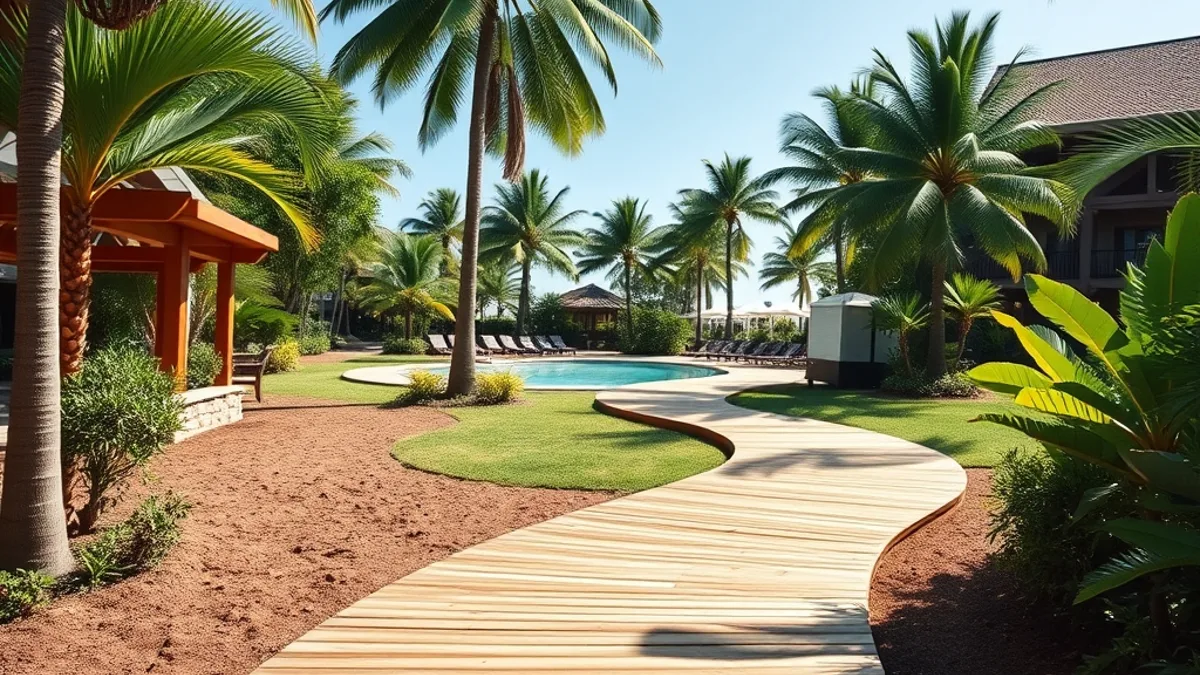
Choosing the right zone comes down less to the resort itself and more to the kind of days you want to have. Beachfront zones suit swimmers and sunset watchers, who can step straight from their room onto the sand and stay for the evening light show. The trade-off is convenience: dining venues usually cluster near the lobby and main building, so beachfront rooms often mean the longest morning walk to breakfast, especially on large properties that commonly span 10-40 hectares.
Garden-zone rooms sit at the opposite end of the spectrum. They are the quietest and typically the cheapest category, with green surroundings and none of the poolside soundtrack. That makes them ideal for guests who plan full-day excursions — if you leave the resort every morning on tours, hikes or dives, you are paying for a bed and a shower, not a view you will rarely see. The savings can even cover an upgrade elsewhere: prime rooms near the main pool or beach usually cost 15-30% more than garden-view rooms in the same resort.
Pool-central zones are where families should look first. Kids’ clubs, shallow children’s pools and family activities cluster around the main pool area, so a room nearby turns every day into a short commute. You will trade some peace and quiet for convenience, but with young children that trade is usually obvious.
Wellness-zone rooms near the spa suit rest-focused trips where the schedule is massages, saunas and slow mornings. Because these zones sit deliberately far from the show stages and bars, expect a proper walk to evening entertainment — build in a buffer of 20-30 minutes if you have a dinner reservation or show booked on the far side of the property. For specific profiles, here is how each zone breaks down:
- Beachfront: best for guests who value sunset views and instant water access, but check whether beach bars or water-sports equipment racks sit directly below your block, as these add daytime noise.
- Garden: look for blocks that border the nature edge rather than service roads, since some garden rooms back onto back-of-house areas that start deliveries early.
- Pool-central: ask whether your block faces the main pool or a secondary quiet pool — many resorts have both, and the difference in noise level is significant.
- Wellness: confirm the spa’s opening hours before booking, because a room near a spa that opens late removes part of the advantage of being close to it.
Getting Around: Walking Times, Shuttles and Buggies
The fastest way to feel in control of a big resort is to translate the map into walking time before you set off. Use the rough rule that one minute of walking covers roughly 70-80 meters. If your room sits 600 meters from the beach, plan on eight minutes each way — not the two minutes the map’s small scale tricks you into imagining.
On large properties, shuttle buggies do much of the heavy lifting. They typically run every 10-20 minutes from around 7:00 to 23:00, linking the lobby, pool complex and beach zones. Spend your first morning learning the main stops and their direction of travel, and you will save yourself plenty of hot, aimless waiting later in the week.
Timing your commitments
Walking times on resort maps describe ideal conditions, not the reality of flip-flops, afternoon heat or a slow elevator at the villa block. When you have a spa appointment or a dinner reservation in a far zone, allow a 20-30 minute buffer. Arriving early costs you a few minutes on a terrace; arriving sweaty and late costs you the start of your massage.
Finally, ask at check-in for a printed room-location map showing exactly where your block sits. Staff hand these out on request, and on properties over 20 hectares a good map can cut your daily walking time by up to half. Mark your room, the closest buggy stop and one shortcut path on day one, and the whole property shrinks overnight.
Planning Your Daily Routine Around the Grounds
Once you understand how the zones fit together, you can shape each day so it flows in one direction instead of zigzagging across the property. The simplest habit is clustering: keep beach mornings, pool afternoons and spa evenings in their own zones, so you move across the grounds once or twice a day rather than five times. On a 10-40 hectare resort, that single decision can easily save you half an hour of daily walking.
Meal bookings deserve the same logic. Book dinner venues closest to your room block for the first and last nights of your stay, when travel fatigue and packing stress are at their peak. Save the far-flung beachfront restaurant for a mid-stay evening, when your legs know the route and the sunset walk feels like a treat rather than a trek. This routine works especially well at slower-paced coastal stays — if that style appeals, take a look at Joywater resorts in Thailand for spa rituals and beach-soft mornings.
Finally, sequence your day around opening patterns rather than fighting them. Keep these differences in mind:
- Early risers: main pools and gyms usually open first, making them your natural morning anchors before the heat and the crowds build.
- Late starters: pool bars, show stages and specialty restaurants come alive after mid-afternoon, so plan quiet-zone time earlier in the day.
- Coastal timing: on island and shoreline resorts, check the tide pattern and the sun’s angle — low tide and morning light usually bring the calmest water and the best beach photos.
Resort Grounds in Different Settings: Beach, Mountain and City Edge
The same zoning logic plays out very differently depending on where a resort is built. At the classic beach resort, everything lines up along a single shoreline: rooms in one or two rows, the pool deck in the middle, dining near the lobby and the sand at the far edge. Distances stay predictable, and once you know your room block, you can estimate any walk to the minute.
Mountain and forest properties are another story entirely. Zones spread across slopes rather than flat ground, so the walk from your chalet to the spa might involve a real climb, not just distance. Altitude changes are exactly why shuttle use matters more than walking at these resorts — a five-minute buggy ride can replace a fifteen-minute uphill hike. To see how this plays out in practice, have a look at Everwave resorts in Switzerland for mountain wellness and fresh-air restoration.
Vertical resorts: city edge, desert and cliffs
City-edge resorts compress the same zones into towers and podium levels. Accommodation stacks upward, while pools, restaurants and lounges cluster on a podium floor or rooftop. Here, lifts replace long walks, and your main concern is learning which elevator bank serves which level rather than how far anything is.
Desert and cliff-side properties add a third dimension: terraces. Dining may sit on one level with pools and sun decks on another, so every move between them involves a stair climb or a ramp. Factor those vertical transitions into your daily plan, especially after dinner when the stairs feel steeper, and choose a room on the terrace that hosts the facilities you will use most.
Wrapping Up Your Resort Grounds Game Plan
That first-day confusion at a sprawling resort usually comes down to one thing: nobody explained how the grounds are actually laid out. Once you know that most properties follow predictable zoning — accommodation blocks, dining and entertainment, pools and wellness, plus the beach or nature edge — the map stops looking like a puzzle and starts looking like a plan.
The rest is preparation. Read the map before booking and match your room zone to your stay style, whether that is beachfront, garden-quiet, pool-central or spa-adjacent. Use rough walking-time estimates, learn the shuttle schedule on day one, and ask for a printed room map at check-in. With those three habits, even a 40-hectare property feels manageable instead of exhausting. If this helped you plan your next stay, leave a comment or share the article with a fellow traveler.