Most travelers love the idea of glamping until a practical question creeps in: will there actually be a real bathroom, a hot shower, and power for charging a phone? The honest answer is that glamping site facilities vary enormously, from shared bathroom blocks a short walk from your tent to fully plumbed lodges with heated floors. Understanding those differences before you book is the key to a trip that feels like an upgrade rather than a compromise.
This guide walks you through exactly what to expect at each comfort level, starting with how facilities scale from budget safari tents to luxury units. We’ll then cover bathrooms, showers, and power in detail, look at heating, water, and kitchen setups, and finish with practical advice on matching facilities to your travel party and booking smart. By the end, you’ll know which questions to ask and which tier of glamping site facilities fits your trip.
What Glamping Site Facilities Really Mean at Each Comfort Level
Glamping site facilities scale with price, and knowing the tiers helps you set expectations before you pay. At the budget end, safari tents and bell tents usually come with shared bathroom blocks located 20-50 m from your tent. That’s a perfectly pleasant arrangement on a dry summer evening, but it changes the experience if you’re making the walk at midnight in the rain. These shared blocks are typically clean and well maintained, but they are communal by design.
Mid-range: en-suite bathrooms and wet rooms
Step up to mid-range lodges and yurts and you’ll often find private en-suite bathrooms or dedicated wet rooms attached to your unit. This is the tier where glamping starts to feel genuinely hotel-like: your own toilet, sink, and shower, steps from your bed. En-suite bathrooms appear in roughly 60-70% of luxury glamping units, so they’re common but not universal — always confirm rather than assume.
At the top of the range, luxury units typically priced around $300-600 per night usually include full plumbing, flushing toilets, and heated floors. Here the facilities question mostly disappears; the real differences lie in service and location.
One phrase to watch when booking
Be careful with the words “private facilities” in listings. They can mean an en-suite bathroom inside your tent or lodge — or a private bathroom in a separate building reserved for your unit. Both are better than a fully shared block, but they’re not the same thing. If the listing is unclear, email the site and ask directly whether the bathroom is en-suite or detached.
Bathrooms: Shared Blocks vs En-Suite Wet Rooms
Bathroom arrangements are the single biggest dividing line between glamping tiers, so it pays to understand exactly what you’re booking. Shared bathroom blocks are the norm at budget sites, and in peak season (June-August) one bathroom can serve 6-8 tents. Do the math on a busy morning and you’ll see why queues form in July and August: everyone wakes up around the same time and heads for the same sinks and showers. If you’re booking a shared-facility site in peak season, plan your morning routine early or late to skip the rush.
En-suite wet rooms solve this entirely. They usually combine toilet, sink, and shower in one fully waterproofed space, so water drains across the whole floor rather than pooling in a shower tray. It’s a compact, practical design you’ll find in many mid-range lodges and yurts — and it’s especially welcome on rainy mornings at countryside sites like the ones featured in this guide to slow French countryside mornings in Provence.
Eco-sites often use composting toilets instead of flush systems. They work well in practice, but they need a quick mindset shift: no flushing, sometimes a sawdust or wood-chip scoop after use, and a slightly different smell profile than you’re used to. Most first-timers adjust within a day.
Finally, don’t assume the extras are included. Provision varies widely between sites, so before booking, ask specifically about:
- Towels — some sites supply bath towels for each guest, others charge a small rental fee or expect you to bring your own
- Toiletries — ranges from full-size dispensers in luxury units to nothing at all in budget bell tents
- Daily cleaning — en-suite wet rooms are sometimes serviced daily, while shared blocks may be cleaned only once or twice a day at quieter sites
- Hand towels and bath mats — small details that make a wet room more comfortable but are frequently omitted
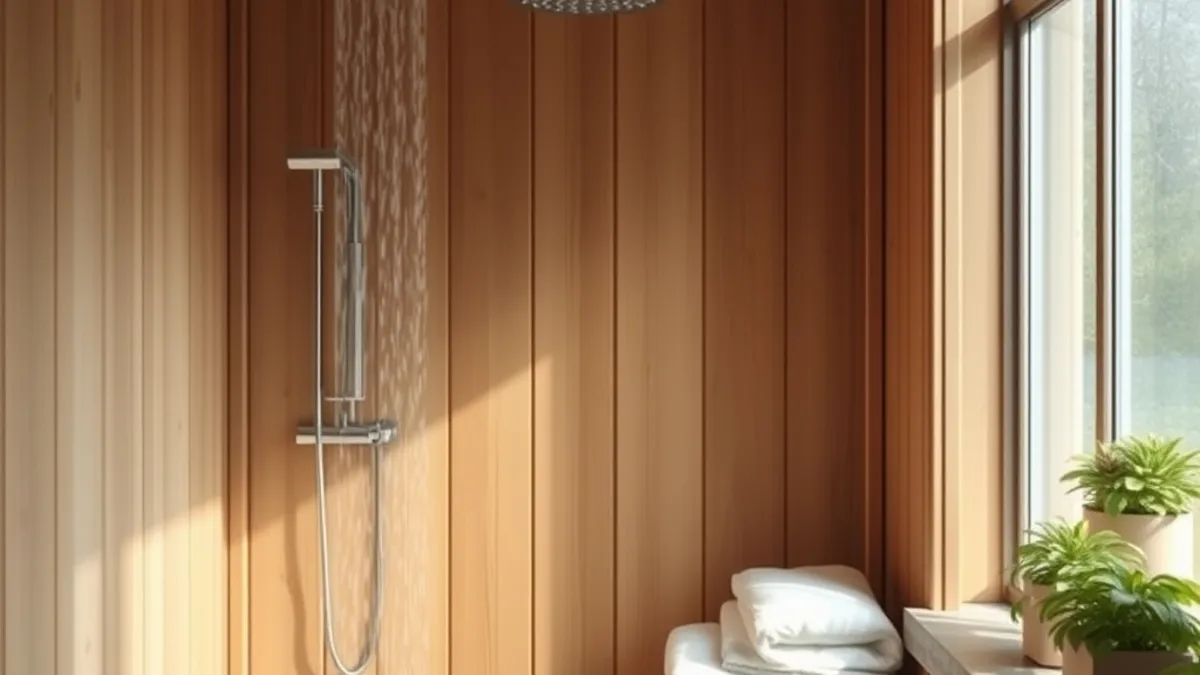
Showers: Hot Water, Pressure, and Eco Limits
Hot water is where eco-focused glamping sites differ most from hotels, and it’s worth understanding the mechanics before you book. Many environmentally conscious sites cap showers at 3-5 minutes using timer buttons on the wall or low-flow shower heads. It sounds restrictive, but a timed shower is usually still comfortably warm and long enough — you simply learn to lather efficiently. If a long, lingering shower is non-negotiable for you, choose a site with gas or mains heating rather than an eco-limited setup.
Why hot water can run out
Gas or solar water heating is common at glamping sites, and both have limits. Solar-heated tanks depend on the day’s sun, and gas systems often rely on a finite tank of hot water. The practical result: after the first evening rush, when everyone showers after a day of activities, hot water can run out. Ask the site how their system works and whether the tank recharges overnight. Sites with larger tanks or on-demand gas heaters rarely have this problem.
Wilderness showers and shoulder-season perks
At wilderness sites, wood-fired hot tubs and outdoor bucket showers are a feature, not a flaw. Heating water over a fire and showering under the open sky is part of the experience — approach it with the right attitude and it often becomes the trip’s most memorable ritual.
Timing matters, too. Shoulder-season stays in May and September mean shorter queues and more reliable hot water, simply because fewer guests are competing for the same tanks and shower stalls. If your dates are flexible, a shoulder-season booking gives you the same facilities with far less waiting.
Power: Solar, Generators, and What You Can Actually Plug In
Power is the facility that surprises glampers most often, and it catches people out in both directions. Many safari tents, yurts, and eco-cabins run on solar panels backed by batteries, and those systems are designed for essentials only: LED lighting after dark and USB ports for phone charging. High-draw appliances are off the table — a hair dryer or electric kettle can overload the system in seconds, so leave them at home unless the site explicitly allows them. Solar power typically supports lighting and phone charging but not hair dryers or high-wattage heaters, so pack accordingly and set expectations with anyone traveling with you who relies on styling tools or other electric comforts each morning.
Off-grid sites that use generators typically run them for only 4-6 hours per day, usually in the evening. That window is when you charge devices, and some sites switch everything off overnight, so a fully charged power bank becomes genuinely useful rather than a nice-to-have. Fully powered lodges, by contrast, offer standard wall sockets and few restrictions, but check the voltage — 110V and 230V are both common depending on the country — before packing appliances from home, and bring a plug adapter if needed.
- Battery banks: A 10,000-20,000 mAh power bank usually covers two to three full phone charges, enough to bridge the gap between evening generator windows.
- Headlamps: Paths between tents and facilities are often unlit by design, so a headlamp with fresh batteries beats a phone torch for hands-free trips to the bathroom block.
- Car charging: Some sites let you top up devices from a 12V car socket — worth asking about when comparing bookings.
- Cold alternatives: If you need hot drinks, a camping stove outside your tent or the communal kitchen kettle solves what a solar setup cannot.
Heating, Water, and Kitchen Facilities Worth Checking
Heat, water, and cooking arrangements vary more between glamping sites than almost any other category. In most tents and yurts, a wood stove is the main heat source, which means you (or the staff) light it each evening. Before you book, ask whether firewood is included or charged per bundle — over a week-long stay, that difference adds up.
Cooking: communal vs private
Communal kitchens are the norm at safari-style and eco-sites: expect shared stoves, fridges, and basic cookware, plus the usual give-and-take over counter space. Private kitchenettes appear mainly in lodges and cabins, and they usually include a two-burner hob, a small fridge, and enough utensils for simple meals rather than full-scale cooking.
Water and Wi-Fi realities
Remote sites often receive potable water by tank delivery, so drinking water may come from a communal refill station rather than the tap in your unit. Confirm availability before you arrive, especially if you are heading somewhere truly isolated — the remote hideaways around Khuvsgul are a good example of where a quick question to the operator saves a lot of guesswork. Wi-Fi at wilderness sites is frequently satellite-based and slow; treat it as a bonus for checking messages, not a given for streaming or video calls.
How to Match Glamping Site Facilities to Your Trip and Book Smart
Once you understand what facilities tiers mean, matching them to your travel party becomes a practical exercise rather than a guessing game. The key is being honest about how your group actually travels, not how you imagine the trip will go. A couple celebrating an anniversary has very different needs from a family with a toddler and a dog, and the tier you choose should reflect that reality. It also means booking on the right timeline, because en-suite units and shared-facility sites fill up on very different schedules.
- Identify your non-negotiables. Families with toddlers should prioritize en-suite bathrooms and on-site laundry; a wet room steps away from your tent turns potty training and muddy clothes from an ordeal into a minor errand. Groups of friends, on the other hand, may happily trade a private bathroom for a lower rate and a livelier communal atmosphere.
- Book on the right timeline. En-suite luxury units for June-August typically need 3-6 months’ lead time, while shared-facility sites generally require only 1-2 months. If you miss the window, ask about cancellations — popular sites do get last-minute openings.
- Consider the shoulder season. May and September stays offer the same facilities with far shorter bathroom queues and lower rates — often around $120-250 per night versus peak-season prices for equivalent units. The weather is usually milder for hiking and campfires, too.
- Study the site map. A “short walk” to the bathroom block reads very differently at 2 a.m. in the rain; look at actual distances and terrain, not just the phrase. Sloped ground, gravel paths, and unlit trails all matter more than the marketing copy suggests.
Spending twenty minutes on these steps saves the kind of disappointment no review photo can fix. Match the tier to your party, book within the right window, and the facilities will feel like a feature of your trip rather than a compromise. And if you are torn between two tiers, remember that a slightly simpler unit booked early beats a luxury unit you never managed to reserve at all.
Choosing Glamping Site Facilities with Confidence
Glamping doesn’t have to mean gambling on your bathroom situation. Facilities fall into three clear tiers: shared bathroom blocks, private en-suite wet rooms, and fully plumbed luxury lodges with real plumbing and heated floors. Once you know which tier a site sits at, you can picture your stay accurately before you book.
The two things worth double-checking are showers and power, since that’s where eco-focused sites differ most from conventional ones — think 3-5 minute shower limits and solar setups that handle lighting and phone charging but little else. Match the facilities tier to your travel party, and remember that en-suite units need booking 3-6 months ahead for summer, while shared-facility sites require less lead time. If this guide helped you plan your trip, leave a comment with your own glamping questions or share it with a friend who’s still on the fence.