Most travelers hear “glamping in Kenya” and picture a single canvas tent on the savanna. The reality is far more varied. A tented suite with a private plunge pool in the Maasai Mara, an eco-dome on a Laikipia conservancy, and a breezy safari-style room near Diani Beach are all glamping, but they offer completely different experiences and price levels.
This guide breaks down what Kenyan glamping actually looks like today, region by region. We’ll compare the Maasai Mara migration circuit with Amboseli, Laikipia and the Rift Valley lakes, then head to the coast for tented stays near the Indian Ocean. You’ll also find realistic cost ranges, the best times to go, how far ahead to book, and how to judge whether a camp’s rate is genuinely good value. By the end, you should be able to match a region to your priorities and budget before you commit to anything.
What Glamping in Kenya Actually Looks Like Today
Glamping in Kenya has moved well beyond the simple safari tent pitched on a grass plain. At the top end, permanent tented suites come with private plunge pools, outdoor bathtubs and decks positioned for sunrise game viewing. Elsewhere you’ll find eco-domes built with rammed earth and canvas, and “star beds” where your mattress rolls onto an open-air platform so you sleep under the sky with a guard nearby.
The common thread is comfort. Expect sturdy canvas walls on permanent frames, real beds with proper mattresses, en-suite bathrooms with hot showers, and lighting and charging powered largely by solar. This is not camping gear you carry yourself; the tent is the room.
How pricing works
Pricing models differ by region, and this trips up many first-time visitors. Most safari camps in places like the Maasai Mara quote an all-inclusive rate per person, covering your tent, meals, game drives and often drinks. Coastal properties and Rift Valley sites typically price per room or per night, with meals and activities added separately. Understanding which model applies matters, because a per-person rate and a per-room rate can look similar while covering very different amounts of your stay.
Check the inclusions carefully before comparing any two camps side by side.
Maasai Mara and the Migration Circuit
The Maasai Mara is the classic choice for glamping in Kenya, and for good reason. The great wildebeest migration typically peaks here from July to October, when enormous herds cross between the Mara and the Serengeti and predators follow close behind. Tented camps range from simple mid-range operations to lavish suites with butler service and views over the plains.
What you’ll pay
Mid-range tented camps run roughly $150-400 per person per night, usually including meals and game drives. High-end luxury camps start around $500 and can exceed $1,500 per person per night, generally on an all-inclusive basis. That spread is wide, so look closely at what each rate covers before comparing camps.
Getting there and booking ahead
The Mara sits about 4-6 hours by road from Nairobi, depending on your entry gate and road conditions, or you can take a 45-minute flight to an airstrip near your camp. The flight saves time and spares you rough final stretches of track, though it adds to the overall cost.
Timing your booking matters as much as choosing the camp. For the July to October peak, when the migration draws the biggest crowds and the highest rates, plan to reserve 6-12 months ahead. Last-minute deals in peak season are rare, and the best-located camps fill first.
Amboseli, Laikipia and the Rift Valley Alternatives
If the Mara feels too crowded or too costly, Kenya has strong alternatives that still deliver a proper tented-camp experience. Amboseli pairs tented suites with open plains beneath Mount Kilimanjaro, and the park’s large elephant herds are among the most photographed in Africa. On clear mornings, the snow-capped peak frames the elephants in a way no other region can match, and the cool high-altitude air makes evenings around the campfire genuinely pleasant.
Laikipia works differently. Much of the area is made up of private conservancies rather than national parks, and that changes what you can do. Activities that national parks restrict, such as guided walking safaris and night drives, are generally permitted here, so a single day can stretch from tracking rhinos on foot to spotlighting nocturnal animals after dinner. Camps tend to be smaller and more exclusive, which suits travelers who want solitude over big-game crowds.
For the lowest prices, look to the Rift Valley lakes. Camps and tented lodges around Naivasha and Elementaita often run $100-250 per night, and their elevation keeps nights cool and comfortable year-round, a welcome break after hot lowland days.
- Amboseli’s dust and light: the park’s dry, dusty lake beds create dramatic photo conditions, especially at dawn, but pack camera protection and expect fine powder on everything.
- Laikipia’s conservation focus: many conservancies reinvest visitor fees into protecting endangered species such as black rhinos and wild dogs, and guides often explain this work during drives.
- Rift Valley day trips: Naivasha’s lake supports boat trips to see hippos and fish eagles, and Elementaita’s shoreline draws flamingos when water levels suit them, making these bases good for non-safari travelers too.
- Cool evenings: at higher elevations you’ll want a fleece or jacket after sunset, even on warm days.
Coastal and Off-Beat Glamping Near the Indian Ocean
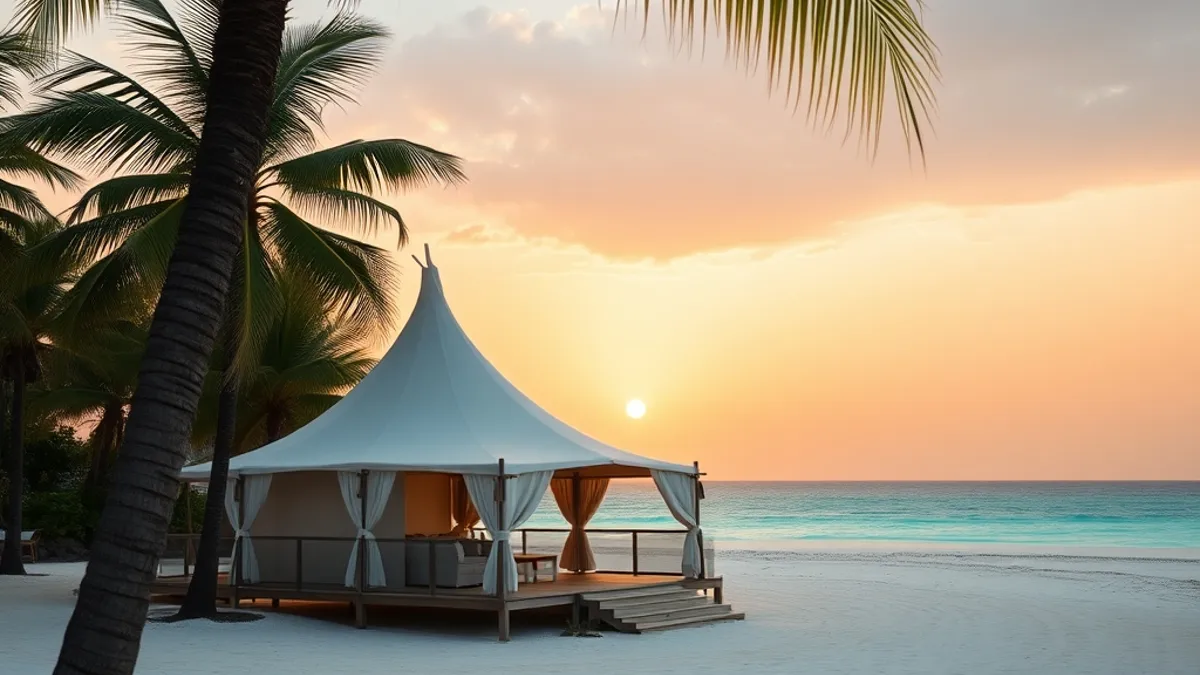
Most travelers picture glamping on the savanna, but Kenya’s Indian Ocean coastline has quietly built its own version of it. Around Diani Beach and Watamu, you’ll find tented lodges and eco-bandas that swap acacia views for palm groves and turquoise water. Rates here typically run roughly $100-350 per night, making the coast one of the more affordable ways to sleep under canvas in Kenya.
What to expect from a coastal tented stay
Coastal properties tend to be more relaxed than safari camps. Many are family-run eco-bandas with wide verandas, outdoor showers and open-air dining, while a few larger tented lodges add pools and beachfront loungers. Because canvas heats up fast in the tropics, the good properties invest heavily in shade design: high thatched roofs, deep overhangs and tent placement that catches the afternoon sea breeze. When comparing options, ask whether tents face the water and whether the layout allows air to move through.
Reef access is the other big differentiator. Watamu sits near a protected marine park with snorkeling and glass-bottom boat trips, and Diani has easy access to reef sites offshore. A property within walking distance of a reef or dive operator will shape your days far more than a slightly cheaper option a tuk-tuk ride inland.
Timing matters on the coast. The December to February dry window suits beach-focused trips best, with reliable sunshine and calmer seas. Coastal glamping also combines well with a short safari: fly from the Mara or Amboseli to the coast and finish your trip with a few barefoot nights by the ocean.
When to Go and How Far Ahead to Book
Kenya’s glamping calendar revolves around rain. Where you stay and what you pay can shift dramatically between the dry windows and the wetter months, so it pays to plan in a clear order rather than booking a camp first and hoping the weather cooperates.
Start with wildlife. The dry seasons of late June to October and December to February deliver the best game viewing and the most reliable road conditions, since tracks stay firm and animals gather at permanent water sources. If the great wildebeest migration is your priority, you’re tied to the peak migration window in the Maasai Mara, and that’s also when demand, crowds and rates all peak together.
If budget comes first, consider the long rains. From roughly March to May, rates drop noticeably and some camps close entirely for maintenance. Tracks can turn muddy and game drives take longer, but the landscapes turn green, birdlife improves, and the camps that stay open are often quiet. Photographers tend to like this window for the dramatic skies and low dust levels.
Then book backward from your dates. Small camps have only a handful of tents to sell, and the best-positioned properties during the migration fill first, so reserve as far ahead as you realistically can for that window. Outside the peak months, booking a couple of months ahead is often enough, and you may still find availability in well-regarded camps in other regions.
Whatever window you choose, confirm directly with the camp or your operator that they’ll be open and operating during your dates, especially if you’re traveling in the wetter months when schedules can shift. Ask about road access as well, since a few camps become difficult to reach after heavy rain and may require a flight transfer instead.
How to Judge Value and Choose Your Region
Glamping rates in Kenya vary enormously, and the sticker price rarely tells the whole story. A mid-range Mara camp whose rate includes meals and game drives can be better value than a cheaper room-only stay where every drive, meal and transfer is billed separately. Before you compare camps, compare inclusions.
The second filter is regional fit. Each area delivers a different version of the trip: the Maasai Mara brings the migration and, with it, more vehicles at sightings; Laikipia’s private conservancies trade big-name sightings for solitude, walking safaris and night drives; Amboseli pairs tented suites with Kilimanjaro views and large elephant herds; and Diani swaps wildlife for ocean. Decide which of those matters most to you before falling in love with a particular camp’s photos.
- Ask exactly how park and conservancy fees are handled. Some all-inclusive rates fold daily conservation fees into the price, while others add them on arrival, which can shift your real cost significantly over a multi-night stay. Fees change year to year, so confirm the current rate directly with the camp.
- Count the transfers. A camp that includes airstrip pickups and road transfers saves you arranging and paying for them separately, which matters most in remote regions like Laikipia or the far Mara.
- Scan recent reviews for tent condition, not just service. Canvas ages fast in sun and rain; reviews from the last few months will tell you whether roofs leak, zips fail or nets have holes.
- Check generator and solar hours. Many eco-camps switch off power at set times; if you need to charge camera batteries daily, confirm the schedule before you book.
- Look for mentions of specific guides by name. Repeated praise for individual guides is one of the strongest signals of a camp’s game-drive quality.
Work through these checks and the differences between camps become clear quickly, and you’ll usually find that two similarly priced properties offer very different real value.
Planning Your Kenyan Glamping Trip
Glamping in Kenya is far more varied than the single canvas tent on the savanna that most travelers picture. You can sleep under canvas on the Mara, watch Kilimanjaro from a tented suite in Amboseli, wander private conservancies in Laikipia, cool off by the Rift Valley lakes or fall asleep to the sound of the Indian Ocean near Diani and Watamu. Rates span roughly $100 to $1,500+ per night depending on region and comfort level, so there is a genuine range of experiences to match different budgets.
Timing and booking lead time matter more than camp brand, especially for the July-October migration, when peak-season Mara camps should be reserved 6-12 months ahead. The simplest way to keep everything aligned is to choose your region first, then pick a stay style that fits your budget. Have you been glamping in Kenya, or are you planning a trip? Share your questions or experiences in the comments below.