If you have ever arrived at a resort hungry, only to discover the teppanyaki restaurant is fully booked and the beachfront grill turned you away for wearing flip-flops, you already know the problem. Understanding how resort restaurants work before you travel saves you from walking up at dinner time to find every signature venue reserved out, or standing at the door while a dress code is politely enforced. The good news is that the rules are usually simple once you know them.
This guide walks through the full picture: how resort restaurants are typically organized, when to book and how far ahead, what dress codes actually require at each type of venue, typical opening hours and meal windows, and how all-inclusive plans differ from room-only dining. We also cover practical tips for island and coastal resorts, where the best sunset tables go first, and wrap up with a simple dining plan you can apply at almost any property.
How Resort Restaurants Are Organized
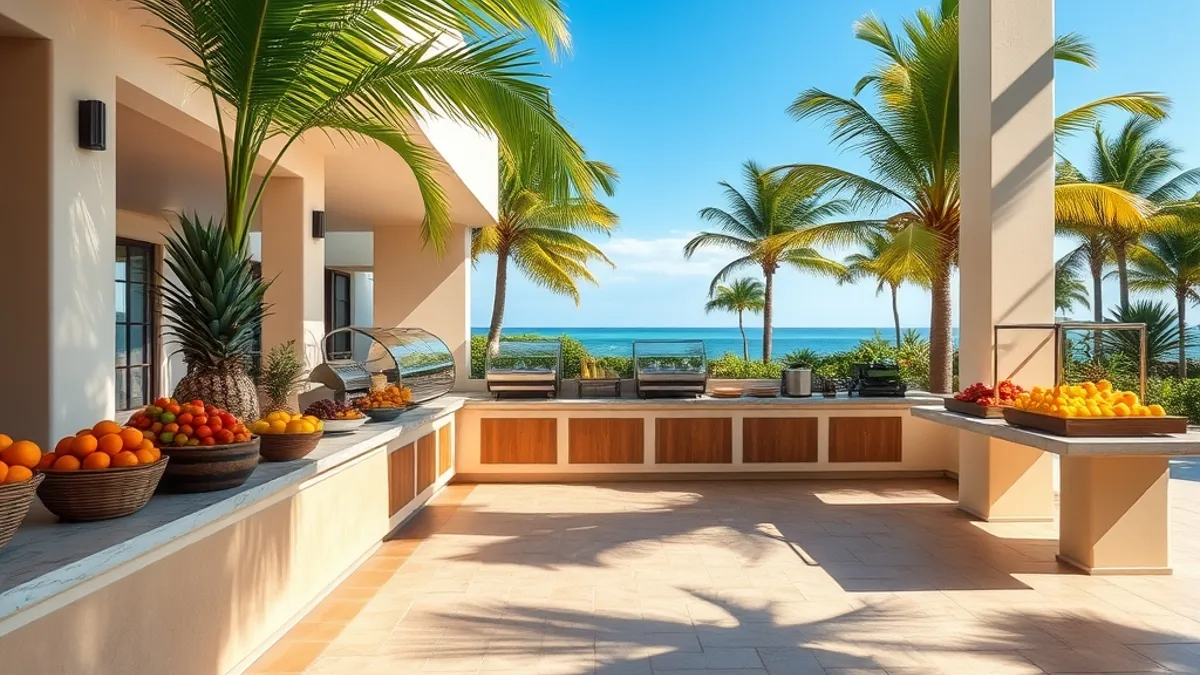
Most resorts follow a similar blueprint: one main buffet restaurant that handles breakfast, lunch and dinner, supported by one to three a la carte venues and a handful of casual pool or beach grills. The buffet is the workhorse of the property, while the a la carte restaurants exist to give guests something to look forward to during a week-long stay.
The size of the property changes the picture considerably. Smaller boutique resorts may have only a single main restaurant, meaning every dinner happens in the same room. Large resorts, by contrast, can host six to ten venues spread across different zones of the property, from a quiet adults-only wing to a lively family beach area, each with its own dining options.
Specialty venues and the rules that come with them
Specialty venues such as teppanyaki counters, seafood restaurants or chef’s-table concepts usually carry the strictest reservation rules. They often have limited seating, fixed seating times and sometimes a surcharge, so they behave more like a city fine-dining restaurant than a casual resort outlet.
Venue count per room matters more than total venue count. Most resorts hold one to three restaurants per 100 rooms, so during peak weeks the tables at smaller properties fill quickly even if the resort feels relaxed on arrival day. Check how many restaurants your hotel actually has relative to its size before assuming you can book whatever you like once you land.
Reservations: When to Book and How Far Ahead
Reservations at resort restaurants reward planning, and the timing depends heavily on the season and your meal plan. Because most resorts operate only 1-3 restaurants per 100 rooms, tables at the most popular venues disappear quickly during peak weeks, especially at smaller properties where the seat count is lowest. The steps below cover how to approach booking from the moment you confirm your stay, so your dining week is set before you even pack your bags.
- Book signature restaurants two to four weeks ahead in high season. These venues have the fewest seats and the highest demand, so last-minute availability is rare. At all-inclusive properties, guests often need to reserve sixty to ninety days out because everyone on the plan competes for the same limited tables.
- Prioritize the venues you care about most. Many all-inclusive plans cap a la carte dinners at two to three per week. Rather than spreading your bookings thinly across every outlet, decide early which specialty restaurants matter to you and use your limited slots there.
- Reserve through the official channels. Use the resort app, send a concierge email before arrival, or visit the front desk on arrival day. Walking up at dinner time rarely works, since seating lists are usually set hours in advance.
- Confirm any surcharges before booking. Premium venues may add roughly $20-60 per person even on inclusive plans. Ask exactly what is covered so the bill at the end of the evening holds no surprises.
- Reconfirm your bookings midweek. Plans change, and a quick check with the concierge can free up a slot you no longer need or snag a cancellation at a venue you missed.
Once your key dinners are locked in, you can relax and fill the rest of your week with the buffet, grills and walk-in-friendly venues. A little advance effort at the booking stage is what separates a smooth dining week from a frustrating one.
Dress Codes Explained: From Pool Grills to Signature Venues
Dress codes at resorts are not one single rule but a ladder of expectations that rises with the formality of the venue. Daytime venues accept swimwear as long as you add a cover-up, while dinner venues generally require resort casual, which for men usually means long trousers and a collared shirt. At the top of the ladder, one or two signature venues may enforce a formal code requiring jackets for men or dresses, so pack one smart outfit per person regardless of how relaxed the destination seems.
The exclusions trip up more guests than the requirements do. Most venues publish a list of what is not allowed, and it typically includes the following:
- Beach footwear: flip-flops and sandals are usually fine at pool grills but rejected at evening a la carte venues, so bring closed-toe shoes or dressier sandals for dinner.
- Swimwear: even with a cover-up, swimwear is almost always excluded after sunset, no matter how upscale the cover-up looks.
- Sleeveless shirts for men: some dinner venues require shoulders to be covered, which catches out guests used to tropical casual dress.
- Shorts at evening a la carte venues: what passes at lunch is often not acceptable at dinner, even at the same property.
The most practical advice is to check the dress code per venue rather than per resort. Rules often differ between the main buffet and the specialty restaurants, and assuming the whole property shares one standard is how guests end up changing clothes twice in one evening.
Typical Resort Restaurant Hours and Meal Windows
Resort dining runs on a schedule, and knowing the meal windows saves you from standing hungry in front of a closed door. The main restaurant is your anchor: breakfast there typically runs from 7:00 to 10:30 am. If you like to eat at 6:00 am before an excursion, or you sleep in past 10:30, room service is usually what fills those gaps.
During the day, the beach and pool grills take over. They generally serve from around 11:00 am to 5:00 pm, which means they close their kitchens well before the dinner venues open. If you plan a late lunch at 4:30 pm, expect a lighter menu and don’t count on a full dinner selection.
Dinner is the tightest window of the day. Most resort restaurants serve from roughly 6:30 to 10:00 pm, with the last seating often around 9:00-9:30 pm. Arrive late and you may be directed to room service instead.
Here’s what to keep in mind beyond the basic hours:
- Buffet breakfasts often switch to a reduced “continental” spread in the final 30-60 minutes, so early risers usually get the fullest selection.
- Pool grills frequently pause service for an hour or so in the mid-afternoon between lunch and their closing time, so check the posted schedule rather than assuming all-day availability.
- Dinner venues usually run two seating patterns: a fixed early and late slot, or open seating with a kitchen that closes before the posted end time.
- After 10:00 pm, your realistic options are typically room service or a single bar with a snack menu, and some resorts stop room service around midnight.
- Hours often shift between high and low season, so confirm the current schedule at check-in rather than relying on a printed app screen from months earlier.
All-Inclusive vs Room-Only Dining Rules
The biggest source of dining confusion at resorts comes down to what your plan actually covers. All-inclusive guests usually enjoy the main buffet without limits, but the a la carte venues are treated differently: most plans cap these specialty dinners at 2-3 per week of your stay. That means a seven-night stay might include only two or three nights at the resort’s best restaurants, with the rest at the buffet.
Room-only and half-board guests face a different trade-off. They can book the same a la carte venues as anyone else, but they pay per meal, and specialty restaurants often use set-menu pricing rather than a la carte ordering. Half-board guests should also check whether their plan credits them a fixed amount toward these dinners or whether they pay the full menu price on top of their plan.
Premium ingredients and surcharges
Even on an inclusive plan, not everything on the menu is “included.” Premium ingredients such as lobster or imported steak are frequently excluded and charged as supplements, and premium venues themselves may add a cover surcharge per person. Ask before you order, not when the bill arrives.
Drinks at dinner
One detail catches many guests off guard: some all-inclusive plans limit inclusive drinks to the bars only, meaning wine or cocktails at an a la carte dinner venue are billed separately. Others include drinks everywhere. Confirm this at the front desk on arrival day so you can budget accurately for the week.
Dining Well at Island and Coastal Resorts
Island and beach resorts think carefully about where to put their best tables, and the answer is almost always the same: the sunset-facing terrace. These seats book out first every evening, often days ahead in high season. If a golden-hour dinner matters to you, mention it when you reserve rather than hoping for a walk-in upgrade.
Tropical destinations tend to be gentler on the wardrobe, too. Places like the Maldives and Thailand favor barefoot-casual venues, where linen trousers or a sundress are plenty and jackets are rarely expected. That easing of dress-code pressure is one of the quiet pleasures of island dining, and it applies at most venues even when a resort’s main brochure lists a formal code for one signature restaurant. If you’re weighing destinations, Maldives resorts built around private blue horizons show just how relaxed island dining can feel.
The scarcity problem at overwater venues
Here’s the catch: the most atmospheric dinner spots at island resorts, overwater decks and beachfront tables, typically have the fewest seats. An overwater venue might hold only a handful of tables per night, and weather can occasionally close sections entirely. Early reservations aren’t just polite here; they’re essential if you want the table at all. Book as soon as your stay is confirmed, and have a backup venue in mind in case your first choice is full or the evening turns windy.
Wrapping Up Your Resort Dining Plan
So, can you simply walk into any resort restaurant at dinnertime? Usually not. Most properties run a mix of a main buffet, specialty venues and daytime grills, and each one plays by its own rules. Signature restaurants often book out weeks ahead in high season, and dress codes are checked at the door, not at the front desk.
The good news is that a little preparation goes a long way. Check the hours and dress code for each venue before you arrive, reserve your must-try dinners early, and pack one smart outfit per person. Do those three things and nearly every resort dining situation is covered. If this helped you plan your next stay, leave a comment or share the article with a fellow traveler.