Glamping in Ha long bay promises the best of both worlds: a night in one of Vietnam’s most dramatic seascapes without giving up a proper bed or a hot meal. The catch is that “glamping” here means two very different things. Do you sleep aboard a traditional wooden junk boat, or do you settle into a tent camp on an island beach?
Both options deliver limestone karsts, kayaking and dinners with a view, but the experience after dark couldn’t be more different. This guide breaks down how junk boat camps and tent camps actually work, what each night realistically costs, which seasons treat you best, and how to pick the right style for your trip. By the end, you’ll know whether your Ha Long Bay sunrise should happen over open water or from a quiet shoreline.
Why Glamping in Ha Long Bay Splits Into Two Very Different Styles
Ha Long Bay has split its glamping scene into two distinct styles, and understanding the difference is the key to booking the right trip. Junk boat camps are exactly what they sound like: you sleep aboard a wooden vessel styled after a traditional junk, in an en-suite cabin, while the boat anchors somewhere in the bay for the night. The boat is your hotel, restaurant and viewing deck all in one.
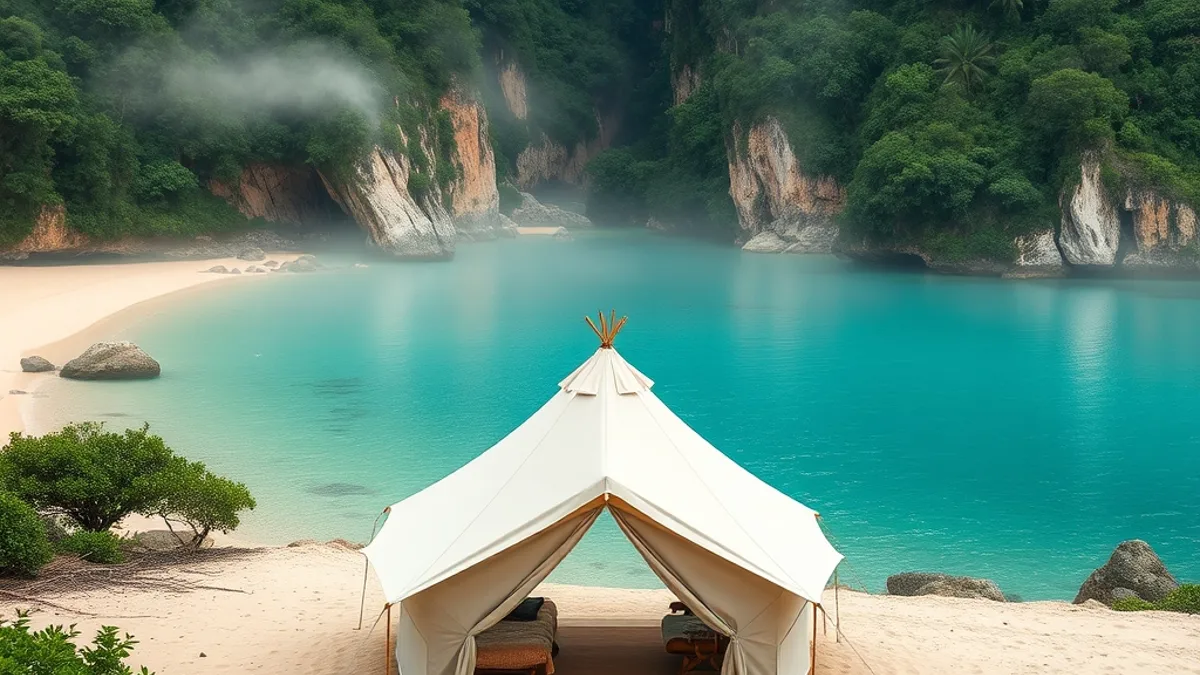
Tent camps take the opposite approach. Instead of floating, you stay put on an island, usually in a large canvas tent pitched on a beach or a hillside clearing. Facilities tend to be shared or semi-private rather than en-suite, and the pace of the stay is slower and more grounded.
What stays the same
Here’s the reassuring part: both styles typically include meals, kayaking and guided excursions such as cave visits. Daytime activities overlap heavily, so the real difference is where you wake up at midnight and where you watch the day begin.
That night-time setting shapes everything. On a junk boat, your sunrise unfolds over open water with dozens of karsts silhouetted on the horizon. From a tent camp, you watch the same light arrive from a shoreline, often with sand underfoot and nobody else in sight. Neither is better, but they are genuinely different trips.
Junk Boat Camps: Cabins, Decks and Life on the Water
Junk boats are the classic way to overnight in Ha Long Bay, and the newer vessels have come a long way from the spartan cruisers of years past. Cabins range from compact doubles to balcony suites, and most now include air conditioning and a private bathroom. If you’ve ever wanted the feel of a boutique hotel that happens to float, this is it. The comfort-first mindset will feel familiar if you’ve read about slow countryside hideaways in Provence — the idea is the same: comfort without losing the sense of place.
One night or two?
One-night itineraries are the most popular option. Your boat anchors in a quiet lagoon by late afternoon, which leaves daylight hours free for kayaking or a cave visit before dinner is served on board. It’s a packed but manageable taste of the bay.
Two-night cruises go further afield, reaching Bai Tu Long Bay or Lan Ha Bay, where fewer boats operate and the anchorages are noticeably quieter. If crowds bother you, the extra night is usually the difference between sharing a lagoon and having one almost to yourself.
Onboard rituals add character to either option. Sunrise tai chi on the top deck has become a near-universal offering, and evening squid fishing off the stern keeps guests entertained after dinner. Neither is compulsory, but both are part of why people remember these trips fondly.
Tent Camps: Sand, Stars and Simple Island Comfort
Tent camps trade the moving itinerary for a fixed patch of island paradise. The tents themselves are typically large canvas units pitched on wooden platforms, and this is glamping in the true sense: you get real beds, proper linens and solar lighting rather than thin mats and torches. For many travelers, it’s the first time “camping” has felt genuinely comfortable.
What to expect from facilities
Bathrooms are the main compromise. Most camps use shared bathroom blocks, so expect a short walk in the morning rather than an en-suite setup. That said, some camps have added private en-suite tents at higher rates, so if a private bathroom is non-negotiable, ask before booking rather than assuming.
The rhythm of a camp stay suits travelers who want longer, unstructured time on one island. There’s no packing up each morning or watching the scenery scroll past from a deck. Instead, you swim, kayak, read in a hammock and let the hours stretch — the opposite of a cruise’s scheduled excursions.
Evenings are where camps shine. Beach bonfires are a nightly fixture at most operations, and the stargazing is on another level: with far less light pollution than aboard a powered boat, the Milky Way is often plainly visible. If your idea of luxury is falling asleep to waves instead of an engine, a tent camp will make sense the moment you arrive.
Costs Compared: What Each Night Actually Costs
Glamping in Ha long bay looks expensive until you compare it night by night. Junk boat cruises typically run USD 130-250 per person for one night and USD 250-450 for two nights, and those fares are usually all-inclusive: cabin, meals, kayaking and guided stops come bundled together. Tent camps cost USD 60-120 per night, which sounds like a clear win on paper, especially for couples who would otherwise pay double the per-person cruise rate.
The catch is that camp prices rarely cover everything. Transfers to the remote islands where camps sit are often charged separately, and a speedboat ride can add a meaningful chunk to the bill. Some camps also treat activities as extras rather than inclusions, so a quote that looks cheap on a booking site can grow quickly. Per couple, a two-night cruise and a two-night camp can land within USD 100 of each other once those transfers are added, so always ask what the quoted rate includes before paying a deposit.
A few cost factors tend to surprise travelers:
- Top-tier rooms sell first. Balcony suites on cruises and private en-suite tents at camps sit at the very top of each price range and typically disappear weeks before standard cabins do.
- All-inclusive means fewer surprise charges. A cruise fare generally covers meals plus excursions, while camp quotes may list kayaking gear, transfers or bonfire evenings as add-ons.
- Per-person versus per-night pricing changes the math. Cruise rates are quoted per person sharing a cabin, while camp rates are per tent per night, so a couple pays double the cruise figure but only one camp rate.
When to Go: Seasons, Weather and Booking Windows
Timing shapes your Ha Long Bay glamping trip more than any cabin upgrade or tent choice. October to December brings the calmest seas and clearest skies, making it the prime window for both junk boats and island camps. Water visibility for kayaking is better, sunrises over the karsts are more dramatic, and itineraries rarely get shuffled.
The rainy season runs roughly from May to September. You can still have fine days in that stretch, but July and August carry the highest storm risk, and occasional itinerary changes are simply part of the deal. Boats may swap anchorages for sheltered water, and camps sometimes move guests on short notice.
How far ahead to book
Junk boat cabins in peak months typically need 3-6 weeks of lead time, especially if you want a balcony suite or a specific vessel. In shoulder season, booking 1-2 weeks ahead is usually enough for most operators.
Tent camps generally need less advance planning, but they have a weather weakness cruises do not: severe conditions can force a camp to close or relocate entirely. Confirm your booking is still running a day or two before you travel, and never pay the full amount far in advance without checking the operator’s weather and cancellation policy.
How to Choose Between a Junk Boat and a Tent Camp
The right choice comes down to what you want from the night, not the day. Both stay types include meals, kayaking and guided excursions, so the deciding factors are comfort, setting and logistics. A junk boat suits travelers who want en-suite comfort, a moving itinerary and sunrise over open water. A tent camp suits those who put beach time, stargazing and a lower nightly rate above onboard amenities. Neither option is objectively better; it is simply a question of whether you would rather wake up to waves against a hull or sand between your toes.
Families with young children usually find cruises easier to manage. Cabins, meals and activities are all handled in one place, so nobody has to shepherd kids across a dark beach to a shared bathroom at night. Couples and solo travelers who value quiet, on the other hand, often prefer the slower rhythm of an island camp, where afternoons can be spent swimming or reading in a hammock without any schedule to follow.
- Ask which bay the itinerary covers. Lan Ha Bay and Bai Tu Long Bay routes are noticeably quieter than central Ha Long Bay, where the highest concentration of boats anchors each evening.
- Factor in the drive from Hanoi. Most trips depart from Tuan Chau or Got harbors, about 2.5 hours from Hanoi by expressway, so plan your morning around an early pickup.
- Match bathroom expectations to your booking. If a private en-suite matters to you, verify the exact cabin or tent category rather than assuming every unit on the boat or at the camp has one.
If you still can’t decide, let the season tip the balance. Calm October-to-December seas favor boats, while clear dry nights favor the camp’s stargazing deck. Whatever you pick, confirm the details directly with your operator before paying, since itineraries and facilities can vary between vessels and camps.
Wrapping Up Your Ha Long Bay Glamping Choice
So which style wins? A junk boat pairs comfort with scenery in motion: a private cabin, drifting between anchorages, and waking to sunrise on the water. A tent camp trades onboard amenities for sand, stars and a lower price, with more unstructured time on one island. Neither is better in general — they simply suit different travelers.
If you want the best odds of calm seas and clear skies, aim for October to December, the sweet spot for either style. Beyond that, let three things decide: your budget, your bathroom expectations and your preferred bay, since quieter Lan Ha and Bai Tu Long itineraries change the feel of any stay. Whichever you pick, you will wake up to one of the most striking seascapes in Southeast Asia. If you have done both, or you are still torn, tell us in the comments or share this article with a travel partner.