A glamping proposal sounds dreamy in theory: a lantern-lit deck, a star-filled sky, a ring revealed at the perfect moment. But the reality takes planning. Pick the wrong site and you may have neighbors ten steps away. Pick the wrong season and you are shivering through the moment or watching rain hammer the canvas. The difference between magic and logistics stress usually comes down to a handful of decisions made months before you arrive.
This guide walks you through each of those decisions. We will help you choose the right stay type, whether a spacious safari tent or a glass dome under the stars, and time your booking so you get the dates and privacy you need. You will learn how to scout the setting before paying, work with hosts on decor and special-occasion packages, and build weather backups into the night itself. We also cover how to stretch the trip into a full anniversary-style itinerary, and we close with a simple checklist you can run through before you hit the book button.
Choosing the Right Glamping Stay Type for a Proposal or Anniversary
The first big decision is the type of structure, and it should follow from what you want the moment to feel like. If your plan involves a surprise setup—roses on the floor, candles along a path, a photographer hiding nearby—you need room to stage it. Safari tents and lodges give you that space. They typically offer separate sleeping and living areas, real furniture, and enough floor space that decorations do not crowd the bed. Lodges often add solid walls and doors, which helps if you are sneaking in a setup while your partner is out on a hike.
For anniversaries, think domes and cabins
Anniversary stays lean in a different direction. Glass domes and well-insulated cabins are built for lingering: you can lie in bed and watch the stars, and you stay comfortable on cold nights in a way that thin canvas rarely allows. If your celebration centers on stargazing, a slow morning, or a cozy evening with wine, these are the structures to shortlist first.
Whichever type you choose, put privacy and comfort features above aesthetics when comparing listings. A private deck gives you a natural stage for the moment itself. A hot tub turns an ordinary evening into a highlight. And a standalone unit—one tent or cabin set on its own rather than lined up with others—means no neighbors within earshot when you get down on one knee. Shared campsites with rows of units can work for casual trips, but for a proposal or anniversary, the extra cost of a secluded setup is usually money well spent.
Timing Your Glamping Proposal: Season and Booking Lead Time
Timing does more for a glamping proposal than almost any other decision. The right window gives you mild nights, thinner crowds, and a buffer if weather misbehaves. It also affects how much you pay, how flexible hosts can be, and how relaxed you feel when the moment finally arrives. Work through these steps in order:
- Pick your season first. Aim for May–June or September–October. Nights are mild enough to enjoy a deck or firepit without heavy layers, and school-holiday crowds have thinned out. You will also find hosts more flexible and attentive outside peak season, which matters when you are asking for help with staging or special touches.
- Book 3–6 months ahead. Special-occasion stays, especially private units with hot tubs or standout views, are exactly what other couples book first. Reserving in this window gives you real choice instead of whatever is left.
- Add more lead time for peak summer weekends. If you are set on a July or August Friday or Saturday, expect to need 6+ months’ notice. Some popular units fill a full season in advance, so treat those dates like event bookings rather than a simple weekend getaway.
- Plan a 2–3 night stay. This is your built-in weather insurance. If rain rolls in on night one, you still have one or two backup evenings for the proposal without paying for a second trip.
Once your dates are locked, resist the urge to schedule the proposal for a specific hour on a specific night. Treat the whole stay as a window of opportunity and let the weather decide which evening becomes the one. The extra nights also give you time to settle in, explore the property, and actually relax before the big moment. That calm shows, and it is the point of the trip.
Scouting Privacy and Setting Before You Book
Marketing photos can make any site look secluded. The only way to know what you are actually booking is to ask specific questions before you pay a deposit. Good hosts expect this from couples planning a proposal and will usually answer in detail; vague or evasive answers are themselves useful information.
The single most important question is distance. Ask directly how far the nearest tent or cabin sits from the unit you are considering, and target 100 m or more. That buffer means a conversation on your deck stays private and a photographer can work without strangers wandering into frame. While you are at it, cover these points:
- Request photos of the exact unit and its sightlines. Not the best unit in the portfolio—the one you will sleep in. Ask for a shot taken from the deck toward the nearest neighbor, so you can see whether you are looking at forest or at someone else’s hammock.
- Confirm cell coverage or Wi-Fi if a surprise depends on it. If a photographer is meeting you on site, or you plan to video call family right after the moment, verify the signal actually works at the unit itself, not just at the property entrance. Many rural sites have patchy coverage, and hosts can usually tell you honestly where it drops out.
- Ask about access and arrival logistics. Find out whether the unit is a short walk from parking and whether hosts help carry bags, so you are not fumbling with luggage in the dark while trying to keep a surprise intact.
Put these questions in writing, ideally in a single message, so you have the host’s answers on record. If a host sends fresh photos of your specific unit and answers the distance question without hesitation, that is a strong sign they will handle the special-occasion details well too.
Working With Hosts on Decor and Special-Occasion Packages
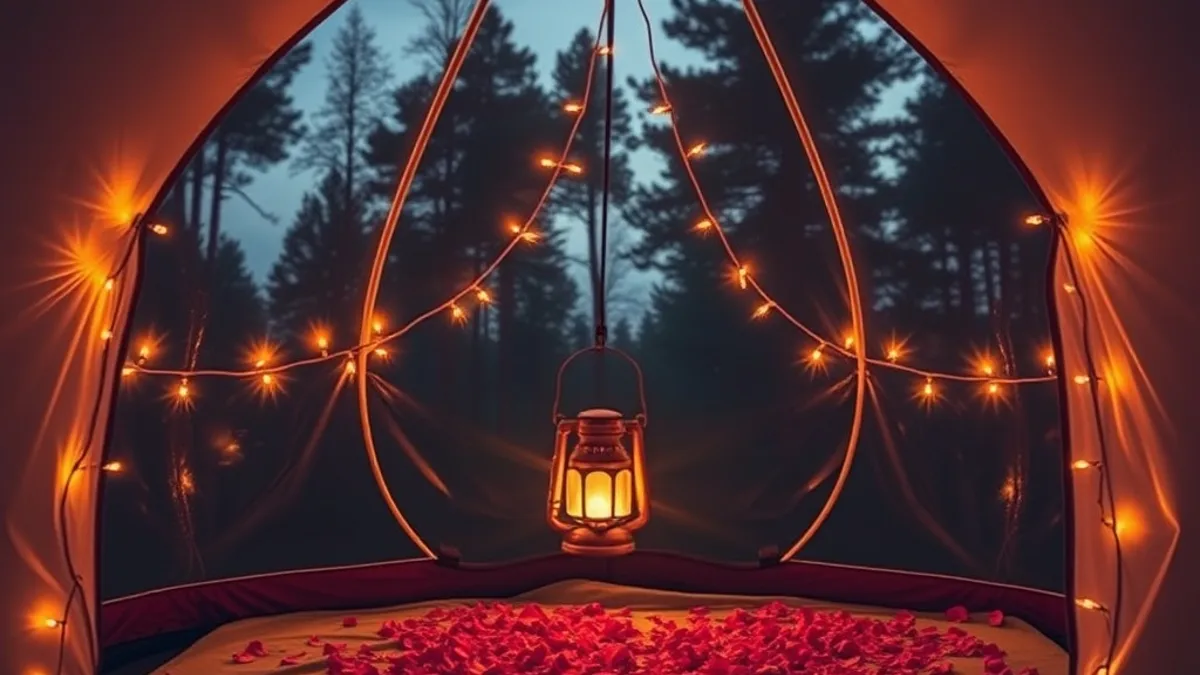
One of the biggest advantages of glamping over a hotel proposal is how involved hosts tend to be. Many glamping owners offer special-occasion packages that typically add $50–$200 to your booking, and these usually cover the details that take the most effort to organize: fresh flowers, candle arrangements, a chilled bottle of champagne, and sometimes rose petals or a small banner. Ask about this when you book, not the week before your stay, so the host can plan supplies and staffing around your dates.
Once you have a package confirmed, share your proposed timing as precisely as you can. If you plan to pop the question on the deck at sunset on night two, tell the host exactly that. Staff can stage the tent or deck beforehand—lighting the candles, arranging the flowers, chilling the champagne—while you take your partner on a short walk or keep them busy with drinks. Without that coordination, you may find yourself fumbling with a lighter and a bouquet while your partner wonders why you keep disappearing behind the tent.
Agree on a signal to avoid awkward interruptions
Nothing derails a proposal like a host walking in with firewood at the wrong moment. Before your stay, agree on a discreet system. Some couples use a simple text message to the host meaning “all clear, you can come by now,” while others ask the host to do a quick walkthrough an hour beforehand and then stay away until messaged. Confirm how reachable the host will be on the night itself—by phone, text, or an on-site staff member—so you are not left guessing. A good host will have handled proposals before and will often have their own suggestions, so ask what has worked well for other guests.
Weather Backups and Night-of Logistics
Weather is the one thing you cannot control, so plan around it before you pay your deposit. A rain shower on proposal night is genuinely common, especially in the shoulder seasons, and a tent—however luxurious—is not where you want to kneel in a downpour. Before booking, confirm in writing that the property has either an indoor lounge, a covered deck, or a screened common area you could use as a fallback. Ask specifically whether that space is reserved for your unit only or shared with other guests, because a shared lounge changes the privacy equation entirely.
Timing within the evening matters just as much. Plan the proposal for sunset or early evening rather than late at night. This is when lanterns and string lights are being lit, the temperature is still comfortable, and you have enough daylight left for photos. A midnight proposal under a dark sky sounds romantic but usually produces grainy photos and a shivering partner.
Night-of logistics worth sorting in advance
- Ring storage: Tent temperatures can swing sharply overnight, from warm afternoons to near-cold small hours, so keep the ring in an insulated case or padded box rather than a thin pocket—it protects both the box finish and your nerves when you reach for it.
- Where you hide it: Choose a hiding spot you control, such as your own bag’s inner pocket, rather than shared luggage your partner might rummage through for a charger.
- Lighting check: Ask the host whether lanterns and string lights run on timers or need to be switched on manually, and who switches them on—photos depend on it.
- Footwear and ground: Decks and tent grounds can be damp after evening dew, so plan where you will actually kneel and bring a dry blanket or mat if the surface looks questionable.
Turning the Stay Into a Full Anniversary Itinerary
A proposal night is the peak of the trip, but the surrounding days are what turn a great weekend into an anniversary you will talk about for years. Rather than packing the schedule with activities, build the stay around one standout celebration evening and one genuinely slow morning. Glamping works best when you resist the urge to treat it like a sightseeing base.
The celebration dinner
For your main evening, book a private dinner or an in-tent chef experience where the property offers one. Many glamping sites partner with local cooks or caterers who set up a table on your deck, cook on site, and disappear discreetly afterward—far more memorable than driving to a restaurant in hiking clothes. Ask about menus and dietary needs when you reserve, and confirm whether the dinner is served at your unit or in a shared dining area, since that affects the intimacy of the evening. If no chef service exists nearby, ask the host whether they can help with provisions so you can cook something simple together over the fire pit instead.
Slow mornings and local discoveries
Balance the big evening with one unhurried morning activity: a soak in a stargazing hot tub before breakfast, a short forest walk straight from your tent, or breakfast served on your own deck. One is enough—resist scheduling more.
Finally, tap the best resource on site: your host. Ask them for local picnic spots or hidden viewpoints within a 30-minute drive. Hosts know the overlooks that never make the guidebooks, the swimming holes locals use, and the bakeries worth a detour. A packed picnic at a quiet viewpoint often becomes the moment guests remember most, and it costs almost nothing to arrange.
Your Glamping Proposal Checklist at a Glance
A glamping proposal or anniversary under canvas really can feel magical, but as we’ve seen, one wrong choice in site, season, or setup can turn romance into logistics stress. The fix is simple: lock in the right stay type, book 3–6 months ahead (more for peak summer weekends), and verify privacy with the host before you pay a deposit.
From there, it comes down to coordination and breathing room. Work with your host on decor or a proposal package, confirm a weather backup like an indoor lounge or covered deck, and plan a 2–3 night stay so a rainy evening never derails the moment. Cap the trip with one celebration experience, whether that’s a private dinner or a slow stargazing morning. Get those pieces right and the logistics fade into the background where they belong. If this guide helped you start planning, share it with a partner-in-crime or leave a comment with your own proposal plans.