You are staring at a $300-per-night tent listing and wondering whether canvas and a firepit can really justify hotel-level prices. It is a fair question, and one that more travelers are asking as glamping rates creep up in popular destinations. So, is glamping worth it? The honest answer is that it depends on the setting, the season, and what kind of comfort you actually need.
This guide breaks the question down without the hype. We will look at what your money actually buys compared with campsites and hotels, and run a comfort reality check on heating, bathrooms, and noise. Then we will map out when glamping clearly beats a hotel, when it is not worth the premium, and how to book smart and pay less. Finally, you will get a list of questions to ask before you commit and an honest verdict on value, so you can decide with confidence instead of guesswork.
What You Are Actually Paying For
Glamping rates typically run between $150 and $600 per night, and that number catches a lot of people off guard. The reason it looks so different from ordinary camping is that the rate bundles several things together: the accommodation itself, furniture, heating, linens, and often private bathroom facilities. You are not paying for a patch of grass — you are paying for a fully set up, furnished shelter that someone else has maintained, cleaned, and stocked before you arrive.
Compared with a traditional campsite
A traditional campsite pitch usually costs $25 to $60 per night, so the gap is substantial. What that gap buys you is essentially zero setup: no hauling gear, no wrestling with poles in the dark, no sleeping pad that never quite inflates. You get real beds with proper mattresses, linens already made, and a weatherproof structure overhead that will not leak the first time a storm rolls through. For travelers who do not own camping equipment, or who have sold it after one soggy trip, the math starts to look less absurd.
Compared with a mid-range hotel
Against a mid-range hotel, which averages $120 to $250 per night in comparable rural destinations, the comparison is trickier. In pure room quality, a hotel usually wins: better insulation, quieter walls, daily housekeeping, and a front desk if something goes wrong. What you are paying extra for in glamping is partly the setting itself — sites on lakeshores, clifftops, or deep in forest clearings that hotels rarely occupy. You are also paying for the experience of staying somewhere that feels closer to the outdoors, without giving up a mattress. Whether that premium makes sense depends on how much those two things matter to you, which is exactly what the next sections unpack.
The Comfort Reality Check
Here is where a lot of glamping disappointment happens: the category covers structures that vary enormously. On one end, you have luxury tents and domes with wood stoves, en-suite bathrooms, and insulated floors. On the other, you have simpler canvas units where the shower and toilet sit in a shared block 50 to 100 meters away — a short walk in sunshine, a genuinely miserable one at midnight in the rain. Before booking, find out exactly which end of that spectrum your unit sits on, because the price does not always make it obvious.
Temperature swings are real
Canvas structures heat up and cool down much faster than solid walls. That works in your favor on a warm afternoon, but it works against you on a chilly night. Shoulder-season stays in May-June or September-October can feel surprisingly cold once the sun drops, especially if your unit has no stove or heater. Conversely, in hot weather a canvas dome can turn stuffy by mid-morning with no way to cool it. Check what heating and cooling actually exists for your dates, not just what the photos suggest.
Sound travels through thin walls
The second reality check is noise. Canvas and lightweight panels let sound carry: you will hear wind, rain drumming on the roof, and conversations or late arrivals from neighboring units. A sealed hotel room muffles most of that; a tent does not. Some people find the sounds of wind and rain part of the charm — falling asleep to a storm on canvas can be genuinely memorable. But if you are a light sleeper, or your neighbors turn out to be a loud group, the experience changes quickly. Earplugs are a cheap insurance policy worth packing regardless.
When Glamping Beats a Hotel
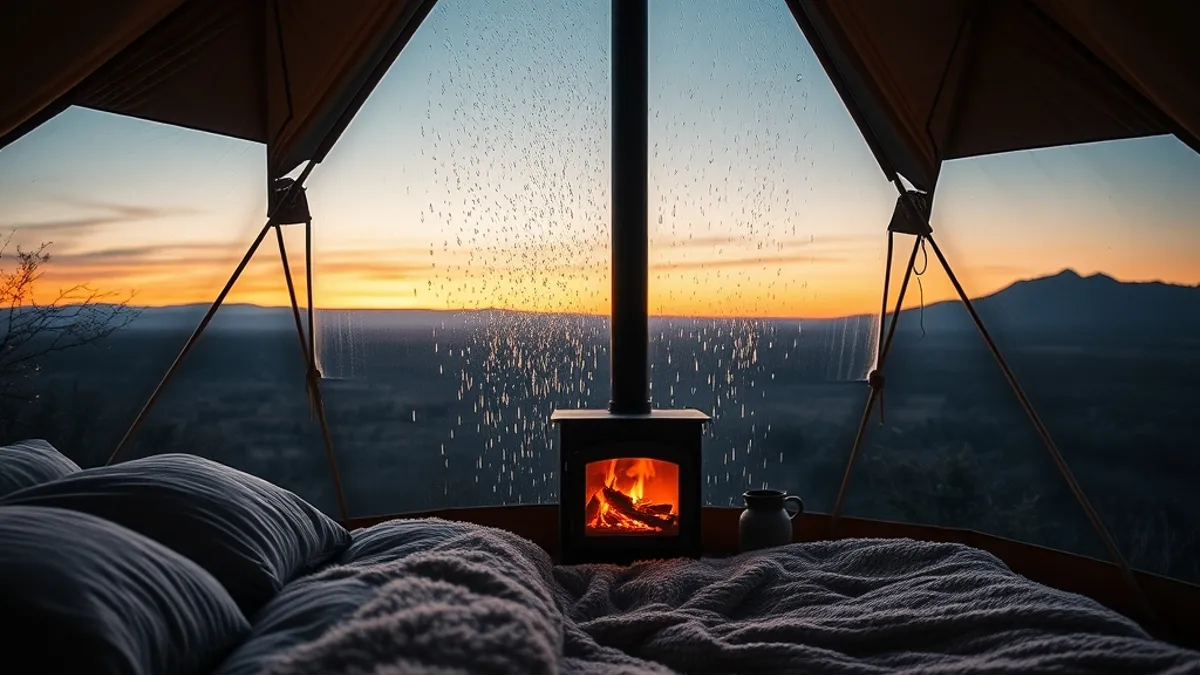
Glamping makes the most sense in places a hotel simply cannot be. Think forest clearings where your only morning view is trees and mist, clifftop platforms overlooking the coast, or lakeshores where you fall asleep to water lapping a few meters from your bed. Hotels need road access, infrastructure, and zoning; glamping units can sit in spots where the view itself is the main amenity. If that setting is what you are after, no mid-range hotel room will replicate it, no matter how comfortable the bed.
Group size matters more than most people realize. Most glamping sites cap occupancy at 2 to 4 guests per unit, and the nightly rate is usually for the whole structure, not per person. That means the per-person cost collapses dramatically with two guests: split between a couple, the rate per head starts looking reasonable next to two separate hotel rooms. For solo travelers, however, you absorb the entire rate alone, and the value proposition weakens considerably.
Finally, glamping shines as a short, memorable splurge rather than a full-week base. One or two nights in a spectacular structure creates the kind of trip highlight you will talk about for years — without the cost compounding over seven nights.
- Anniversary and milestone trips: A stargazing dome or a tent with a private firepit turns an ordinary weekend into a celebration, and the photos tend to be far better than anything a standard hotel corridor can offer.
- Trying camping without the gear commitment: If you are curious about the outdoors but own zero equipment, glamping lets you test how you sleep outside before spending hundreds on gear you might never use again.
- Splitting a road trip: Dropping one glamping night into a longer driving itinerary breaks up budget stays and gives the trip a rhythm — a night of indulgence between practical, cheaper stops.
- Small friend groups: With a 4-guest cap on many units, two couples or a few friends sharing one large structure often pay less per person than booking separate hotel rooms in the same rural area.
When It Is Not Worth the Money
Glamping promises comfort in the outdoors, but the wrong conditions can turn that premium into a frustrating expense. The biggest risk factor is weather. Canvas and fabric structures simply do not cope with sustained rain the way a solid building does. Walkways turn to mud, damp seeps into everything, and drying gear inside a tent is a losing battle. Before you commit, check the seasonal weather patterns for the region — some destinations have months where rain is close to a daily certainty.
Long stays are another place where the math stops working. A full week at glamping rates can easily cost more than a boutique hotel with daily housekeeping, blackout curtains and a proper front desk. Glamping works best as a highlight, not as a base camp for an entire trip.
Then there are personal non-negotiables. Be honest with yourself about what you actually need to sleep well and function in the morning. If any of the following describe you, the premium is hard to justify:
- You need reliable hot water. Some units have on-demand systems, but others rely on shared facilities or solar heating that runs out on cloudy days — ask exactly how yours works before booking.
- You need blackout darkness. Canvas lets dawn light flood in early, and even domes with curtains rarely achieve true darkness; light-sensitive sleepers often struggle.
- You need total silence. Thin walls mean wind, rain and neighboring guests are all part of the soundscape — earplugs become essential gear, not an afterthought.
One more thing worth checking before you pay: how the site handles bad-weather cancellations or early departures. Policies vary widely between operators, and a soggy forecast on arrival day can otherwise leave you paying in full for a miserable stay. A quick email asking about refunds for severe weather takes two minutes and can save you the whole cost of the trip.
How to Book Smart and Pay Less
The difference between a great glamping deal and an overpriced one often comes down to when you book, not where. The same tent, in the same spot, with the same view can cost noticeably more or less depending purely on timing. A few simple habits around dates and booking windows can save you a meaningful amount, and none of them require insider knowledge or special connections. Here is how experienced glampers keep their costs down without settling for worse sites.
- Book peak-season weekends 3-6 months ahead. Popular sites sell out their 2-4 person units first, and last-minute availability at fair prices is rare. If a summer or holiday weekend is fixed in your calendar, treat booking like a flight purchase and lock it in early rather than hoping for a late deal.
- Target shoulder-season dates in May-June or September-October. Rates often drop 20-40% below peak, while the scenery is usually at its best — autumn color or late spring greenery included. You trade slightly cooler nights for a much lower bill, which many travelers consider a fair exchange.
- Watch for 2-night minimums on weekends. Many sites require them, which quietly doubles the cost of a quick trip. A midweek single night often dodges both the minimum stay and the peak price at once, making it the cheapest way to sample a site.
It also pays to compare several sites in the same region rather than settling on the first one with availability. Structure type, included amenities and minimum-stay rules vary widely, and two properties with similar photos can differ sharply in what you actually get for your money. Check what is included in the rate before comparing prices, since meals, firewood and towels can change the real cost significantly. Finally, sign up for newsletters from a couple of operators you like — cancellations and off-peak promotions do appear, and subscribers usually hear about them first.
Questions to Ask Before You Commit
Glamping listings tend to be photo-heavy and detail-light. The images show the bed, the view and the wood stove, but they rarely show the bathroom block, the heater’s actual capacity or the checkout bill. Marketing photos are usually taken in peak season, in good weather, with the unit styled for the shot — none of which tells you what your stay will actually feel like. Asking a few pointed questions before you pay protects you from the most common disappointments, and the answers come at zero cost.
The three that matter most concern bathrooms, temperature and what is actually included. A unit that looks dreamy in July can be miserable in October if it has no real heat source, and a “private bathroom” that turns out to be a shared facility a short walk down a dark path changes the experience considerably. Email the operator directly rather than relying on the listing text, and keep the replies in writing so there is no ambiguity at check-in.
- Bathroom access: Ask whether it is en-suite or shared, and measure the distance in walking time, not meters — a two-minute walk matters a lot at 2 a.m. in the rain. Also ask whether the facility is exclusively for your unit or shared with other guests.
- Heating and cooling: Ask what specifically handles the coldest and hottest hours of your dates — a wood stove that dies overnight is not the same as thermostatic heat, and canvas structures have little insulation to fall back on. If the answer is “a stove,” ask whether someone shows you how to keep it burning.
- Inclusions versus add-ons: Ask what is covered — meals, firewood, towels, bedding — and what gets added at checkout, since firewood bundles, cleaning fees and activity charges can quietly add a meaningful amount to the final bill. Request a sample total for your exact dates and group size.
Any operator worth booking will answer these quickly and specifically. Vague or evasive answers are themselves useful information: if a site cannot tell you how the unit is heated, assume it is not heated well. One honest reply that reveals a compromise is far better than a glossy listing that hides it until you arrive with your bags in the rain.
The Honest Verdict on Value
So, is that $300-per-night tent worth it? Sometimes, yes. Glamping earns its price when three things align: a small group of 2-4 people, shoulder-season dates, and a setting that no hotel can replicate — a clifftop, a lakeshore, a quiet forest clearing. Get those right, and you are paying for an experience a standard room simply cannot offer.
It falls short for long stays, bad-weather trips, and travelers who need hotel-grade quiet, blackout darkness or dependable climate control. The honest truth is that the $150-$600 premium buys atmosphere and zero-effort camping — not a better version of a hotel room. Judge it on those terms and you will rarely feel overcharged. Have you tried glamping yourself? Share your experience or your questions in the comments below.