If you have ever booked a safari lodge and spotted an electric fence on the property photos, you have probably asked yourself an uncomfortable question: does that wire protect wildlife, or does it put animals at risk? It is a fair concern, and it sits at the heart of wildlife safety around lodges. The answer, as it turns out, depends far more on design and maintenance than on the fence itself.
This article walks through why lodges use electric fencing in the first place, how the wires actually affect the animals around them, and what separates a responsibly built fence from a careless one. We will also cover how you as a guest should behave near fence lines, which questions to ask before booking a fenced property, and where these lodges fit into the wider safari landscape. By the end, you will know exactly what to look for and what to ask.
Why lodges use electric fencing and wires
Electric perimeter fences exist for one simple reason: they keep dangerous animals out of the spaces where people sleep, eat and walk after dark. Elephants, buffalo and large predators can all move through unfenced grounds at night, and a close encounter between a guest and a buffalo in the dark is dangerous for both parties. A well-maintained fence line dramatically reduces those nighttime encounters, which is why most lodges in genuine big-game country treat fencing as a core safety measure rather than an optional extra.
A deterrent, not a barrier
Here is the part that surprises many travelers: a low-amperage electric fence is often gentler on wildlife than a solid wall. The pulse delivers a sharp, memorable shock that teaches an elephant or hippo to turn away, but it does not cause lasting injury. Solid barriers such as concrete walls or game-proof steel fencing do the opposite of what conservation intends; they fragment habitats and cut animals off from water sources and movement routes. A wire fence, by contrast, can be designed to guide animal movement rather than block it entirely.
Protection beyond the guest areas
The fence does more than shield guests, too. Lodge water points, vegetable gardens and staff quarters are magnets for nocturnal raiders. Hippos graze heavily on lawns at night and can be extremely aggressive when surprised, while bushpigs can tear through a garden in a single evening. By protecting these areas, the fence reduces conflict between people and wildlife, which in the long run is one of the most important contributions a lodge can make to local conservation.
How electric wires affect wildlife safety around lodges
A properly built electric fence is designed to startle, not to injure. The pulses on a typical safari lodge perimeter carry between 5,000 and 8,000 volts, but at very low amperage, which is what makes the shock uncomfortable rather than dangerous. The current fires roughly once every 1 to 2 seconds, and that gap matters enormously: it gives an animal that touches the wire a moment to pull back and retreat instead of being hit with continuous current. A zebra that brushes a strand once will usually remember the lesson for life and keep its distance thereafter.
The real risk: entanglement
The genuine danger is not the shock itself but entanglement. When wire sags, breaks or snags on a fallen branch, an animal can become caught in the line, and a struggling animal wrapped in wire can injure itself badly while receiving repeated pulses. This is why daily line inspections are non-negotiable at well-run lodges. A fence checked every morning catches sagging strands and snapped wire before an animal finds them, and faults get logged and repaired quickly rather than left for days.
Small creatures near the base
The animals most vulnerable around fence lines are not elephants but the small ones: snakes, tortoises and ground-dwelling birds that move through low vegetation at the fence base and may not register a thin wire at all. Thoughtful fence design accounts for this by keeping the ground along the line clear of dense cover, so small animals can see and avoid the wire. If you walk a lodge boundary and see thick, unmanaged brush pressing against the fence, that is a quiet sign the operation is not paying attention to the details that matter.
Design features that separate responsible fences from careless ones
Not all electric fences are built to the same standard, and the differences are easy to spot once you know what to look for. Elephant-proof fencing, for example, is not a single wire strung at knee height. It usually requires multiple strands running from 1.8 to 2.4 meters high, tall enough that a bull elephant cannot simply step over or reach across it. The corners and tension points matter just as much: responsible fences use insulated strainer posts at these stress points so the line keeps consistent tension and the current does not leak into the ground.
Visibility is the second marker of a careful design. An animal moving at speed at dusk cannot see a thin steel strand, so good fences make themselves obvious. Reflective flags or HDPE visibility strips are spaced every 10 to 15 meters along the line, catching vehicle headlights and low sunlight so that buffalo, zebra and giraffe register the obstacle before a collision happens.
The third marker is the most telling of all: what the fence does not block. A lodge that leaves deliberate gaps at river crossings or along known wildlife corridors has planned for animal movement rather than simply walling off its patch. That kind of planning signals an operation thinking about the whole ecosystem, not just its own boundary.
- Grounding and earthing systems: a well-designed fence includes properly installed earth stakes so the shock remains effective even in dry season soils, when poor grounding can render a fence nearly useless.
- Alarm or monitoring integration: some lodges connect fence lines to alert systems that flag a drop in voltage immediately, meaning staff learn about a fault from the control panel rather than from a stranded animal.
- Gate protocols at vehicle crossings: responsible designs use self-closing or staffed gates at access points, so a delivery driver leaving a gate open does not silently undo the entire perimeter.
- Battery and solar backup: a fence that fails during a power cut leaves a gap at the worst possible time, so quality setups run on solar or battery systems that keep the current live around the clock.
Guest behaviour near fence lines and wires
Electric fence lines are not part of the scenery, and treating them like decoration is where most guest problems start. The safest habit is simple: keep at least 5 meters between you and any wire, and double that caution at dusk and dawn, when low visibility makes most fence-related incidents happen. Animals also move more at these hours, so a buffalo or elephant may be standing quietly near the line long before you notice it.
It is tempting to treat a fence wire as a convenient drying rack or a place to dangle a camera strap, but the weight can ground the fence, weaken the pulse along that section, or snap a strand entirely. A grounded stretch of wire is exactly the kind of fault that lets a curious hippo test the boundary overnight. Use the laundry area or your room instead, and keep gear straps clipped to your bag.
- If you hear a faint ticking or see sparking at a joint, note the nearest strainer post or marker so staff can find the fault quickly, then walk away from the line before reporting it.
- If an animal lingers along the fence for more than a few minutes, tell staff the direction and rough distance rather than approaching for a photo, since a stressed animal may push through or along the wire.
- After dark, use a torch on any path that runs near the boundary, because a sagging wire or fallen strand is far harder to see than a live one at midday.
- Keep children within arm’s reach on guided walks near fence lines, as kids are shorter, closer to the ground cover where snakes and tortoises shelter, and less likely to judge wire distance accurately.
Reporting takes a minute and costs you nothing; investigating a live fault yourself can end a holiday badly. Lodge staff carry the tools, gloves and training to repair lines, and they would much rather hear about a small issue at breakfast than an accident after dinner.
Questions to ask before booking a fenced safari lodge
A well-fenced lodge is not just a lodge with wires; it is a lodge that maintains them. The difference shows up in how staff answer a few direct questions before you book, so treat your enquiry as a short inspection of its own. Managers of genuinely well-run properties can usually talk about their fencing in specific, practical terms without hesitation, while vague or evasive answers tend to reveal where maintenance has slipped. Bring these questions with you and pay as much attention to how they are answered as to what is actually said.
- Ask whether fence lines are inspected daily and how quickly faults get repaired. Well-run operations log issues within 24 hours, so a vague answer like “we check sometimes” is a signal to keep looking.
- Ask whether the property sits inside a fully fenced reserve or uses partial fencing. A fenced reserve changes which animals you might meet on a night walk between your tent and dinner, so make sure the style matches your comfort level.
- Ask what the fence is designed to keep out. Elephant-proof strands run 1.8-2.4 meters high with insulated strainer posts, and a manager who can describe their fence in that much detail usually manages it just as carefully.
- Ask how the fence handles wildlife movement, such as gaps at river crossings or corridor routes. This tells you whether the lodge plans around animal behaviour or simply blocks it.
On price, expect roughly $250-$1,500 per person per night in Botswana and South Africa, usually including meals and game drives. That spread is wide because it reflects management quality as much as luxury: higher rates often fund daily patrols, better fence design and quicker fault repairs. If a deal looks unusually cheap for a fenced big-game property, ask exactly what has been trimmed, because fence upkeep is one of the first line items to suffer when budgets are squeezed. It also helps to compare at least two or three quotes side by side and to ask each lodge the same four questions above, so you can judge answers against each other rather than in isolation. For a sense of what thoughtful, well-paced safari stays look like in Botswana, this guide to resorts in Botswana built around safari serenity and calm is a useful benchmark before you compare quotes.
Where fenced safari lodges fit in the wider travel picture
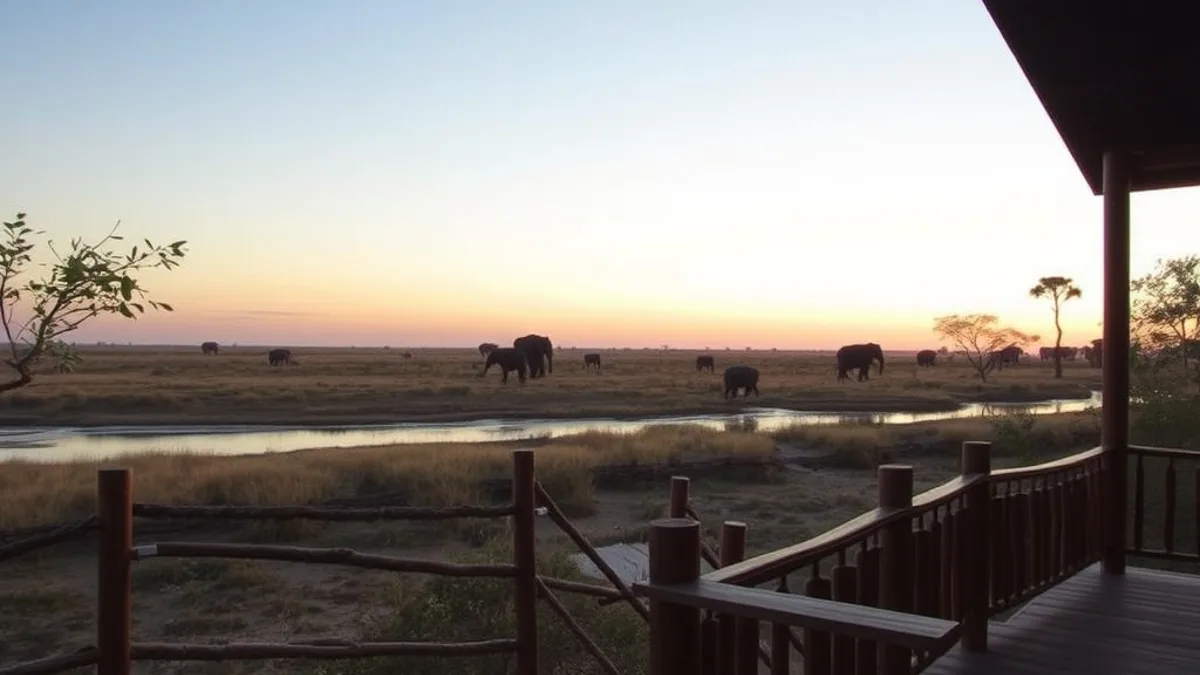
Fencing philosophy differs sharply across Africa’s safari countries, and it shapes your experience more than most travelers expect. In South Africa, many reserves are fully fenced, which means animals stay inside the boundary and you stay safely inside yours. In Botswana and Kenya, many camps sit in open concessions with no fence at all, so elephants can walk between your tent and the fire pit at midnight. Neither approach is wrong; one trades a little wildness for predictability, the other trades predictability for a rawer sense of the bush.
Partial fencing and homestead stays in Kenya
Kenya’s Laikipia plateau, around the town of Nanyuki, has developed its own middle path. Lodges there often pair homestead-style hospitality with partial fencing along conservancy boundaries, so game moves freely across large sections of land while guest areas stay protected at night. It is a good fit for travelers who want wild encounters without the full exposure of an unfenced camp. If that blend appeals to you, these Nanyuki homesteads near safari country show how spacious, calm properties work alongside conservancy land.
Reading the wires as a signal
Electric fencing is also a useful clue about where you are. Coastal and lakeside lodges elsewhere in the world rarely need wires at all, because their local wildlife poses little risk to guests. So when you arrive at a property and find a serious, well-maintained electric perimeter, take it as a strong signal that you are in genuine big-game country, with elephants, buffalo or predators moving through the area at night. Let that shape your behavior, not just your expectations: the same wire that tells you the setting is wild is the one you should keep 5 meters from after dark.
Wrapping up fencing and wildlife safety
So, do the electric fences around a safari lodge protect wildlife or endanger it? The honest answer is that they do both jobs well when they are built and maintained properly. Low-amperage pulses, clearly visible lines and daily inspections mean a fence deters elephants, buffalo and predators without causing lasting harm, while keeping guests safe from dangerous close encounters at night.
As a guest, your part is simple: keep your distance from the wires, never hang anything on them, and report sparking, sagging lines or an animal lingering near the fence, especially at dusk and dawn when most incidents happen. Just as importantly, ask about fence design and maintenance before you book. A lodge that can answer those questions clearly is one that takes wildlife safety seriously. If this guide helped you plan your trip, leave a comment or share it with a fellow traveler.